An airless toothpaste pump bottle is useful when an oral-care product genuinely benefits from pump dispensing. It is not automatically better than a standard toothpaste tube, and it should not be chosen only to make the product look more premium. The real decision is whether the finished toothpaste, gel or oral-care paste can be dispensed smoothly through the selected pump format and whether the capacity and daily-use action fit the product.
LumLun currently has confirmed PP toothpaste pump models in 50ml, 60ml and 100ml directions. That makes this a real packaging niche with actual products behind it, but the exact pump, outlet and formula behavior still need to be confirmed by model.
When Does an Airless Toothpaste Pump Bottle Make Sense?
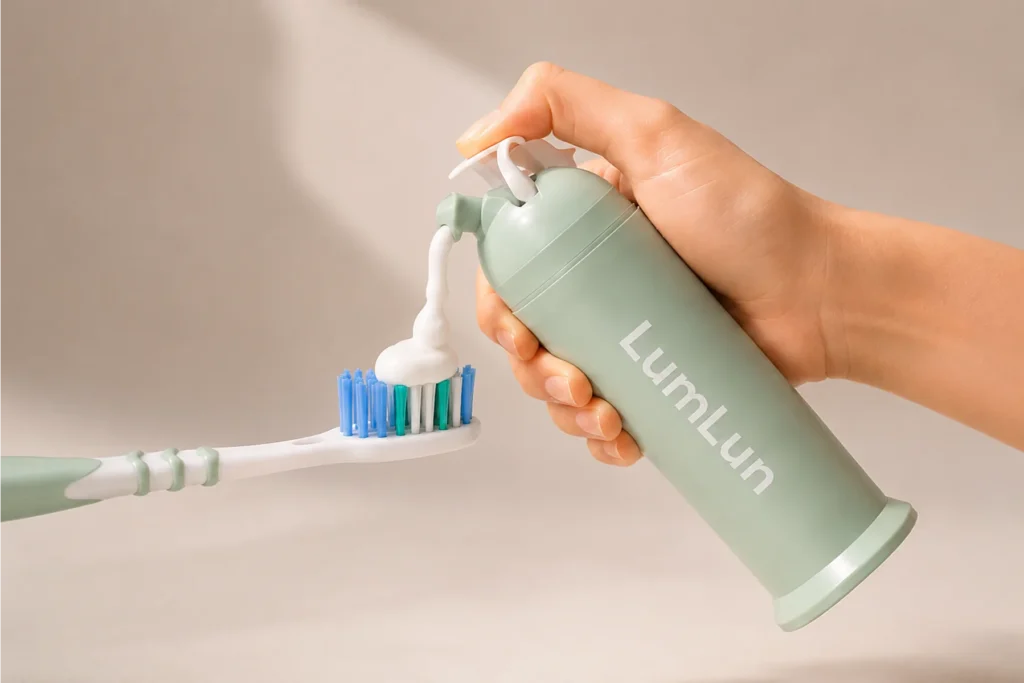
The format makes the most sense when the product brief calls for press-to-dispense oral care: the user presses a pump instead of repeatedly squeezing and rolling a conventional tube. This can suit toothpaste gels, oral-care pastes and related personal-care products when the formula can move through the selected pump and outlet.
Start with the dispensing action, not with “airless” as a marketing claim.
A buyer should first ask whether pump dispensing solves a real use problem. If the product needs a familiar flexible tube, compact carry format or simple squeeze behavior, a standard toothpaste tube can remain a very good choice. If the product is intended to stand upright and dispense by press, a toothpaste pump model becomes more relevant.
Airless architecture can also reduce repeated direct handling of the remaining formula and may support more complete product access when the pump/piston system and formula are matched correctly. It should not be described as guaranteeing shelf life, formula efficacy, zero residue or a fixed evacuation percentage.
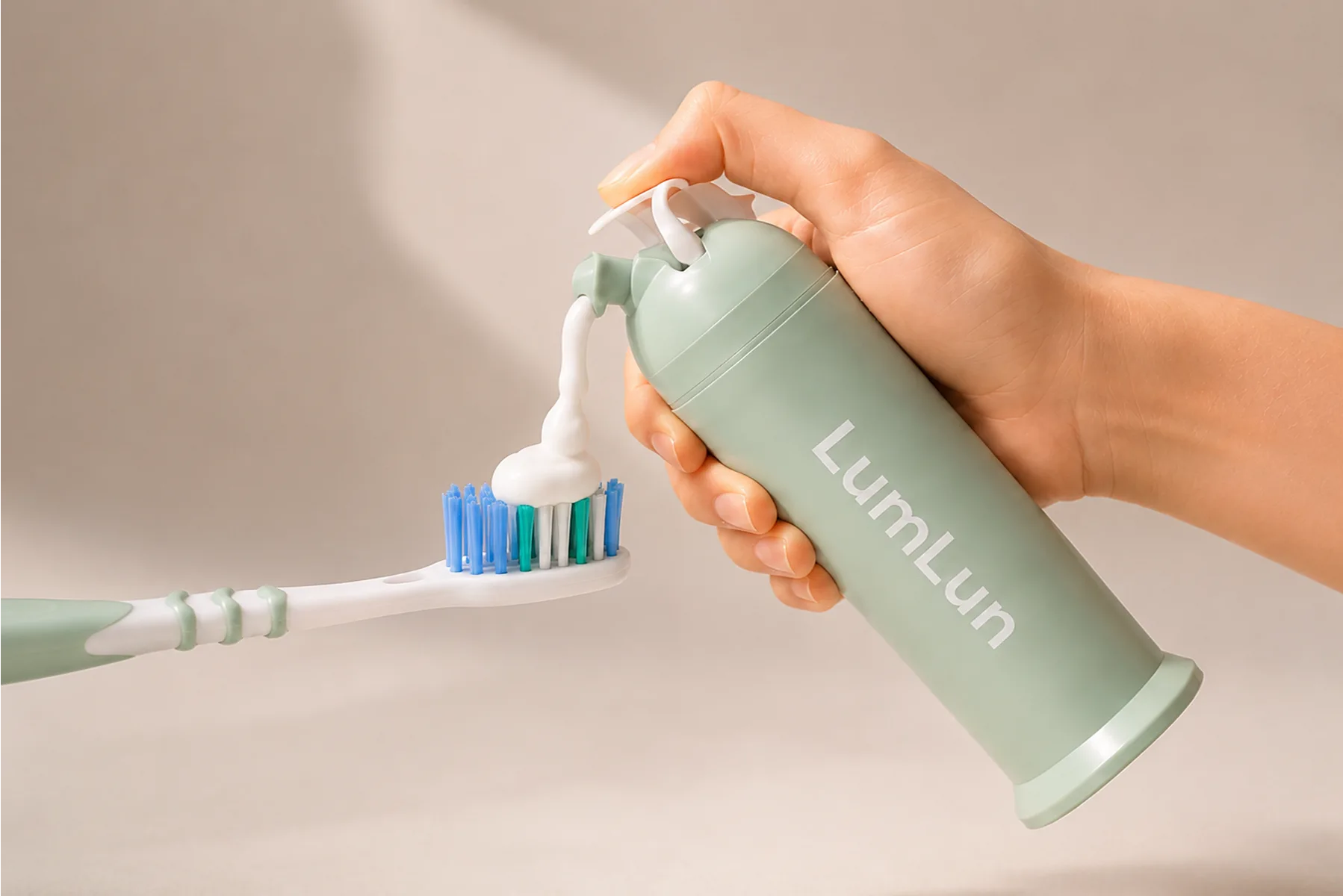
One-handed use can be a real functional reason, but only when the package remains stable during pressing.
A countertop toothpaste pump can let the user hold the toothbrush in one hand and press the actuator with the other. That can make the routine simpler, but the base, actuator force and outlet position still have to feel stable. “One-handed” should describe the real action, not be used as a generic convenience claim for every pump design.
The cap or top protection also matters because oral-care packs live in a wet bathroom environment and the dispensing outlet should remain protected when not in use. The exact cap style depends on the model, and a cap by itself should not be treated as a hygiene guarantee.
How Is the Pump Format Different From a Standard Toothpaste Tube?
| Packaging direction | How the user dispenses | When it belongs on the shortlist |
|---|---|---|
| Standard toothpaste tube | Squeeze the flexible tube body | When familiar squeeze use, compact storage and tube construction fit the product |
| Airless toothpaste pump bottle | Press the pump/actuator | When upright press dispensing and an airless pump route fit the product |
| Airless toothpaste tube / pumped tube | Press a pump integrated with a tube-style body | When the project specifically wants a tube-like pack with pump dispensing |
None of the three is a universal upgrade over the others. They create different component systems, dimensions and filling/dispensing behavior. The correct choice depends on the finished formula and the intended pack architecture, not on visual positioning alone.
For toothpaste and oral-care paste, the comparison stays focused on the dispensing action, formula flow and real pump format needed for the finished product.
The two formats also behave differently near the end of use.
A flexible tube can be rolled or squeezed from different points as it empties. A pump system relies on its internal dispensing path and mechanism. When the selected airless model is well matched, it may make remaining product easier to access without repeated rolling or hard squeezing, but actual residual product still depends on the specific pack and formula.
Footprint is another practical difference. A tube may store flat or horizontally, while a pump bottle usually needs more stable upright space and extra height for the actuator/cap. This affects bathroom storage, cartons and packed shipping volume without making either format universally better.
Match Formula Texture, Pump and Outlet to the Real Product
Toothpaste gels and oral-care pastes can be much more viscous than a serum or facial toner. That makes formula flow a real model-selection issue. A pump that works with one gel should not be assumed to work with every paste, and a product that barely moves through the outlet will not become suitable simply because the bottle is described as airless.
The buying questions are practical: Does the product prime normally? Does a full press produce a stable amount? Does the pump recover for the next use? Does the outlet release the paste cleanly rather than forcing the user to press repeatedly? These are filled-sample questions, not reasons to publish a universal viscosity or pump-output rule.
The outlet shape also matters because toothpaste is normally delivered to a toothbrush or directly as a controlled ribbon/dollop rather than atomized across an area. That is why a toothpaste pump should not be treated as a fine-mist, lotion-pump or generic skincare pump with a different label.
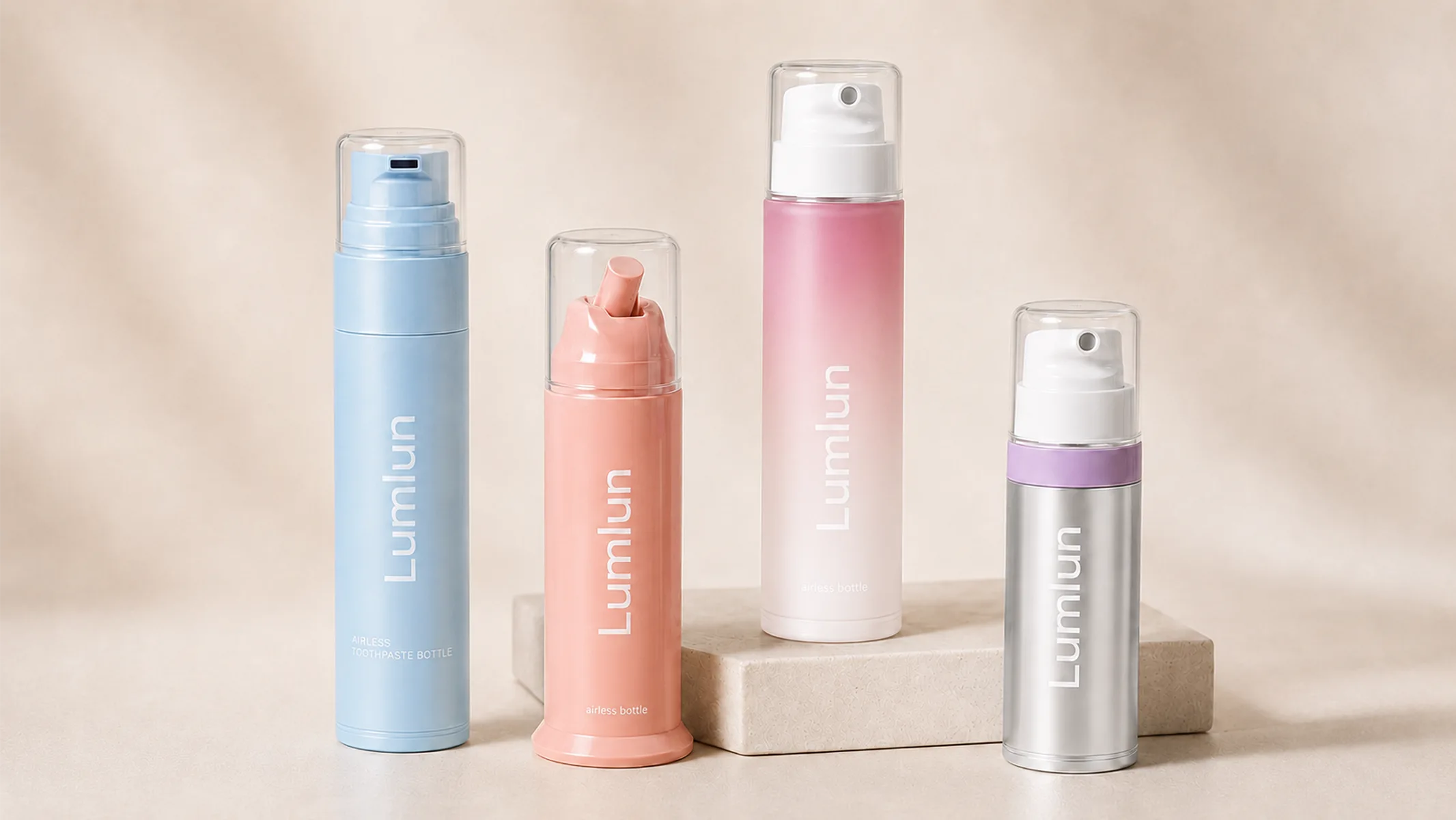
A formula can be “thick” in more than one way.
Two toothpaste gels may feel similarly dense in a jar but behave differently under pressure and through a narrow outlet. Rather than publish a viscosity cutoff, the buyer should use the closest actual formula and observe whether flow, pump recovery and the dispensed ribbon remain consistent over repeated use.
If the product contains visible particles or has a texture that may interfere with a narrow flow path, that should be raised early with the packaging supplier. The point is not to teach formulation; it is to avoid selecting a pump architecture that is unrealistic for the finished product.
Choose 50ml, 60ml or 100ml Around the Product Role
LumLun currently confirms two PP toothpaste pump directions: the PP Airless Toothpaste Pump Bottle — 50ml & 100ml and the 60ml PP Airless Toothpaste Pump Bottle. Both list PP and an MOQ of 10,000 pieces.
Capacity should follow the product plan and the actual dispensing amount. A 50ml treatment-size oral-care product, a 60ml core SKU and a 100ml larger daily-use product can all be reasonable, but nominal milliliters do not tell you how many uses the pack will provide. That also depends on the real pump output and how much product the user needs each time.
Compare assembled height and width as well as volume. Pump head, cap and outlet can change the carton and shelf footprint, so a 60ml pump pack can occupy very different space from a 60ml flexible tube.
Output per press influences how capacity feels in daily use.
A small output may require several presses, while a larger output can empty the package faster. Neither is automatically correct. If the brand has a target amount per brushing or application, compare it with the actual output of the selected model so the chosen capacity and expected usage period make sense together.
Capacity can also support a product hierarchy: a smaller targeted oral-care gel and a larger everyday toothpaste may use related visual language without pretending they are the same use case. The package should make the net content and product role easy to understand.
Customize Existing Toothpaste Pump Models After the Structure Is Clear
Once the exact pump model is selected, color, surface finish, printing and visible pump/cap components can be developed around the existing structure. This is the efficient place to use customization: the packaging function stays stable while the visible design is adapted.
If the project requires another capacity, a different outlet, a different pump architecture or a new silhouette, compare another existing model first. A request that changes the core dispensing structure is not the same as changing color or artwork.
For projects that need a different body concept, LumLun also lists a PP Airless Toothpaste Tube — 50g, 60g & 100g as another oral-care pump direction. It should be evaluated as its own model, not assumed to share the same components as the bottle versions.
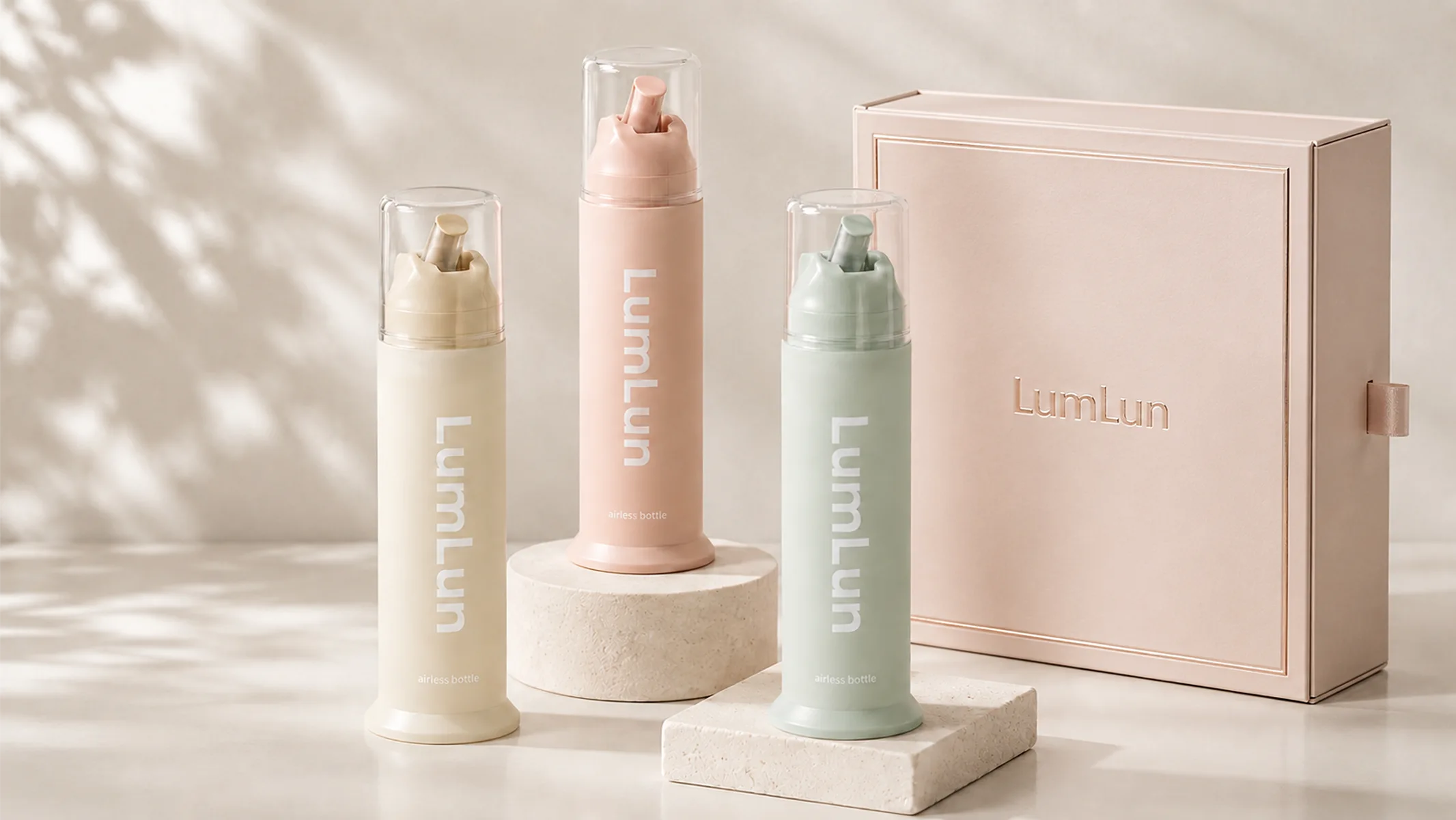
PP is the confirmed material on LumLun’s current 50ml, 60ml and 100ml toothpaste pump bottle directions.
That gives the project a factual starting point for color and surface decisions. However, the visible bottle, pump, cap and any internal airless components may not all have the same material. Decoration and material-contact questions should therefore be tied to the exact bill of components for the selected model rather than generalized from the word “PP”.
For artwork, check the smallest selected capacity and the real printable zone before locking text size or logo placement. Toothpaste pump bottles can have a tall top structure, so visual balance on a flat design file may differ from the assembled pack.
Use a Filled Sample to Confirm the Final Pump Direction
A stock sample can confirm the assembled size, cap, actuator, outlet and hand feel of the real model. The filled sample is where the formula-dependent questions are answered: priming, flow, full-press output, pump recovery, outlet behavior and the amount of product left difficult to access near the end of use.
The goal is not to turn the buyer into a pump engineer. The sample only needs to show whether the selected package behaves naturally with the real toothpaste or oral-care paste. If it does not, compare a different confirmed pump or return to the standard tube route.
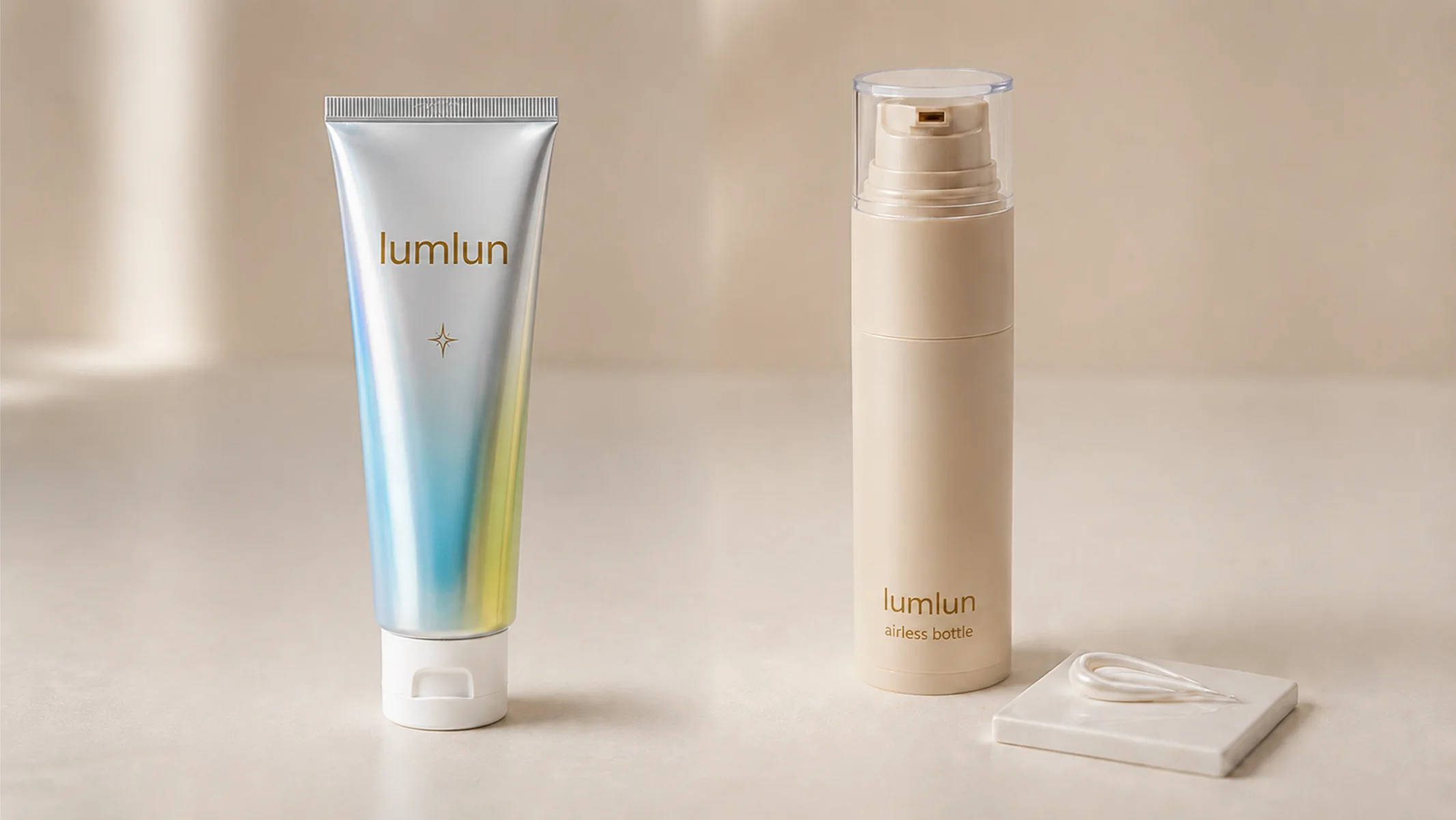
For an oral-care project, the useful next step is to compare the closest confirmed 50ml, 60ml or 100ml pump models and confirm the dispensing behavior with the finished product.
Repeated dispensing matters more than one successful press.
A useful sample check observes several normal cycles: initial priming, consecutive full presses, pump return, the shape of the dispensed paste and whether performance changes as the fill level drops. These checks provide practical evidence about the real package without requiring a full laboratory protocol.
Secondary packaging should also be checked around the assembled pump height and cap. If the product is shipped in a carton, the insert or internal clearance should protect the top without accidentally pressing the actuator.