Key Takeaways
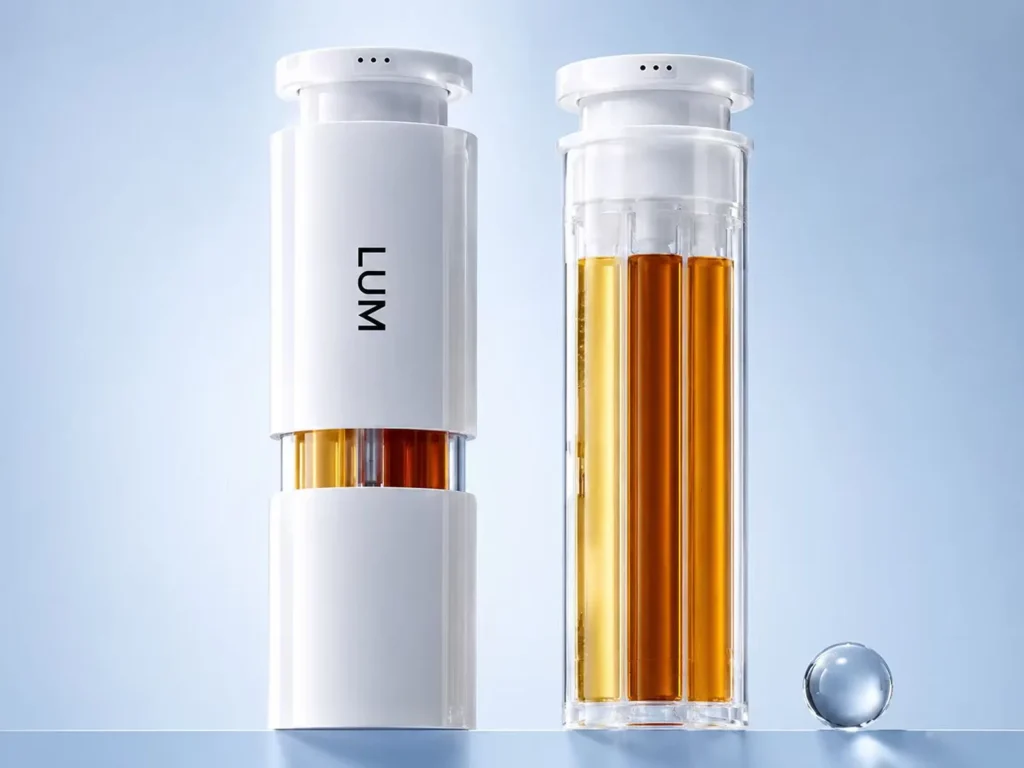
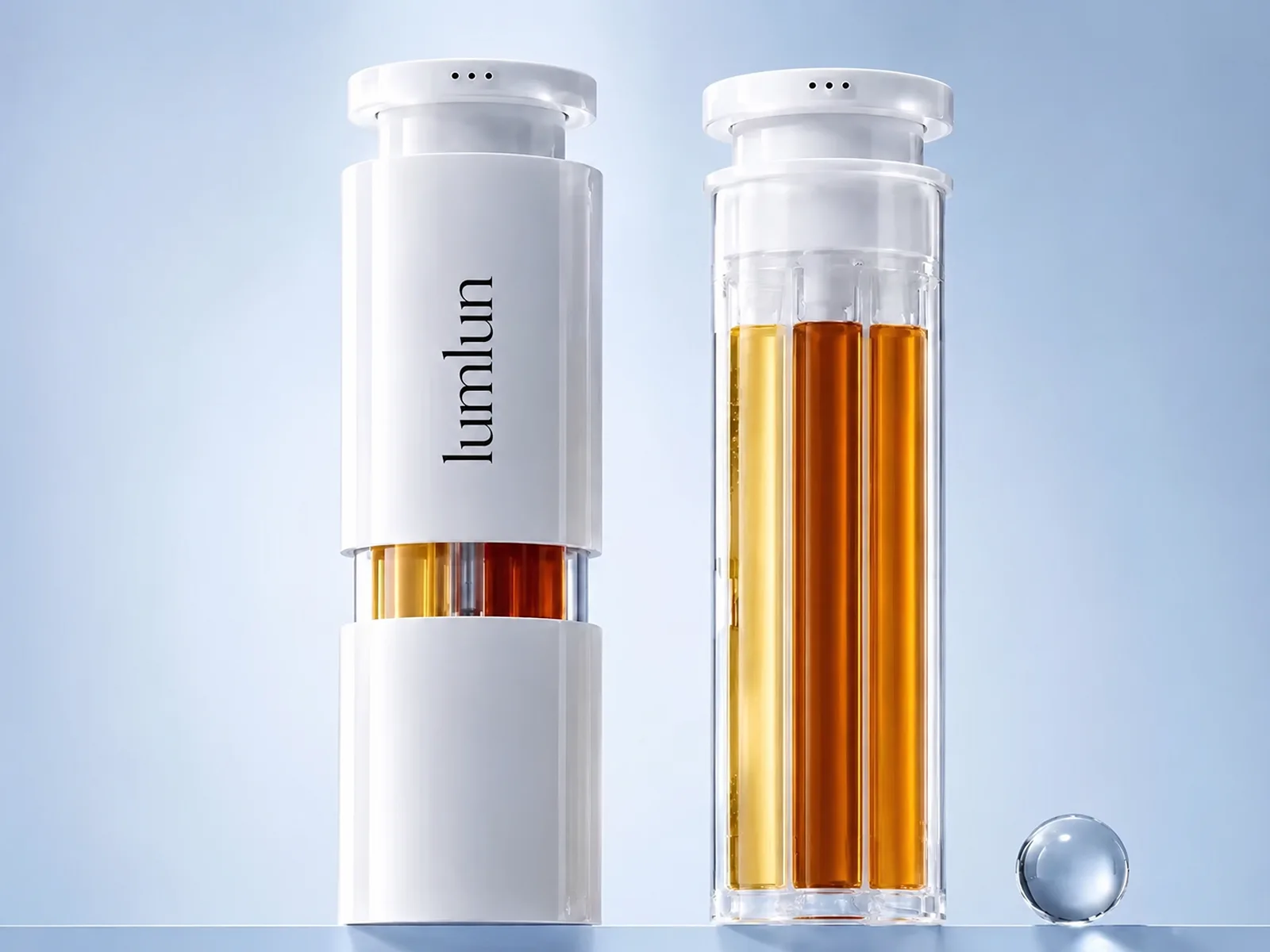
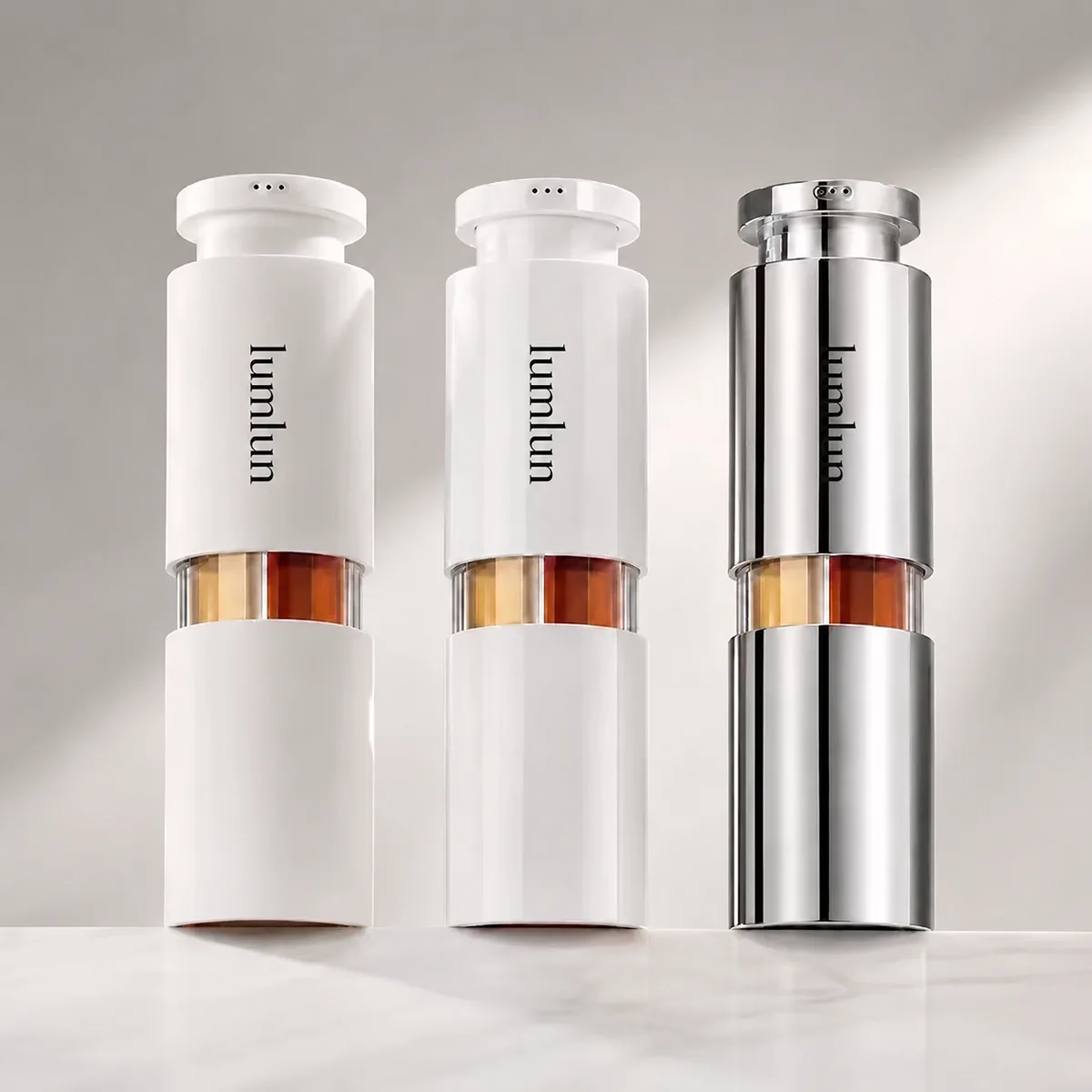
- A multi-chamber airless bottle holds three separate formulas in one bottle, giving a brand a distinctive, uncommon product that stands out on a shelf and in a social feed.
- It keeps every advantage of a regular airless bottle — air-free protection, near-complete dispensing, a premium feel — across all three chambers at once.
- The three chambers dispense together in one press, mixing at the moment of use; this format is built for formulas designed to be applied as a set, not for dispensing each one separately.
- The three inner chambers stay sealed and independent, so three formulas can be paired without reacting in storage, and without reformulating to fit the packaging.
- Two ways to open — a cap-and-press design and a twist-to-open design — let a brand match the everyday experience to its positioning.
Last Updated: June 2026
In a category where most products look alike on the shelf, the hardest thing for a skincare brand to do is get noticed. A multi-chamber airless bottle is one of the few packaging formats that solves that problem on sight: three formulas, visibly held in one bottle, in a design most shoppers have never seen before. It’s newer and less common than a standard bottle, and that’s exactly where its value comes from — it gives your product an instant point of difference, before a customer reads a word of your copy or feels a drop of your formula. This article covers what that difference is worth to your brand, how the format actually works, and when it fits.
Standing Out Is the Whole Point — and a Three-Chamber Bottle Does It on Sight
A multi-chamber airless bottle gives a skincare brand an immediate visual point of difference, because a bottle visibly holding three formulas is a format most shoppers have never encountered. That novelty is not a gimmick — it’s a real commercial asset in a market where standing out is the first and hardest step toward a sale.
Here’s why it matters. A customer’s first contact with your product is the packaging, never the formula. On a shelf, they scan rows of bottles that mostly look the same. In a social feed, they swipe past products that blur together. The thing that earns a pause — a pick-up, a click, a save — is whatever looks different. A three-chamber bottle is different by construction: it reads as more advanced, more considered, and more worth a second look than a single-formula bottle next to it. Packaging analysts have made the same point directly, noting that as formulas across a category converge, packaging becomes the main lever brands have for genuine differentiation.
This is the foundation of the commercial case for a multi-chamber bottle, and everything else in this article builds on it. The protection, the formula freedom, the dispensing, and the channel-by-channel selling power all serve the same goal: turning an unusual piece of packaging into attention, brand recognition, and margin.
One Product Instead of Three — What That Changes for Your Brand
A multi-chamber airless bottle lets a brand present three formulas as a single, complete product rather than three separate items — which changes how customers perceive the value and how simply your brand can operate behind the scenes. This is the part of the decision that touches your margins directly, so it’s worth looking at both the customer-facing and the operational side.
On the customer-facing side, a single product that delivers three formulas reads as a complete, curated solution — not three things a customer has to choose between and assemble themselves. That framing supports a higher price, because the product is perceived as more than the sum of three bottles, and it reduces direct price comparison, since there’s no identical competitor product to line it up against. The visible, three-chamber structure also signals a level of formulation thinking that a plain bottle doesn’t, which is part of what lets a brand position the product higher.
On the operational side, presenting three formulas as one product can simplify what a brand has to manage. A curated set sold as three separate items is, behind the scenes, three units to produce, label, stock, pick, and ship — and bundled sets are a known source of fulfillment complexity, since what looks like one product to the customer is several separate units to the warehouse. A single multi-chamber product can reduce that to one unit to handle. It’s worth weighing against the higher cost of the bottle itself, which the cost section below covers honestly — but the operational simplicity is a real part of the picture, not a side note.
Where a Three-Chamber Bottle Fits — Compared to Single and Dual Chamber
A multi-chamber airless bottle fits brands that want to present three formulas as one set; a single-chamber bottle fits one formula, and a dual-chamber bottle fits two — each suits a different product idea, and none is better in the abstract. Seeing them side by side makes it clear which matches what you’re trying to build.
| What you’re building | Best-fit format | How it dispenses |
|---|---|---|
| A single formula | Single-chamber airless bottle | One formula, one pump |
| Two formulas, with a choice of how they dispense | Dual-chamber airless bottle | Together in one press, or separately with two pumps |
| Three formulas presented as one complete set | Multi-chamber (three-chamber) airless bottle | All three together in one press, mixing at application |
One honest distinction matters here. A dual-chamber bottle can be built to dispense its two formulas separately, with an independent pump for each. A multi-chamber bottle is designed around dispensing all three together in a single press. That makes it the right fit specifically when your three formulas are meant to be used as a set, applied together. If your concept depends on dispensing each of three formulas separately and independently, that’s a different need — and we make formats suited to that too, so it’s worth a conversation about what your product actually requires. The point isn’t that one is better; it’s that the three-chamber format is built for a combined, three-in-one experience.
Not sure whether your three formulas suit a multi-chamber bottle? Tell us what you’re pairing and we’ll let you know what’s possible — with free samples to test before you commit.
Three Formulas, No Compromise — Why the Independent Chambers Matter
Because the three inner chambers in a multi-chamber airless bottle are sealed and independent, three formulas can sit together without reacting in storage — and you never have to reformulate to fit the packaging. Keeping reactive ingredients apart until use is one reason brands choose separated chambers, but the bigger advantage is freedom: the independence is what lets you decide which three formulas go together.
Each formula sits in its own sealed chamber and stays there, untouched by the other two, until the moment it’s dispensed. That means the trio is yours to design — a brightening formula, a repair formula, and an eye treatment; or three steps of a targeted routine; or a set built around one hero ingredient delivered three ways. Industry packaging suppliers note the same structural logic, that a three-chamber design keeps components from meeting until the user activates the bottle, protecting each one until use.
For a brand weighing the format, the practical takeaway is this: you choose the three formulas, and the bottle accommodates them — not the other way around. The packaging bends to your product idea rather than constraining it, which is a meaningful advantage when your whole reason for using a three-chamber bottle is to launch something distinctive.
How the Three-in-One Dispensing Works
A multi-chamber airless bottle dispenses all three formulas at the same time in a single press, with each chamber’s airless pump pushing its formula up so the three meet only at the point of use. Understanding the mechanism helps you judge whether the format suits how you want your product applied.
Inside, each of the three chambers works like a small airless bottle of its own: a piston rises as the formula is dispensed, so no air re-enters and each formula stays protected. When the user presses, all three pumps actuate together, delivering a set ratio of the three formulas at once. The three combine as they’re applied — fresh, every time, mixed only at the moment of use rather than sitting pre-blended in a single container. Because it’s an airless system throughout, each chamber also dispenses nearly all of its formula, with very little left behind.
The thing to be clear about when you’re planning your product: this is a combined, three-at-once experience by design. All three dispense together in the same press — the format is built for formulas meant to be applied as one set, which is exactly what makes the “three-in-one” concept work as a single, cohesive product.
Two Ways to Open — Cap-and-Press and Twist-to-Open
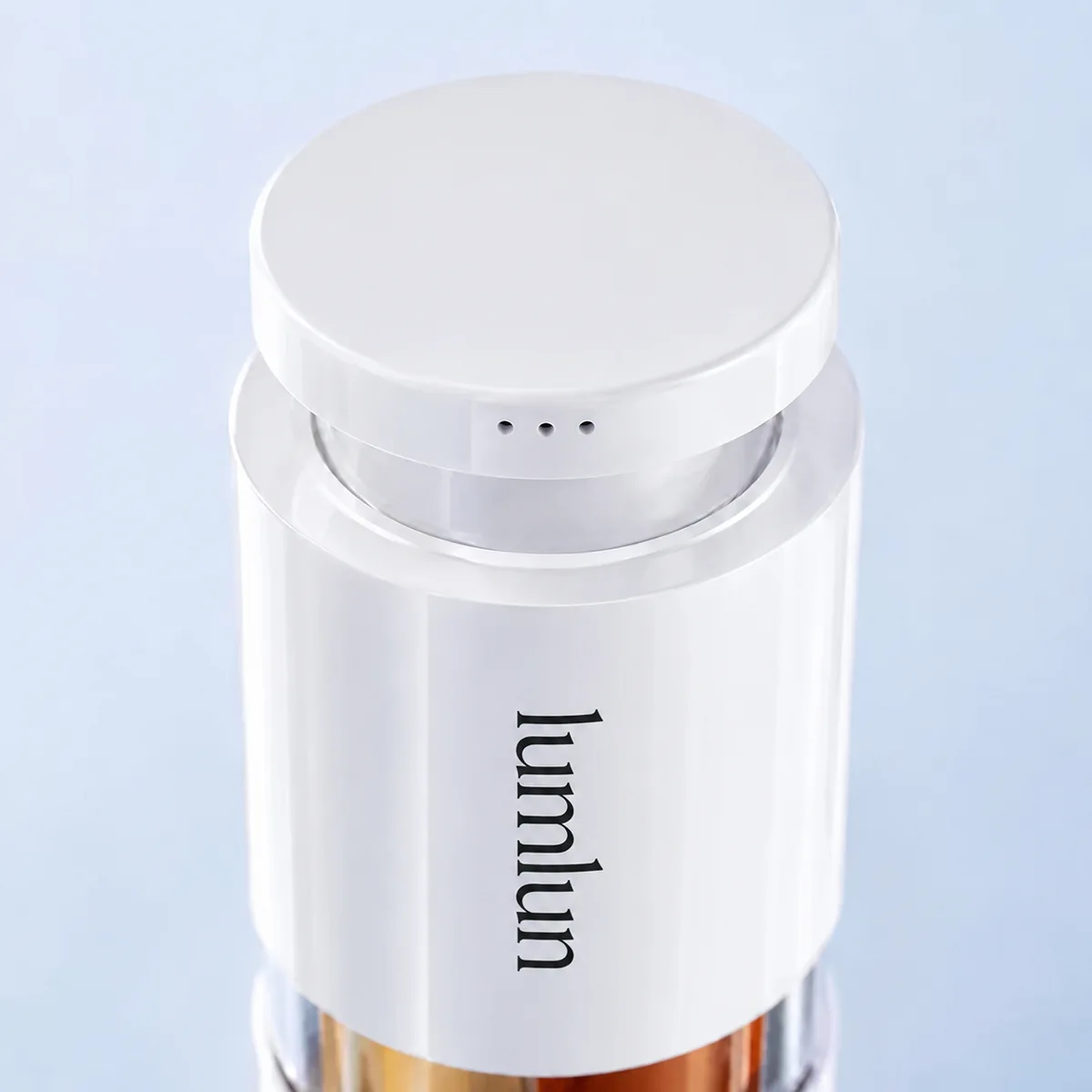
A multi-chamber airless bottle comes with two ways to open and dispense — a cap-and-press design and a twist-to-open design — and the choice shapes the everyday experience your customer has with your product. Both deliver the same three-in-one dispensing; they differ in how the customer gets there.
The cap-and-press design works the way most people expect a pump to work: the customer removes the cap, presses to dispense, and replaces the cap. It’s familiar and intuitive, with the cap adding a layer of protection over the actuators. This suits a brand that wants a classic, recognizable interaction with nothing for the customer to learn.
The twist-to-open design replaces the removable cap with a twist mechanism: the customer twists the top to unlock and dispense, then twists back to close. There’s no separate cap to misplace, the look is cleaner and more modern, and the locking action helps prevent accidental dispensing in a bag — useful for travel. This suits a brand built around minimal design and a more refined, considered everyday ritual.
Neither opening style is better in the abstract. The cap-and-press is familiar and classic; the twist-to-open is cleaner and travel-friendly with nothing to lose. The right one comes down to the experience you want your customer to have each day — and matching it to your positioning is what makes the product feel intentional.
Why a Three-Chamber Bottle Sells — Online and in Retail
A multi-chamber airless bottle creates a selling advantage in both channels, but it works differently online than in retail — and using each well is how the format earns its place. Brands sell through two very different environments, and an unusual three-chamber format has a distinct edge in each.
Online — through your own site, marketplaces, and social platforms — customers meet your product as an image or a short video first. Here, a three-chamber bottle is a genuine visual hook: it photographs as something they haven’t seen, it gives a product video an obvious thing to demonstrate, and it gives your product description a real story (“three formulas, one bottle”) instead of a generic feature list. In a feed where skincare bottles blur together, a bottle that visibly does three things earns the pause that turns a scroll into a click. The convenience angle reads strongly in copy too, since it answers a real frustration consumers have with juggling multiple products — and shoppers consistently value formats that are easy to travel with and keep a routine together.
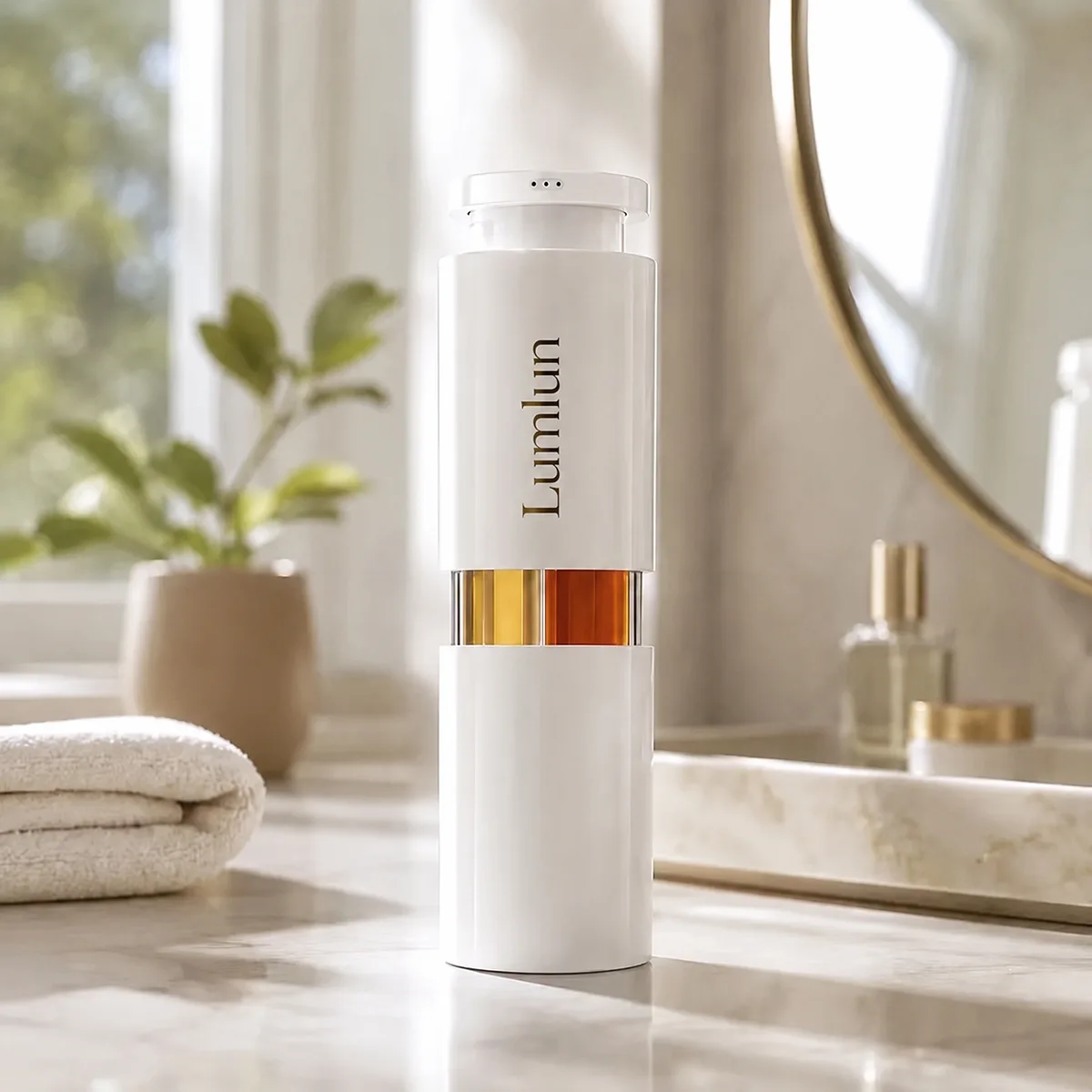
In retail — through brand stores and stockists — the moment that matters is at the shelf. A three-chamber bottle stands out plainly among rows of single-formula bottles and earns the pick-up, the critical first step toward a sale. Once it’s in the customer’s hand, the three chambers explain the product without a word of copy: the “three formulas in one” value is visible and immediate. Suppliers in the category point to the same effect, noting that the visible complexity of a multi-chamber bottle communicates a sense of science and sophistication that supports a higher price point. That tactile, self-explaining quality is something a plain bottle has to work much harder to achieve.
Across both channels, the through-line is the same: the packaging does the work of standing out before any copy or salesperson has to. Online it stops the scroll; in retail it earns the pick-up.
Cost vs Value — Does a Three-Chamber Bottle Pay Off?
A multi-chamber airless bottle costs more per unit than a single- or dual-chamber bottle, but it’s built to earn that back through a higher price point, less price comparison, and a stronger, more distinctive brand presence. This is the question that decides whether the format makes sense for your brand, so it deserves a straight answer.
The higher unit cost is real — three independent chambers and three pumps make it a more complex piece of packaging to produce and assemble. But cost and value aren’t the same thing. A distinctive, three-formula product supports a higher retail price because customers perceive it as more than a single product in a bottle. It faces less direct price comparison, because there’s no identical competitor product to be measured against. And presenting three formulas as one product changes the customer’s value math, reading as more for their money even as it supports a higher price for you.
There’s a brand-building return as well. An unusual, memorable package gets photographed, talked about, and associated with your brand — recognition a generic bottle doesn’t build. The honest framing for a brand weighing the cost: this format earns its place when your goal is to differentiate, launch something genuinely distinctive, or move upmarket. If your three products are better sold as separate items a customer can buy individually, or if you’re competing mainly on lowest price, a simpler format may serve you better — and that’s a fair thing to weigh before committing. As a newer, less common format, it’s a bolder move than a standard bottle; the upside is that boldness is exactly what gets a brand noticed.
What to Confirm Before You Order
Before placing a multi-chamber airless bottle order, confirm the capacity per chamber, the opening style, the output per press, and the surface finish — these are the details that decide whether the finished product matches your concept. Settling them at the inquiry stage avoids costly surprises after production starts.
- Capacity per chamber. Decide how much each of the three chambers holds, and whether the split is even or weighted toward one formula, based on how much of each a customer uses per application.
- Opening style. Choose the cap-and-press or the twist-to-open design, based on the everyday experience and positioning covered above.
- Output per press. Pump output is set during production, so confirm the dose each chamber delivers per press during sampling rather than after bulk production.
- Formula testing. Test your three actual formulas in the bottle before bulk production, so the dispensing and the combined application perform the way you expect.
- Shell material and finish. Match the outer shell and surface treatment — color, printing, finish — to your brand’s positioning.
- Sampling before bulk. Always approve a physical sample with your formulas before confirming the full order.
→ A multi-chamber bottle is one option within the wider airless range. To compare it with a two-formula format, see our dual chamber airless bottle guide, and explore shapes and finishes in our airless bottle and jar collection.
Frequently Asked Questions
What is the difference between a multi-chamber and a dual-chamber airless bottle?
A dual-chamber airless bottle holds two formulas and can be built to dispense them together or separately. A multi-chamber bottle holds three formulas and dispenses all three together in one press, mixing at application. The three-chamber format is built for formulas meant to be used as a set, while a dual-chamber bottle offers more flexibility in how its two formulas are dispensed. Which fits depends on how many formulas you’re pairing and how you want them applied.
Can the three chambers hold formulas with different textures or viscosities?
In most cases, yes. The three chambers are independent and sealed, so they can hold different formulas without those formulas reacting in storage. Because all three dispense together in one press, formulas with broadly compatible flow behave best as a combined application. The most reliable way to confirm your specific three formulas perform well together is to test them with samples before bulk production.
Can a multi-chamber airless bottle dispense each formula separately?
No — a multi-chamber airless bottle is designed to dispense all three formulas together in a single press, mixing them at the point of application. It’s built for a combined, three-in-one experience. If your product needs each formula dispensed separately and independently, a different format would suit better, such as a dual-chamber bottle with separate pumps. We can walk you through the options based on what your product needs.
How do you open and use a multi-chamber airless bottle?
There are two designs. With the cap-and-press version, you remove the cap, press to dispense all three formulas at once, and replace the cap. With the twist-to-open version, you twist the top to unlock, press to dispense, then twist back to close — no separate cap to lose. Both deliver the same three-in-one dispensing; the difference is in how the bottle opens and how it suits travel and daily use.
Is a multi-chamber airless bottle worth the cost compared to selling three separate products?
It’s worth it when your goal is to stand out, launch something distinctive, or present three formulas as one complete product at a higher price. The higher unit cost is offset by stronger differentiation, less price comparison, and a more memorable brand presence. If your three products sell better as separate items customers buy individually, or you compete mainly on price, separate packaging may serve you better.
Ready to launch something that stands out?
Tell us the three formulas you want to pair and the look you’re going for, and we’ll recommend the right multi-chamber configuration — with free samples shipped in 48 hours.