Last Updated: July 2026
For skincare brands, pump output is not just a factory specification. It affects how the product feels when a customer presses the pump, how much formula comes out, whether the package stays clean, and whether the product feels easy to use again tomorrow.
A concentrated serum that dispenses too much can feel wasteful. A facial lotion pump that dispenses too little can feel inconvenient. A fine mist spray that feels too wet can lose the fresh, lightweight experience customers expect. An airless cream pump jar that leaves residue around the outlet can make a premium cream look less clean in daily use.
The best pump output is not the biggest amount per press. It is the amount that makes the skincare product feel controlled, clean, practical, and worth using again.
This article is written for skincare brand owners, product development teams, and packaging buyers who need to choose pump packaging before sampling and production. It explains how pump output affects formula fit, customer experience, perceived waste, product value, and the way packaging helps a skincare product feel easier to sell.
Key Takeaways
- Pump output affects how customers judge the product. Customers may not know the output number, but they notice whether the product feels controlled, clean, and easy to use.
- Different skincare formulas need different dispensing logic. Serum, lotion, facial mist, and cream pump packaging should not be judged by the same output standard.
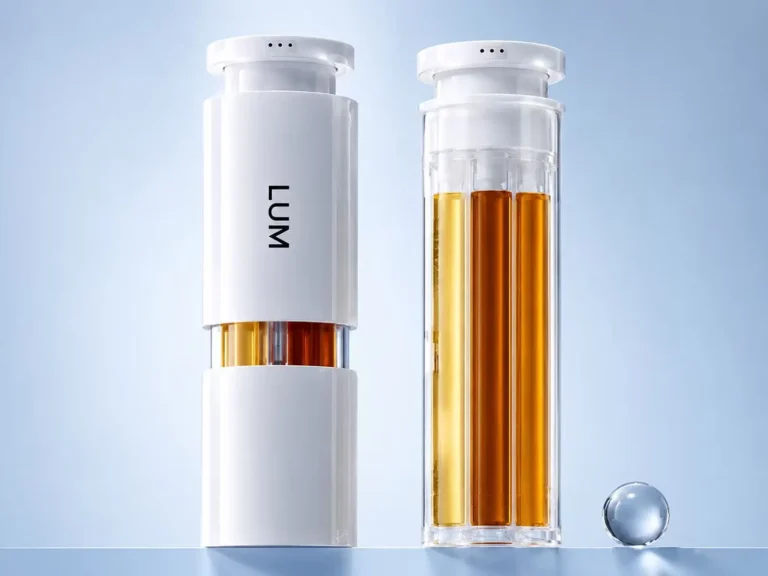
- Real output numbers matter, but they are not universal rules. LumLun selected airless bottle options may use 0.25ml per stroke, selected airless jar options may use 0.35ml per stroke, and other pump-head options may range from 0.23ml to 1.00ml per stroke depending on model.
- Formula texture matters. If a thicker formula does not match the pump structure and outlet design, it may dispense slowly, leave residue, or clog.
- Brands do not need to know every technical detail before contacting LumLun. A product idea, formula type, target capacity, or reference photo is enough to start a packaging discussion.
Why Does Pump Output Matter for Skincare Brands?
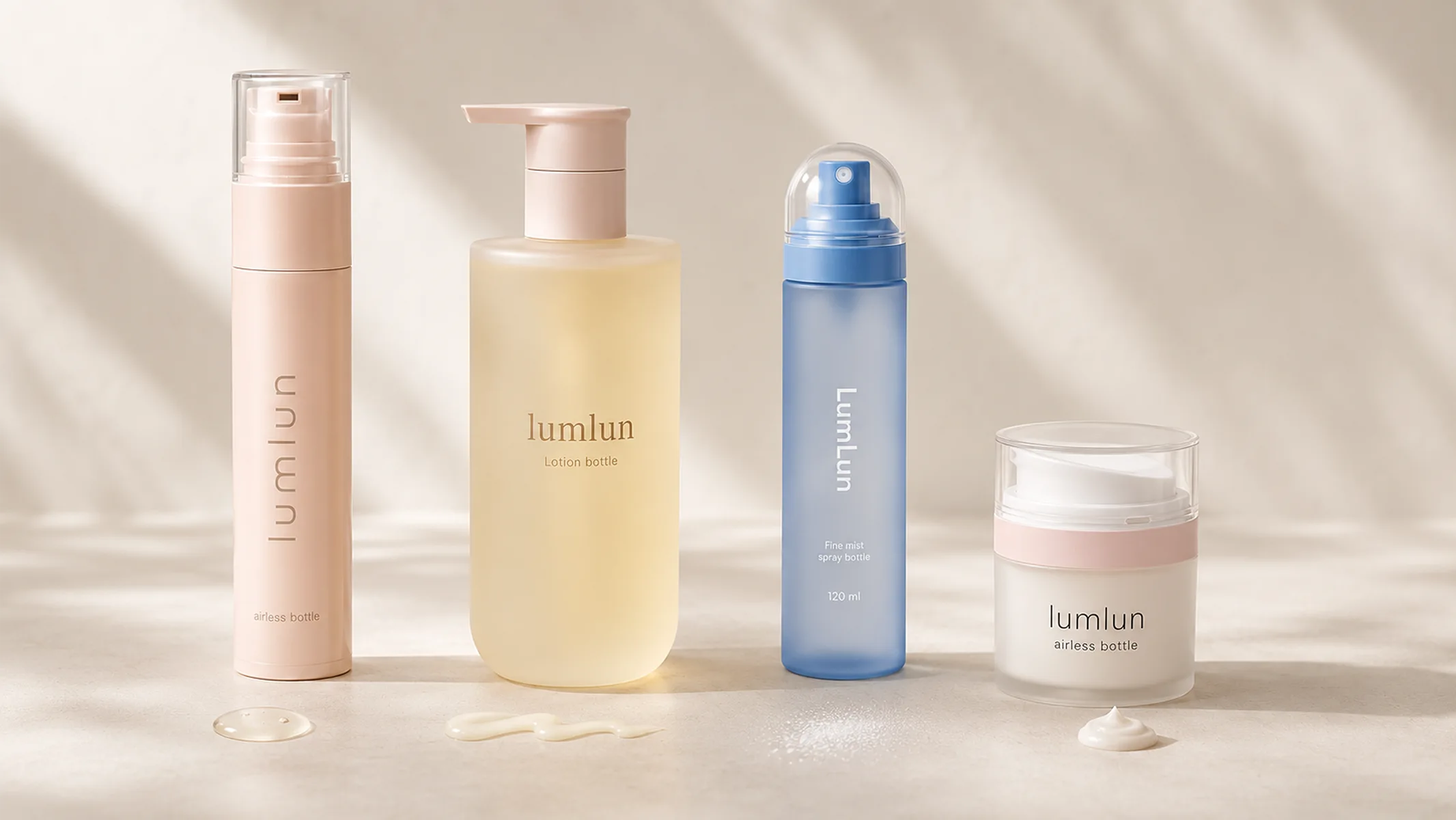
Pump output matters because it changes how customers experience the formula before they fully judge the formula itself. The first press can make a product feel precise, clean, smooth, or refreshing. It can also make the same product feel messy, wasteful, slow, or less premium.
For skincare brands, this detail becomes part of the product story. A serum should often feel concentrated and controlled. A moisturizer should feel easy to apply. A mist should feel light and even. A cream pump jar should feel cleaner than dipping fingers into an open jar.
When pump output supports those expectations, packaging helps the product feel more complete. When output does not match the formula or the customer routine, the packaging can create friction that weakens the product experience.
Good pump output does not guarantee sales, but it can remove small usage problems that make customers question the product’s value.
What Does Pump Output Mean in Skincare Packaging?
Pump output means the amount of formula dispensed each time the pump, sprayer, or press system is used. Packaging suppliers may also describe it as discharge rate, dosage per stroke, output per press, output per actuation, cc per stroke, or ml/T.
For skincare packaging, this number only becomes useful when it is connected to the formula and use case. A lower amount per press may feel right for a concentrated serum, but inconvenient for a larger-use lotion. A fuller amount per press may feel practical for a moisturizer, but wasteful for an eye serum. A fine mist sprayer should be judged by mist feel, spray pattern, and wetness — not only by volume.
Some LumLun pump packaging models include dispensing or discharge information in their product specifications. These specifications help narrow the options, but the final choice should be confirmed with the brand’s actual formula or the closest available real formula before production.
What Do Pump Output Numbers Mean for Skincare Products?
Pump output is usually measured as ml, mcl, or cc per press. These numbers help brands compare dispensing options, but they should be treated as a starting point for sampling, not as a fixed rule for every skincare formula.
| Output Example | What It Means | Skincare Packaging Use |
|---|---|---|
| Smaller controlled output | A smaller amount per press when control and perceived value matter. | Eye serums, concentrated serums, and targeted skincare formulas. |
| 0.25ml per stroke | A controlled standard output used in selected LumLun airless bottle options. | Daily serums, emulsions, facial lotions, and lightweight creams depending on formula texture. |
| 0.35ml per stroke | A fuller press amount used in selected airless jar-style dispensing formats. | Cream pump jars or richer skincare products where a slightly fuller dose may feel more practical. |
| 0.23ml–1.00ml per stroke | A broader selectable range depending on pump head and packaging model. | Useful when the brand needs to match output more closely to formula texture and customer routine. |
These numbers should not be treated as universal rules. Each pump head is manufactured to deliver a fixed output per stroke, and the final choice should be confirmed with the selected packaging model and the brand’s actual or closest real formula before production.
How Does Pump Output Change the Customer Experience?
Customers do not think in technical pump-output numbers. They think in daily-use feelings: too much, too little, clean, messy, smooth, slow, premium, or cheap.
| Packaging Detail | What Customers Feel | Value for the Brand |
|---|---|---|
| Controlled amount per press | The product feels precise and less wasteful. | Supports high-value serum and targeted skincare positioning. |
| Smooth dispensing | The formula feels easy to use in a daily routine. | Improves satisfaction and repeat-use confidence. |
| Clean outlet after use | The package looks more hygienic and premium. | Helps product photos, reviews, and daily bathroom-counter appearance. |
| Output matched to formula texture | The product feels reliable instead of slow or blocked. | Reduces the risk of launch complaints caused by poor dispensing. |
This is where pump output moves beyond technical explanation. The right dispensing experience helps the brand communicate control, cleanliness, convenience, and product value every time the customer uses the package.
How Should Brands Choose Pump Output for Serum, Lotion, Mist, and Cream Packaging?
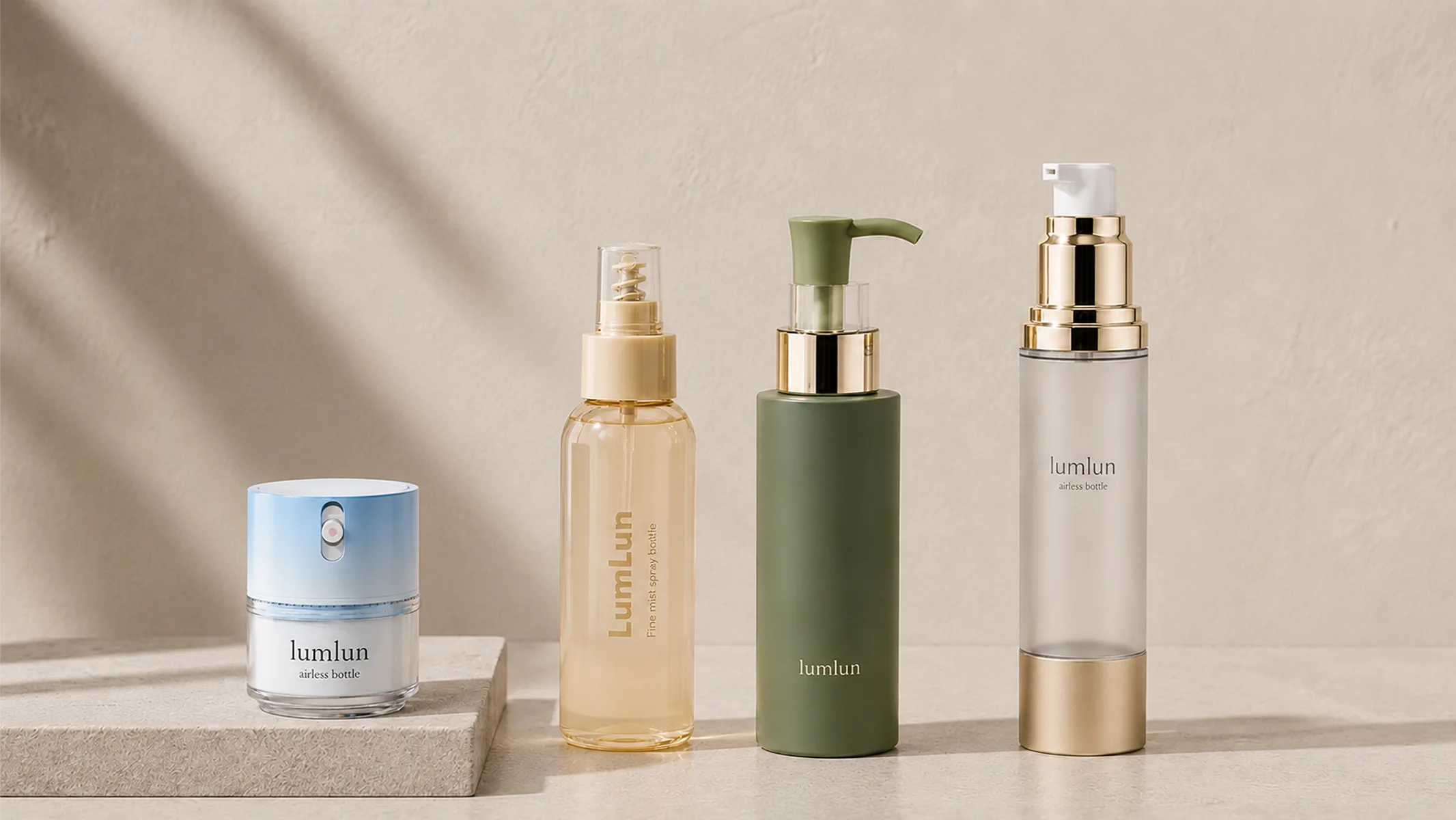
Serum, lotion, mist, and cream packaging should be selected around how the customer uses the formula, not only around the container size. Each skincare format creates a different expectation.
| Skincare Product | Customer Expectation | Better Output Direction | How It Helps the Product Sell Better |
|---|---|---|---|
| Concentrated serum or eye serum | Precise, controlled, not wasteful. | Use a smaller, more controlled amount per press; selected treatment-style pump options may be designed for smaller doses depending on model. | Makes a small high-value formula feel more intentional and premium. |
| Facial serum, emulsion, or lightweight lotion | Controlled, smooth, easy to use every day. | Selected LumLun standard airless bottle options may use around 0.25ml per stroke, depending on pump model. | Helps the product feel practical without making the formula feel wasteful. |
| Toner or facial mist | Light, even, refreshing. | Judge mist fineness, spray pattern, wetness, and repeated spray consistency rather than only ml per press. | Makes the product feel fresh, clean, and suitable for daily reapplication. |
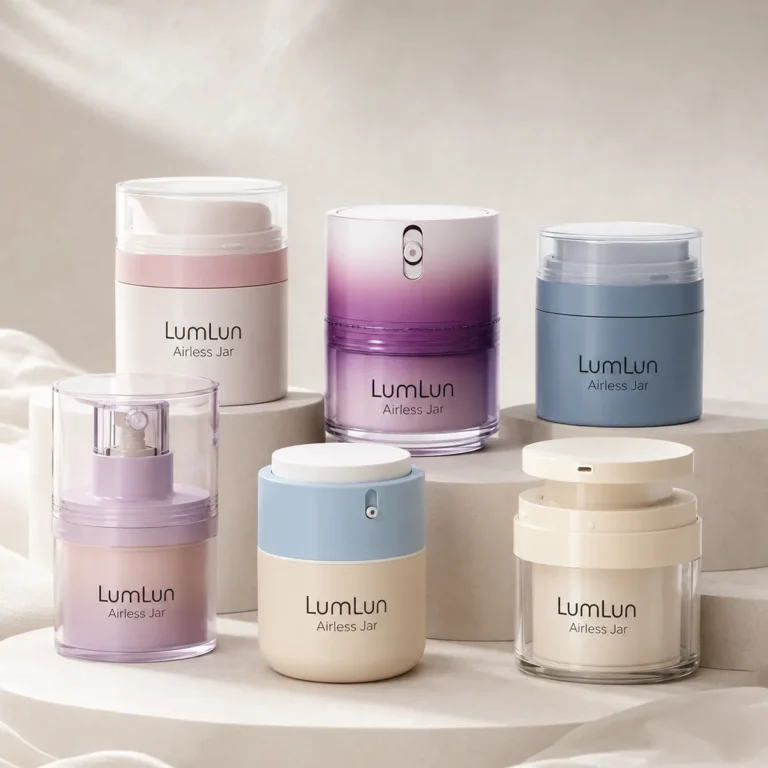
| Airless cream pump jar | Clean dispensing, less finger contact, premium routine. | Selected airless jar-style options may use a fuller output such as around 0.35ml per stroke. | Turns cream packaging into a cleaner and more premium daily-use experience. |
A brand should not only ask, “What is the standard pump output?” The better question is: “What dispensing experience will make this skincare product feel easiest to use, cleanest, and most aligned with its price and positioning?”
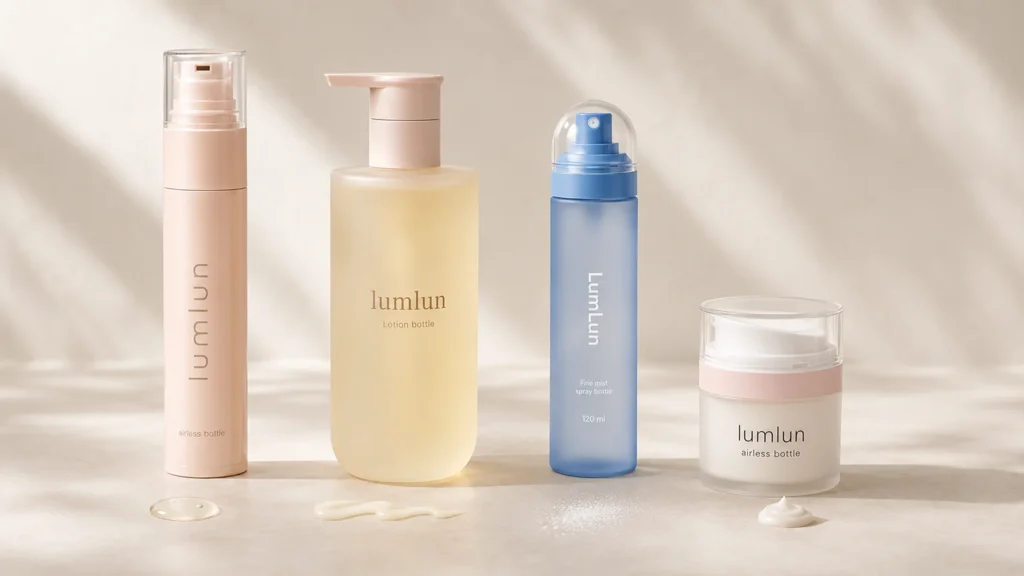
After the pump-output direction is clear, brands can compare LumLun custom airless pump bottles and jars for skincare formulas, lotion pump bottles for facial moisturizers and lotions, fine mist spray bottles for toner and facial mist, and cream jars and cream pump packaging for premium skincare.
What Happens If Pump Output Does Not Match the Formula?
When pump output does not match the formula, the customer sees a product-experience problem, not a technical packaging problem. They may not say “wrong pump output,” but they may feel the product is hard to control, slow to dispense, messy, or not as premium as expected.
| Mismatch | Customer Reaction | Brand Risk |
|---|---|---|
| Too much formula per press | Feels wasteful or messy. | The product may feel less controlled and less premium. |
| Too little formula per press | Requires too many presses. | The package may feel inconvenient or poorly matched to the formula. |
| Slow or uneven dispensing | Feels difficult to use. | Customers may blame the brand, even if the formula is good. |
| Residue around the outlet | Looks less clean after repeated use. | Weakens premium appearance in product photos and daily use. |
These problems do not mean one pump type is bad. They mean the package, formula texture, and customer routine were not matched carefully enough before production.
Not sure which pump packaging fits your skincare formula? Send any product idea, reference image, formula type, or target capacity you already have. LumLun can help narrow suitable options before sample testing.
How Does Formula Texture Affect Pump Output?
Formula texture is one of the main reasons a pump that works for one skincare product may not work for another. A watery toner, lightweight serum, milky lotion, gel cream, and richer cream can behave differently through the same pump structure.
If a formula is too thick for the selected pump and outlet design, it may dispense slowly, come out unevenly, leave more residue, or clog. This does not mean thick formulas cannot use pump packaging. It means the formula and pump structure need to be checked together.
For lightweight formulas, brands should watch for over-dispensing, dripping, or a messy outlet. For lotions and moisturizers, brands should check whether the amount feels practical and smooth. For creams, brands should pay attention to press feel, recovery, residue, and whether the outlet stays clean after repeated use.
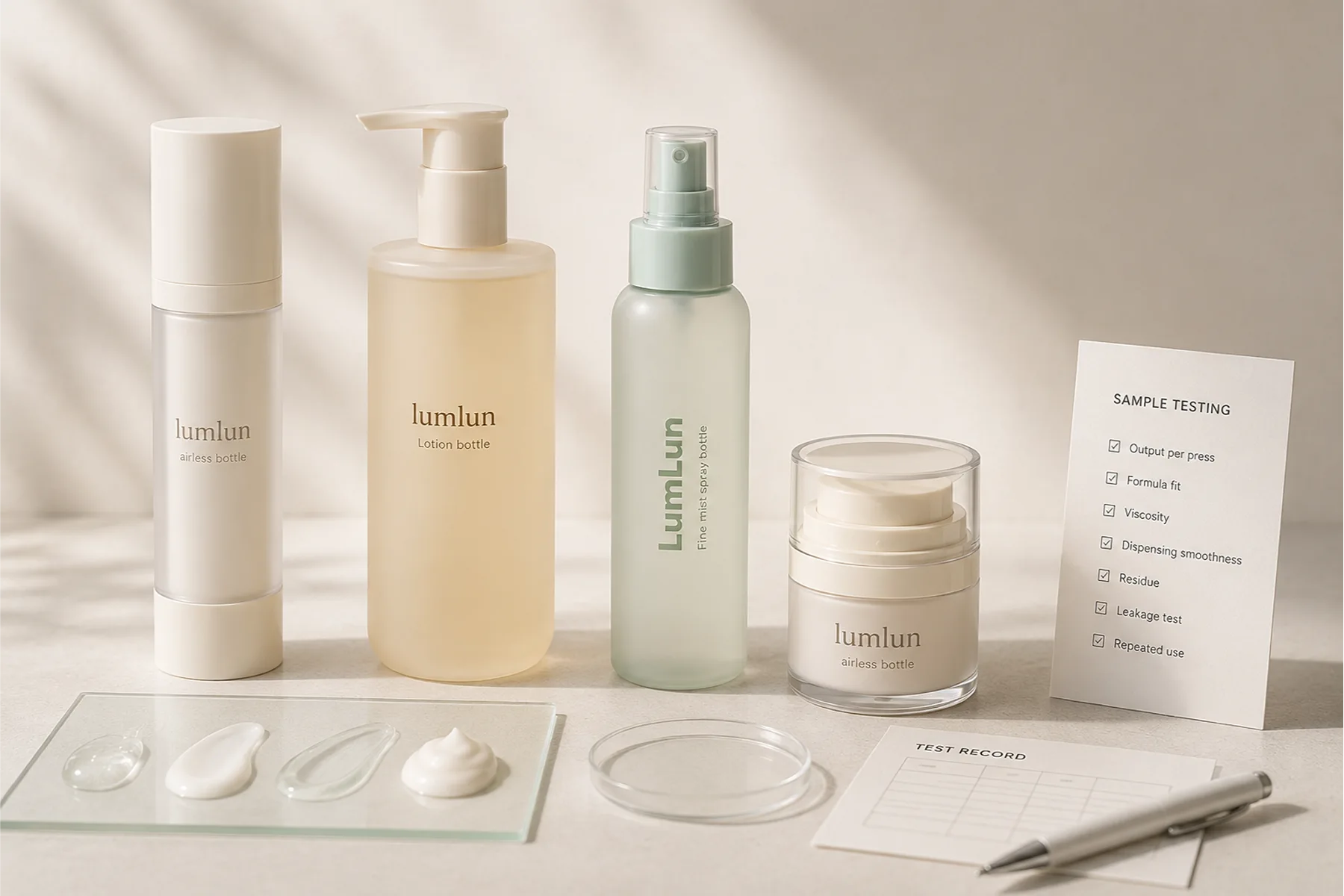
Important note: LumLun can recommend suitable pump packaging directions, but final compatibility should be confirmed with the actual formula or the closest available real formula before production.
A catalog output value can help narrow options, but it cannot prove how every formula will behave after filling, transport, and repeated use.
Which Skincare Packaging Formats Should Be Checked for Pump Output?
Any skincare package that dispenses formula through a pump, sprayer, or press system should be checked for dispensing experience. This includes airless pump bottles, lotion pump bottles, fine mist spray bottles, and airless cream pump jars.
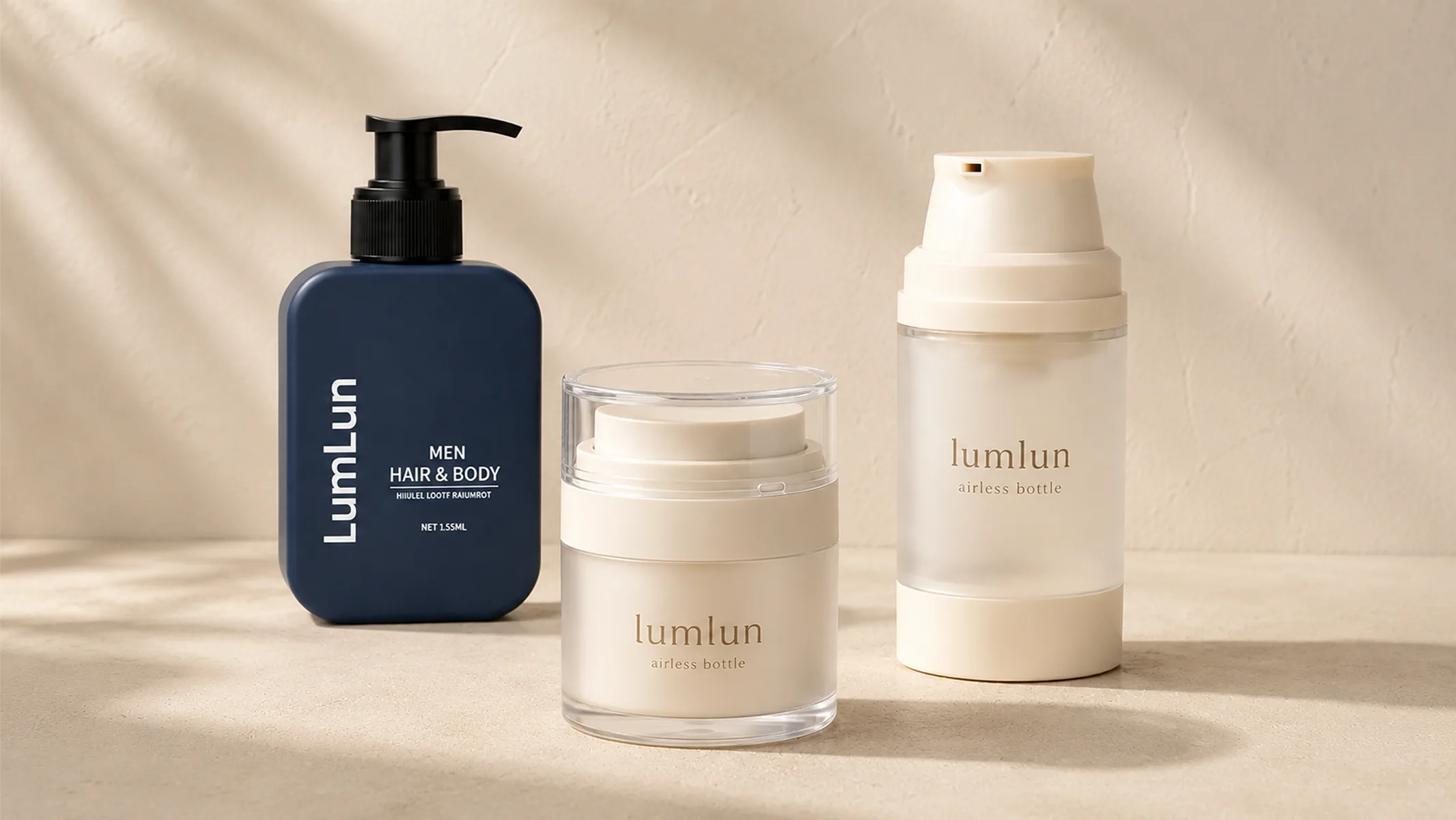
Airless pump bottles can support cleaner dispensing for serums, lotions, emulsions, and cream formulas. Lotion pump bottles are often selected for practical daily-use products such as facial moisturizers and lotions. Fine mist spray bottles need mist-pattern and wetness checks. Airless cream pump jars should be reviewed for cream dose, outlet cleanliness, and repeated-use appearance.
Packages without a pump, sprayer, or press mechanism should not be forced into this topic. A traditional open cream jar or a standard toner bottle without pump output should be judged by different packaging criteria.
For broader packaging validation, brands may also review external references such as ISTA transport packaging test procedures and ASTM F2338 package leak detection by vacuum decay where applicable. These references can help with transport or package-integrity planning, but they do not replace formula-specific pump testing for skincare packaging.
How Can Pump Output Help a Skincare Product Feel More Premium?
Pump output helps a skincare product feel more premium when each press feels intentional, clean, and matched to the formula. Premium packaging is not only about color, finish, or decoration. It is also about whether the package behaves well after the customer starts using it.
For a concentrated serum, controlled dispensing can make the product feel less wasteful and more precise. For a moisturizer, smooth output can make daily use easier. For a mist, even spray can make the product feel fresher. For an airless cream pump jar, cleaner dispensing can make the routine feel more hygienic than open-jar use.
This is where pump output can help the brand sell better: it supports the feeling that the product is well designed, easy to use, and worth buying again. It does not promise higher sales by itself, but it can improve the small daily-use moments that shape product satisfaction and repeat-use confidence.
How LumLun Helps Brands Choose Pump Packaging Before Production
LumLun helps skincare brands narrow pump packaging options without requiring the customer to prepare a complete technical file first. A product idea, formula type, target capacity, reference image, or desired packaging style is enough to start the conversation.
For serum packaging, LumLun can help compare controlled dispensing, airless structure, actuator style, and premium appearance. For lotion and moisturizer packaging, the focus may be smooth output, daily-use convenience, and cap or lock structure. For facial mist packaging, the focus may be spray pattern and refreshing feel. For cream pump jars, the focus may be clean dispensing, residue, and a more premium routine.
The goal is not to make the customer do more work before sending an inquiry. The goal is to make it easier for the brand to avoid a poor packaging match before sampling and production.
Have a skincare product idea or packaging reference? Send it to LumLun. Even if your formula is not finalized, we can help narrow suitable pump packaging options for sampling.
Frequently Asked Questions
What is pump output in skincare packaging?
Pump output is the amount of formula dispensed each time a pump, sprayer, or press system is used. It may also be called discharge rate, dosage per stroke, output per press, cc per stroke, or ml/T. For skincare packaging, it affects dosage control, formula fit, cleanliness, perceived waste, and daily-use experience.
Why does pump output matter for skincare brands?
Pump output matters because it changes how customers experience the formula in daily use. A better-matched output can make the product feel controlled, clean, convenient, and more premium. A poor match can make the product feel wasteful, messy, slow, or inconvenient.
What pump output is suitable for a serum bottle?
A serum bottle usually needs controlled dispensing rather than the largest possible amount per press. The right choice depends on formula texture, expected use amount, outlet cleanliness, and whether the product is used on a targeted area or the full face.
Why can lotion or moisturizer need a different pump output than serum?
Lotion and moisturizer usually need a more practical daily-use amount, while serum often needs a more controlled amount. A lotion pump should feel smooth and convenient, while a serum pump should help reduce perceived waste and support a more precise routine.
Can thick skincare formulas cause slow dispensing or clogging?
Yes. A thicker gel cream or rich cream may dispense slowly, leave residue, or clog if the pump structure and outlet design are not suitable. This does not mean thick formulas cannot use pump packaging. It means the formula should be checked with the selected package before production.
How can pump output reduce perceived waste?
Pump output can reduce perceived waste by helping customers dispense only the amount they expect to use. This is especially important for concentrated serums, eye serums, and premium formulas where too much product per press can make the product feel less controlled.
Can LumLun help if I am not sure which pump packaging is suitable?
Yes. You can send LumLun your product idea, formula type, target capacity, or reference image. You do not need to prepare a complete technical file before making an inquiry. LumLun can help narrow suitable pump packaging options for sampling, while final compatibility should still be checked with the actual or closest real formula before production.