Key Takeaways
- Airless pump bottles cost more than regular dip-tube packaging — but for active formulas and thick textures, that cost difference usually pays back through fewer returns and higher repurchase rates.
- Regular pump bottles let air back in with every press and leave product trapped at the bottom — two problems that turn into customer complaints after launch, not before.
- Airless technology uses a rising piston instead of a dip tube, so the formula stays sealed from air and dispenses almost completely.
- Airless is worth it for serums with vitamin C or retinol, thick creams, glass-to-plastic switches, and premium-positioned lines.
- For stable, fast-moving, lower-priced products like basic body lotions and cleansers, a regular pump does the job and the extra cost isn’t necessary.
You already know airless pump bottles cost more than a regular pump. That part is easy to find out. The harder question — the one that actually decides whether you should spec them for your next launch — is what you get back for that extra cost, and whether your specific product even needs it.
Here’s the honest version: for some skincare products, airless packaging quietly prevents the exact problems that drive returns, bad reviews, and lost repurchases. For others, it’s money spent on protection the formula doesn’t need. Knowing which group your product falls into is worth more than any feature list. This guide breaks down the decision from a B2B OEM sourcing perspective — based on what LumLun, a cosmetic packaging OEM manufacturer based in Zhangjiagang, China, supplying skincare brands across 27 countries, consistently sees in real sourcing conversations.
The Packaging Problems That Show Up After Launch — Not Before
Most skincare complaints don’t trace back to a formula problem — they trace back to a packaging decision made months earlier, before launch. The pattern is consistent: a brand passes stability testing, the product looks great, and the launch goes out. Then the messages start — the serum changed color, the cream is “finished” with product still visibly inside, the pump stopped working halfway down. The formula never changed. The packaging was quietly working against it the whole time.
This shows up in real cases across the industry. One mid-sized brand switched its best-selling moisturizer to airless only after repeated customer complaints about contamination and product waste — nothing about the formula changed, only the packaging did. Another premium brand moved its serum out of a glass dropper bottle because the pipette was too delicate and kept breaking, generating complaints the brand never anticipated at launch.
The thread connecting all of these is the same: the packaging was chosen for how it looked on a shelf, not for how it would protect the formula and behave in a customer’s hands over eight weeks of daily use. That gap between “looks right” and “works right” is exactly where the airless decision lives.
What Regular Packaging Actually Does to Your Formula and Your Customers
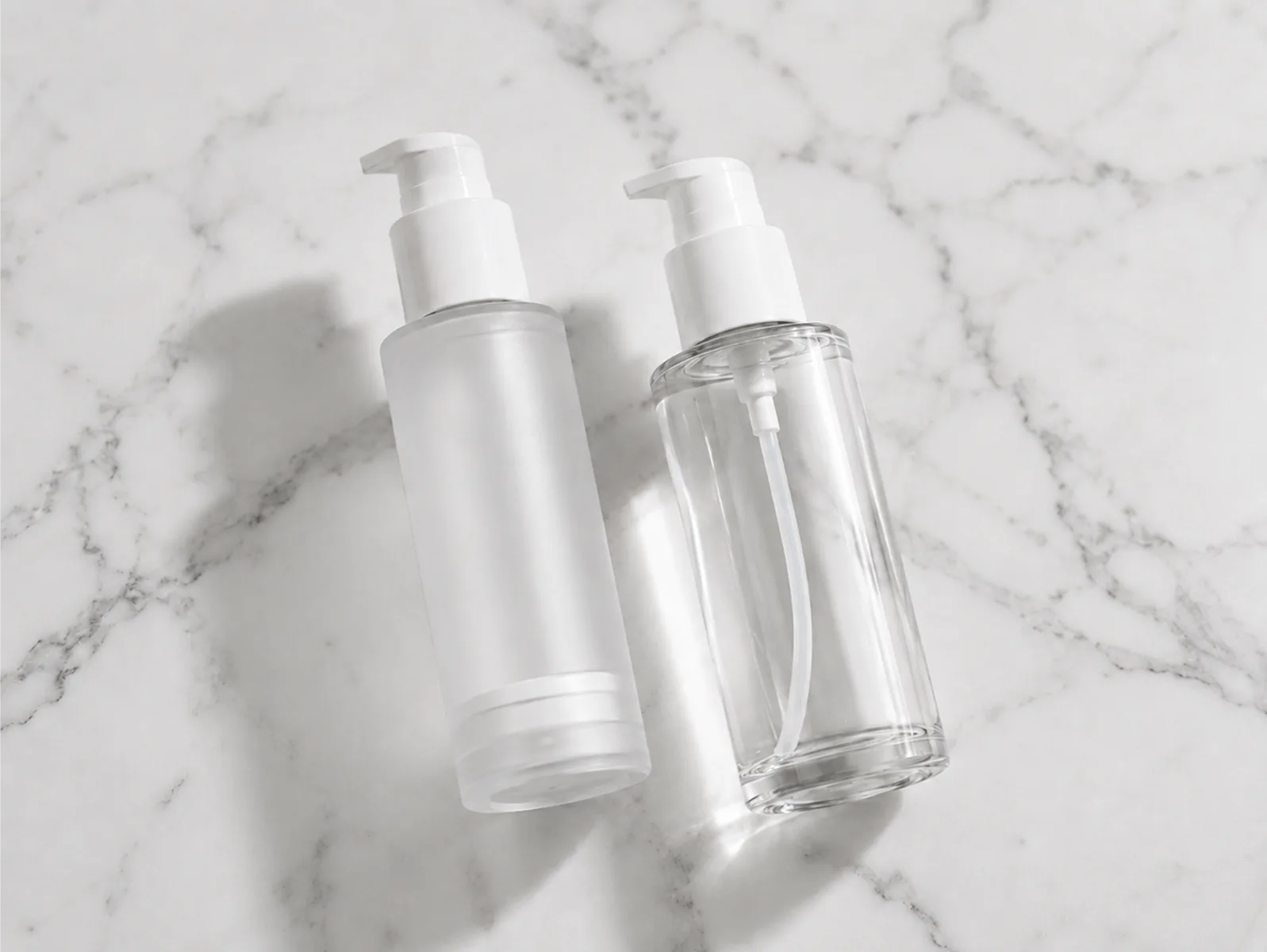
A regular dip-tube pump draws product up through a straw and lets a small amount of air back into the bottle with every press — and that single design fact is the root of most packaging-related complaints in skincare. Here are the specific problems brands run into.
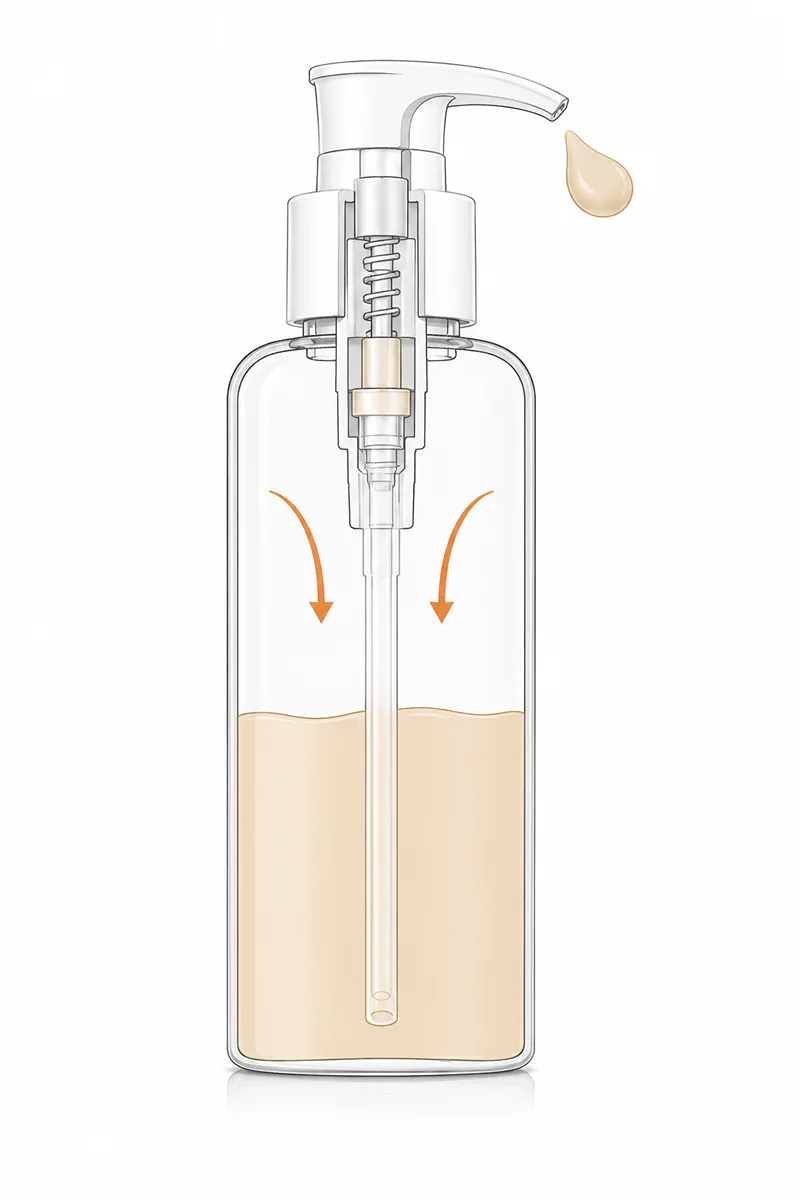
Active ingredients oxidize once air gets in
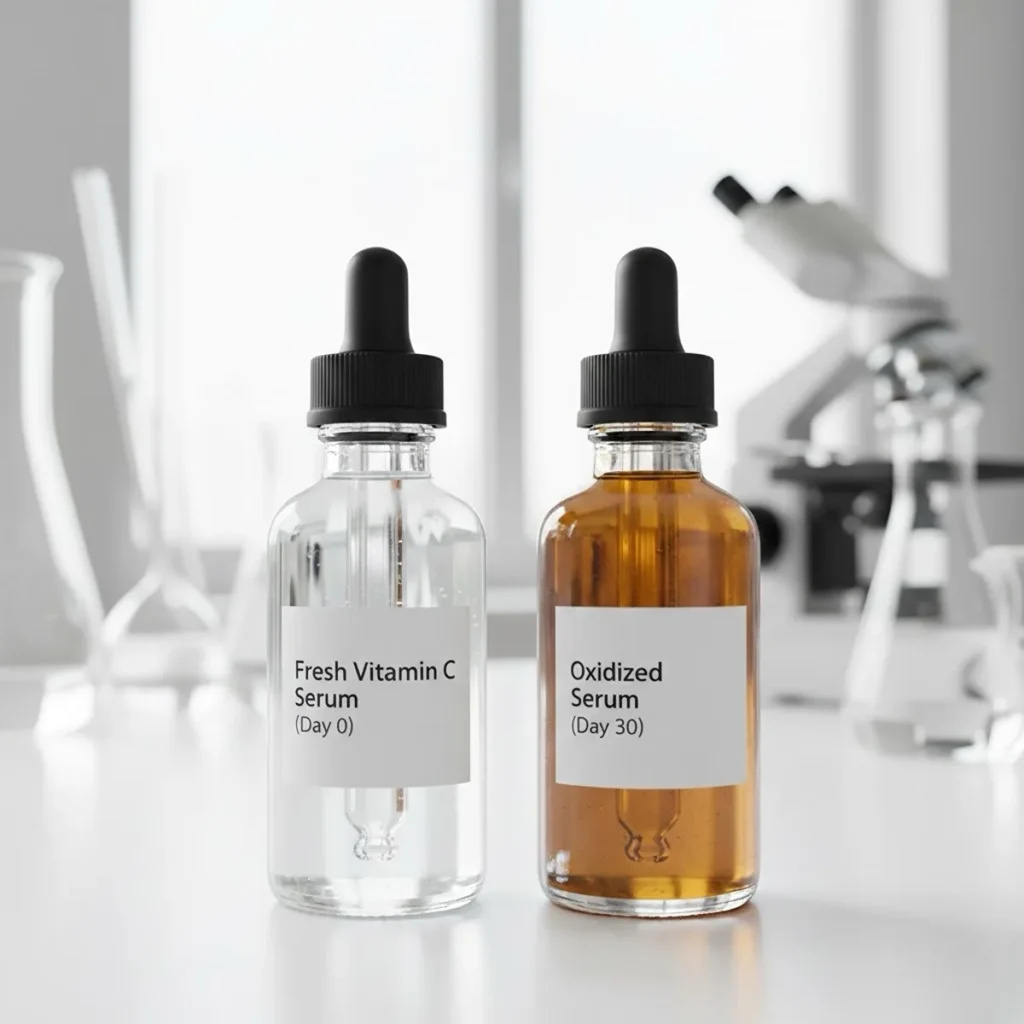
Formulas built around vitamin C, retinol, peptides, or botanical extracts are the ones most exposed to air damage — every press of a regular pump lets oxygen back in, and these actives degrade fastest when that happens. The result is a serum that loses potency, and often visibly changes color, before the bottle is even empty.
This isn’t a theoretical concern. Research on topical vitamin C confirms that ascorbic acid is highly unstable and oxidizes rapidly on exposure to air and light, losing its effectiveness. Dermatologists make the same point in practical terms: clear dropper bottles let both light and air reach the formula, which can alter the potency and pH of a vitamin C serum. And consumers notice. Real product reviews describe vitamin C serums turning yellow — the visible signature of oxidation — and they blame the brand, not the bottle. To the customer, a product that stops working is a product that wasn’t worth the money.
Thick formulas get stranded at the bottom
Regular pump bottles leave a meaningful share of thick product trapped at the bottom and along the walls, because the dip tube can’t reach everything and viscous formulas cling rather than flow. Research on lotion residue has found that a notable share of product stays trapped due to bottle design, and households routinely throw away usable product simply because it’s “stuck.”
Anyone who’s ever shaken a near-empty lotion bottle, held it upside down for five minutes, or pried the pump off to scrape out the last third knows this problem firsthand. This is worst with the textures skincare brands sell the most of — moisturizers, rich creams, cleansing balms, and thick treatments — the exact products where a dip tube struggles and a customer ends up fighting the bottle. For the brand, that frustrating ending is the last experience a customer has with the product before deciding whether to reorder. Customer reviews call this out directly: people notice when a pump tube only reaches part of the way down and the rest is unreachable, and they hold it against the brand. It’s a quiet but real driver of one-and-done purchases.
Open and dip-tube packaging invites contamination
Every time a dropper touches skin and goes back into the bottle, or a finger dips into an open jar, bacteria gets introduced into the formula. Traditional pumps have a milder version of the same issue — air and the environment cycle back in with use. For products with light preservative systems or clean-beauty positioning, that contamination risk is a direct threat to both safety and shelf life, and it’s the kind of problem that doesn’t appear in testing but shows up in the field.
Glass and thin pump parts break
Glass droppers and slender pump components fail in ways that damage the unboxing experience and generate returns. Glass shatters on impact, droppers snap, and when one item leaks in transit, the whole order takes a hit — customers open the box and remember the mess, not the brand. For brands shipping internationally, glass breakage is a recognized, recurring sourcing risk, not a rare accident. In our experience working with brands across 27 countries, breakage and leakage complaints are one of the most common reasons a brand comes to us looking to move away from glass droppers and thin-necked pumps.
The packaging undercuts your pricing
Packaging that feels cheap caps how much you can charge, even when the formula is excellent. Consumer perception studies are blunt about this: shown the identical product in standard versus premium packaging, customers estimated the premium version should cost around 40% more. If your bottle signals “drugstore” while your formula is premium, customers question the formula before they question the bottle — and your pricing power goes with it.
Not sure whether your formula needs airless protection? Send us your product type and we’ll tell you honestly whether it’s worth the upgrade — within 24 hours.
How Airless Technology Works — And What That Means in Practice
An airless pump bottle replaces the dip tube with a rising piston that pushes product up from the bottom — which means no straw, no air re-entering the bottle, and product that dispenses almost completely. That single mechanical difference is what solves the problems above.
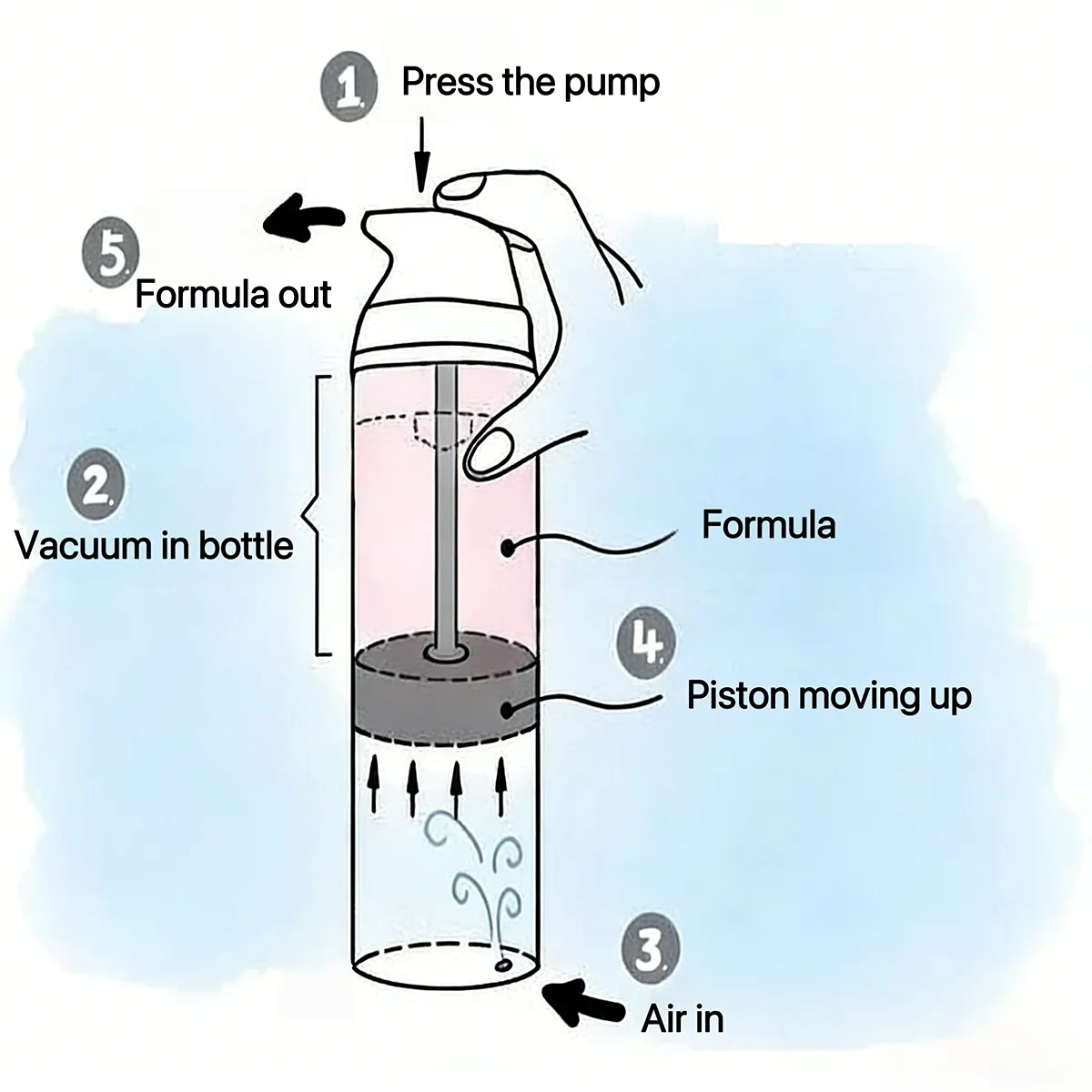
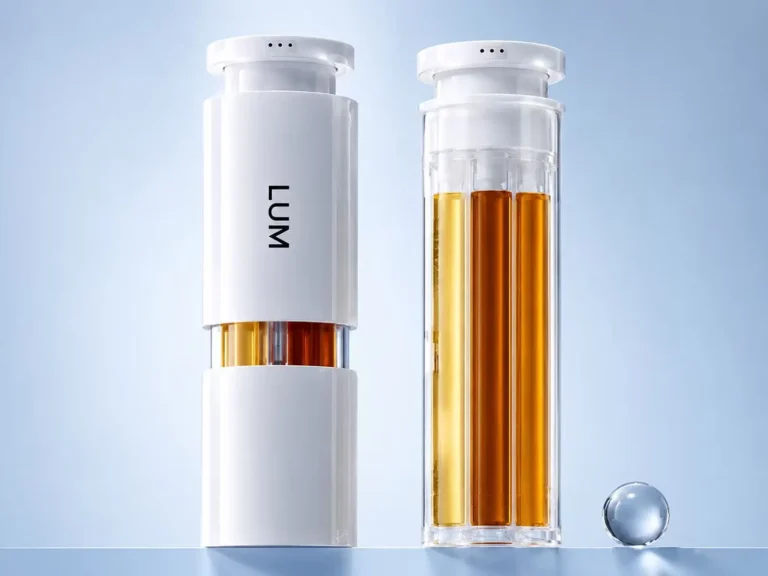
Because the formula sits in a sealed chamber that never lets air back in, oxidation-sensitive actives stay stable from the first press to the last. Because there’s no dip tube, the piston pushes product up evenly until the bottle is nearly empty — the “stranded at the bottom” problem largely disappears, and for thick creams and balms that’s the difference between a customer using every bit of what they paid for and tossing the bottle with product still inside. And because the system is sealed, fingers and bacteria never reach the formula, which is why airless packaging lets clean-beauty brands reduce their preservative load: a tightly sealed system keeps the product stable with less reliance on synthetic preservatives.
There’s also a practical usability gain that customers feel every day. An airless bottle doesn’t need to stand upright to dispense, so it works at any angle, with no sputtering or air-spitting at the end of the bottle. The press is smooth and the dose is consistent from first use to last — and there’s no fragile dip tube or thin spout to snap. That consistency is part of what makes a product feel considered and premium in the hand, before the formula even reaches the skin.
One point worth clearing up, because it confuses a lot of brands: the part that touches your formula is the inner bottle, which is almost always PP for its broad formula compatibility. The outer shell is a separate, purely visual layer — and it’s where customization lives. At LumLun, the outer shell can be produced in materials including PP, AS, PETG, PMMA, MS, ABS, PET, and glass — each carrying a different look and feel, from matte and understated to crystal-clear and weighted premium. That means the protection stays consistent across the range while the brand expression stays fully open. If you want to see the formats available, our airless bottle and jar collection shows the shapes and finishes in one place.
The Business Case: Returns, Repurchase, and Pricing Power
Packaging cost is paid once, but the customer’s repurchase decision happens over and over — which is why a packaging problem that lowers repurchase costs far more than the packaging itself ever saved. This is the real math behind the airless question, and it’s where the extra cost earns its place.
Start with returns and complaints. The oxidation, waste, and contamination problems above don’t stay quiet — they become bad reviews, support tickets, and refunds. Suppliers who’ve made the switch with their clients report the same pattern: moving an active or thick-textured product to airless reduces the complaints that were driving returns in the first place. Fewer returns is real money kept, and it compounds on a best-seller that ships thousands of units.
Then there’s repurchase. A customer’s final impression of your product is the moment they reach the bottom of the bottle. If that moment is “I can’t get the rest out” or “this stopped working,” they don’t reorder — and you’ve lost not one sale but the whole customer lifetime. The reverse is true too: a smooth, satisfying experience all the way to the last dose is what makes someone buy the next bottle without thinking about it. The experience at the end of the bottle quietly drives the decision to buy the next one.
Finally, pricing power. Premium packaging gives customers permission to pay more, and lets you hold a higher price without the constant pressure to discount. Studies on luxury packaging show that more than half of premium consumers will repurchase specifically because the packaging feels high-end. The bottle stops being a container and becomes part of why they stay loyal to the brand.
For brands thinking even further ahead, airless technology also extends into formats that build repurchase and convenience directly into the product — refillable inner bottles that turn the package into a reorder trigger, and dual-chamber and 3-in-1 designs that let two or three formulas live in one package. Those are deeper topics in their own right; if they’re relevant to your line, our dual-chamber airless bottle guide and 3-in-1 multi-chamber breakdown cover them in full.
When It’s Worth the Higher Cost — And When Regular Packaging Is Fine
Airless packaging earns its cost when the formula, the price point, and the customer experience all need it to — and it’s an unnecessary expense when they don’t. Here’s the honest decision framework, including the cases where we’d tell you to save your money.
| If your product is… | Airless worth it? | Why |
|---|---|---|
| A serum with vitamin C, retinol, peptides, or botanical actives | Yes | These actives oxidize fast with air exposure; airless protects potency to the last drop. |
| A thick cream, balm, or rich moisturizer | Yes | Thick textures strand in regular bottles; the piston pushes nearly all of it out. |
| Currently in a glass dropper bottle with breakage issues | Yes | Airless plastic removes shipping breakage and dropper contamination at once. |
| Positioned mid-to-premium, where packaging supports the price | Yes | The look and feel justify a higher price and lift repurchase. |
| A clean-beauty line reducing preservatives | Yes | The sealed system supports a lighter preservative load safely. |
| A stable, basic body lotion or cleanser, high volume, lower price | Not needed | No oxidation-sensitive actives; a regular pump does the job at lower cost. |
| A very thick body butter or scrub too stiff to pump | Not ideal | Extremely stiff textures can struggle in a pump; a jar may serve better. |
The principle underneath the table is simple: if your current packaging isn’t causing complaints, isn’t wasting product, and isn’t holding back your price, you may not need to spend more. Airless solves specific problems. If you don’t have those problems, the regular option is the smart call. If you do — and most brands working with actives, thick textures, or premium positioning do — that’s exactly where the higher cost pays for itself.
Frequently Asked Questions
Do airless pump bottles actually make a difference for vitamin C or retinol serums, or is it mostly marketing?
It’s a real difference. Vitamin C, retinol, and similar actives oxidize quickly when exposed to air, which is why dermatologists recommend airless packaging for them. A regular pump lets air back in with every press, so the formula can lose potency and change color before the bottle is empty. For active-heavy serums, airless protection is functional, not decorative.
What types of skincare products benefit most from airless packaging?
Products with oxidation-sensitive actives (vitamin C, retinol, peptides), thick textures that strand in regular bottles (creams, rich moisturizers), and premium-positioned lines where packaging supports the price benefit most. Clean-beauty formulas reducing preservatives also gain from the sealed, contamination-resistant system. Basic, stable, high-volume products generally don’t need it.
I’m launching a mid-range skincare line — is airless worth the higher MOQ and unit cost at my scale?
It depends on your formula and positioning, not just scale. If your products use active ingredients or thick textures and you’re priced mid-to-premium, airless usually pays back through fewer returns and stronger repurchase. If your line is basic and price-sensitive, a regular pump may be the better fit. The honest answer comes from matching packaging to the specific product.
How do airless pump bottles compare to regular pump bottles on product waste?
Airless bottles dispense significantly more of the product than regular dip-tube pumps. A regular pump leaves product trapped at the bottom and along the walls because the tube can’t reach it all and thick formulas cling. The airless piston rises from the base and pushes nearly all the product out, which reduces waste and improves the customer’s experience at the end of the bottle.
Ready to find out if airless is right for your product?
Tell us about your formula and positioning, and we’ll give you an honest recommendation within 24 hours — with free samples shipped in 48 hours.