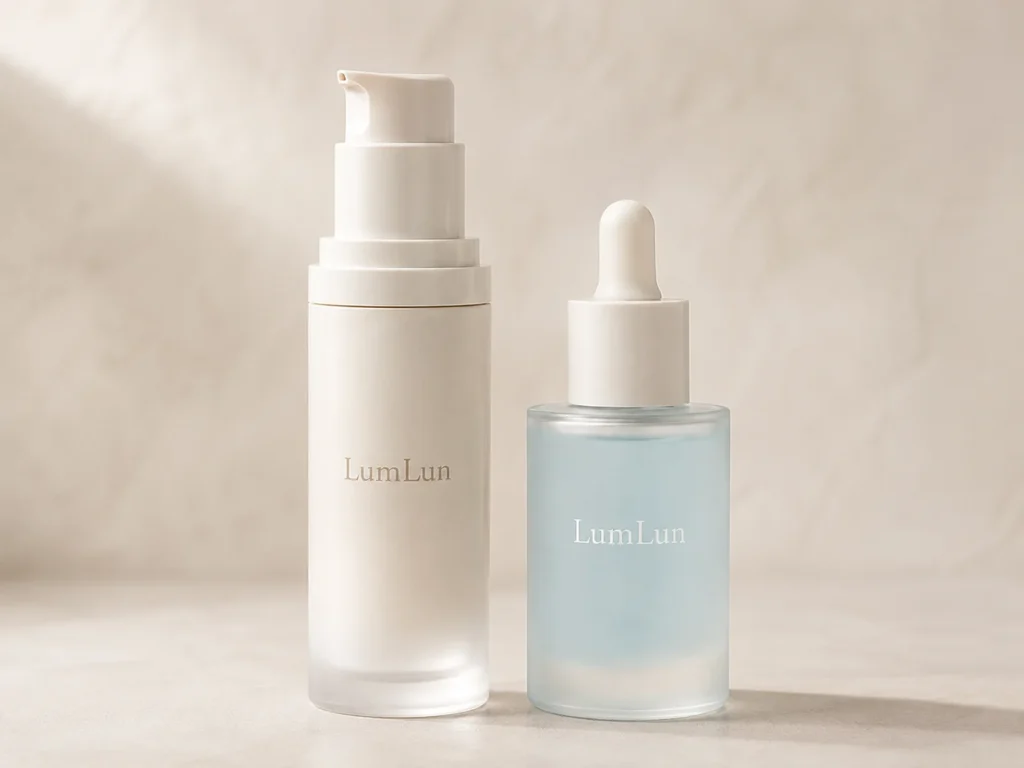
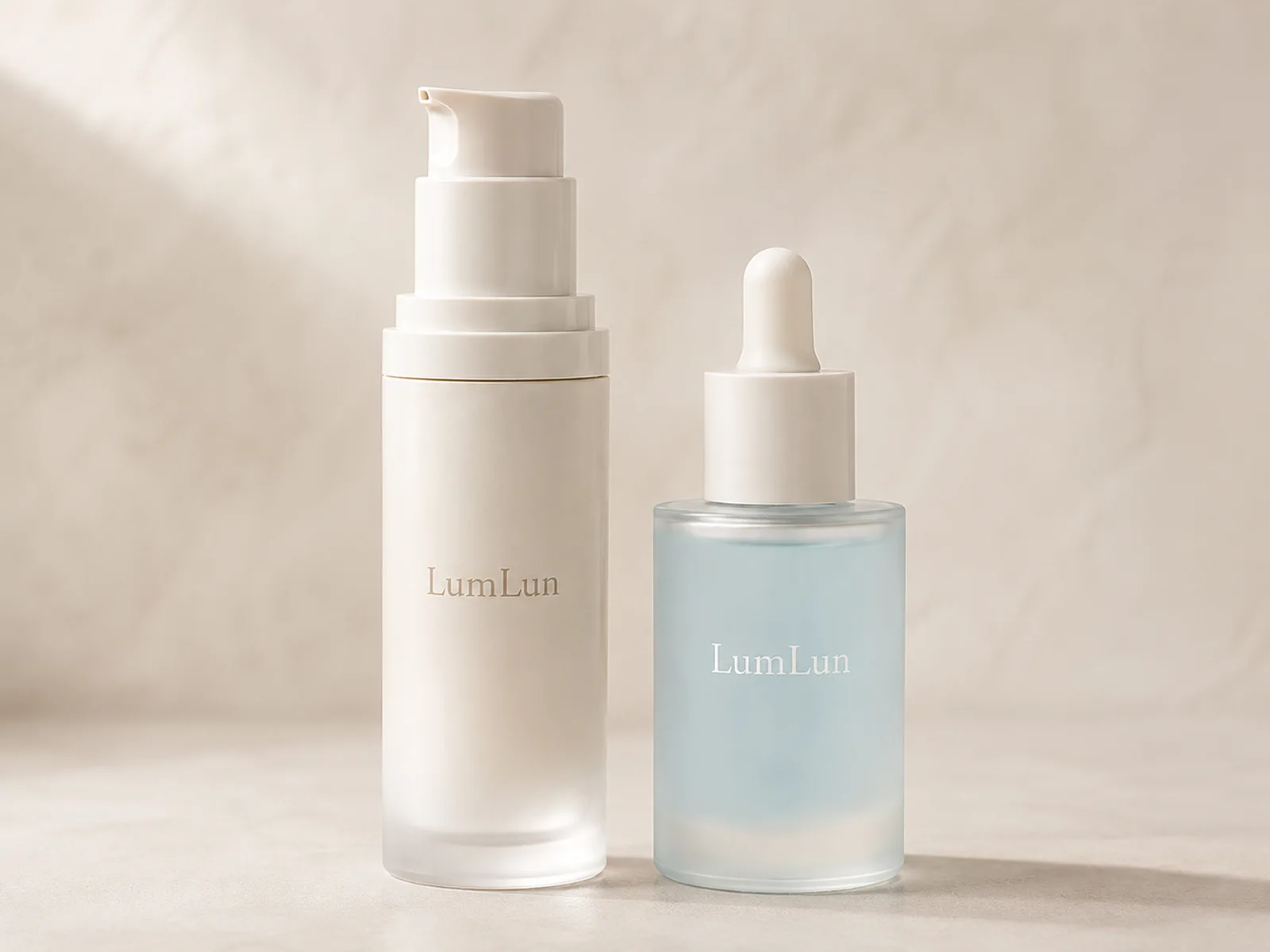
A dropper and an airless pump tell different stories before a customer uses the serum. A dropper can make the formula and dosing ritual more visible, while an airless pump can create a cleaner one-handed routine and a more treatment-led appearance.
The stronger choice is the one that makes the product easier to understand and use. Formula texture and compatibility still need to be confirmed with the selected package, but the first brand decision is usually about how customers should see, hold and dispense the serum and how that experience should extend across the rest of the line.
Start by comparing real LumLun dropper bottles and airless bottle models. The separate guide to 15ml, 30ml and 50ml dropper bottle sizes can then help refine the capacity after the dispensing format is clearer.
Reviewed by the LumLun Packaging project team · Updated July 2026
Key Takeaways
- Choose the experience customers should have. Droppers emphasize visibility and ritual; airless pumps emphasize clean one-handed dispensing.
- Let the formula guide the shortlist, not the final claim. Texture and dose can narrow options, but the selected package still requires confirmation.
- Use the pack to clarify the product story. The dispensing format should make the serum easier to understand online and during use.
- Plan the full serum range. Different formats can coexist when color, logo and finish keep the line visually connected.
- Compare existing models before opening a mold. A close existing option may deliver the desired look with less development complexity.
Decision Table
Dropper bottle vs airless pump: core decision
| Decision area | Dropper bottle | Airless pump | What decides the fit |
|---|---|---|---|
| Customer action | Open, squeeze bulb and dispense drops | Press pump head with one hand | Desired ritual, speed and dose communication |
| Formula presentation | Can show color, clarity and movement | Can hide or partially reveal formula through the selected wall | Whether formula visibility supports the brand story |
| Texture direction | Commonly suited to low-viscosity, flowing serums and oils | Can suit light-to-moderate serum directions by model | Actual viscosity, particles, dose and selected mechanism |
| Visual position | Apothecary, botanical, measured or sensorial | Modern, treatment-led, closed and engineered | Bottle shape, finish and wider range design |
Which Serum Experience Do You Want Customers to Remember?
Choose the format by the daily gesture you want the customer to associate with the product.
A dropper creates a deliberate sequence: remove the closure, draw formula into the pipette, place drops and close the bottle. That action can support a sensorial, measured or botanical story. It also gives the customer visible control, which can be helpful when the product instructions use a number of drops.
An airless pump creates a simpler sequence: remove or unlock the cap and press. It can feel efficient, clean and treatment-led, especially when the bottle has a strong pump head and an opaque or layered wall. The action is familiar to customers who prefer a fixed routine and do not want to handle a pipette.
Neither experience guarantees better satisfaction. The format works when the action supports the product promise and feels consistent from first use to last. A beautiful dropper that gives an awkward dose or an airless pump that does not suit the texture weakens the product story.
How Do Dropper and Airless Pump Packaging Create Different First Impressions?
Droppers make the formula part of the visual identity; airless pumps make the dispensing system part of the identity.
A transparent dropper bottle can show a golden oil, a milky serum or a tinted treatment. That visibility can make the formula feel tangible online and on shelf. Frosting or color can reduce visibility while preserving the classic dropper overall shape. Bulb color, collar material and bottle shape strongly influence whether the result feels apothecary, natural, clinical or luxury.
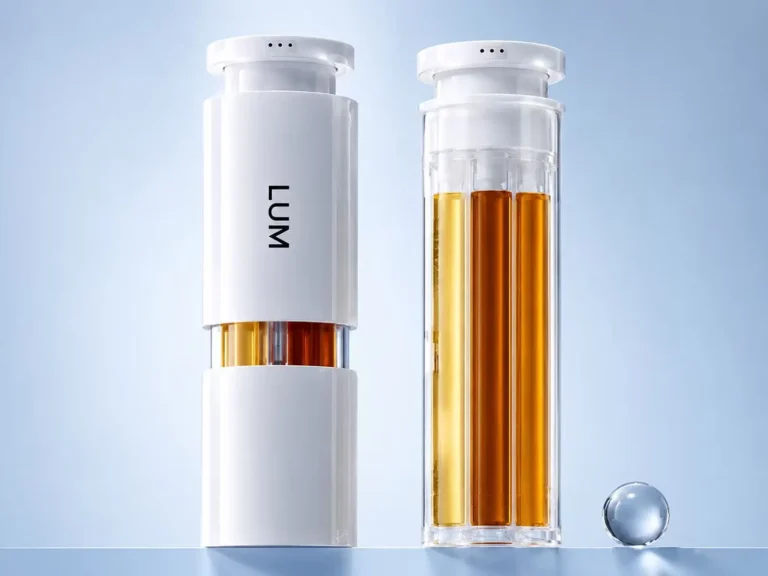
An airless pump often presents a cleaner uninterrupted body. The formula may be hidden, shown through a clear outer wall or visible as an inner bottle. The top press, twist-up or traditional pump head can make the package look engineered and modern. Opaque color also gives brands more control when the formula color is not part of the desired visual story.
The first impression should be tested in the context of the actual product page. At thumbnail size, a distinctive bottle overall shape and readable logo may matter more than a material label. In a gift set, the relationship to jars, tubes and other bottles becomes equally important.
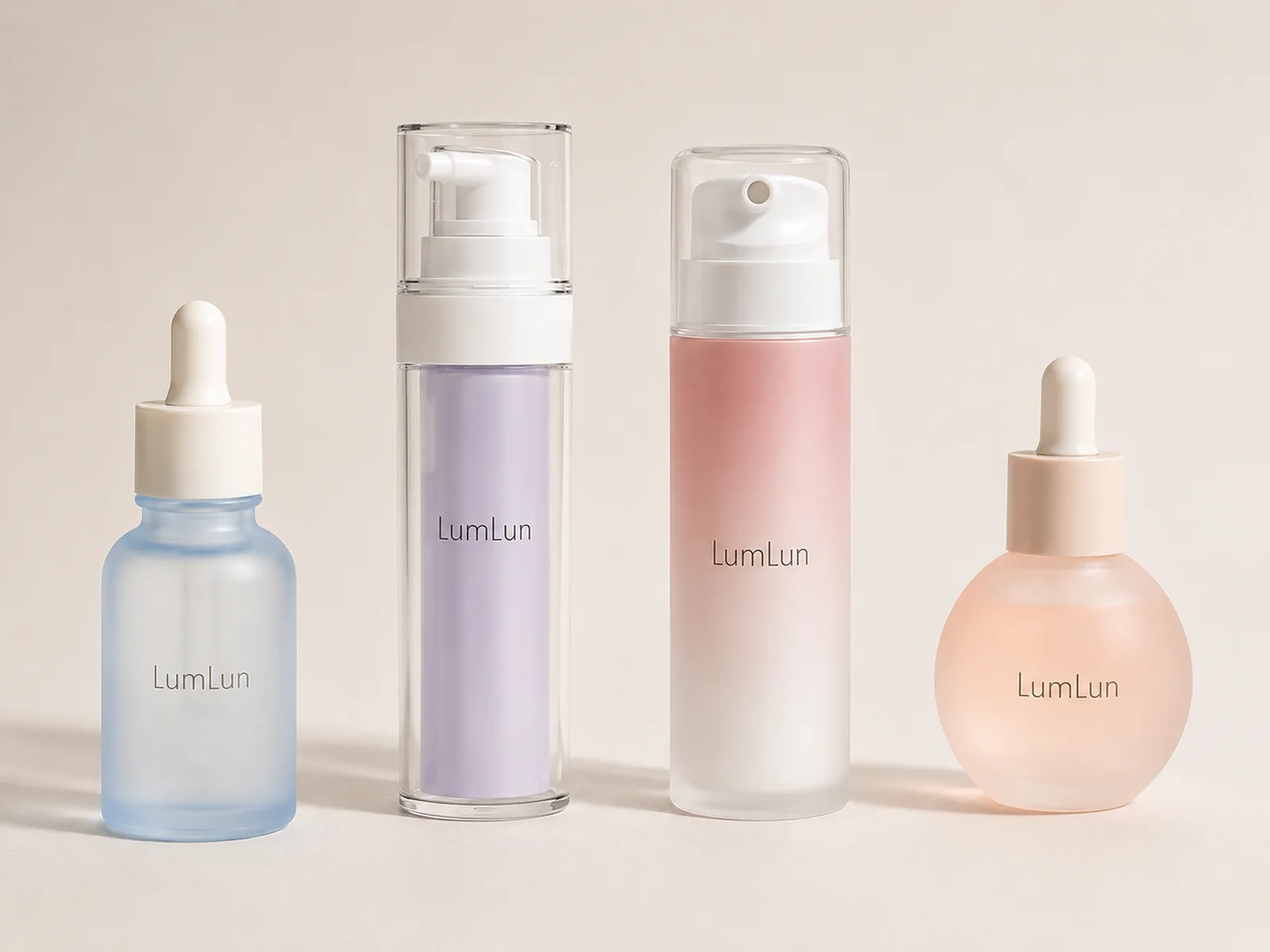
Do You Want to Show the Formula or Offer a Simple Press-to-Dispense Experience?
Formula visibility is valuable only when it strengthens the product story; a closed pump is valuable only when it improves the routine.
Showing the formula can build interest around color, clarity or suspended visual effects, but it also means the formula appearance must remain consistent and attractive throughout shelf life. The selected bottle may need tinting or opacity for branding or formula-related reasons, and those decisions should follow the actual product requirements rather than generic assumptions.
A closed airless presentation keeps the customer’s attention on the package and the press action. This can make a treatment serum easier to use in one hand and simpler to demonstrate in short product videos. The brand can communicate one or two presses rather than a number of drops, provided the selected pump output is confirmed for the actual formula.
The decision is therefore not transparency versus protection as a simple binary. It is whether the visible formula or the closed dispensing action creates the clearer, more credible product experience.
Which Format Makes the Serum Story Easier to Understand?
Use the format that helps customers understand what the serum is, how it is used and why it belongs in the routine.
A dropper can immediately signal a serum, facial oil or concentrated treatment because the format is familiar in those categories. It works especially well when the formula’s color or texture is visually appealing. The brand should still avoid relying on the bottle alone; product instructions and dose language need to match the pipette and actual use.
An airless pump can position a serum closer to a treatment emulsion, eye product or performance-led skincare system. It may help the line look more cohesive when other products already use airless packaging. The format can also make a richer serum feel more deliberate than a dropper bottle that struggles to communicate the texture.
If the package and the product claim tell different stories, customers may hesitate. The strongest direction is the one that makes the product role obvious in seconds without requiring a long explanation.
Send the serum bottle you like or one reference image. We can help compare a dropper and an airless option around the experience you want customers to have.
How Does Each Format Fit the Customer’s Daily Skincare Routine?
Daily fit depends on speed, control, cap handling, one-handed use and where the bottle will be stored or carried.
Droppers suit customers who enjoy a deliberate routine and are comfortable opening a bottle with two hands. The pipette can place formula directly onto fingers or the face, depending on instructions. Closure fit, bulb feel, wiper behavior and the ability to return the pipette cleanly to the bottle all affect the experience.
Airless pumps suit customers who prefer one-handed dosing and a closed package. A cap, lock or twist mechanism influences portability. The pump head shape and pump force influence comfort. A consistent dose can simplify product instructions, but the exact dose must be based on the selected component rather than assumed from the category.
Travel and gift sets add practical questions. A securely closed pump can be convenient, while a well-fitted dropper closure can work in a rigid insert. The full pack and secondary packaging should be considered together.
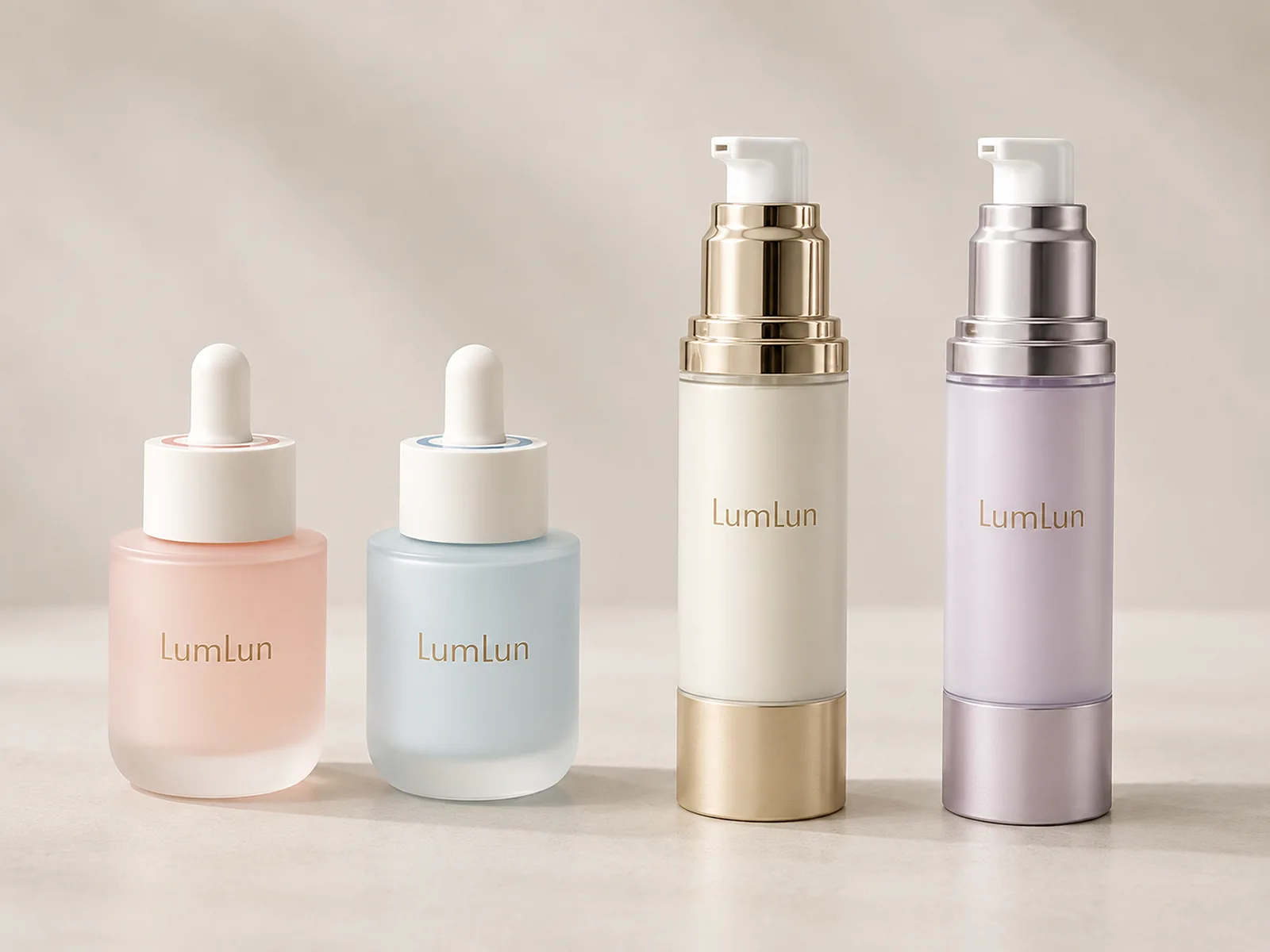
Which Serum Textures Usually Work With Droppers or Airless Pumps?
Droppers generally start with flowing formulas; airless pumps can cover a broader light-to-moderate range when the selected pump path is suitable.
Low-viscosity serums, facial oils and essences often work naturally with a pipette because the formula can be drawn and released in drops. A very watery formula may need a wiper and pipette system that prevents uncontrolled dripping. A thicker serum may move slowly through the pipette or create an uneven customer experience, but the actual result depends on the formula and component.
Airless pumps can suit lightweight serums, emulsions and some richer treatment formulas. The selected pump output, flow path and inner bottle must match the real texture. Extremely thick, particle-containing or unusual formulas may require another format, such as a lotion pump, airless jar or tube. That is a packaging-fit decision, not a failure of the product.
Brands can start the conversation before the full formula is finalized by sharing the formula direction—watery serum, oil, gel-serum or emulsion. LumLun can then narrow the model family and identify what must be confirmed later.
Which Format Better Supports Premium Product Positioning?
Both formats can support premium positioning; the decisive factors are proportion, component quality, decoration and how clearly the package expresses the product value.
A dropper can feel premium through a heavy or thick-wall bottle, a refined bulb, a precise collar, a push-button closure, controlled frosting and high-quality print. A clear bottle may also let the formula become part of the premium visual story. The risk is assuming that any glass dropper automatically looks high-end; generic proportions and weak component coordination can make the result familiar rather than distinctive.
An airless bottle can feel premium through a clean pump head, a layered outer shell, a twist or top-press gesture, an opaque matte finish, a gradient or a metallized detail. The package can support a modern treatment position without exposing the formula. Again, the mechanism alone does not create value; the whole design must feel intentional.
Review the available LumLun customization and finishing options after the format is chosen so the decoration supports the real bottle rather than compensating for an unsuitable structure.
How Can Dropper and Airless Bottles Be Customized?
Customize the bottle, closure and artwork as one system so the selected format becomes recognizable rather than catalog-generic.
- Dropper options: bottle tint or frosting, bulb color, collar finish, push-button or bulb direction, printing and hot stamping by model.
- Airless options: opaque or translucent color, matte or glossy coating, gradient, cap and pump color, metallized details and printing by model.
- Shared brand language: repeat one logo hierarchy, color rule and metallic tone across both formats when the serum line uses more than one dispenser.
- Artwork adaptation: the available front panel and curvature differ, so artwork should be redrawn for each bottle rather than copied at the same dimensions.
The fastest route is to choose the closest existing structure first, then design the finish around the actual surface and assembly. If the exact overall shape is essential and no realistic model exists, tooling can be reviewed separately.
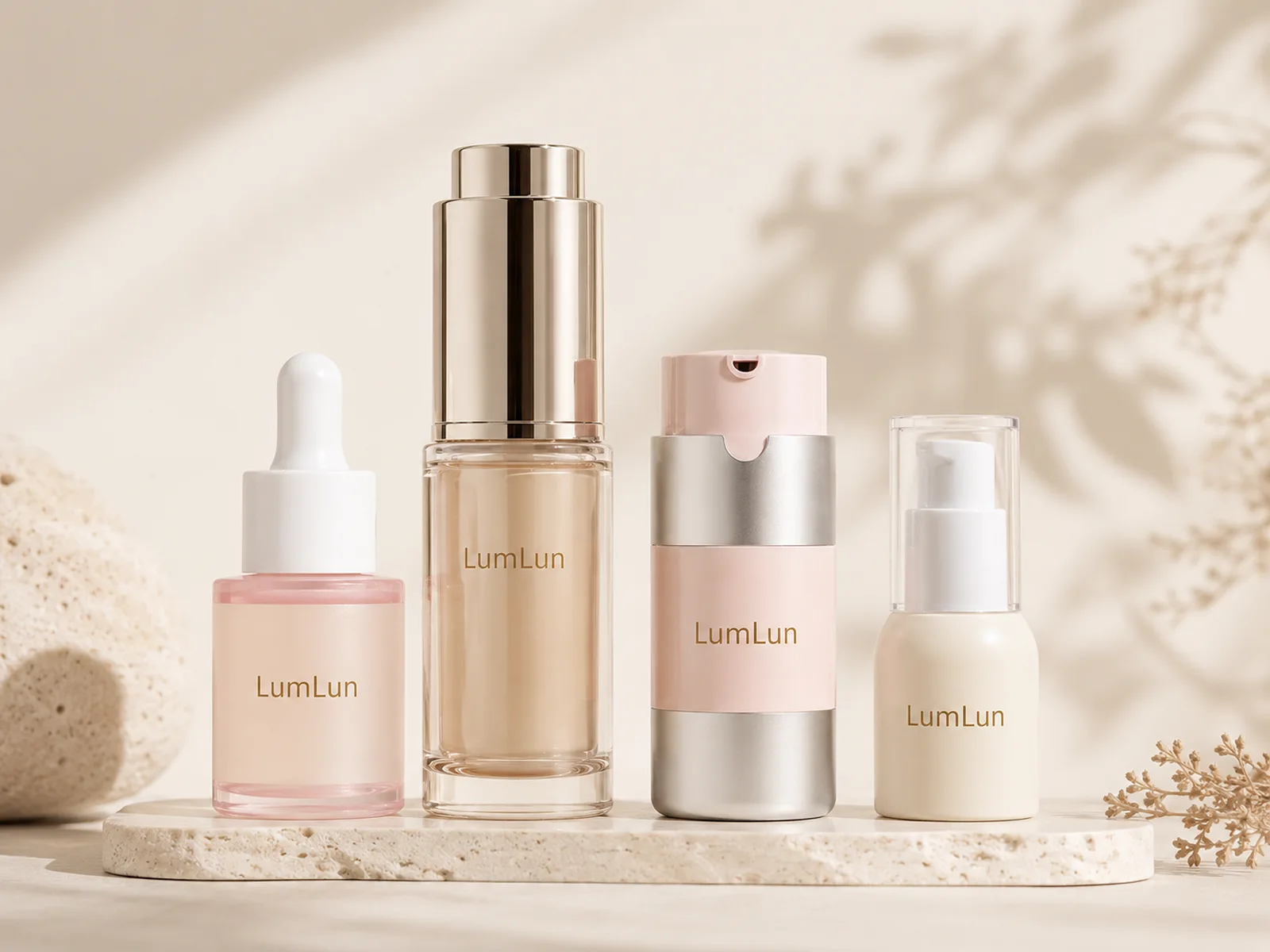
Which Format Better Supports a Complete Serum Range?
One format creates the simplest visual system; two formats create clearer SKU roles when the distinction is intentional.
A single dropper family can cover trial, core and larger serum sizes when the bottle and closure family is available. A single airless family can connect eye treatment, serum and lotion-like treatment products. This approach reduces visual complexity and makes the range easier to recognize.
Using both formats can be stronger when the products are meaningfully different. A facial oil may use a dropper while a peptide emulsion uses an airless pump. The common brand system—color, logo, typography and decorative accent—keeps the range coherent. The formats then help customers understand the product roles instead of creating inconsistency.
Do not add a second format only to make the shelf look varied. Each dispenser should answer a real formula, use or positioning need.
Dropper or Airless Pump: How to Choose the Final Direction
Choose the format that makes the serum easier to understand, easier to use and easier to integrate into the wider brand system.
Start with texture and dose. If the product is a flowing serum or oil and the brand wants visible formula and a measured ritual, shortlist droppers. If the product is a treatment serum or emulsion and one-handed pressing is central, shortlist airless pumps. Then compare real bottle shapes, closures and finishes.
Next, review the channel and range. Transparent formula can be powerful in photography; an opaque airless body can create a stronger color block. A dropper may pair naturally with facial oils; an airless family may pair naturally with eye and moisturizer products. The correct answer is the one that reduces explanation and reinforces the product role.
Finally, send one product image or reference image. LumLun can shortlist models before the full specification is complete, then the brand can confirm the selected direction with its formula, filling process and market requirements.
Decision Table
Which serum direction points to which format?
| Product direction | Stronger starting format | Reason | Alternative to consider |
|---|---|---|---|
| Visible facial oil or botanical serum | Dropper | Formula color and measured ritual are part of the story | A pump bottle when one-handed use matters more |
| Daily treatment serum with a clean routine | Airless pump | Closed press-to-dispense action is easy to understand | A push-button dropper for a more controlled ritual |
| Rich serum or fluid cream | Airless pump by suitable model | Pump path and piston system may suit a more substantial texture | Lotion pump or airless jar if the texture is too demanding |
| Multi-SKU premium range | Either or both | Format can signal SKU role while design keeps the line connected | Use one hero format when the launch needs maximum simplicity |
Final Recommendation
Choose a dropper when formula visibility and a measured application ritual make the serum more understandable. Choose an airless pump when one-handed, closed dispensing and a treatment-led appearance better fit the routine. Let texture, dose and product-line role decide the format before material or trend.
Frequently Asked Questions
Is a dropper or airless pump better for serum?
Neither is always better. Droppers often suit visible, lower-viscosity formulas and a measured ritual. Airless pumps often suit a closed, one-handed experience. The formula and selected component must be confirmed.
Which packaging works well for facial oil?
Dropper bottles are a common facial-oil direction because they support controlled drops and formula visibility. The pipette, bulb, gasket and neck fit still need to match the product.
Can thicker serum use a dropper bottle?
Some thicker serums can use a dropper, but pipette bore, bulb recovery and formula flow become more important. An airless pump may offer a more natural dispensing experience for lotion-like textures.
Which format provides a simpler one-handed experience?
An airless pump generally provides the simpler one-handed action because the customer presses the pump head without opening a separate closure or handling a pipette.
Can one serum line use both droppers and airless bottles?
Yes. Use each format for a clear product role and connect the range through color, logo, finish and artwork hierarchy.
SERUM PACKAGING OPTIONS
Compare Dropper and Airless Options for Your Serum
Browse LumLun serum packaging or send one product image. A simple question is enough to begin comparing realistic dropper and airless directions.