Choosing a body oil bottle should start with how the customer will use the oil, not with whether glass or plastic looks more premium. For an everyday, all-over body oil, a pump is usually the first format worth evaluating because it supports fast, one-handed dispensing. A dropper can make more sense for a smaller or more treatment-led body oil where the customer expects to apply a limited amount at a time.
After that first decision, choose capacity and material around the use pattern, then confirm the bottle and closure as one package. A good-looking bottle is not a good body oil package until the actual formula dispenses, closes and travels as intended.
| Body oil plan | First format to evaluate | Why | Confirm before approval |
|---|---|---|---|
| Everyday all-over or post-shower use | Pump bottle | Faster, one-handed application and easier larger-area use | Formula flow, priming, output, lock and seal |
| Smaller treatment-led or targeted use | Dropper bottle | Controlled small-amount application and a more deliberate ritual | Pipette loading, dose, collar, seal and closure fit |
| Massage, spa or higher-use format | Larger pump bottle | Repeated, more generous dispensing | Capacity, pump flow, lock and transport behavior |
| Premium retail product | Pump or dropper | Premium positioning can work with either format | Hand feel, finish, usability and filled-package performance |
Start With How the Body Oil Will Be Used
The first packaging question is not “glass or plastic?” It is “what should the customer do every time they use this product?”
An all-over body oil is usually applied to a much larger area than a facial serum. If the intended routine is several presses into the palm after a shower, the package needs to make that action quick and clean. That naturally moves a body oil pump bottle higher on the shortlist.
A different product may be sold as a concentrated treatment for elbows, cuticles, scars, dry patches or selected areas. If the intended routine is a small amount at a time, a body oil dropper bottle becomes easier to justify.
This distinction matters because the same formula can feel very different when the package makes the customer work against the intended routine. A dropper is familiar and visually premium, but dispensing an all-over product drop by drop may add friction. A pump is convenient, but it still has to be matched to the formula and the amount the brand wants one press to deliver.
So start with the use pattern. Then choose the dispenser.
When a Body Oil Pump Bottle Is the Practical First Route
A pump is usually the stronger first route when the product is designed for frequent, generous or all-over application.
Think about a post-shower body oil. The customer may have wet or slightly oily hands and wants to dispense product into the palm without repeatedly opening and closing a cap. A well-matched pump can make that routine simpler.
A pump also becomes more attractive as capacity increases. A 150ml or 200ml body oil is normally a different proposition from a 30ml targeted treatment. The larger package suggests more frequent or more generous use, so the dispensing format should support that behavior.
But “pump bottle” is not a performance guarantee. Oils can vary in flow, and pump systems vary in chamber design, dip tube, spring, actuator and output. A lotion pump that works well with one product should not automatically be treated as suitable for every body oil.
For that reason, do not approve a pump only from an empty sample. Evaluate the selected bottle and pump with the real formula before mass production. The checks that matter are practical: does it prime normally, does each press dispense cleanly, does the actuator return properly, does the lock work as expected, and does the closure stay clean in use and transport?
The point is not to find a universally “best” pump. It is to find a pump system that makes the intended body oil routine easier.

When a Body Oil Dropper Bottle Makes More Sense
A dropper makes more sense when the product is intentionally used in smaller amounts or when the dropper is part of the product experience.
That can include a concentrated botanical body treatment, a premium oil applied to selected areas, or a smaller format positioned closer to a body serum. In those cases, opening the bottle, drawing product into the pipette and applying a limited amount can feel consistent with the product story.
Capacity helps here, but it should not become a rigid rule. A 30ml dropper is an obvious format to evaluate for a smaller treatment product, while larger 60ml, 70ml or even 100ml dropper bottles also exist. The real question is not “Is 70ml too large for a dropper?” It is “Does dropper-style use still make sense at the amount and frequency this product is designed for?”
A dropper also introduces its own component relationship. The bottle neck, collar, bulb, pipette and seal all need to work together. The pipette should load the formula properly, the closure should seat correctly, and the package should remain clean after repeated opening and closing.
Do not choose a dropper simply because the product is premium. Choose it because the intended use and brand experience justify the extra opening, drawing and closing steps.
Capacity Changes the Packaging Decision
Body oil capacity should follow the product role.
Smaller formats can support travel, trial, gifting or treatment-led positioning. They can work with a dropper when controlled application is part of the experience, or with a compact pump when the product still needs quick dispensing.
Mid-size formats give brands more freedom. A 50ml or 70ml product can sit between treatment and regular-use positioning, so either a pump or a dropper may be reasonable depending on how much product is used per application.
Larger formats shift the decision again. If the customer is expected to use the oil across arms, legs and torso several times a week, the package needs to support that amount without making dispensing tedious. That is why larger pump formats are worth evaluating early.
Capacity also changes the physical package: bottle height, grip, label area, shipping weight and the visual relationship between the bottle and closure. Do not select “100ml” in isolation. Compare the actual 100ml bottle and dispenser as a finished package.

Material Comes After the Dispensing Decision
Glass and plastic both appear in body oil packaging, but neither is automatically the correct material.
Glass can provide weight, rigidity and a familiar premium skincare feel. It is also widely used with dropper formats. Its trade-offs are straightforward: more shipping weight and greater breakage risk than plastic.
Plastic can reduce package weight and can be practical for larger, frequently handled formats. PE, PET and other resins also create different visual and structural directions, so “plastic” should not be treated as one single option.
The important point is sequence. If the product is clearly an everyday 150ml pump format, first find a pump-and-bottle family that suits that use. Then compare the material options available within or around that route. If the product is a 30ml targeted treatment with a dropper, evaluate the bottle material in the context of that dropper assembly.
Material choice still needs to be confirmed against the real formula. Body oils may contain different carrier oils, fragrance systems, essential oils or other ingredients, and compatibility should not be inferred from the material name alone.
A Premium Body Oil Does Not Automatically Need a Dropper
This is one of the easiest packaging shortcuts to make: serum equals dropper, and premium oil equals dropper.
That shortcut can produce the wrong user experience.
A premium all-over body oil can still be better served by a pump if the customer uses several portions at a time. Premium positioning can come from the bottle shape, weight, finish, color, decoration, pump design and the way the complete package feels in hand. The dispenser does not need to make the product slower to use in order to make it feel premium.
The reverse is also true. A dropper should not be dismissed as “too small” simply because the product is for the body. If the product is deliberately concentrated, treatment-led or used on selected areas, a dropper can be a coherent part of the routine.
The better question is: Does the packaging behavior match the product promise?
That keeps the decision tied to real use rather than a visual stereotype.
Treat the Bottle and Closure as One Package
For body oil, the closure is not an accessory added after the bottle has been chosen.
A pump has to match the bottle neck and the formula. A dropper has to match the bottle neck, collar, bulb and pipette. A lockable pump is only useful if the lock is easy to operate and remains secure in the intended distribution route. A beautiful dropper is only useful if it closes correctly and the pipette handles the formula cleanly.
This is why the final approval should use the actual component combination, not a bottle from one sample and a pump or dropper from another.
Before production, confirm the selected capacity, bottle material, closure configuration, decoration direction and filled-package performance together. If the product will be shipped through e-commerce or carried in a bag, include the real packed format in the final review rather than assuming a closure is “leakproof” by name.

Real LumLun Packaging Directions to Compare
The three products below are not automatic body oil recommendations. They are real existing LumLun models that represent different packaging directions worth comparing once the use pattern is clear.
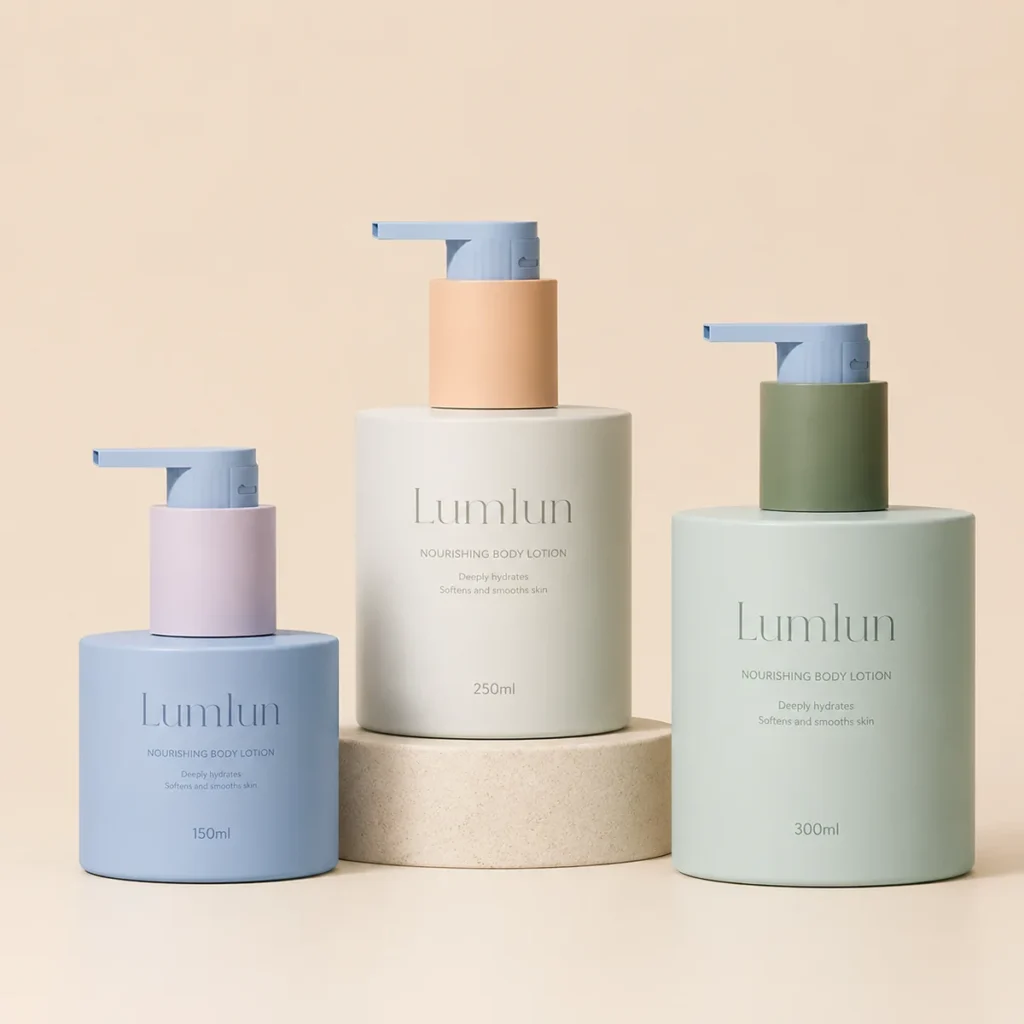
Larger-capacity pump direction
Round PE Lotion Pump Bottle with Lockable Pump — 50ml–500ml
PE · 50ml–500ml · lockable pump family; evaluate with the actual body oil formula before approval.
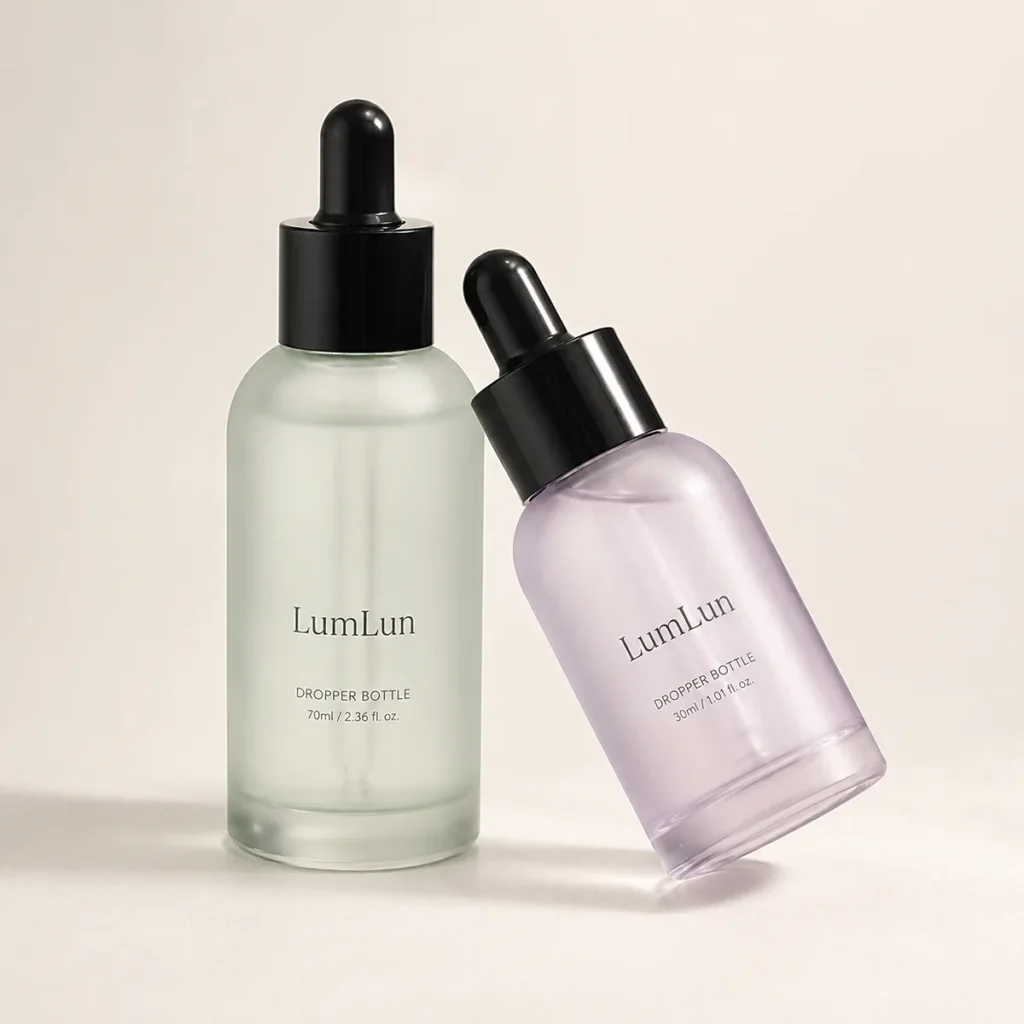
Oil-focused glass dropper direction
Glass Dropper Bottle for Face & Hair Oils — 30ml & 70ml
Glass · 30ml / 70ml · controlled pipette application; confirm viscosity, loading, dose and seal with the formula.

Larger dropper-capacity direction
Frosted Glass Dropper Bottle — 30ml, 60ml & 100ml
Glass · 30ml / 60ml / 100ml · NBR or silicone bulb options; useful when pipette-based use still fits the product.
What to Send When You Want a Packaging Shortlist
You do not need to prepare a technical dossier before starting a packaging discussion. A useful first message can be simple:
- target fill volume or approximate size;
- whether you currently prefer a pump, dropper or are open to both;
- a reference image or preferred bottle style, if you have one;
- planned order quantity.
If the formula has an unusual texture or a specific packaging concern, mention it. From there, the next step is to compare real models and confirm the selected package with samples before production.
Final Decision
Choose the body oil package in this order:
Use pattern → dispenser → capacity → material → component fit → real model → approved sample.
For everyday all-over use, start by evaluating a pump. For smaller or treatment-led use, include a dropper in the shortlist. Do not let “premium,” “glass,” or “dropper” decide the package on their own.
The best result is the package that makes the intended body oil easy to use, fits the actual formula and gives the brand a realistic path from sample to production.
Frequently Asked Questions
Can body oil go in a pump bottle?
Yes. A pump can be a practical body oil format, especially for everyday or larger-area use. The selected pump still needs to be tested with the actual formula for flow, priming, output, lock operation and closure performance.
Is a dropper better for body oil?
Not automatically. A dropper can fit smaller, treatment-led or controlled-application body oils, while a pump can be more convenient for regular all-over use. The intended routine should decide which format is evaluated first.
What size bottle works for body oil?
There is no single standard size that fits every body oil. Smaller formats can suit travel or treatment positioning; larger formats can suit frequent all-over use. Choose the capacity together with the dispenser and the intended amount used per application.
Should body oil be in glass or plastic?
Either can be appropriate. Glass can support a weighted premium presentation, while plastic can reduce weight and suit larger or frequently handled formats. The final material should be chosen around the dispenser, formula, distribution route and approved package sample.