Custom Eco-Friendly Cosmetic Tubes [2026 OEM Guide]
How To Guides

Sustainable Cosmetic Tubes: Which Eco Material Is Right for Your Brand?

Sustainable cosmetic tubes compared: PE, PCR, and sugarcane bio-PE across cost, brand fit, and green claims — and how the right one helps you sell more.

Published Mar 20, 2026 Updated Jul 22, 2026 13 min read
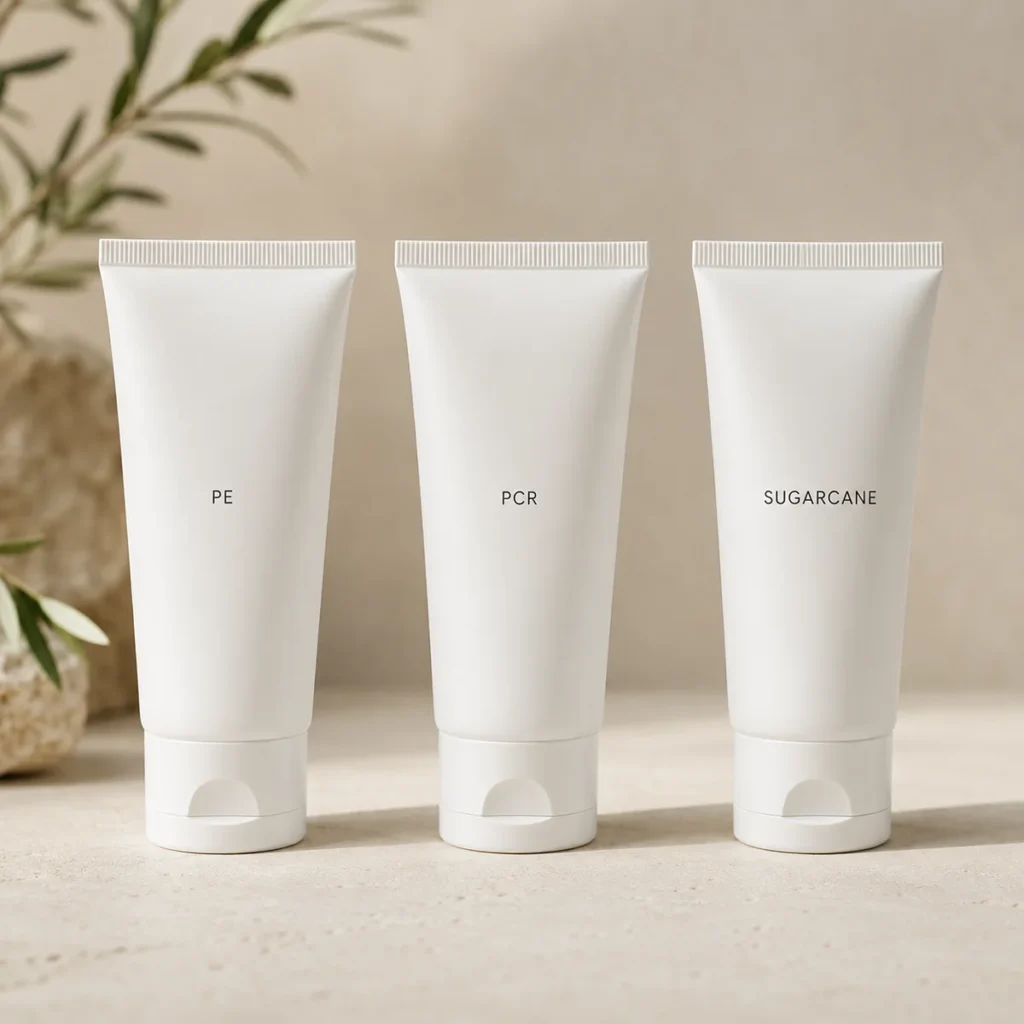
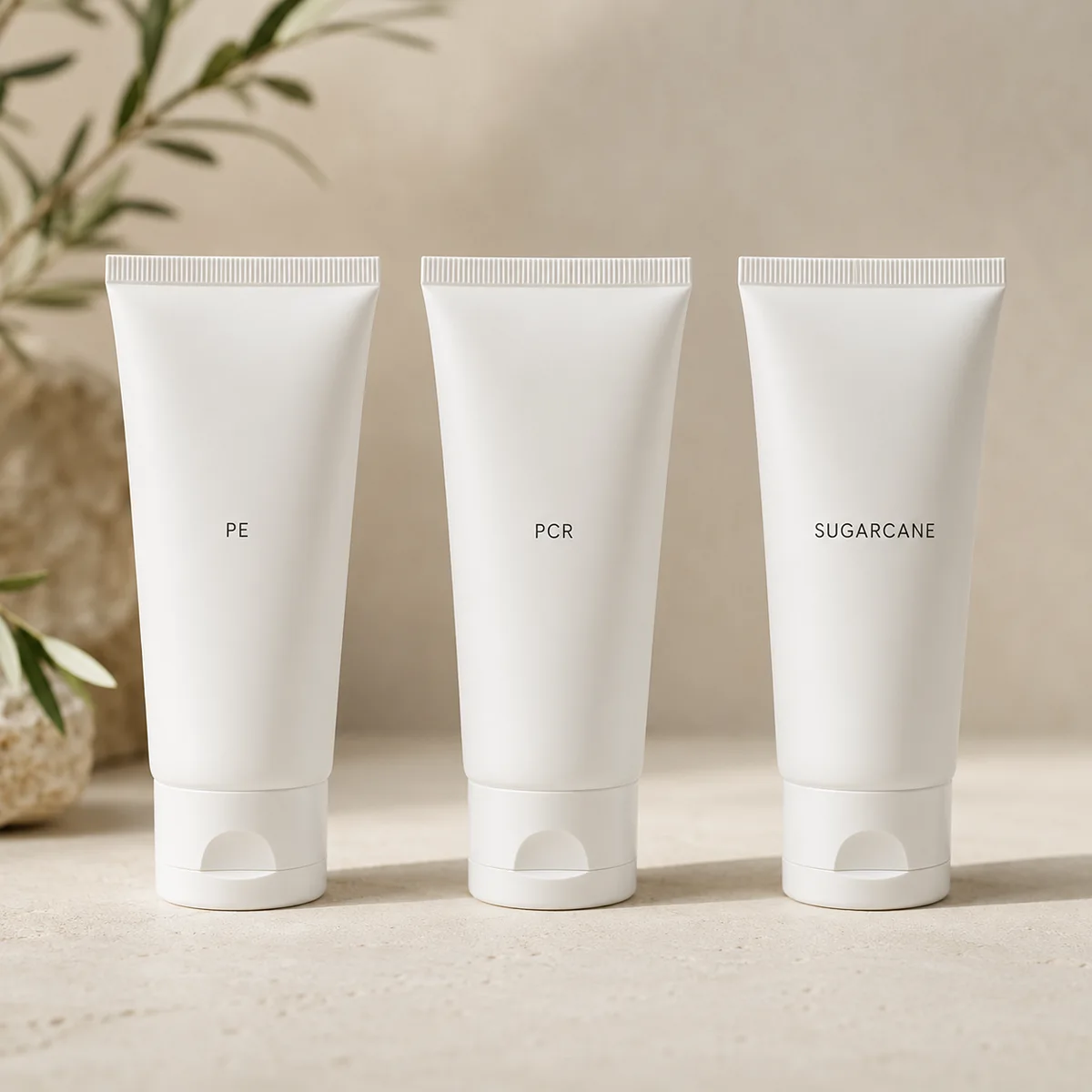
Three white cosmetic tubes labeled PE, PCR and sugarcane showing sustainable tube material options for skincare brands
Sustainable cosmetic tubes come in PE, PCR, and sugarcane bio-PE, and the right one depends on your brand, not just the material.

Key Takeaways

  • A sustainable cosmetic tube isn’t just an eco gesture, it’s a commercial advantage that helps you win retail listings, justify a higher price, and earn repeat customers.
  • For most brands the real choice is between three materials: standard PE, PCR, and sugarcane bio-PE. Each fits a different budget and brand position.
  • PCR at 30% is the sweet spot, with enough recycled content to back a credible green claim, without the gray tint that higher percentages can bring.
  • Sugarcane bio-PE is recyclable but not biodegradable, and suits premium, clean-beauty positioning with a “grown, not drilled” story.
  • The right choice depends on your budget, brand position, and the claim you want to make, not on which material sounds greenest.

Last Updated: June 2026

You’ve decided your next launch should use a more sustainable cosmetic tube. Then you start looking, and the options pile up fast: PCR, sugarcane, recycled this, bio-based that, plus warnings about gray tints, higher costs, and the risk of being called out for greenwashing. It’s easy to freeze, or to pick something based on which word sounds greenest.

Here’s the thing most material guides skip: choosing a sustainable cosmetic tube isn’t really a sustainability decision, it’s a business one. The point isn’t to feel good about the material. It’s to pick the option that helps your product get onto the right shelves, command the price you want, and keep customers coming back. This guide compares your three realistic choices (PE, PCR, and sugarcane bio-PE) across the things that actually affect your business: cost, brand fit, the claim you can credibly make, and what each one does for how your product sells.

Why a Sustainable Cosmetic Tube Is a Commercial Decision, Not Just a Green One

Upgrading to a sustainable cosmetic tube pays off in three concrete ways: it opens retail and channel doors, it supports a higher price, and it builds the kind of loyalty that drives repeat orders. Before comparing materials, it’s worth being clear on what you’re actually buying with that upgrade, because it’s not just a cleaner conscience.

Here’s where the return shows up:

  • It opens doors with retailers and marketplaces. Major beauty retailers (Sephora, Ulta, and Boots among them) now apply sustainability criteria to the brands and private-label products they stock, and recycled-content rules in markets like California are tightening too. A credible recycled or renewable tube can be the difference between getting the listing and getting passed over. That’s access to channels and orders a virgin-plastic line can’t reach.
  • It supports a higher price, within limits. Eco-conscious buyers will pay more for sustainable packaging, but mostly a modest premium, not a big one. McKinsey’s 2025 global packaging survey of over 11,000 consumers found a majority still willing to pay extra, while only a small share will pay a lot more. That’s a strong argument for a cost-controlled upgrade like 30% PCR rather than the most expensive option: you capture the willingness to pay without pricing yourself out.
  • It future-proofs you against regulation. Rules like the EU’s Packaging and Packaging Waste Regulation are tightening recycled-content and recyclability requirements. Building sustainability in now avoids a costly forced redesign later.
  • It builds brand story and loyalty. A credible sustainability story gives customers a reason to choose you over a near-identical competitor, and a reason to come back, turning a one-time buyer into a repeat one and strengthening the brand itself.

Keep these four outcomes in mind as you compare materials, because the “best” tube is the one that delivers the most of them for your particular brand, not the one with the greenest-sounding name.

Your Three Real Choices: PE, PCR, and Sugarcane

For a skincare tube, your three practical material choices are standard PE, PCR (post-consumer recycled), and sugarcane-based bio-PE, and they differ less in how they perform than in cost, brand story, and the claim each one lets you make. Plenty of guides will throw aluminum, wheat straw, and bamboo at you too, but those add complexity without fitting most squeeze-tube skincare lines. Here’s what each of your three options really offers.

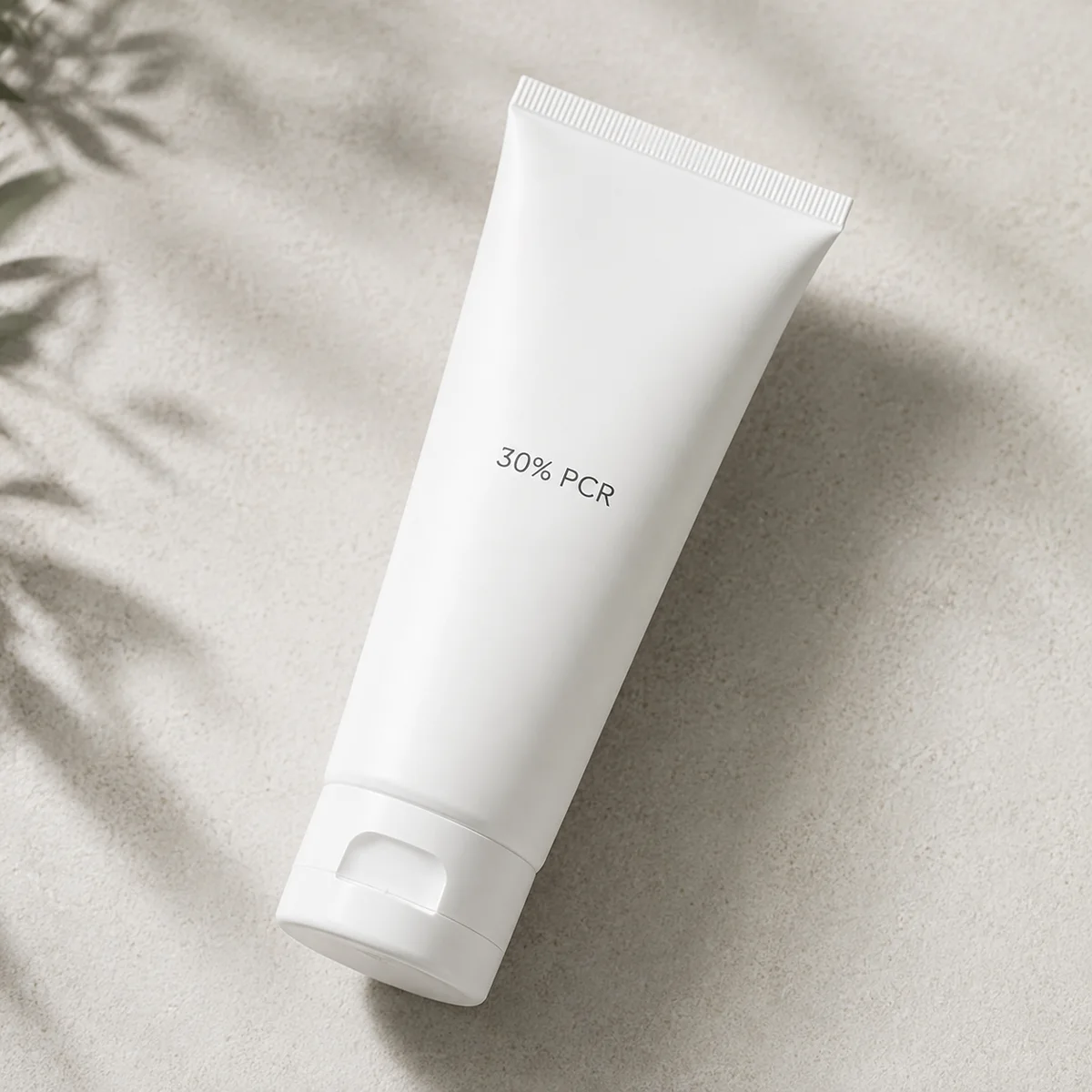
White cosmetic tube labeled 30% PCR showing clean recycled-content appearance without gray tint for skincare packaging
PCR at 30% gives a credible recycled-content claim while keeping the clean look brands want.
  • Standard PE: the familiar, flexible squeeze tube. It’s the lowest cost and accepts every cap, finish, and print option. On its own it doesn’t carry a green claim, but it’s the foundation the two sustainable upgrades build on, and it can be designed for recyclability.
  • PCR (post-consumer recycled) PE: a tube that reuses existing plastic. It gives you a credible, measurable “second life” story, it’s the most cost-effective way to hit a recycled-content target, and it’s what most retailers are asking for. Recycled-content standards from bodies like the Association of Plastic Recyclers help define what counts as credible. This is the pragmatic choice for most growing and mass-market brands.
  • Sugarcane bio-PE: PE made from a renewable plant source instead of fossil feedstock. It behaves like standard PE, takes a premium finish well, and carries a distinctive “grown, not drilled” story. European Bioplastics is a useful reference on how bio-based materials like this are defined. This is the choice for premium and clean-beauty brands that want sustainability as a headline, not a footnote.

One honest clarification that trips up a lot of brands: sugarcane bio-PE is recyclable, but it is not biodegradable. It’s made for durability and to go into existing PE recycling streams, not to break down in a compost bin. Knowing this keeps your marketing accurate and keeps you out of greenwashing trouble, which we’ll come back to.

How to Choose: Compare Across the Factors That Matter

The right sustainable cosmetic tube comes down to four factors: your budget, your brand positioning, the green claim you want to make, and your order volume, not to which material is “greenest.” Use the comparison below to match a material to your situation rather than guessing.

Factor Standard PE PCR Sugarcane bio-PE
Cost Lowest Moderate premium over PE Higher premium
Brand fit Everyday, value-focused lines Mass-market and growing brands Premium and clean-beauty brands
Green claim Designed for recyclability Recycled content (e.g. 30%) Renewable, plant-based
Look & feel Full range of finishes Clean at 30%; tint rises with higher % Clean, takes premium finishes well
Best when you want to Keep cost low, stay recyclable Hit recycled targets affordably Lead with sustainability as a story

The pattern most brands land on: PCR when you want credible sustainability at scale without hurting margin, sugarcane when sustainability is central to your brand and you can carry a premium. Neither is “better”; they fit different brands, and the right one is the one that matches where you’re taking your line.

To choose the right sustainable cosmetic tube, match your situation to the option and the payoff it actually buys you:

Where your brand is now The choice that fits What it buys you
Launching or scaling, need to win retail listings while protecting margin 30% PCR Meets the recycled-content bar retailers increasingly ask for, so you get the listing, at a small premium your margin can absorb
Have a customer base, want to stand apart from near-identical competitors 30% PCR with a clear on-pack claim Gives the sizable group of shoppers who switch brands over packaging a reason to choose you, and a reason to reorder
Premium or clean-beauty, sustainability is core to the brand story Sugarcane bio-PE A distinctive “grown, not drilled” headline that supports a higher price and deepens loyalty with values-driven buyers
Cost-led line, sustainability is a “nice to have” for now Standard PE, designed for recyclability Keeps cost lowest while staying recyclable, so you can add PCR later as budget or retail demand grows

Not sure whether PCR or sugarcane fits your brand and budget? Tell us your product and positioning, and we’ll recommend the right material, with a free sample so you can see and feel it before you commit.

Request a Free SampleWhatsApp

Honest Answers to the Concerns That Hold Brands Back

The three things that stop most brands from upgrading (cost, the look of recycled material, and fear of a greenwashing accusation) are all manageable once you know how. Here’s a straight answer to each, so the decision feels less risky.

  • “Will PCR look gray or cheap?” Only at high percentages. PCR’s gray or yellow tint mostly shows up when content is pushed toward 100%. At 30% PCR, the level we recommend, the tube keeps a clean appearance while still carrying a credible recycled-content claim. That 30% sweet spot gives you the green story without the visual compromise, which is exactly why we point most brands to it.
  • “Is it worth the extra cost?” Sustainable material does cost more than virgin plastic, but the comparison isn’t cost versus zero. It’s cost versus the retail listings it unlocks, the higher price it supports, and the repeat customers it earns. For most brands the premium is small relative to what it returns in access and loyalty.
  • “What if I’m accused of greenwashing?” Greenwashing risk comes from vague or unprovable claims, not from sustainable packaging itself. The protection is simple: use real, verifiable material and make specific claims you can back up: “30% post-consumer recycled content” or “made with sugarcane-based PE,” not a vague “eco-friendly.” Working with a supplier who provides genuine, traceable material keeps your claims solid as scrutiny tightens.

None of these is a reason to stay with virgin plastic. They’re just things to handle well, and a good packaging partner handles most of them for you.

How the Right Tube Helps You Sell More

A sustainable cosmetic tube earns its place not by being green, but by helping your product get stocked, get chosen, and get reordered. This is the payoff that makes the whole decision worth it, so it’s worth seeing the full picture.

  • It wins shelf space. With retailers like Sephora, Ulta, and Boots applying sustainability criteria to what they stock, a credible recycled or renewable tube keeps you eligible for channels and orders a virgin-plastic line can be shut out of.
  • It supports a premium price. A credible eco story lets you charge more for the same formula, and shoppers who value sustainability are willing to pay it: margin that stays with you.
  • It earns loyalty and reorders. Customers who choose you partly for your values tend to stay, turning a single sale into repeat purchases across your range.
  • It strengthens the brand itself. A clear, honest sustainability position becomes part of your identity and your story, the kind of thing customers share, which brings new buyers in at no media cost.

Seen this way, a sustainable cosmetic tube isn’t a cost you absorb to look responsible. It’s an investment that pays back in access, price, and loyalty: the things that actually grow a brand. That’s the reason to upgrade, and the reason to get the material choice right.

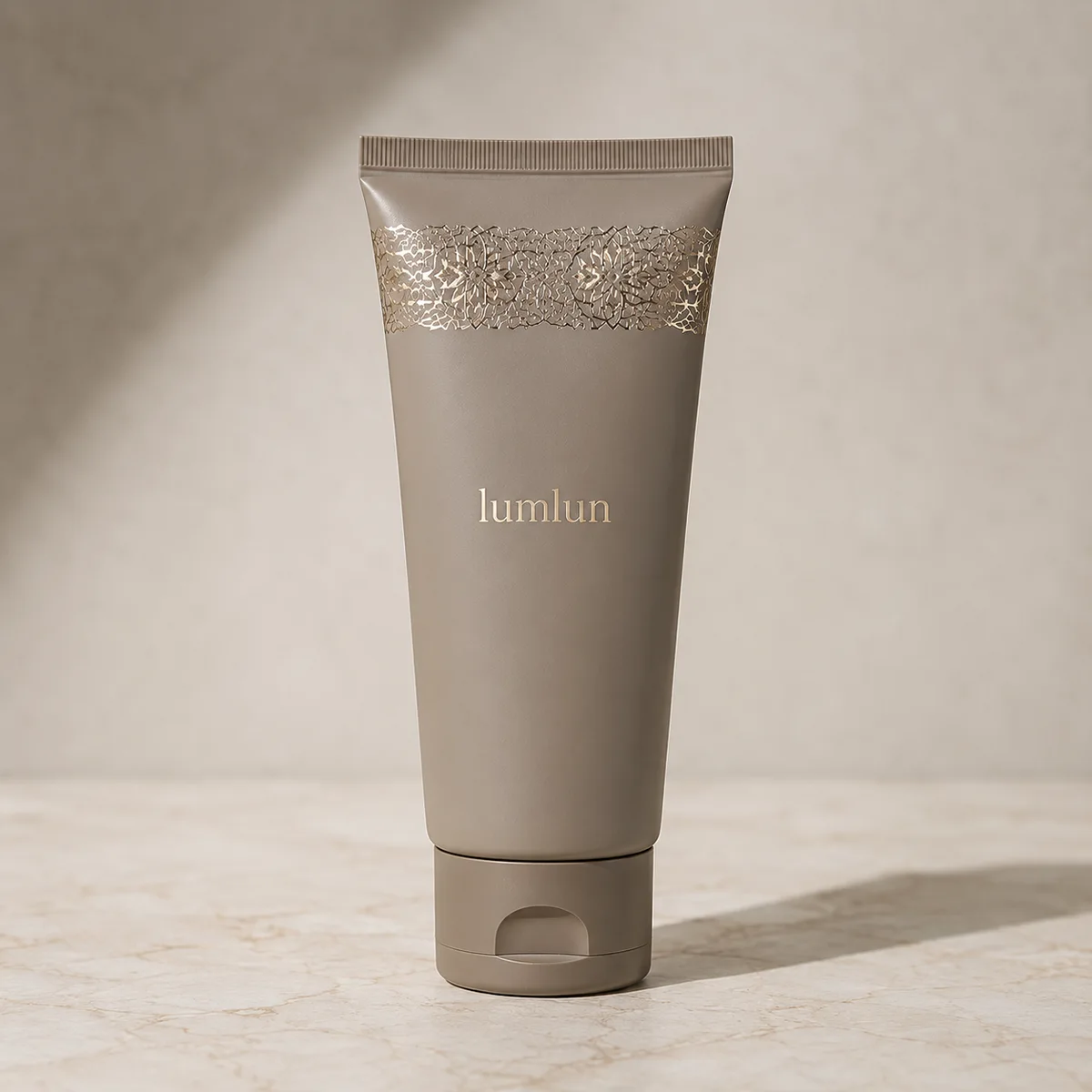
Premium taupe LumLun cosmetic tube with gold foil lace detail showing custom branding on a sustainable squeeze tube
Sustainable doesn’t mean plain. PCR and sugarcane tubes take premium finishes like gold hot-stamping just as well as standard PE.

Customizing and Ordering Your Sustainable Tube

A sustainable cosmetic tube can be fully branded with custom color, printing, and finish, and you confirm the fit with a sample before bulk, on a typical timeline of around 12–15 working days for sampling and 30–40 days for production. Going green doesn’t mean giving up on a premium, on-brand look.

What to know as you move from choice to order:

  • You don’t sacrifice branding. PCR and sugarcane tubes take custom color, silk-screen, offset, and hot-stamp printing just like standard PE, so your sustainable cosmetic tube still looks unmistakably yours.
  • PCR content is adjustable. Recycled content can be tuned to your needs; we recommend 30% as the balance of a credible claim and a clean look, and can advise based on your target and design.
  • Always sample and test first. Confirm the color, finish, and compatibility with your actual formula before committing to bulk, since it protects your investment and your launch.

And to turn a sustainable cosmetic tube into the commercial payoff (the listings, the price, the loyalty), a few practical moves matter more than the material name itself:

  • State the specific claim on pack. Print “30% post-consumer recycled” or “made with sugarcane-based PE,” not a vague “eco-friendly.” A specific, provable claim is what satisfies retailer criteria and what the shoppers who switch brands over packaging are actually looking for, and it keeps you clear of greenwashing scrutiny.
  • Ask your supplier for traceable material. Request documentation of the recycled or bio-based content so your claim holds up if a retailer or regulator asks. A supplier who can’t show it may be blending in cheaper material and calling it PCR.
  • Match the green claim to where it’s seen. Lead with sustainability in the markets and channels where it most influences buying (clean-beauty retail, EU markets tightening packaging rules) so the upgrade works hardest where it pays back most.

Based on our experience supplying tubes to skincare brands across 27 countries, the smoothest sustainable launches are the ones that confirm material, look, and fit with a sample first. A good partner makes that low-risk:

  • Free samples shipped within 48 hours, so you can see and feel the material before deciding.
  • Replies within 2 hours, so a launch never stalls waiting on answers.
  • Genuine, traceable material, so the green claim you make holds up.

One more honest note: if your product is built around ingredients that lose effectiveness with air exposure, even a sustainable squeeze tube may not protect it as well as a sealed format. In that case it’s worth looking at an airless option, which can also be made with PCR. Matching the format to the formula is part of getting it right. And if you’re still mapping out the basics of tube choice, our guide on how to choose a cosmetic tube covers material, cap, and size together, while you can browse current cosmetic tube options to see what’s possible.

Ready to make your tube sustainable?

Tell us your product, brand positioning, and the green claim you want to make, and we’ll recommend PCR or sugarcane, the right content level, and the finish to match, with free samples shipped in 48 hours.

Contact UsWhatsApp

Frequently Asked Questions

PCR or sugarcane: which sustainable tube should I choose?

Choosing the right sustainable cosmetic tube comes down to budget and brand position. PCR is the cost-effective, scalable choice for mass-market and growing brands that want a credible recycled-content claim. Sugarcane bio-PE costs more but suits premium and clean-beauty brands that lead with sustainability. Neither is better overall. Match it to where your brand sits and the story you want to tell.

Will a PCR tube look gray or cheap?

Not at the level we recommend. The gray or yellow tint people worry about mainly appears as PCR content approaches 100%. At 30% PCR, the tube keeps a clean appearance while still carrying a genuine recycled-content claim. That’s why we point most brands to 30% as the balance of sustainability and a premium look.

Are sugarcane tubes biodegradable?

No, sugarcane bio-PE is recyclable, not biodegradable. It’s made from a renewable plant source and behaves like standard PE, going into existing PE recycling streams rather than breaking down in compost. Marketing it as “biodegradable” would be inaccurate, so the right claims are “renewable” and “plant-based,” which keep you credible and compliant.

Will a sustainable tube actually help me get into retailers?

Increasingly, yes. Major beauty retailers like Sephora, Ulta, and Boots now apply sustainability criteria to what they stock, so a credible recycled or renewable tube can keep you eligible where a virgin-plastic line is screened out. The key is a specific, provable claim, such as “30% post-consumer recycled,” backed by traceable material your supplier can document if asked.

Is sustainable packaging worth the higher cost?

For most brands, yes, because it returns more than it costs. Sustainable material carries a premium over virgin plastic, but it can unlock retail listings, support a higher selling price, and earn repeat customers. The right comparison isn’t cost versus zero, it’s the premium versus the access, margin, and loyalty it brings.

Can a sustainable tube still be fully custom-branded?

Yes. PCR and sugarcane tubes accept custom color, silk-screen, offset, and hot-stamp printing just like standard PE, so your sustainable tube looks every bit as branded. You can match your brand colors and finish, and PCR content can be tuned to your target, so sustainability and a premium look aren’t a trade-off.

Technical Review Note

This guide is reviewed against LumLun’s current packaging project experience. Model suitability, material documentation, dispensing performance, and formula compatibility remain specific to the selected packaging and project.

Relevant Packaging Direction

Compare Cosmetic Tube Options

Review actual models first, then confirm capacity, material, dispensing components, decoration, order quantity, and formula compatibility for the selected packaging.

View Cosmetic Tube
Packaging Project Support

Make Your Packaging Feel Unmistakably Yours

Bring your packaging vision to life through the right structure, color, finish, and branding details—creating a look that feels true to your brand and gives customers more reason to notice, remember, and choose it.

Distinctive packaging. Stronger brand recognition. More memorable product experiences.
Chat on WhatsApp