Place two airless bottles side by side and they may look very similar from the outside: both have a pump, neither uses the conventional long dip tube, and both belong to the airless packaging family.
Open up the internal structure, however, and the difference can be obvious. One uses a moving piston at the bottom of the bottle. The other holds the product in a flexible inner pouch inside the outer bottle. During use, one system moves the piston upward while the other gradually collapses the inner pouch.
That means once a skincare project has already decided to use an airless bottle, “piston or pouch?” can become the next real packaging choice rather than simply two different names for the same thing.
The useful question is not which system sounds more advanced. It is which internal structure better fits the project’s capacity, exterior design and product requirements.
The Core Difference Is Where the Product Sits Inside
In a common piston airless bottle, the product sits between the pump mechanism and the piston at the bottom of the bottle. As product is dispensed, pressure changes inside the system move the piston gradually upward, keeping the remaining product close to the pump. This same basic logic is used across existing LumLun piston airless models.
A pouch system is different. The product does not sit directly in a rigid chamber with a moving base. Instead, it is held inside a flexible inner pouch within the outer bottle. As product is dispensed, that pouch gradually contracts.
Both structures belong to airless packaging, but the internal product chamber changes in two different ways during use.
| Comparison | Piston airless | Pouch airless |
|---|---|---|
| Where the product sits | Rigid internal space with a moving piston at the bottom | Inside a flexible pouch within the outer bottle |
| What happens during use | The piston gradually moves upward | The inner pouch gradually collapses |
| Most obvious structural feature | Moving base / piston | Separate flexible inner pouch |
| Visual presentation | Available across many established airless bottle designs | The inner pouch itself can become a visible part of the package |
| Main selection focus | Capacity, pump, bottle shape, material and existing model | Pouch structure, outer bottle design, capacity and specific material combination |
Why Piston Airless Is So Common in Skincare Packaging
One advantage of the piston system is the wide range of established bottle models already available.
For example, LumLun currently offers a PP airless pump bottle series in 15ml, 30ml and 50ml. Other existing airless families also cover 30ml, 50ml, 60ml, 80ml, 100ml and larger capacities.
If a brand is planning, for example, a 30ml serum, a 50ml cream or lotion and a 100ml lotion, the first question may not be “Do I need a special internal system?” It may be much more practical: Which existing airless family already gives me the capacity, bottle shape and bottle-to-pump proportion I want?
Piston airless also does not mean the package must be a basic white plastic bottle. LumLun’s 15ml–50ml PP series already shows multiple colors and proportions, while the broader Airless range also includes clear AS designs, transparent looks, double-wall appearances and different shapes. The exact internal system remains model-specific, so the visible design should not be used to infer the hidden structure.
For many standard serum, lotion and skincare projects, the selection path can therefore stay very direct: find the right capacity and pump structure first, then choose the exterior look from real bottle models.

When a Pouch Airless System Is Worth Comparing More Closely
What makes pouch airless interesting is that the inner pouch itself becomes part of the overall packaging structure.
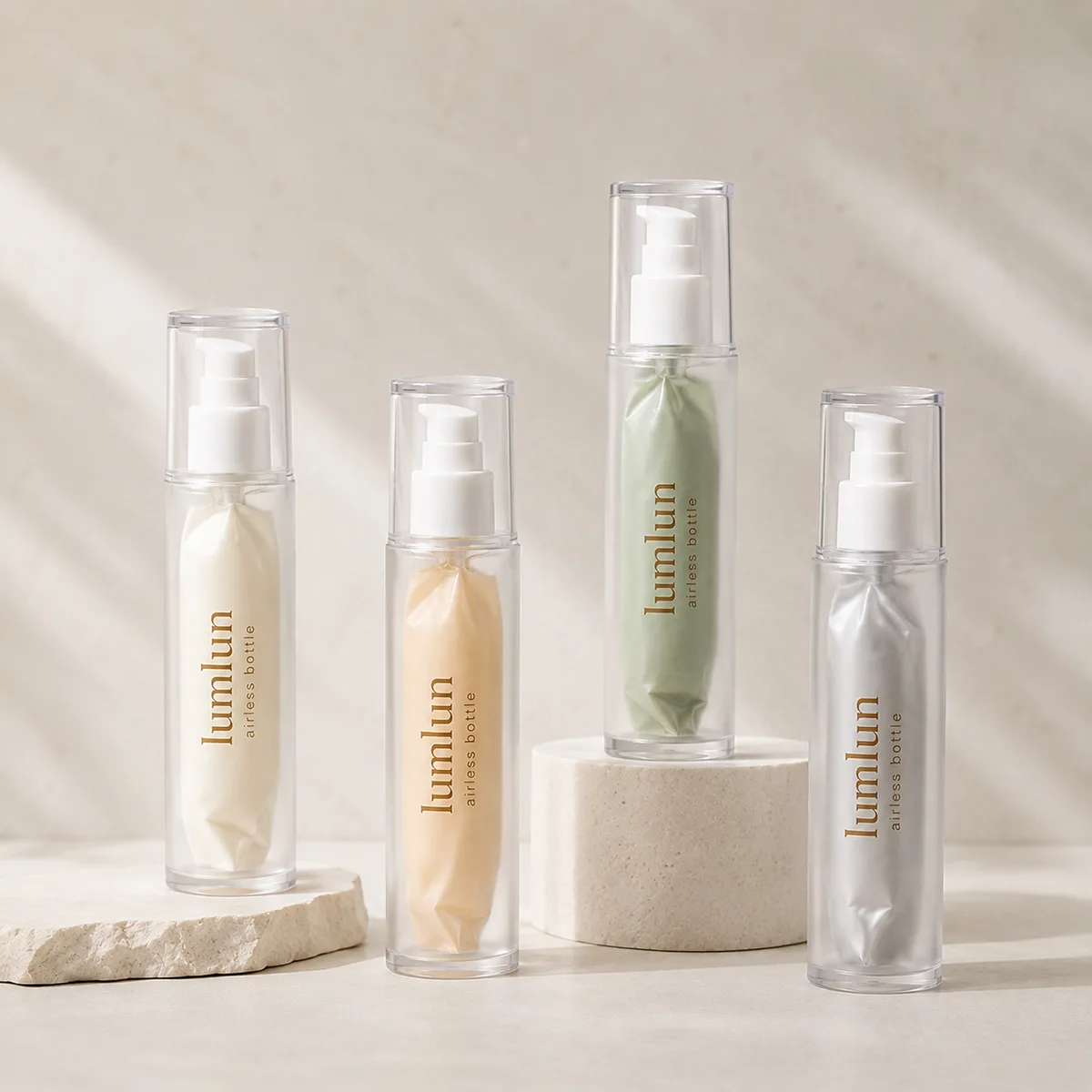
LumLun currently has a real 150ml PETG airless bottle with an EVOH pouch. With a clear or high-clarity outer bottle, the pouch can be visible and can become part of the final product appearance.
That creates a very different visual effect from a common piston airless bottle. If a brand does not simply want to show “outer bottle + bottom piston,” but instead wants a visible relationship of “clear outer bottle + separate inner pouch,” then the pouch structure itself can participate in the package design.
Especially in a larger 150ml format, the bottle proportion is already large enough for the inner pouch to create a clear inner-versus-outer structural effect.
At that point, the customer is not only choosing a pump bottle. The decision also becomes: Should the internal package structure itself be visible and become part of the design?
Do Not Choose Pouch Automatically Just Because You See EVOH
Pouch airless systems are often seen together with EVOH or other multilayer, barrier-oriented material structures. That does not mean a product should automatically choose pouch simply because the formula is demanding or the brand wants to emphasize formulation protection.
What can be confirmed for current LumLun products is specific: PETG outer bottle + EVOH pouch + 150ml. Another existing 150ml airless model uses a PP/EVOH material combination.
Those are real product facts. What should be avoided are universal shortcuts such as:
- EVOH = always more stable;
- Pouch = automatically protects every formula better;
- Piston = automatically unsuitable for sensitive products.
Airless packaging can reduce repeated exposure of the remaining product to outside air during use, but airless packaging by itself does not prove a fixed shelf life, stability result or formula performance.
For this comparison, a more useful order is therefore: compare the structure first, then compare the actual model and material construction.
Similar Outside Appearance Does Not Mean the Internal System Is the Same
This is easy to miss during sourcing.
A clear airless bottle may look very simple from the outside but use a piston inside. Another clear bottle with a similar overall size may contain a clearly visible flexible inner pouch.
From a packaging design perspective, the result can look completely different. A piston airless bottle tends to read as one complete airless container. A pouch airless bottle can instead create three visible layers: the outer bottle, the inner pouch and the product color.
For example, a light-colored outer pump, a clear outer bottle and a colored product visible through the inner pouch can create a very distinctive skincare packaging look by themselves.
For projects that depend heavily on product photography, ecommerce images or shelf presentation, this difference is not only technical. It directly affects what the finished product looks like.

When We Would Look at Piston Airless First
If a project needs common skincare capacities such as 15ml, 30ml, 50ml, 80ml or 100ml and wants to choose from more established airless bottle shapes, piston airless is often a natural starting point.
At that stage, the brand is mainly trying to answer:
- Does the capacity fit?
- Does the bottle proportion look right?
- Does the pump fit the project?
- Do the material and outer shell follow the intended direction?
LumLun currently has multiple existing airless families across different capacities and looks that can be compared along this route.
In other words: if the bottle itself—not a visible inner pouch—is meant to define the package’s visual identity, starting with established piston airless families is usually straightforward.
When We Would Put Pouch Airless Earlier on the Shortlist
If the project is already interested in the inner pouch structure, or wants a clear outer bottle that visibly shows the pouch, then pouch airless deserves to enter the shortlist earlier.
Because LumLun already has a real 150ml PETG/EVOH pouch model, it can be compared with conventional airless bottles as a concrete product rather than an abstract concept.
For example, a larger lotion, body-care product, sunscreen or other pump-dispensed product may be a reason to compare pouch airless if the brand wants the package to show a clearer inner-and-outer structural relationship.
The question is still not: “Is pouch more premium than piston?”
The useful question is: “Is this internal structure something the brand wants the package to show?”
If the answer is no, there is no need to add complexity just because the structure is different. If the answer is yes, then pouch should not be treated as merely a small variation of an ordinary airless bottle.
Do Not Compare Only the Words “Piston vs Pouch”
In the end, the comparison still has to return to real bottle models. A practical way to compare is to look at four things together:
First, capacity.
Does the project need 15ml, 30ml, 50ml or 150ml? Capacity quickly narrows the real model range.
Second, the internal system.
Do you want a traditional piston that moves upward, or a separate flexible pouch?
Third, the visible presentation.
Should the package look like one complete airless bottle, or should a clear outer bottle intentionally reveal the pouch?
Fourth, the actual material and pump construction.
Piston and pouch are only the broad internal-system directions. The final choice still has to land on a real airless bottle model.
That is more useful than simply asking: “Which is better, piston or pouch?”

Compare Real Airless Bottle Options
Compare three real LumLun Airless Bottle options across different structures and materials: refillable, Mono-PP and pouch.
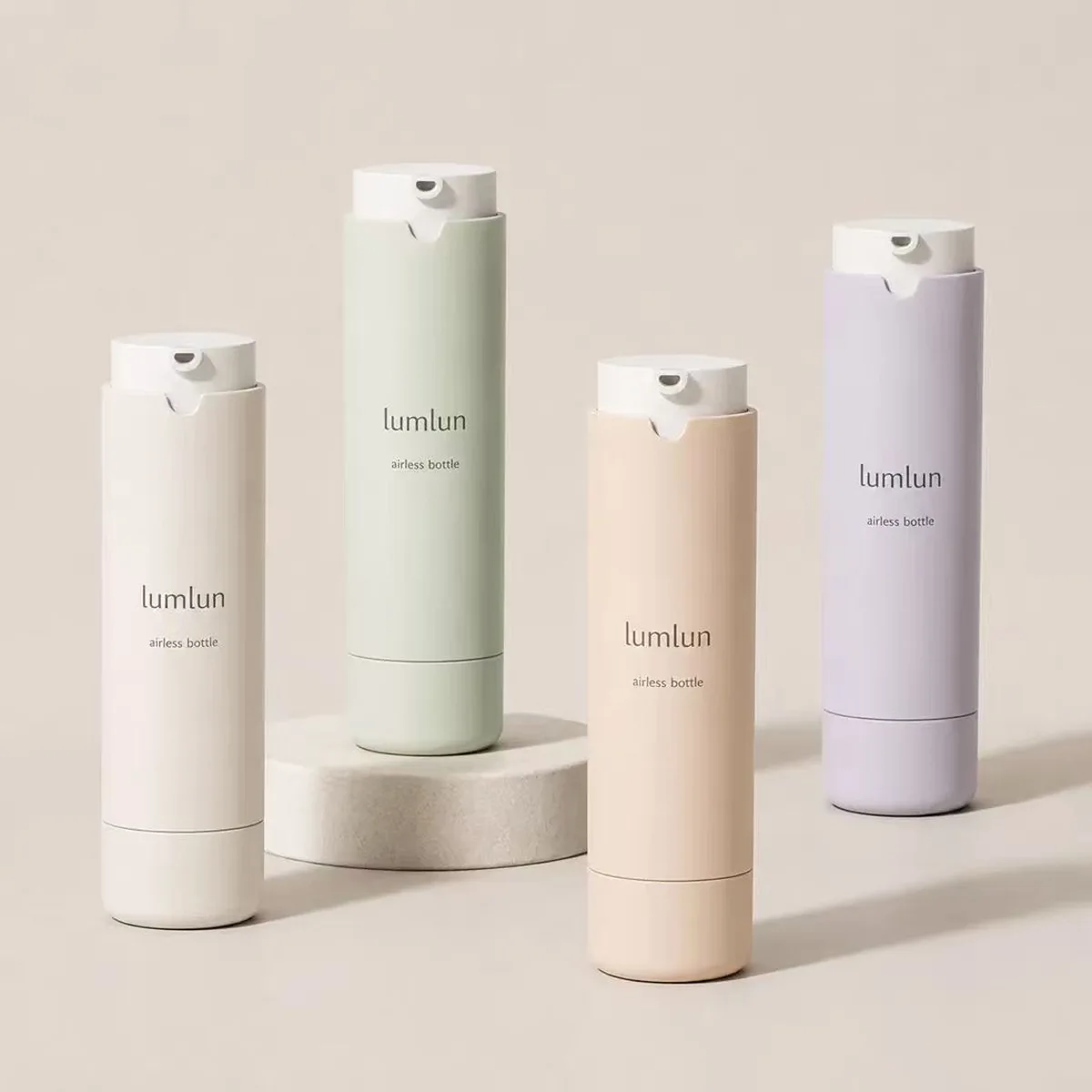
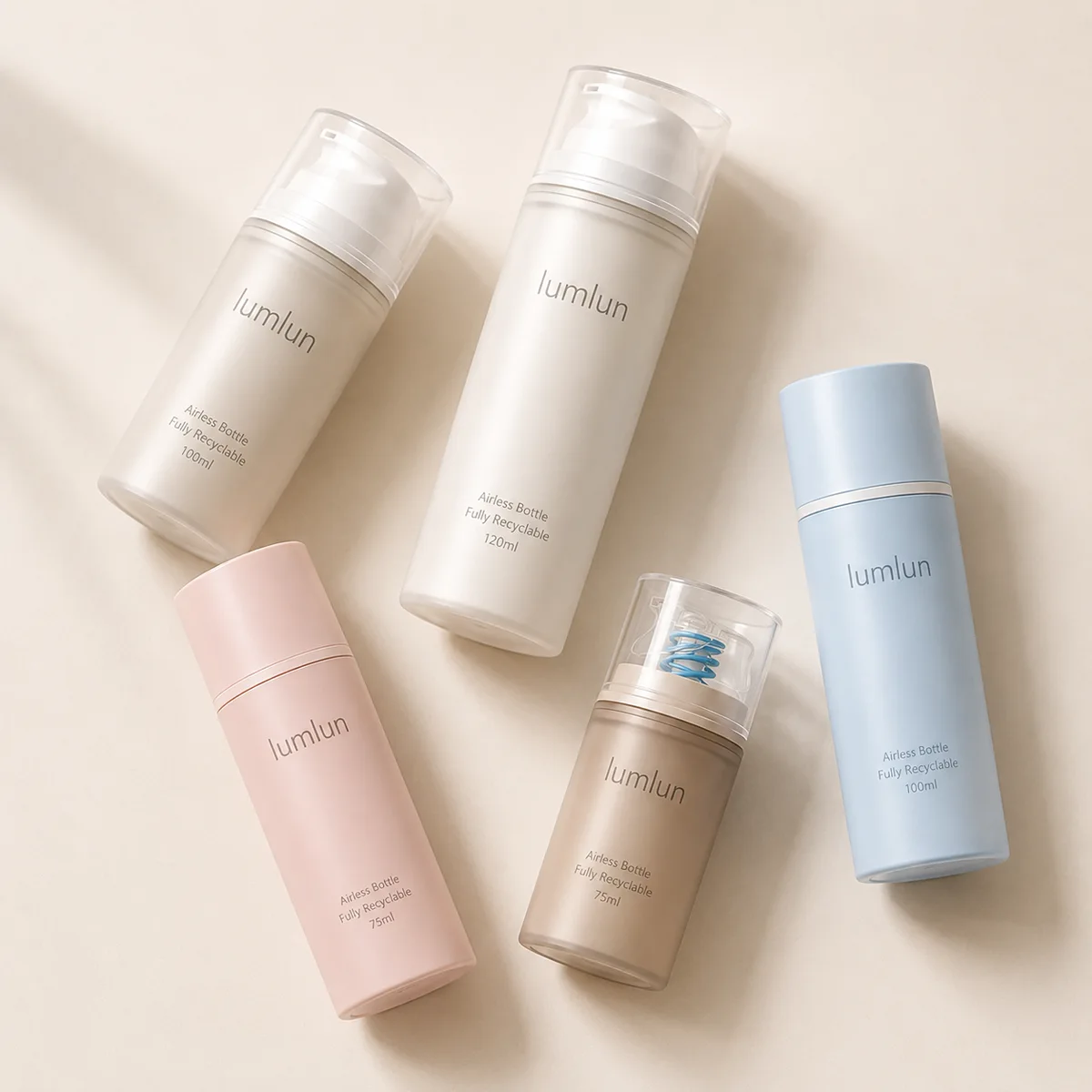
Mono-PP Airless Pump Bottle — 30–200ml
Which System Fits the Project Better?
Piston airless and pouch airless solve the same broad airless job in two different ways. Neither system is automatically better.
If the project wants to compare many established bottle shapes and capacities, piston airless is often the simpler place to start.
If the separate inner pouch is part of the structure or visible design the brand actually wants, pouch airless should move higher on the shortlist.
The better choice is the one that fits the capacity, internal structure, intended look and real model available for the project.
Browse LumLun Airless Bottle & Jar to compare more real models and capacities.