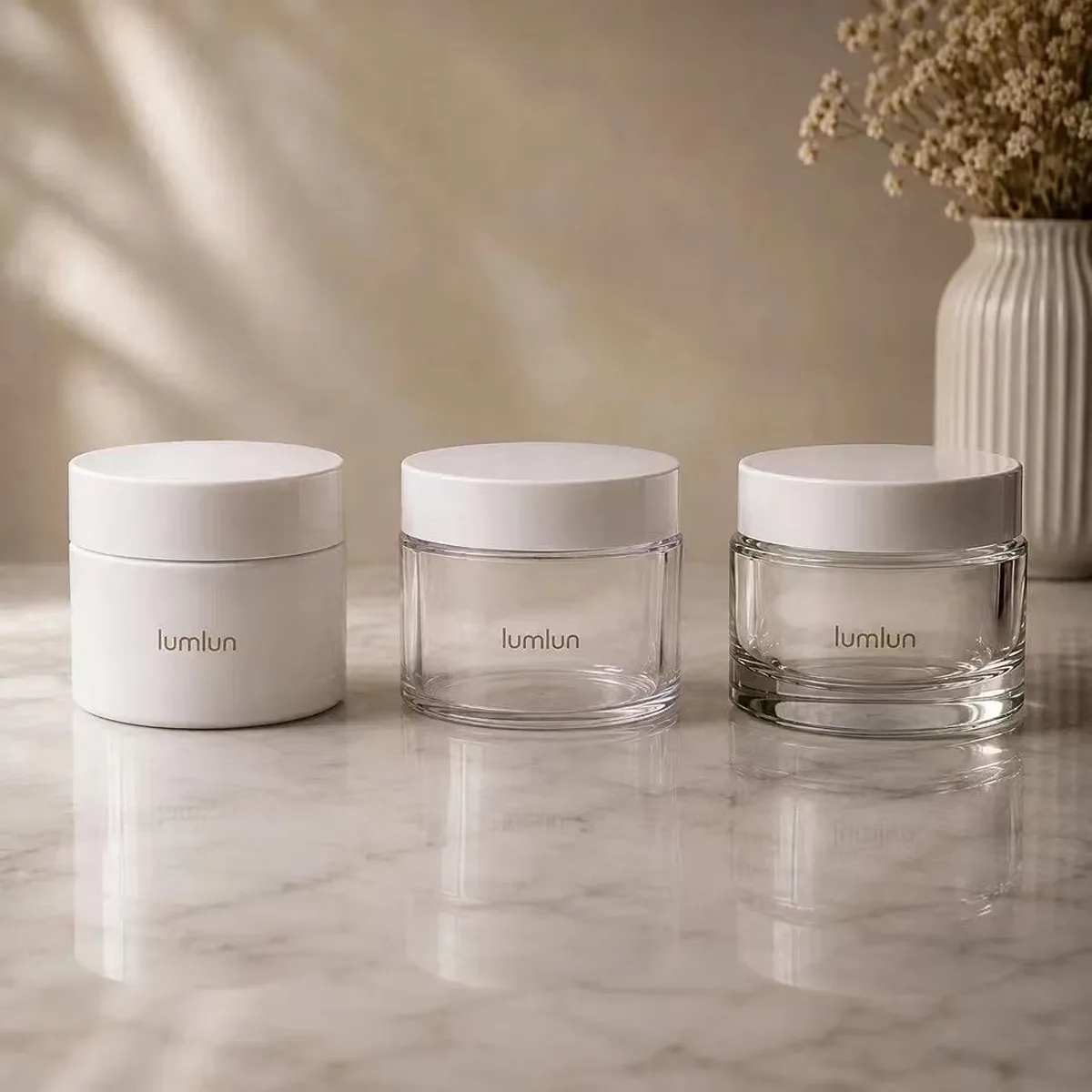
Cream jar packaging should be chosen by structure first, then material, capacity, closure and refill design. A single-wall PP jar, a double-wall jar and a refillable jar with a replaceable inner cup solve different packaging tasks even when they hold similar cream products.
The clearest way to compare them is to separate the visible outer jar from the part that actually holds the formula. That prevents a common sourcing mistake: assuming that a clear outer wall, heavy shell or refillable appearance tells you what the formula-contact component is made from.
Before material or decoration, a buyer usually has four practical questions: How will the user access the product? How thick or fluid is the product in normal use? Is a refill SKU genuinely part of the range? Which capacity and closure make that use easy? Those questions often narrow the jar family faster than a material name.
Start With the Jar Structure: Single Wall, Double Wall or Replaceable Inner Cup
A single-wall jar uses the main jar body as the primary container structure. It can be a straightforward route when the project needs a conventional wide-mouth cream jar with fewer visible layers.
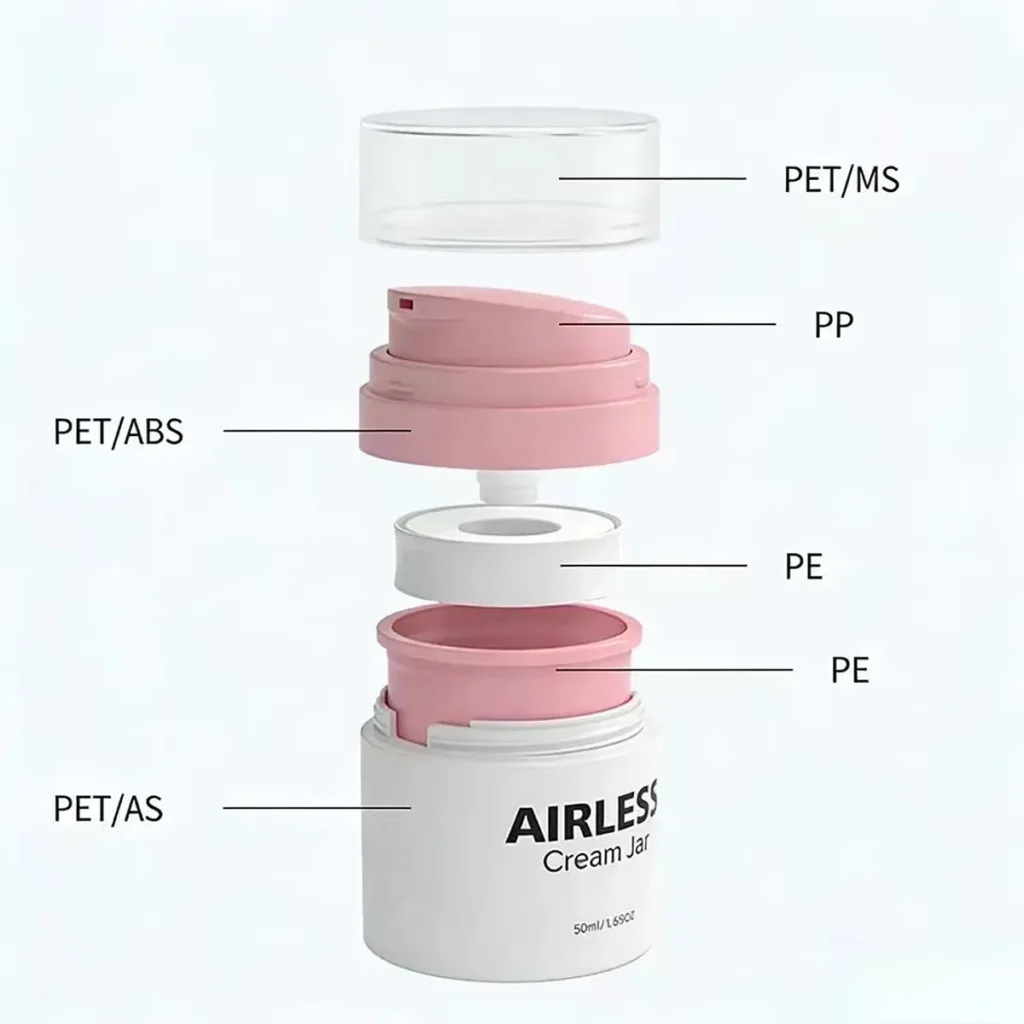
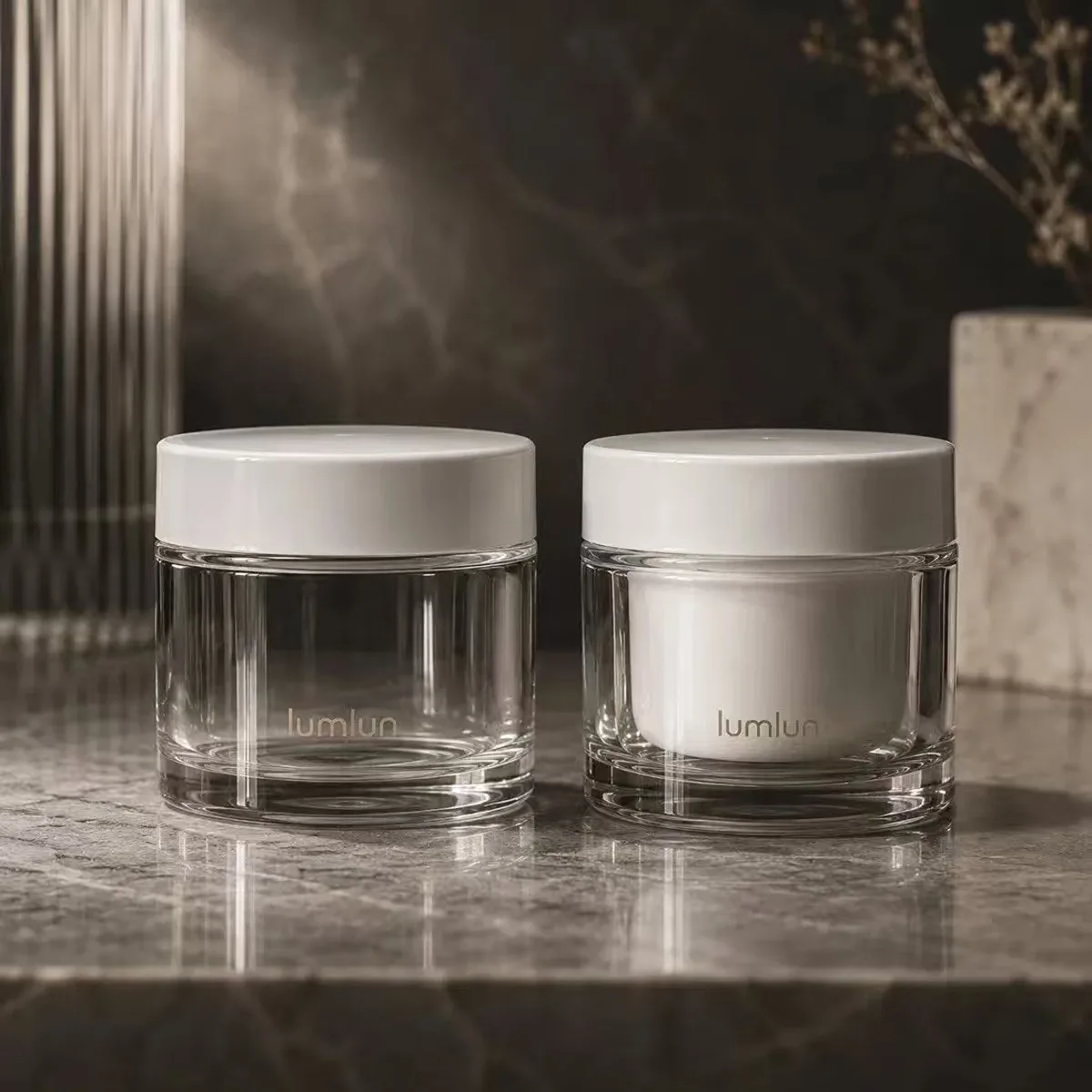
A double-wall jar uses an outer shell around a separate inner cup or inner container. The extra wall can change the visible depth, proportions and component layout, but double wall does not automatically mean refillable. In many designs the inner component is part of the assembled pack and is not intended to be replaced by the end user.
A refillable or replaceable-inner jar is different because the inner cup is intentionally designed as a replaceable component. The outer jar, lid or other main visible parts may remain in use while the confirmed refill component is changed.
| Structure | What changes | When to compare it |
|---|---|---|
| Single wall | One main jar body with a conventional lid/closure route | When a straightforward cream-jar construction is enough |
| Double wall | Visible outer shell plus inner container or cup | When wall depth, outer-shell design or multi-component appearance matters |
| Replaceable inner cup | Inner component is designed to be removed and replaced | When a refill system is part of the product plan |
A wide-mouth jar is a natural direction for products that are intentionally scooped or picked up directly, such as richer face creams, masks, balms and body butters. A spatula can support that access when the selected jar is designed around one. If the product brief instead requires pump dispensing without repeatedly opening the bulk product, compare an airless pump jar rather than forcing a traditional open jar to solve a pump-based task.
Choose Material by the Component, Not by the Appearance Alone
A cream jar can combine several materials. The outer shell may be glass, PETG, PMMA, AS, ABS or PP depending on the exact model, while an inner cup, liner, lid or accessory may use a different material. The formula-contact material must be confirmed on the selected structure.
PP is common in cream-jar systems because it can be used for jar bodies, inner cups and refill components on many models. Clear plastics such as PETG or other transparent resins can be used where the project wants visible wall depth or an inner color to show through. Glass can be used as the main visible jar body on glass models.
Avoid turning that into a universal material ranking. A material that works well for one model or formula is not automatically the best choice for another. The useful sourcing step is to identify the exact component list, then confirm the selected pack with the real formula where formula compatibility matters.
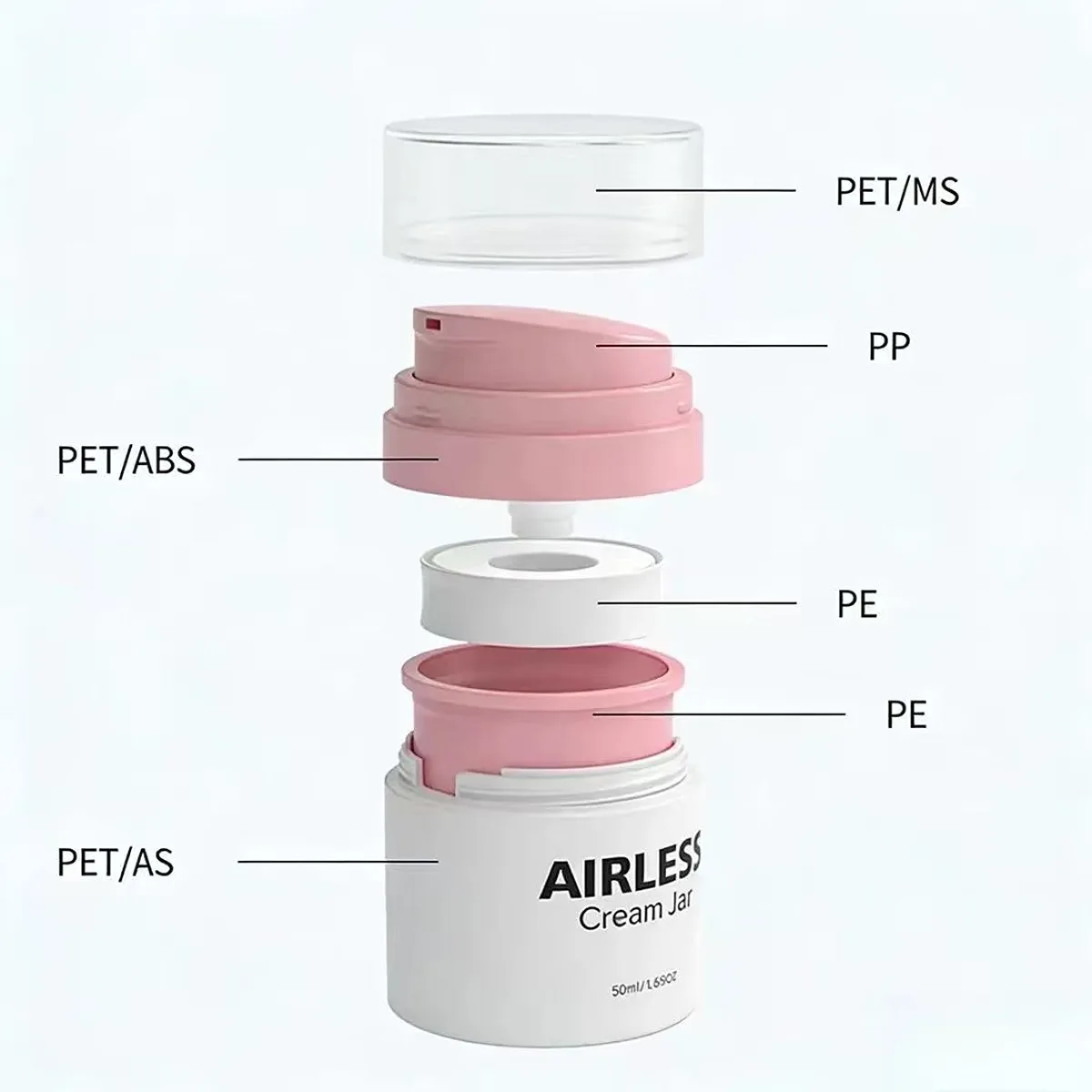
For a conventional open jar, the user accesses the cream directly through the jar opening. An airless cream pump jar uses a different dispensing structure and belongs to a separate packaging decision. The two should not be mixed simply because both are called cream jars.
For a wide-mouth jar, the opening diameter and the way the user removes product are part of the format. A liner, inner lid or spatula can be included on specific models, but those parts should be confirmed instead of assumed from a reference photo.
When the visible shell is clear, the inner cup becomes more noticeable. The color relationship between outer shell, inner cup, formula and lid can therefore affect the final appearance without changing the actual material that touches the formula.
PP is especially common for functional inner cups, refill pods, lids and structural jar components. Clear or heavy outer shells may use glass, PETG, PMMA/acrylic, AS/SAN, ABS or other confirmed materials, but the visible outer material should not be used as a shortcut for the formula-contact material. For compatibility decisions, the inner cup or real contact component matters more than the decorative shell.
Use Refillable Cream Jars When the Replaceable Inner Is Part of the Product Plan
A refillable cream jar makes sense when the brand actually intends to manage a full pack plus a separately identifiable replacement inner cup. The physical refill mechanism should be easy to recognize, remove and replace on the exact model.
Refillable structure is not automatically the more sustainable choice in every market or every product system. The outer pack, refill component, materials, transport and how the refill is actually supplied all influence the final result. The packaging decision should therefore begin with the real replacement structure rather than a broad environmental claim.
It is also useful to confirm whether the refill component can be supplied separately for the exact model. A jar may look as if the inner cup can be removed, but a production version should only be called refillable when that replacement route is part of the confirmed design.
A refill plan also needs a clear component identity. The buyer should be able to specify the complete jar and the replacement inner without confusing them as two different jar models. This makes future quotation and repeat production easier to keep tied to the approved structure.
If a project only wants the appearance of a double-wall jar and has no plan to supply replacement inners, a conventional double-wall model can be the simpler route. A refill mechanism adds value only when the replacement component is actually part of the product system.
| LumLun model | Confirmed structure / material | Capacity |
|---|---|---|
| 50g Refillable Twist-Pod Cream Jar | Replaceable inner cup; PP / PMMA / MS direction | 50g |
| PP Flip-Top Refillable Cream Jar with Spatula | PP; flip-top, spatula storage and replaceable inner cup | 100ml / 150ml / 200ml |
| 100ml PP Cream Jar with Magnetic Spatula | PP; refillable jar with magnetic spatula | 100ml |
| Square PP Cream Jar | PP conventional jar family | 20ml / 30ml / 50ml / 100ml |
A refill project also needs a practical SKU plan. Confirm that the replacement inner can be supplied as its own component or refill set, that it locks or seats correctly in the approved outer jar, and that the lid, disc or other retained parts still close as intended. Do not assume that a 50g refill fits a 100g outer jar or another jar family just because both are called refillable.
It also helps to make the full pack and refill easy to distinguish in ordering and artwork. The refill should be clearly identified, while the reusable outer pack keeps the main visual system. This is a packaging-structure decision, not a promise about repeat purchasing.
Match Capacity, Closure and Access to the Product Role
Capacity changes the jar proportions and how much product the user accesses at one time. Compact 20ml or 30ml jars can fit eye-care, treatment or smaller cream formats; 50g is a common face-cream direction; 100ml and above can support larger face, body, mask or other higher-use products when the exact model is appropriate.
Choose capacity from the product role and intended fill, not from a generic “premium size.” A larger jar changes the opening diameter, lid proportion, visible wall area and artwork space. It can also change which model families are available.
Closure is equally structural. A screw lid, flip-top lid, snap-on component or pump top changes access to the product and the component set that must be matched. A spatula can be loose, stored in the lid or integrated into a specific design. These are model choices, not decorative details added after the jar is finished.
Capacity and closure should also be reviewed together. A 200ml flip-top jar and a 50g twist-pod refillable jar may both be refillable, but they serve very different product roles and have different opening, handling and artwork areas. The refill label alone does not make them substitutes.
If a product line needs several capacities, first check whether one real model family actually offers those sizes. Using unrelated jars only because they share a material can create inconsistent lid proportions and refill structures across the range.
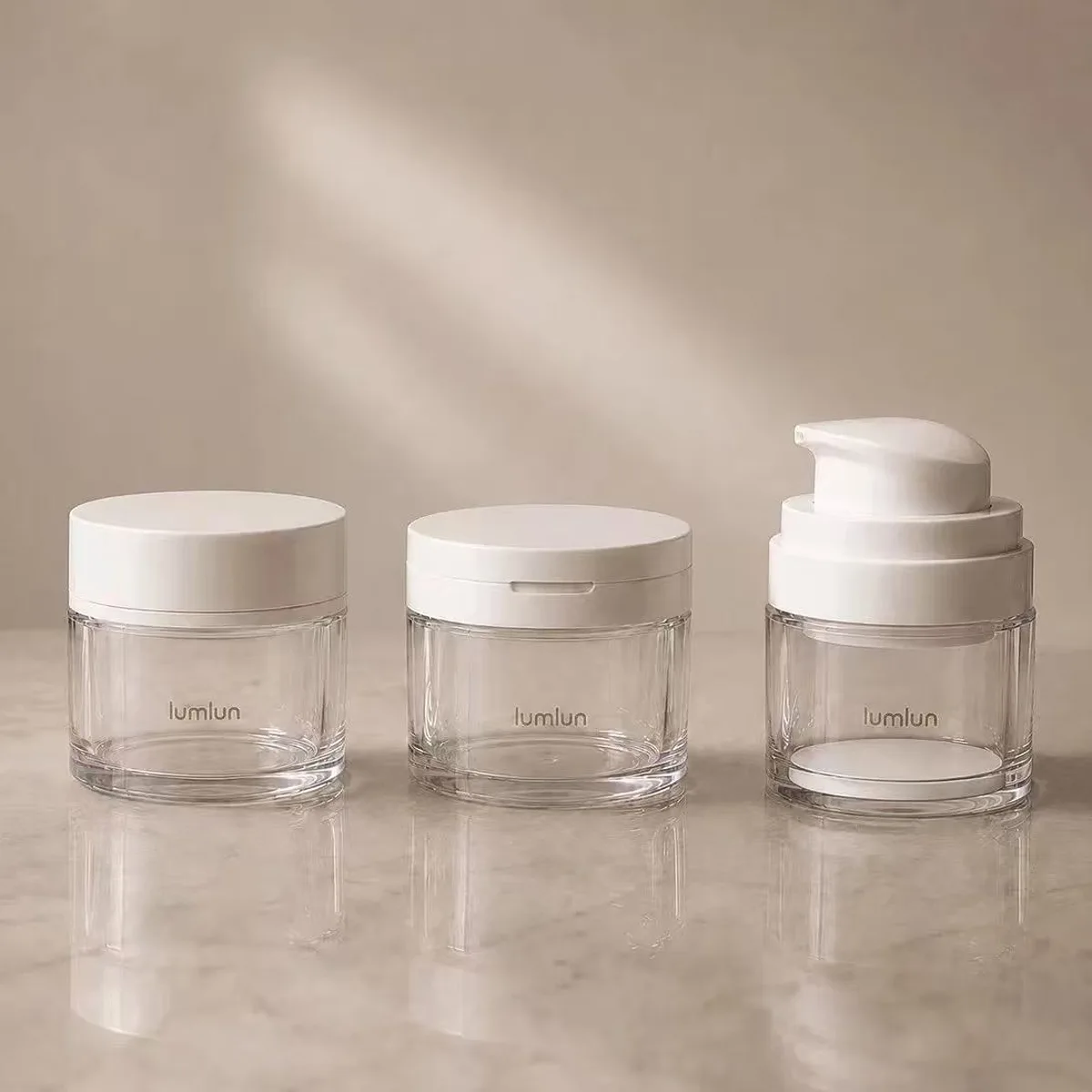
Product texture changes the access experience even when the jar capacity is the same. A dense balm or body butter may benefit from a wider opening and spatula-friendly access; a soft cream or gel moisturizer may use a standard screw jar comfortably; a more fluid product may be cleaner and easier in a pump-based format. The product name alone does not decide the jar—texture, amount per use and access method should agree.
Opening diameter and jar depth also matter. A deep narrow 50g jar and a wide shallow 50g jar can hold similar fill amounts but feel very different when the user reaches the remaining product. For larger face masks or body products, hand access and lid handling become more important; for eye-care or treatment sizes, compact proportions and controlled spatula access may matter more.
Keep Decoration After Structure and Material Are Confirmed
Once the jar architecture is right, color and decoration become much easier to specify. Molded color, coating, frosted effects, printing, hot stamping or metallized details may be available depending on the confirmed material and surface.
The outer jar and lid can carry the main visual system, while an inner cup or spatula may use a coordinated or contrasting color. On refillable models, the full pack and replacement inner should be visually related without hiding which component is the refill.
Artwork should follow the actual printable surface. A curved side wall, wide lid, clear outer shell or double-wall construction changes how much area is available and what will be visible through the pack.
Confirm the Selected Model With a Sample, Without Turning Sourcing Into a Test Manual
A stock sample is useful for checking the real jar size, wall construction, lid movement, inner-cup removal and decoration area. If formula compatibility or dispensing behavior is important to the selected structure, a filled sample can confirm those product-dependent points.
The buyer does not need a long laboratory checklist to make the packaging decision. The practical goal is to verify that the exact jar, inner component, closure and formula relationship work as expected before bulk production.
Compare real structures in the LumLun Cream Jar collection. When a refill system is part of the project, use the exact product model and replacement-inner design as the basis for the quotation and sample discussion.
For refillable models, the sample should also make the replacement action obvious: remove the used inner, insert the new one, confirm that it sits fully in position and close the lid normally. For jars with a stored or magnetic spatula, check that the spatula returns to its intended position without interfering with the closure. These are simple usability checks on the chosen structure, not a long laboratory protocol.