Choosing sunscreen packaging becomes much easier when the first decision is based on the product itself rather than on decoration. A 50ml facial sunscreen cream, a 200ml body sunscreen lotion and a solid sunscreen stick do not call for the same package.
Quick answer: start with product form, then decide how the product should dispense, and use target capacity to remove packaging models that no longer fit. Creams, lotions and gels may lead to a cosmetic tube, pump bottle or airless pump bottle. A solid sunscreen stick starts from a different product form, while a spray sunscreen needs its own dispensing system.
| Product direction | Packaging worth comparing first | Main decision |
|---|---|---|
| Cream / lotion / gel with squeeze dispensing | Cosmetic tube | Does a flexible pack and direct squeeze action match the intended use? |
| Cream / lotion / fluid with press dispensing | Pump bottle | Does the project need a rigid bottle with a pump and a suitable size range? |
| Project specifically requires an airless structure | Airless pump bottle | Is airless construction itself part of the packaging requirement? |
| Solid sunscreen | Stick container | Is the formula developed for direct application as a solid stick? |
| Spray sunscreen | Dedicated spray packaging | What spray pattern and dispensing system does the actual product require? |
Start with the product form, not the word SPF
“Sunscreen” describes the product category, but it does not define a package. One formula may be a richer cream, another a light lotion or fluid, another a gel, and another a solid stick. For creams, lotions and gels, a tube, regular pump bottle or airless pump bottle can all be reasonable starting directions depending on how the product should be used.
If the product is already developed as a solid sunscreen stick, the comparison changes immediately. A stick is not simply a different shell for the same liquid product; the product form and the way it is applied are different.
Choose a cosmetic tube when squeeze dispensing is the intended use
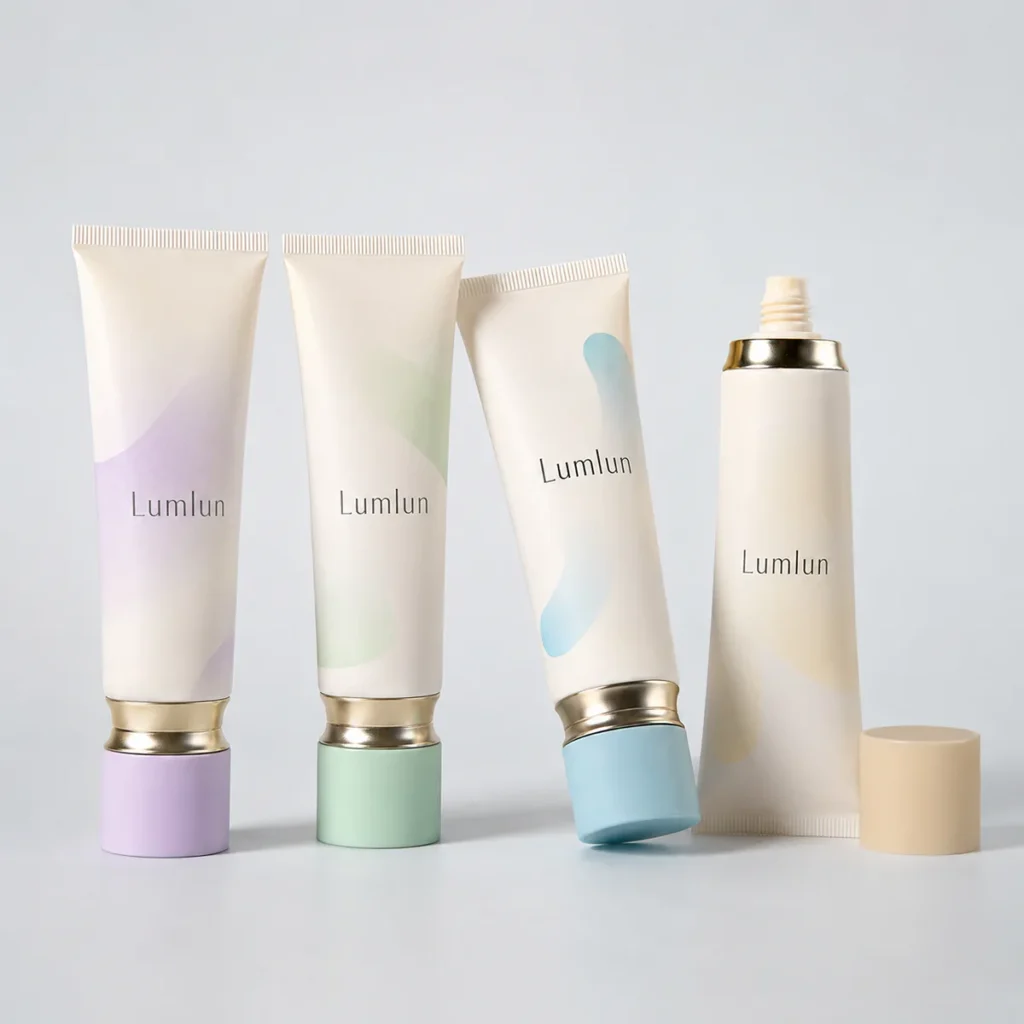
A cosmetic tube is a clear starting point when the consumer should squeeze the pack and dispense the sunscreen directly. This can work well for many facial creams, daily sunscreen lotions and body sunscreen products where a flexible, portable format is part of the intended experience.
Capacity then narrows the choice further. For example, a project already defined as 50ml + cream sunscreen + squeeze dispensing does not need to keep comparing every pump bottle on the market. LumLun offers a real 50ml PE cosmetic tube listed for hand cream and sunscreen applications, so the project can move from a generic “tube” idea to an actual 50ml model.

Choose a pump bottle when press dispensing and a wider size range matter
If the intended action is pressing a pump rather than squeezing a flexible pack, a pump bottle becomes more relevant. The useful question is not whether pump bottles are “better”; it is whether the required capacity and dispensing style exist in a real model.
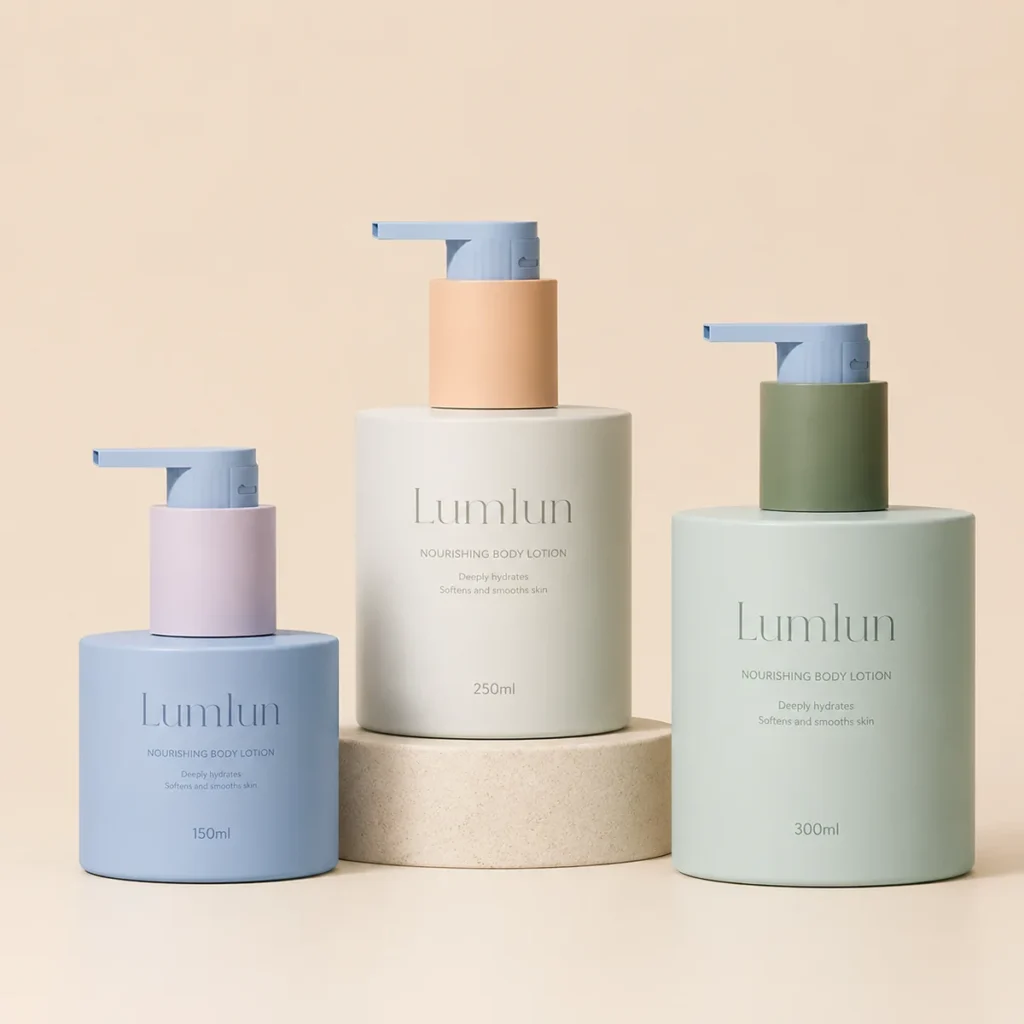
LumLun’s round PE lotion pump bottle with lockable pump is currently offered in 50ml, 100ml, 150ml, 200ml, 250ml, 300ml, 400ml and 500ml. For a 200ml body sunscreen + pump dispensing project, the existence of a real 200ml size is immediately more useful than a generic list of pump-bottle advantages.
Use airless as a project requirement, not a default SPF rule
An airless pump bottle can be one sunscreen packaging direction, but SPF alone does not make airless the automatic answer. A better question is whether the project itself calls for an airless pump structure.
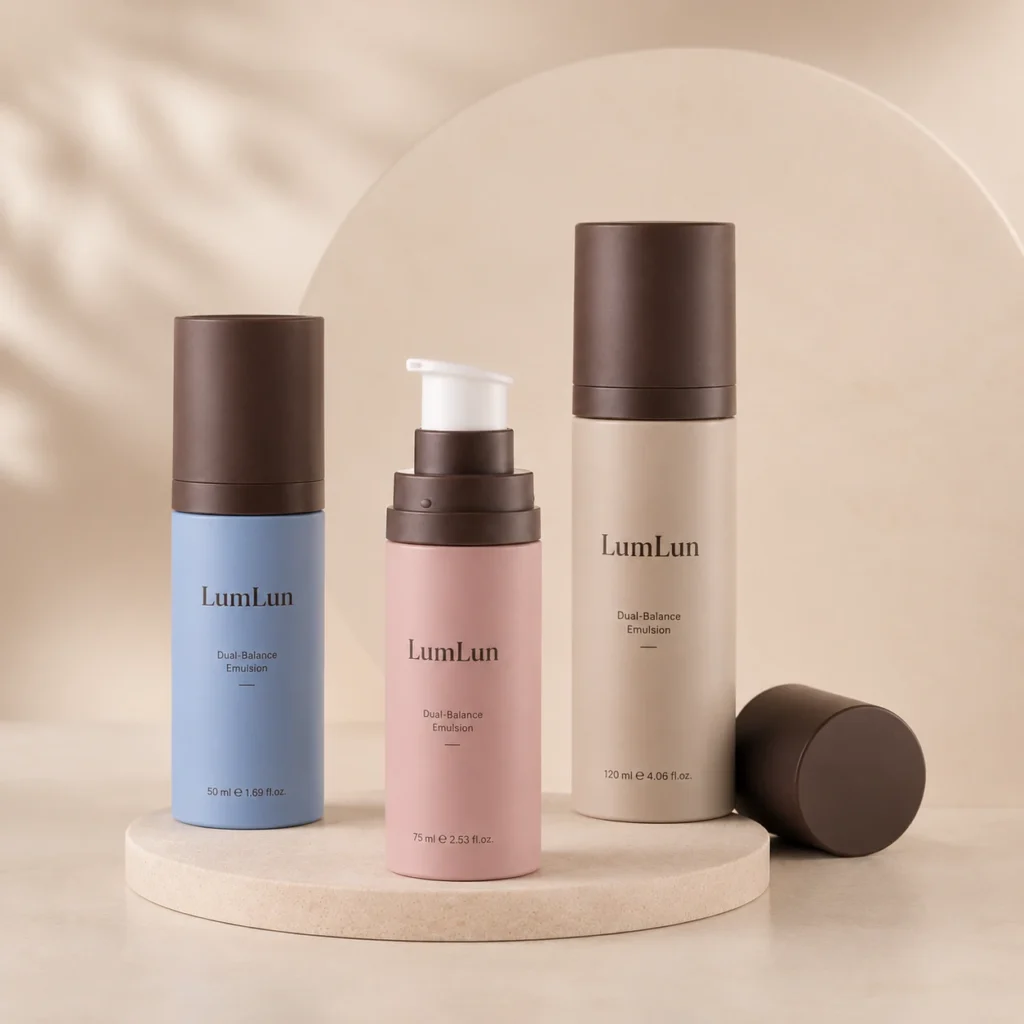
LumLun has a real airless pump bottle family for lotions and emulsions in 50ml, 75ml and 120ml. If a project is already defined as 75ml facial SPF + airless pump, the 75ml model is worth reviewing. If the target is 200ml, this particular 50/75/120ml model is no longer a size match. That does not make airless “wrong”; it simply means the buyer should review a different real model rather than assume one bottle can be resized without changing its structure.

Face and body use change the practical size shortlist
Face and body use do not dictate one universal package, but they often change the capacity, hand feel and dispensing action that deserve attention. A smaller facial product may keep compact tube, pump or airless options in the comparison. A body sunscreen can make larger tube or pump formats more practical because more product is normally used over a larger area.
This is why the same word “sunscreen” can lead to very different real packaging models. Rigid packages also vary in body proportions and top structures, so the exact model matters once a rigid format has been chosen.

Solid sunscreen sticks start from a different product form
If the product is a solid sunscreen stick, a stick container becomes the main packaging family. The product is applied directly rather than squeezed or pumped out, so the next useful comparisons are the intended net content, stick diameter, application surface, twist mechanism and the real filling configuration of the selected model.
If the product is still a cream, lotion or gel, moving to a stick requires a different product format rather than only a package change. The first decision is therefore whether the product itself is truly being developed as a solid stick.
Spray sunscreens need their own dispensing route
A spray sunscreen should also be treated as its own dispensing project. An ordinary skincare fine-mist bottle should not automatically be treated as a sunscreen spray system just because both products are sprayed.
The actual product state, required spray pattern, capacity and spray package need to be reviewed together. This keeps the packaging recommendation tied to the intended use instead of to the appearance of the bottle.
Capacity is a model filter, not just a label number
Once the dispensing route is clear, capacity is one of the fastest ways to remove unsuitable models. A 75ml facial project and a 200ml body project may both be sunscreen, but they should not be compared against exactly the same product list.
For example, 75ml exists in the airless family above, while 200ml exists in the PE pump-bottle family. Using real model availability this way turns capacity into a purchasing filter rather than a specification added at the end.
Compare real LumLun packaging directions
After the packaging family has been narrowed to one or two directions, compare real models rather than generic format names. These three LumLun products illustrate the difference between a verified sunscreen tube application, an airless model family, and a pump-bottle family with a wider capacity range.
Start the shortlist with four project details
A first packaging review does not require finished artwork or every decoration detail. Four pieces of information are usually enough to make the initial comparison useful:
- Product form: cream, lotion, gel, fluid or solid stick.
- Target capacity: for example 30ml, 50ml, 75ml, 100ml or 200ml.
- Preferred dispensing: squeeze, regular pump, airless pump, direct stick application or spray.
- Main use: face, body or another defined application.
A reference packaging image can also be useful when the visual direction is already clear. With these basics, a very broad sunscreen packaging search can be reduced to a small group of real models worth comparing.
Explore the relevant product families: Cosmetic Tube models · Airless Bottle & Jar models · Lotion Bottle models
Have a sunscreen packaging project? Send the product form, target capacity and preferred dispensing style. A reference image is optional. Chat on WhatsApp