If an airless pump bottle is not working, it does not automatically mean the bottle is defective. A new bottle that has not dispensed yet needs a different first check from one that worked normally and then stopped.
| What you see | Check first |
|---|---|
| New bottle gives no product at first use | Priming, pump position and outlet |
| Pump head moves but no product comes out | Outlet, product in the bottle and any lock |
| Output is weak or irregular | Formula flow, pump path and whether the issue repeats |
| Pump head stays down or returns slowly | Pump head, outlet and visible damage |
| Several matching bottles show the same issue | Supplier review of the exact bottle and pump |
1. Identify the Symptom Before You Troubleshoot
“Not working” can mean several different things. A bottle that has never produced its first dispense is not the same problem as one that worked normally and later stopped.
Has it ever dispensed?
This quickly separates a first-use priming question from a problem that appeared later.
Does the pump head move and return?
A pump head that moves normally points you toward different checks from one that feels stuck or stays down.
Does the same issue repeat?
If several matching bottles behave the same way, the pattern matters more than a one-off issue in one bottle.
Does the pump have a lock?
If the pump twists or locks, make sure it is fully in the open position before judging its performance.
Make these checks before taking the bottle apart. Opening the pump or forcing the piston changes the bottle and can make the original cause harder to identify.
2. Start With Priming on a New Airless Pump Bottle
A newly filled airless bottle may need a number of complete press-and-release cycles before product reaches the outlet. This first stage is called priming.
There is no useful universal rule such as “10 presses is correct” or “20 presses proves the bottle is good.” Priming can vary with the pump, bottle design and how easily the formula flows.

3. The Pump Moves, but No Product Comes Out
If the pump head moves normally but no product appears, check the easy visible points before assuming the pump has failed.
- Check the bottle: make sure product is in the bottle and the pump is fully fitted.
- Look at the outlet: check for visible dried product or residue around the dispensing opening.
- Check the lock: if the pump twists or locks, make sure it is open.
- Leave the pump assembled: avoid removing the pump just to investigate unless the exact bottle is being checked in a controlled way.
If dried product is visible on the outside of the outlet, clean only the accessible exterior as appropriate for the product. Soaking the assembled pump can create a new problem instead of showing what caused the original one.

4. Why the First Check Changes by Airless Bottle Design
Airless bottles do not all work in exactly the same way. The pump style, lock and number of chambers can change what you should check first. These three LumLun examples make that difference easy to see.
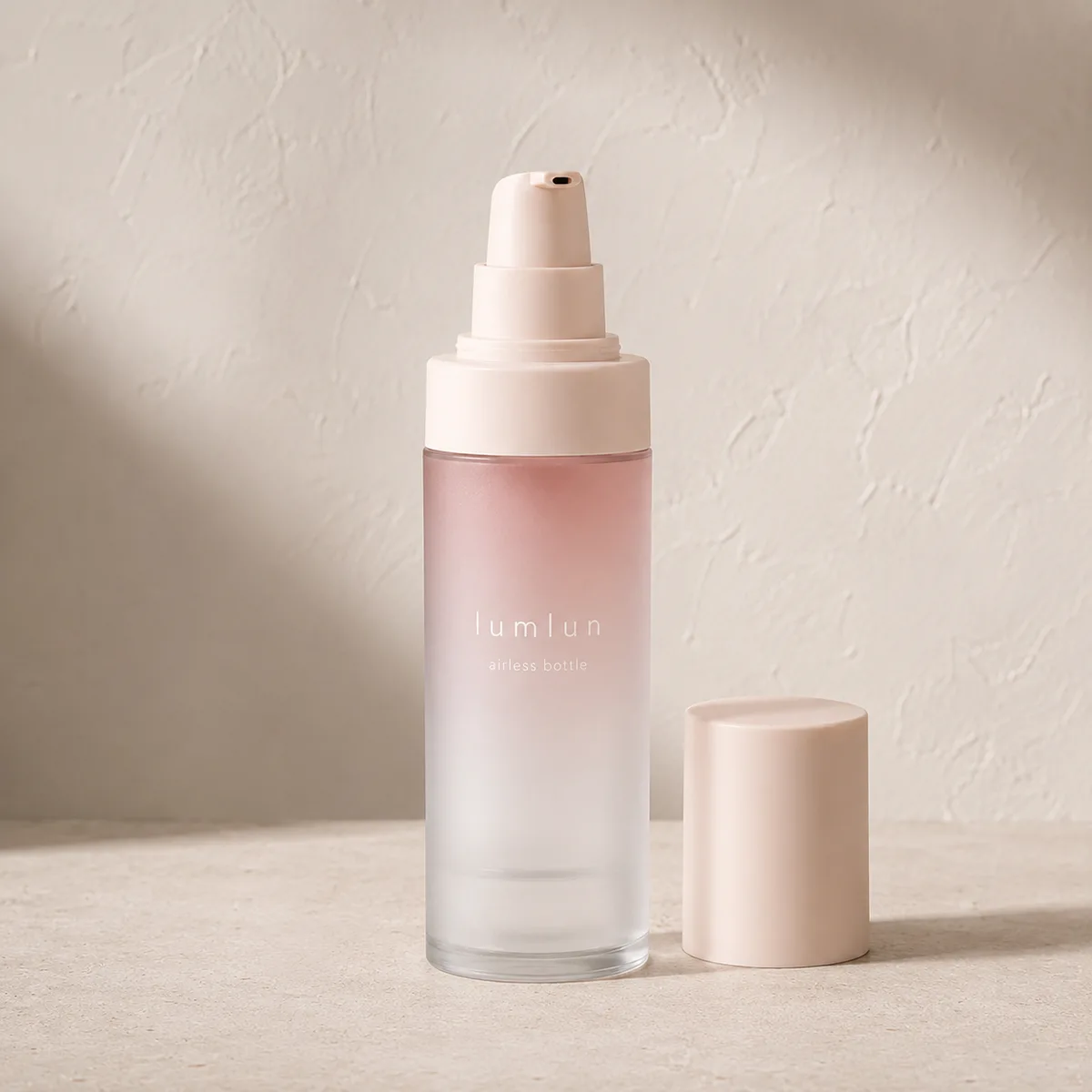
Airless Pump Bottle — 30ml–120ml
With this PP airless pump bottle family, start with priming, the outlet and normal pump movement before moving to less visible causes.
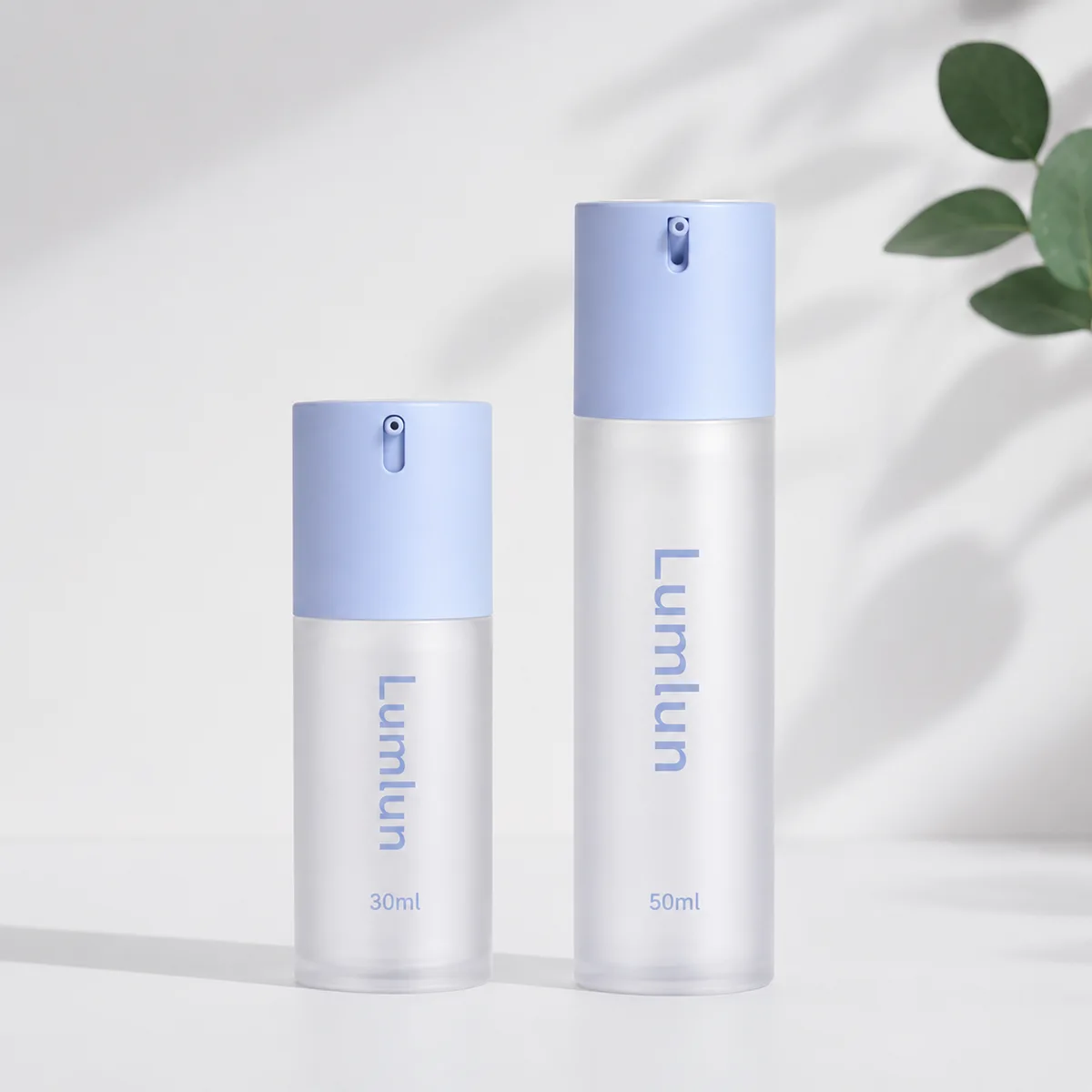
Twist Lock Airless Pump Bottle — Frosted MS, 30ml & 50ml
Because the pump has a twist lock, the first check is simple: make sure it is fully open and ready to press.
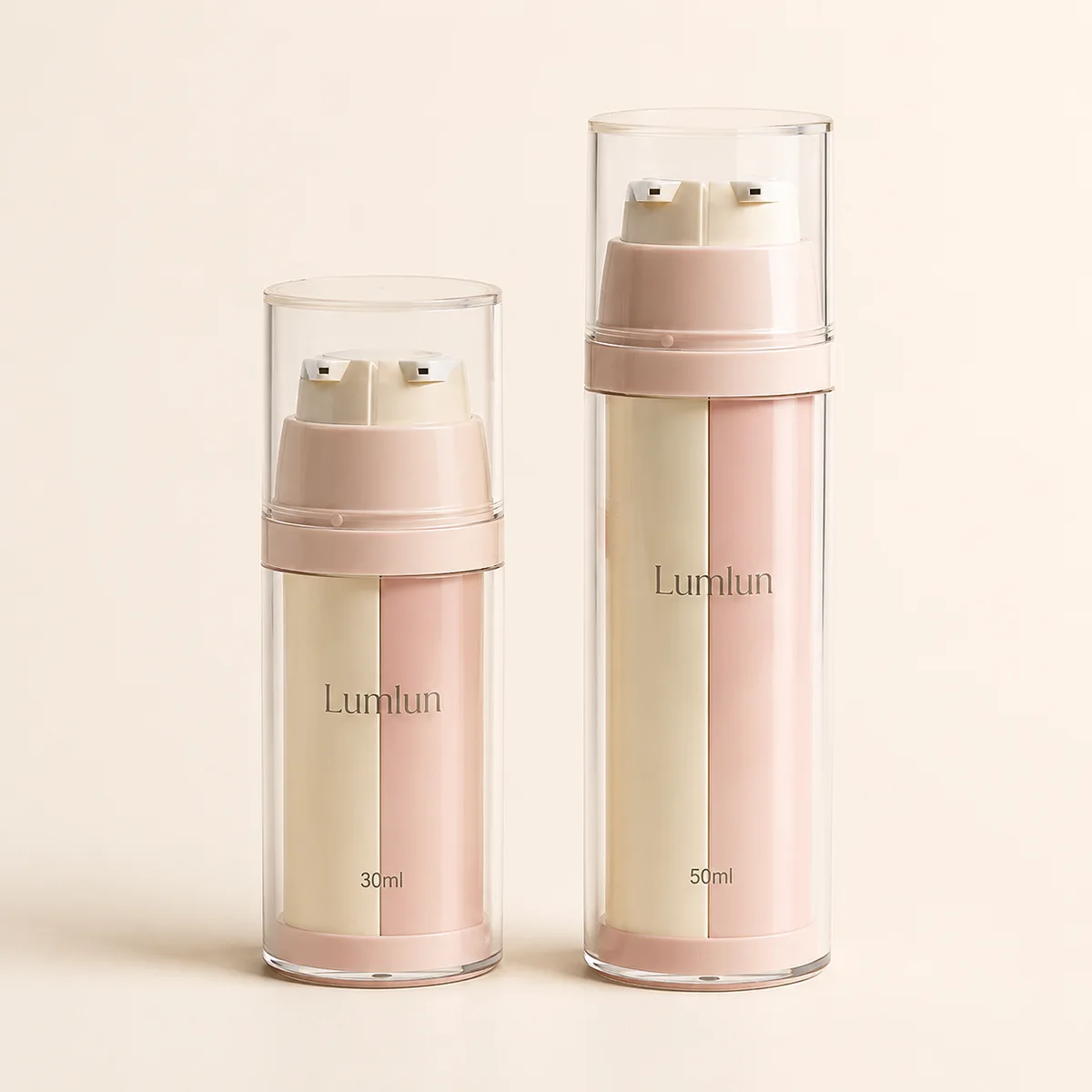
Dual-Chamber Airless Pump Bottle with Twin Pumps — 30ml–100ml
This design has two chambers and two pumps. If only one side has a problem, compare the two sides first instead of assuming the whole bottle has failed.
5. If Dispensing Is Weak, Uneven or Intermittent
If product comes out but the amount is weak or uneven, look for a pattern rather than blaming one part immediately.
Formula flow
The same pump can behave differently with different formulas. Avoid using one generic viscosity limit unless it is confirmed for that exact pump.
Pump path
Air remaining in the pump or product path shortly after filling can affect the first dispenses. This should improve as a normal product path is established.
Parts fit
If the pump or another visible part looks loose, tilted or damaged, stop forcing it and have the exact bottle checked.
Repeat pattern
One uneven press tells you less than the same behaviour repeating across several presses or several matching bottles.
6. If the Pump Head Does Not Return Normally
If the pump head stays down, comes back slowly or feels stuck, treat that as a different symptom from simple first-use priming.
Look for visible residue around the outlet, anything blocking the pump head, or obvious damage. If you have another matching bottle, compare how the pump head moves without taking either one apart.
7. Check the Moving Piston Only If Your Airless Bottle Uses One
Some airless bottles use a moving piston at the bottom of the product chamber. On these bottles, piston position can be a useful clue when it is viewed together with the remaining product and pump behaviour.
Do not push the piston upward with a pin, paperclip, metal rod or other tool unless the supplier of that exact model specifically asks for it during a controlled check. Forcing the piston changes the bottle and can hide the original problem.
Other airless bottles use a pouch instead of a moving bottom piston. If you want to see how these systems differ, read What Is an Airless Pump Bottle and How Does It Work?

8. When Is the Bottle More Likely to Have a Real Problem?
A real bottle or pump problem becomes more likely when the same abnormal behaviour repeats, appears on several matching bottles, or comes with visible damage. One unusual press by itself is not enough to identify the cause.
| What you observe | What it means |
|---|---|
| A new bottle does not dispense immediately | Check priming first. This alone does not prove a defect. |
| Several matching bottles fail in the same way | A shared bottle or pump issue becomes more worth checking with the supplier. |
| The pump head repeatedly stays down or returns slowly | The pump head and pump deserve a closer review. |
| A component is visibly cracked, loose or damaged | Stop forcing the bottle and contact the supplier. |
| The same issue continues after the basic checks above | The exact bottle should be reviewed rather than trying more aggressive fixes. |
9. Questions About Your Airless Bottle? A Simple Message Is Enough
If you still have a question, send LumLun a short message. No special preparation is needed before you contact us.
If you have the product link or model, include it if convenient. If you do not, contact us anyway and we can start from what you already know.
10. Explore Airless Packaging for Your Project
If the current bottle still is not working as needed after the basic checks, compare another airless bottle design instead of changing parts at random.
Browse Airless Bottle & Jar
Compare LumLun airless bottle designs, sizes and material options for your skincare or beauty packaging project.
Chat With LumLun on WhatsApp
Have a question about an airless pump bottle? Send us a message and we can start from there.