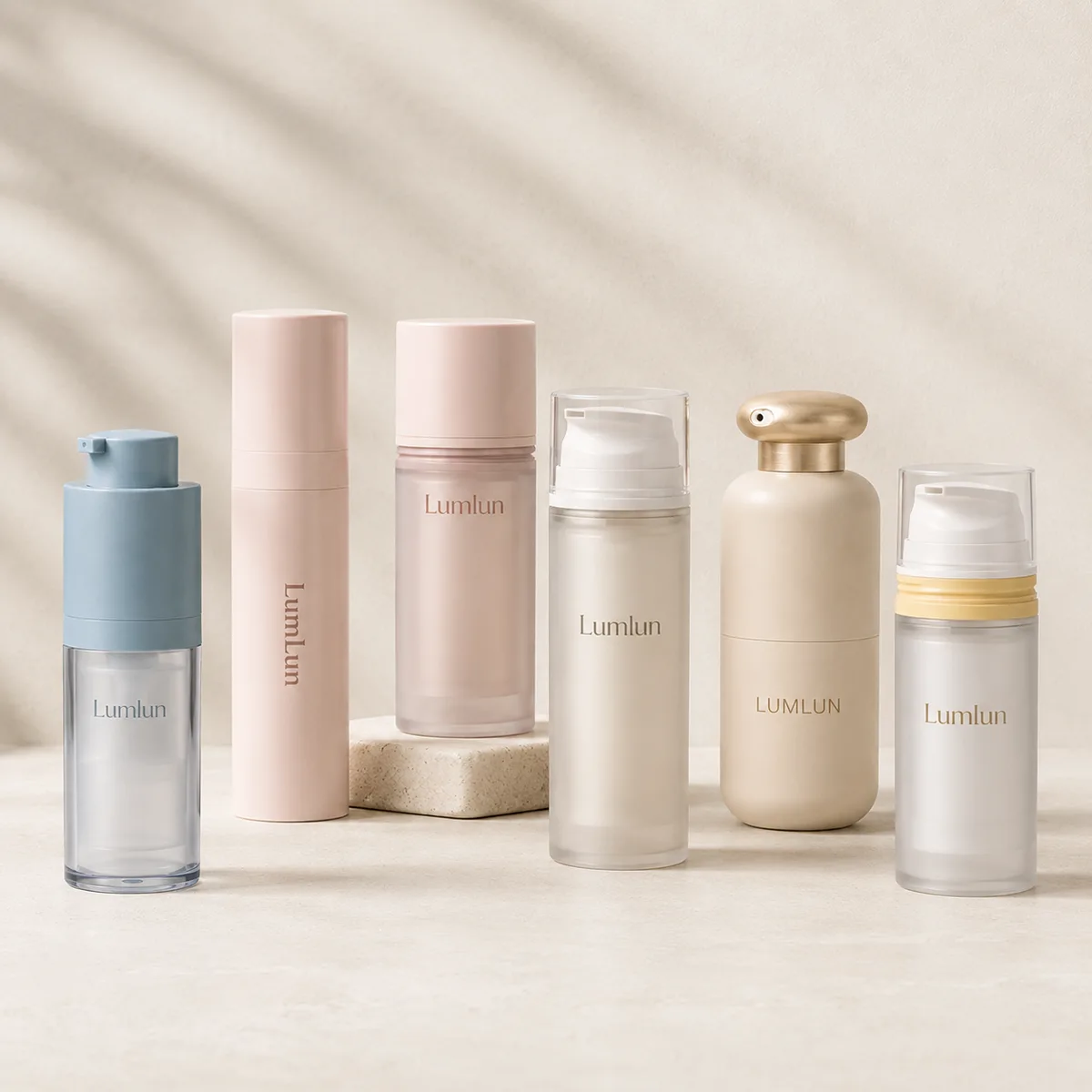
Choosing an Airless Pump Bottle should start with how the skincare product needs to dispense, then move through pump output, capacity, material and shape. This sequence keeps functional choices ahead of decoration and prevents a visually attractive bottle from becoming the starting point for every decision.
This is a model-selection task. It assumes Airless has already been chosen as the packaging family. If the project is still deciding between Airless, a jar, tube, dropper, mist bottle or standard pump, that format decision should come first.
Start With Product Texture and Target Dispensing
Describe the product in practical packaging terms: light serum, fluid emulsion, lotion, richer cream, or another texture the selected pump needs to move consistently. Then define how much product is normally needed in one application. These two points give the pump and actuator discussion a useful starting point without turning the packaging decision into a chemistry lesson.
A product that needs a small controlled dose should not be evaluated in exactly the same way as a lotion used over a larger area. Likewise, a product intended to spray or dispense in drops is already pointing toward another packaging family. The desired dispensing action should be clear before comparing bottle appearance.
A product name such as “serum” or “cream” is not enough to predict formula-specific dispensing performance. Two formulas in the same category can have different flow behavior. The purpose of the shortlist is to choose a realistic pump family and capacity range, then confirm the selected model with the actual project.
Texture should be described by how it behaves in the package, not by a broad ingredient label. A light serum may flow easily, while another serum can be more gel-like. A lotion can range from fluid to relatively rich. That difference is relevant because the pump has to move the actual product, not the marketing category printed on the carton.
The intended application also helps. An eye treatment used in a small area and a facial moisturizer used across the full face may both use Airless packaging, but the practical dose per press is unlikely to be considered in the same way. The model shortlist should reflect the product role before visual finish is discussed.
The package should also be considered in the position in which it will normally be used. A facial treatment may be dispensed in a controlled small amount, while body-care applications usually need more product. This does not create a universal pump-output rule, but it gives the supplier a more useful target than “serum pump” or “cream pump” alone.
If the formula contains visible particles, is extremely fluid, or behaves unusually, avoid assuming a standard pump will handle it just because the product category is common. The model shortlist should remain conditional until the actual product can be evaluated with the selected package. A short conditional explanation is enough; a long failure checklist would not improve the model choice.
The selection also needs a simple flow check. A light serum, an emulsion and a dense cream can all be Airless candidates, but they do not place the same demand on a pump. Higher-viscosity Airless systems exist, yet every model has its own operating range. Very stiff textures, suspended particles or a formula that does not prime cleanly can change the shortlist. For selection, the practical point is to keep the actual product behavior connected to the specific pump model rather than treating every Airless pump as equivalent.
Match Pump Output to the Amount Used per Application
Pump output is the amount released in one full press. It is model-specific, and it matters because a concentrated eye or serum product may need a smaller dose than a face cream or larger-area lotion. The correct output is not the highest or lowest number; it is the one that produces a practical amount for the product’s intended use.
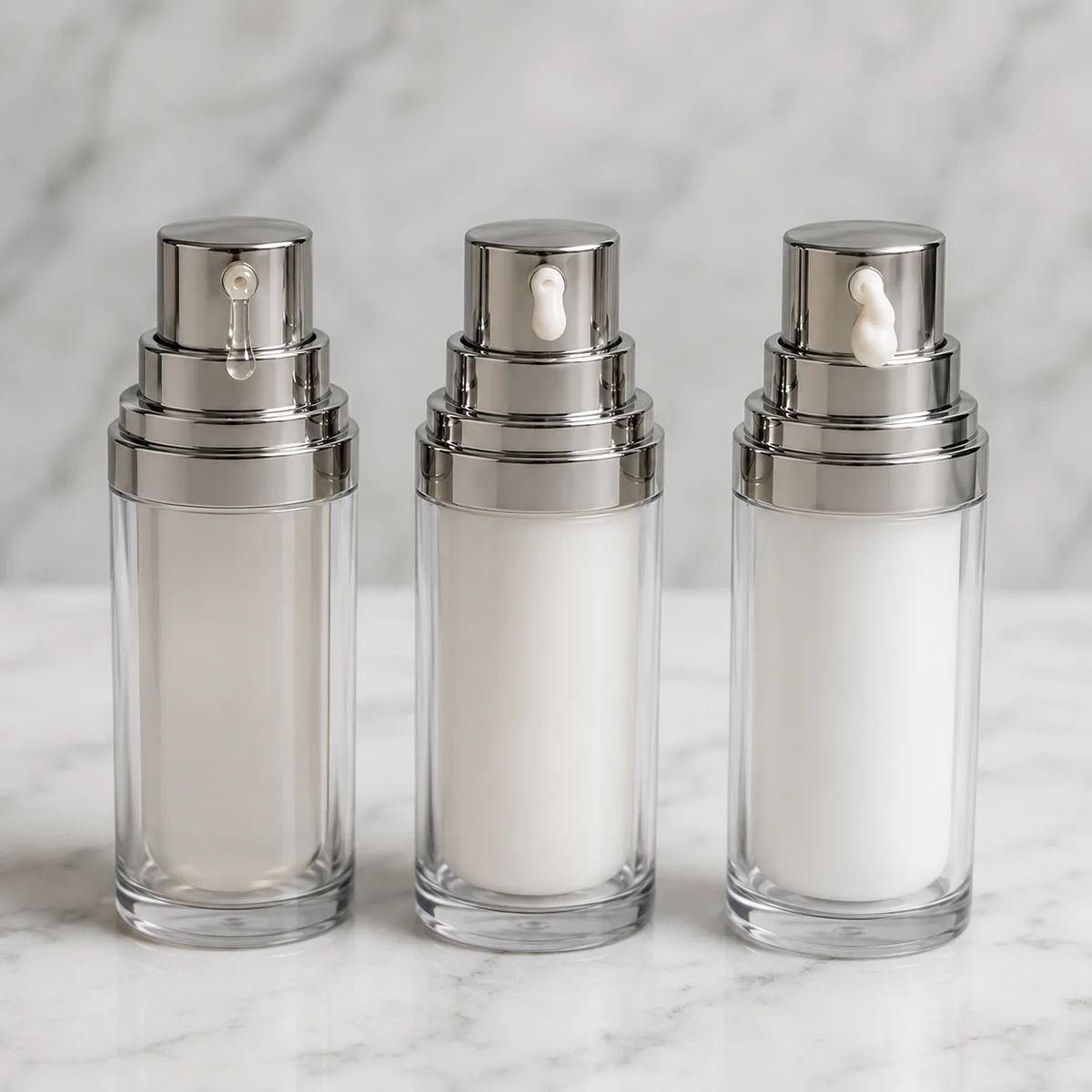
Avoid choosing output from a generic table alone. A supplier specification can tell you the nominal dose, but the actual user experience also depends on the formula and actuator. If the project needs a deeper output comparison, LumLun separates that decision under skincare packaging pump output so this Airless selection stays focused on the bottle as a complete model.
Keep pump output and capacity connected. A 30ml treatment product with a small amount per use and a 100ml daily lotion do not have the same use pattern, even if both can technically use an Airless pump.
A nominal pump output is useful only in context. A lower output can be appropriate when a small amount is desired, while a higher output can reduce the number of presses needed for a larger application. The output should support the normal use amount without creating an awkward number of presses or an unnecessarily large dose.
This is not a reason to publish a universal output chart for every serum, cream or lotion. The exact formula, actuator and model still matter. A useful specification identifies the target amount per press and then checks which real pump options are available with the shortlisted bottle.
The actuator also changes the way the nominal output feels in use. The size of the pressing surface, nozzle design and return feel can make two pumps with similar nominal output feel different. Those details are best compared on the actual shortlisted model rather than as separate abstract specifications.
For a multi-SKU line, output can be coordinated where the same bottle family is used, but it should still respect the product role. The goal is a consistent packaging system without forcing identical dosing on products that are used in different amounts.
Pump output matters even more when the product is concentrated, used in a small area or relatively high in value. Too much output can release more than the intended application amount, while an output that is too small can force several presses every time. The target is not the smallest or largest number; it is a dose that feels natural for the product role. This is also why nominal output should be compared together with actuator size, nozzle direction and the real filled sample.
Choose Capacity From Product Role and Fill Volume
Capacity should follow the intended fill and product role, then be checked against real model families. LumLun currently has Airless Pump Bottle models covering compact 15ml and 30ml formats, common 50ml formats, 80ml and 100ml options, and larger capacities in selected families. Not every shape or material is available in every size.
| LumLun model | Available capacities | Confirmed material | Useful comparison point |
|---|---|---|---|
| PP Airless Pump Bottle for Serum and Lotion | 15 / 30 / 50ml | PP | A compact three-size family when PP is the selected material. |
| PP Airless Pump Bottle | 30 / 50 / 100ml | PP | A PP family that extends from face-care sizes to a larger 100ml format. |
| AS Airless Pump Bottle | 30 / 50 / 60 / 80 / 100ml | AS / PP / ABS | A wider capacity family with a rigid AS outer presentation. |
| PETG / PP Airless Pump Bottle | 30 / 50 / 100ml | PETG / PP | A clear PETG body in three core capacities. |
The table is a shortlist, not a universal size rule. A 30ml formula does not automatically need one of these four models, and 50ml does not mean every Airless family is equivalent. Capacity removes options that cannot meet the fill target; it does not finish the selection by itself.
Fill volume also affects the visual proportions of the bottle family. A 15ml or 20ml treatment pack is naturally more compact than a 100ml lotion pack, and the same decorative concept may need to be adapted so the logo and product information remain clear. Capacity is therefore both a functional and a layout constraint, but it should not be chosen only for appearance.
When a product line uses several capacities, compare whether the chosen family supports those sizes with related proportions. This can be more useful than finding one attractive standalone bottle and then discovering that the next SKU requires a completely different family.
Target fill volume should be distinguished from the outer bottle size. Double-wall or clear outer-shell models can look larger than a simpler PP bottle with the same nominal fill. Buyers comparing carton dimensions, product-line proportions or secondary packaging should therefore use the real model dimensions after the capacity is chosen, not assume all 50ml Airless bottles occupy the same space.
This distinction also helps when the package must sit beside other products in a set. The fill volume can stay fixed while the visible outer size changes with the model architecture. That is a valid design choice as long as the model still meets the functional requirement.
Capacity should also make sense with the intended use cycle. A compact treatment may justify 15ml or 30ml, while a daily lotion can need a larger fill. When several SKUs belong to one line, the most useful family is often the one that covers the needed capacities without forcing a different pump architecture for every size. This is a product-line planning benefit, not a rule that every SKU must use the same bottle.
Compare Material and Shape After Function Is Clear
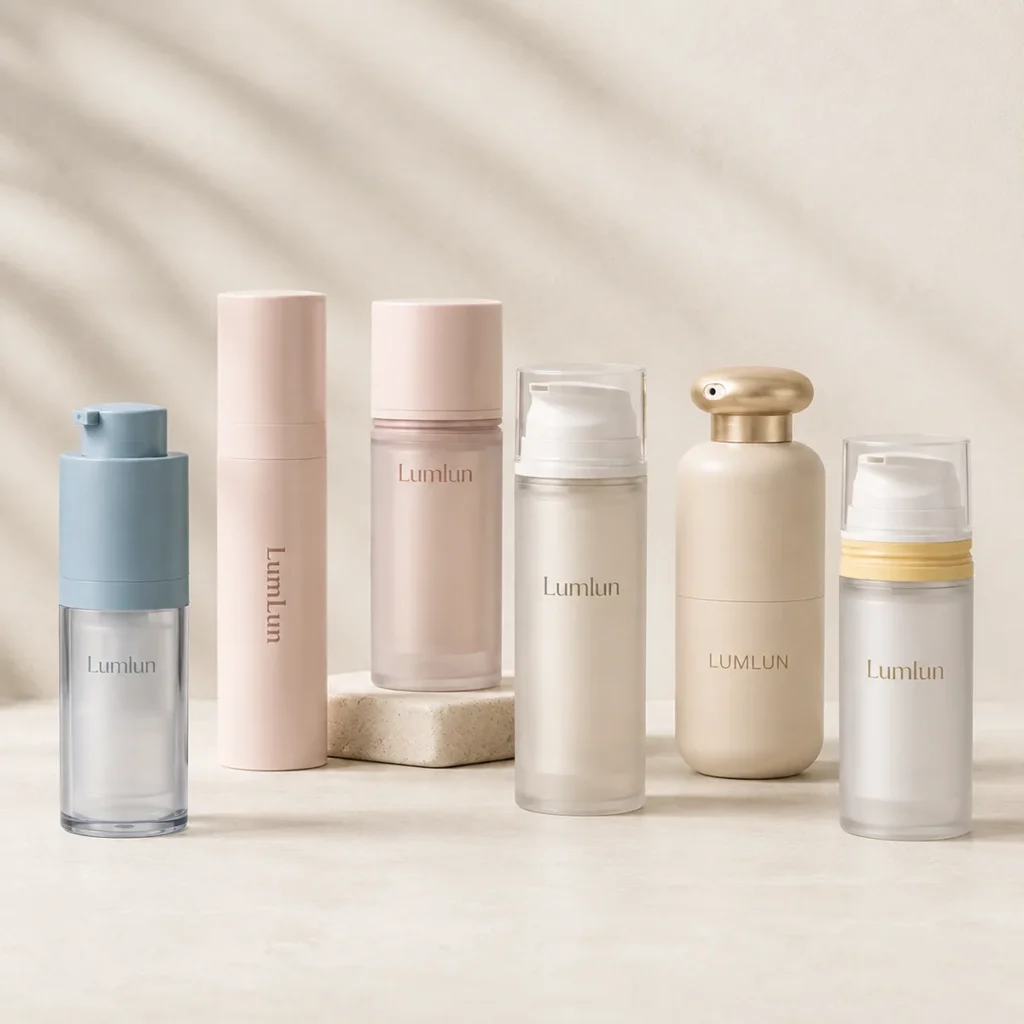
After the pump setup and capacity are narrowed, compare the visible material system and outer shape. PP Airless bottles give an opaque plastic body on the models confirmed as PP. AS and PETG outer bodies can create clearer or more glass-like visual structures on models that use those materials. The exact inner and outer component set should still come from the selected model specification.
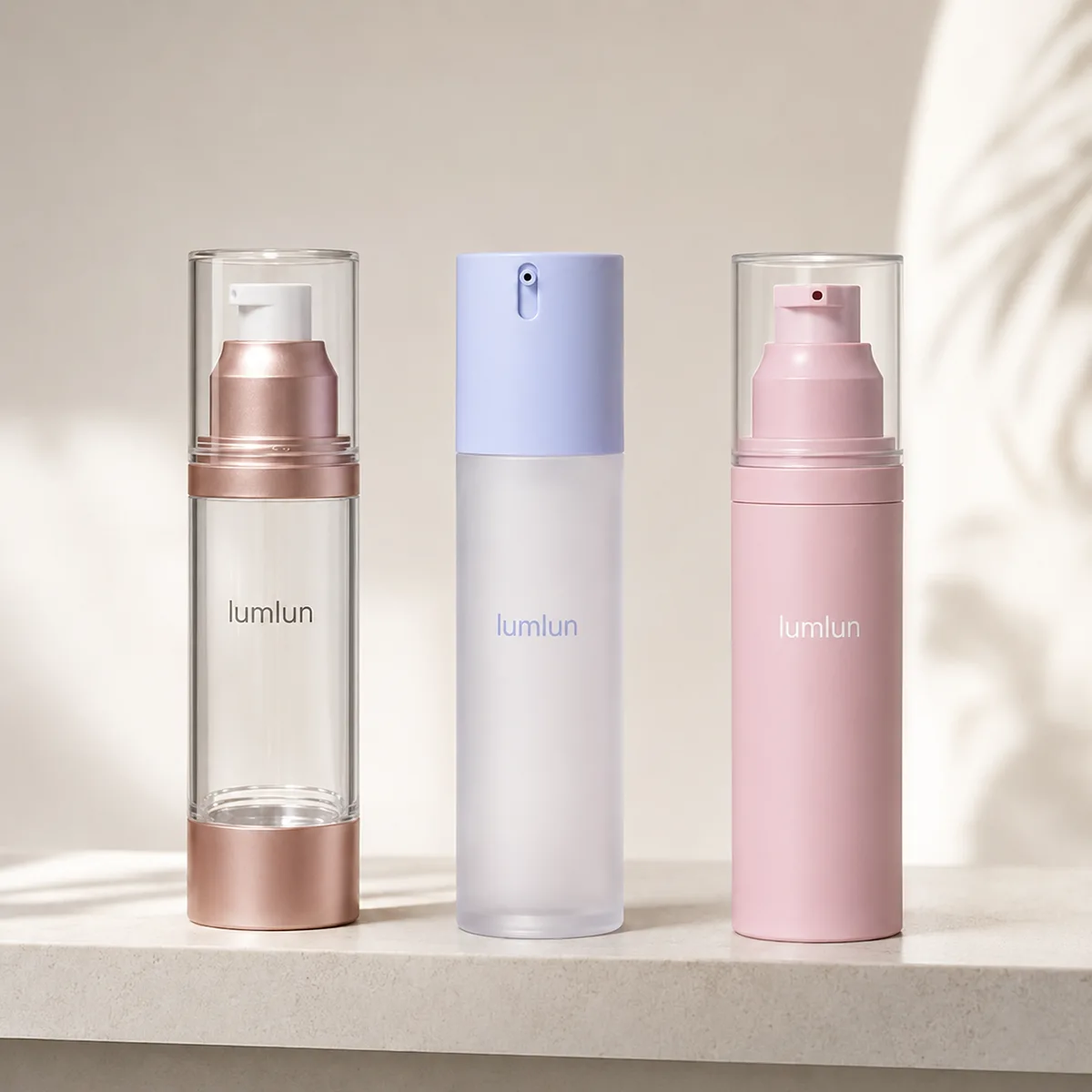
Shape should be treated the same way. Round and square Airless bottles are real separate model families, not styling modes that can be switched after the bottle is chosen. A square double-wall model may provide the structured profile a project wants, while a round PP family may be more appropriate when the selected capacity and pump already fit.
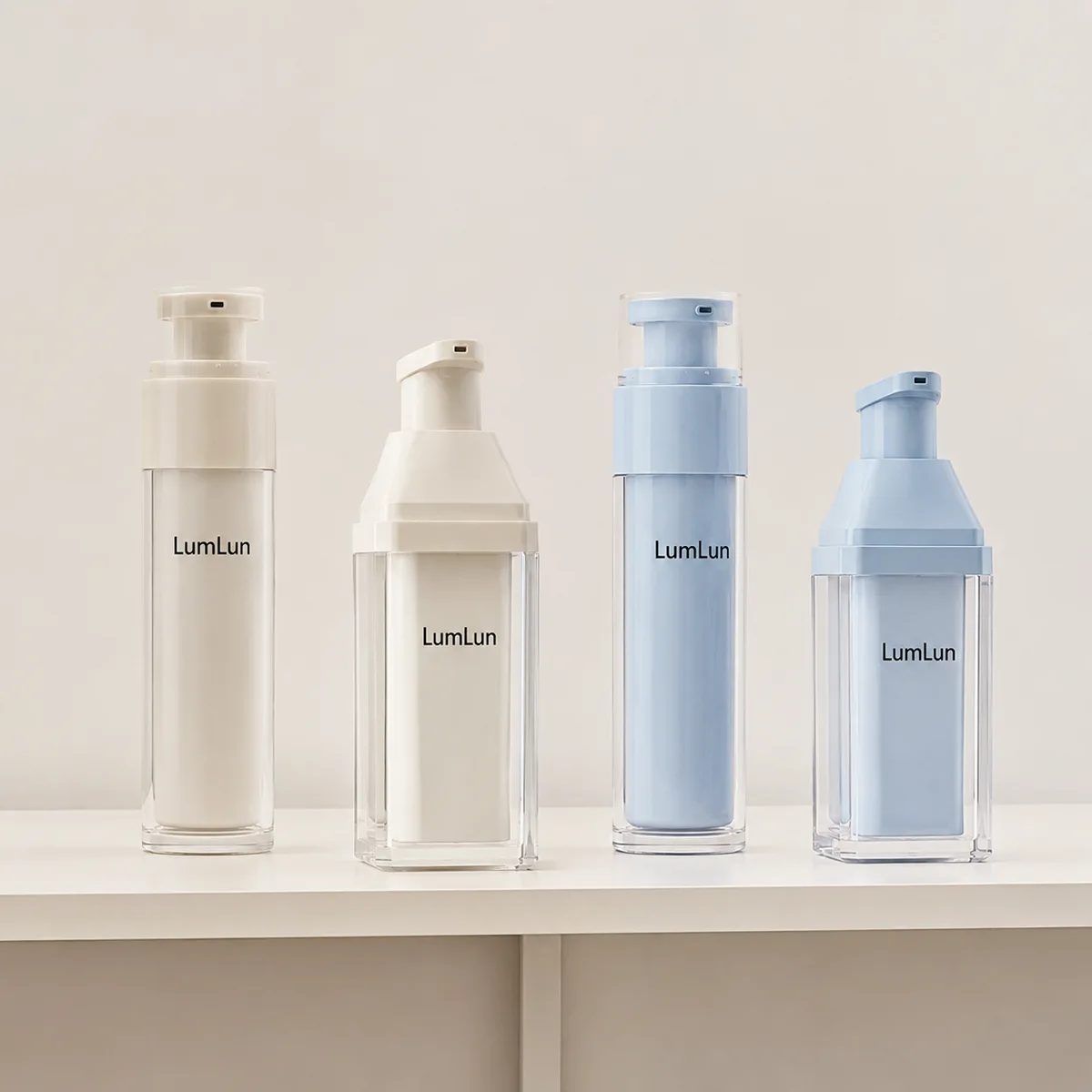
Finish comes after those decisions. If the project is mainly about matching a particular shape, visible shell, actuator and decoration system on an existing Airless model, custom Airless Pump Bottle model selection is the narrower next step.
Material names should describe the package that is actually being considered. A PP model and a PETG/PP model may both be Airless, yet the visible body, component system and finish possibilities differ. Likewise, a clear AS outer shell is not the same structure as an opaque PP bottle. Use the material to distinguish real models, not to make broad claims about formula compatibility from the resin name alone.
Shape comes last in this sequence because it should not override dispensing and capacity. Once two or three models already fit the functional requirements, shape becomes a useful final filter. A round model may give a straightforward cylindrical profile; a square double-wall family can provide a more geometric outer form. The choice is then between real packages that can all do the job, rather than between a functional bottle and a purely visual concept.
Clear outer-body models also require precise wording. A transparent or high-clarity outer shell does not always mean the formula itself is directly visible; some Airless structures have an inner bottle inside the outer body. Product photography and component specifications should be used to understand what the customer will actually see.
Likewise, “PP Airless bottle” should describe a model whose confirmed material is PP rather than implying that every component in every PP-led Airless package is necessarily mono-material. If a mono-PP claim is important, that is a separate structure and sustainability decision.
Separate the visible outer material from the formula-contact path. A PETG or AS outer body may create a clear, rigid presentation while the formula sits inside another component. An opaque PP model may have a different inner/outer construction. The resin named in the product title therefore should not be used to guess which material touches the formula, how the whole package behaves, or which finish is available. Those details belong to the actual model record.
Shortlist a Real Airless Pump Bottle Model
A useful shortlist should now be small enough to compare real product records rather than generic features. The selected models should already match the intended dispensing type and target capacity; material, outer proportions and visible components then decide which one is closest to the finished package.
Do not add a new requirement simply because it appears in a catalog. Refillable structure, PCR content, a square double wall or a twist mechanism each belongs to a specific packaging feature. They should enter the project only when that feature is actually needed.
Current models can be compared in the Airless Bottle & Jar collection. Once a model is selected, color, finish and artwork can be developed within that model’s available options.
A good shortlist usually ends with only a few real models. Compare their product records side by side, then confirm the selected pump, capacity and component set for the project. Samples can be used once there is a specific shortlist to evaluate.
The sequence stays consistent: product behavior and use amount → pump setup → capacity → material system → shape → real model. Keeping decoration until after that sequence makes the choice easier to explain and easier to carry into the next stage of the packaging project.
| Selection question | What to confirm on the real model | What not to assume |
|---|---|---|
| Dispensing | Nominal pump output, actuator and product-use amount | That all Airless pumps dispense the same amount. |
| Capacity | Available fill sizes in the selected family | That every material or shape exists in every capacity. |
| Material | Actual inner/outer component description | That one resin name describes every component or formula result. |
| Shape | Real dimensions and outer construction | That two 50ml bottles have the same external size or proportions. |
This compact check is enough to create a practical model shortlist. Artwork and detailed decoration specifications can be developed after the package itself is narrowed.
AIRLESS MODEL SELECTION
Compare the Shortlist, Not the Whole Catalog
Start from a small group of Airless models that already match the dispensing setup and target capacity, then compare the visible material, shape and components.
Once only two or three models remain, a filled sample is useful for the few points that cannot be settled from a drawing: priming, how the real formula moves through the selected pump, the dose in use and how much product remains accessible as the pack empties. This is not a long testing protocol. It is simply the last confirmation that the shortlisted model behaves the way the project expects before color and artwork receive most of the attention.