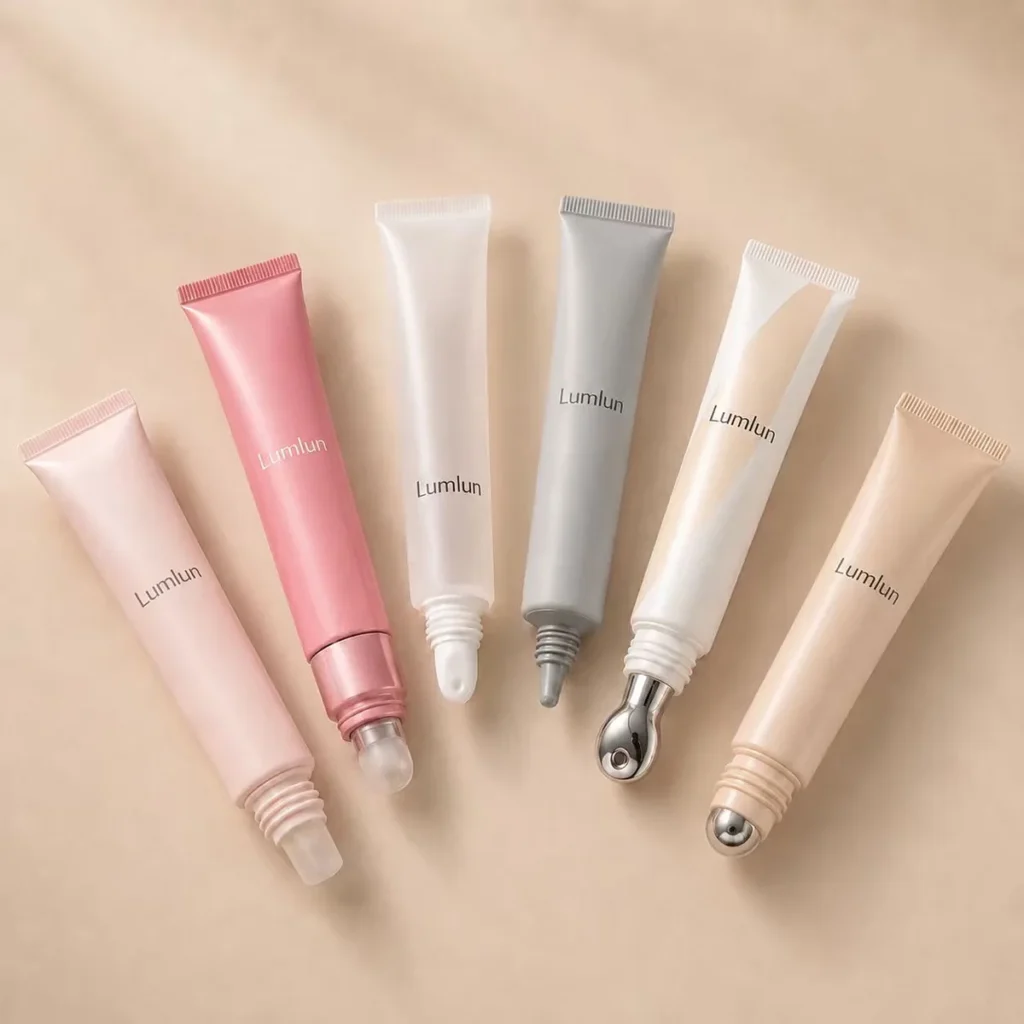
Fine nozzles, rollerballs and slanted or direct-contact tips change how a cosmetic tube places product on the skin. The useful comparison is not which applicator looks more premium. It is whether the product should be placed on a small point, rolled across an area, or dispensed and spread directly from the tube.
Once that application action is clear, formula flow, tube capacity, applicator geometry, cap clearance and the available real models become much easier to compare. Material still matters, especially for a fixed contact surface, but it is a separate decision from the mechanism itself.
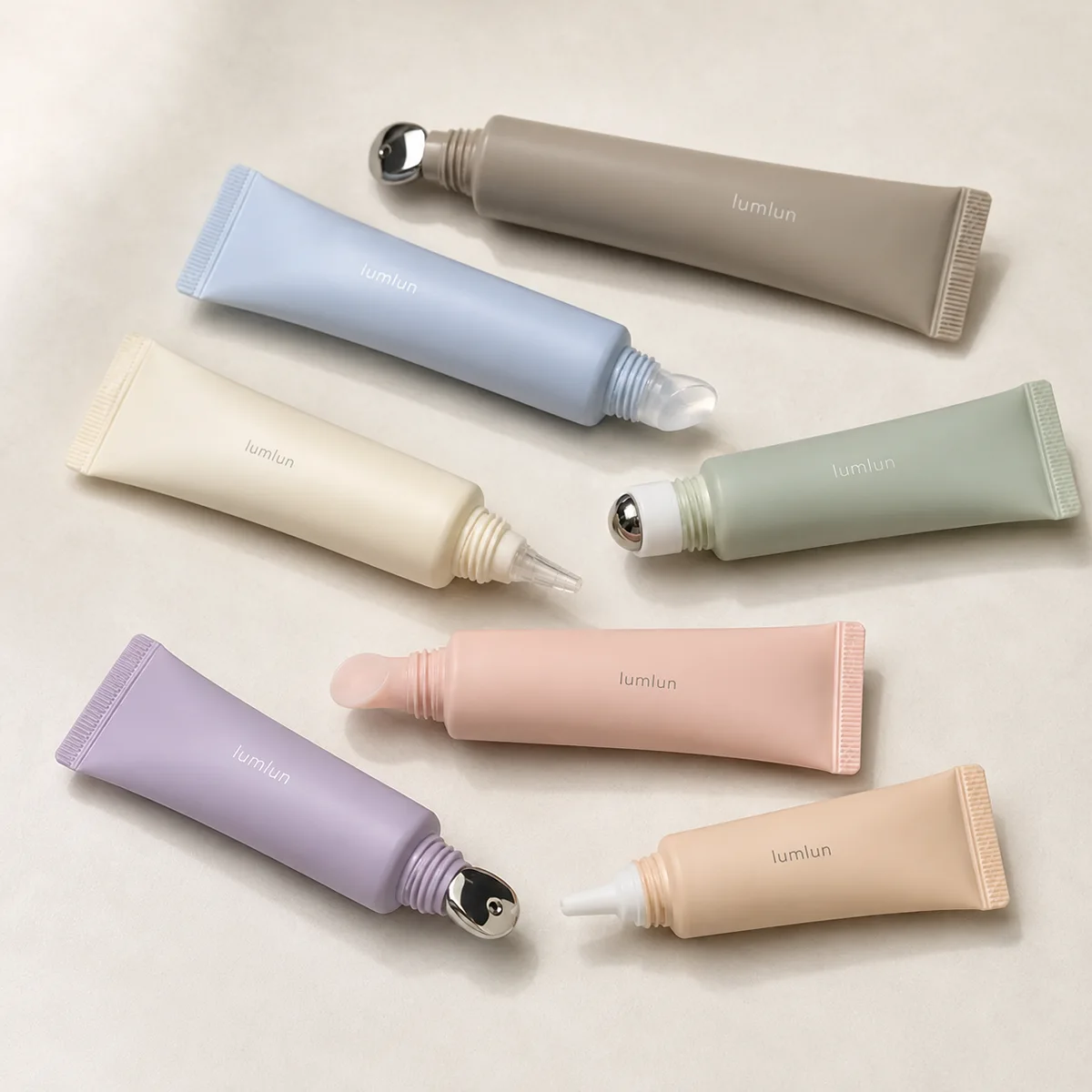
Start with the application action, not the applicator material
A ceramic contact surface, a metal contact surface and a silicone contact surface can all feel different, but they do not automatically perform the same application action. A rollerball works because a ball rotates inside a housing. A fine nozzle works because product passes through a small outlet. A slanted or other fixed contact tip works because product leaves an opening and is then spread by the surface of the tip.
That distinction matters when comparing packaging. If the project needs a rolling action, searching only for “ceramic applicator” can lead to both rollerballs and fixed ceramic heads even though the mechanism is different. If the project needs precise placement on a small area, the outlet geometry may matter more than whether the visible tip is metal or plastic.
A practical first question is therefore: What should happen between squeezing the tube and the product reaching the skin? The answer usually points toward nozzle, rollerball or direct-contact application before material and finish are considered.
Fine nozzle: when the main task is placing a small amount on a defined area
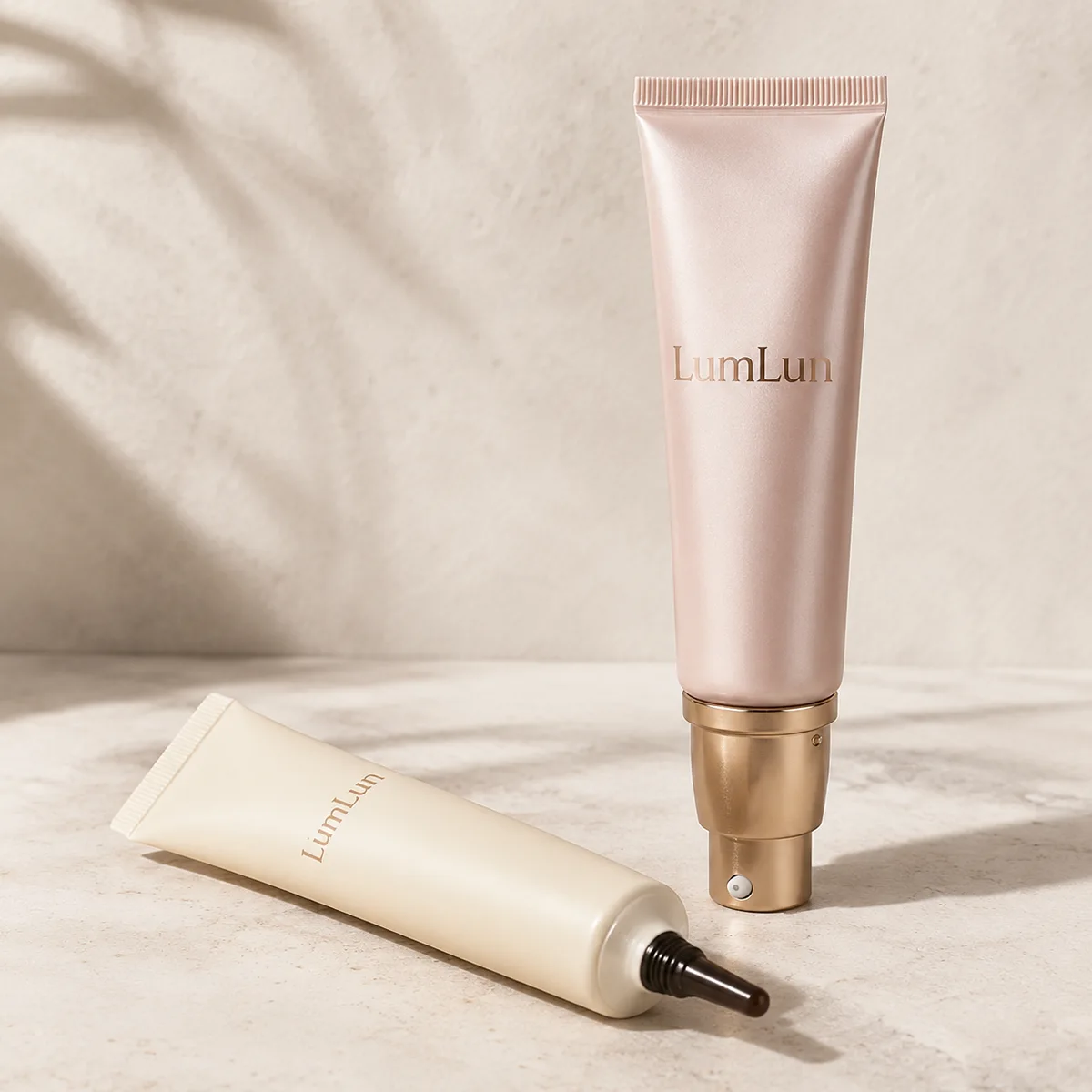
A fine nozzle gives the tube a narrow outlet. The product is squeezed through that opening and placed where the user wants it, rather than being spread by the applicator itself.
This format is useful for products where placement matters more than surface contact. Eye treatments, spot products and other targeted skincare can all use nozzle-style tubes when the formula can move through the selected opening.
The key word is selected. “Fine nozzle” is a family description, not a universal diameter. Two nozzle tubes can have different opening sizes, shoulder shapes, caps and tube diameters. A narrow outlet may suit one formula but feel restrictive for another. There is no single viscosity number that approves every nozzle.
LumLun’s PE Nozzle Tip Eye Cream Tube, for example, is recorded in 10–20ml with a PE construction. It is useful as a real reference for a small targeted tube, but the nozzle belongs to that specific structure rather than serving as a detachable option for every tube in the catalogue.
When comparing nozzle models, look at the full upper section: outlet length, shoulder transition, cap depth and the amount of exposed tip after the cap is removed. These details influence how easily the outlet is seen and placed, and they are usually enough for an early packaging comparison without a full engineering specification.
Rollerball: when the pack should roll product across a small area
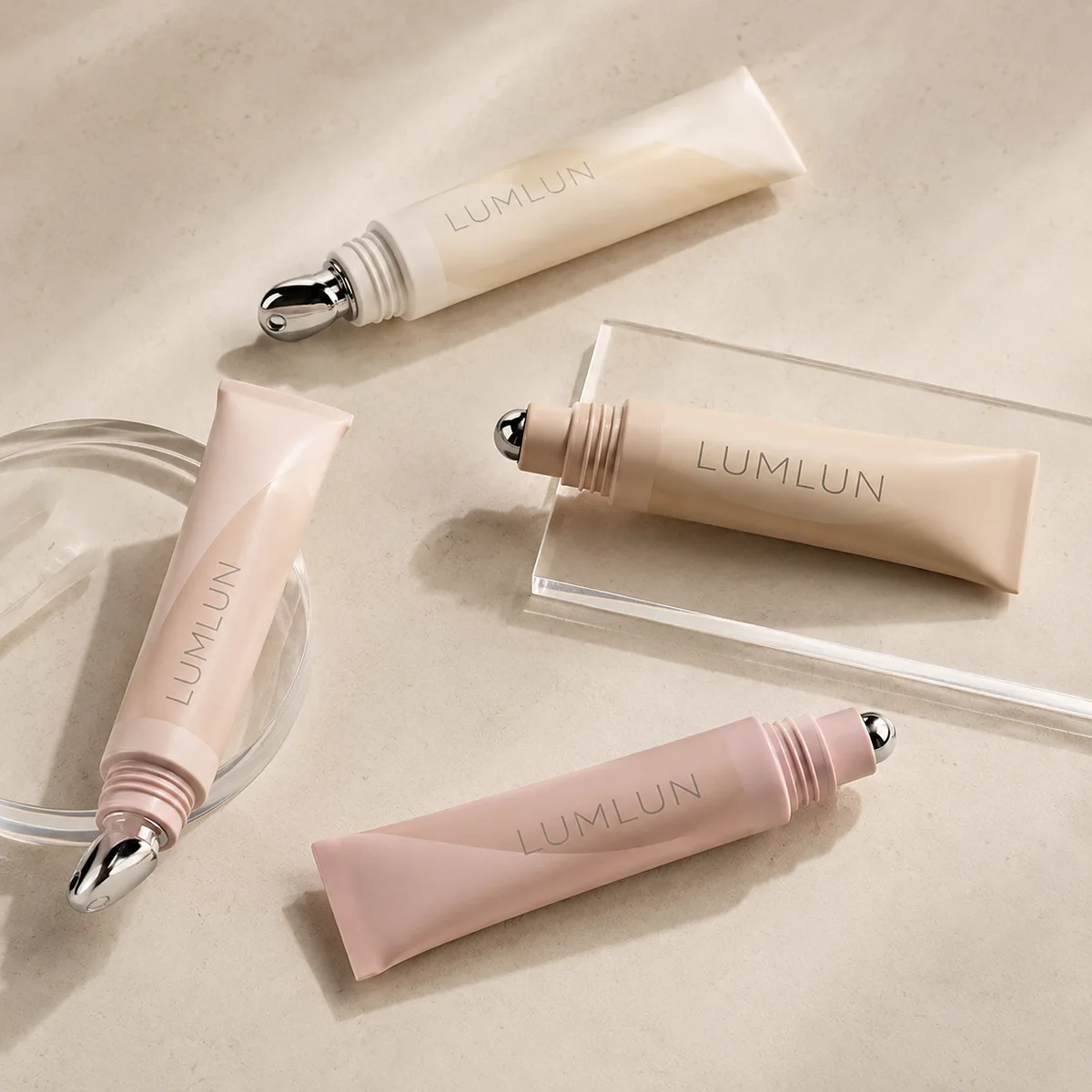
A rollerball uses a ball held inside a housing. As the ball moves across the application area, product is transferred around the ball surface. The defining feature is the rolling mechanism, not the ball material.
For a cosmetic tube, this usually makes sense with a product that can reach the ball housing and move consistently enough for the ball to transfer it. A very heavy or poorly flowing product cannot be approved simply because “rollerball” sounds suitable for the category. The actual package and product still need to work together.
The 15ml PE Rollerball Tube for Eye Serum is one current LumLun example. Its 15ml capacity, PE tube body and rollerball assembly are part of one package. The same rolling action could appear in other products, but that does not mean the ball housing can be moved freely to unrelated tube diameters.
Rollerball also should not be confused with “metal applicator.” A metal ball is still a rollerball mechanism, while a fixed metal contact head is a different type of applicator. Keeping those terms separate makes product searches and supplier discussions much clearer.
Slanted or fixed direct-contact tip: when the tube should dispense and spread
A slanted tip or other smooth direct-contact surface does two jobs in one motion: product leaves the tube through an opening and the shaped surface can then be used to spread it.
This is common in lip-care and other small-area products because it removes the need for a separate wand while giving the tube a defined contact surface. The exact shape may be angled, curved, flat or contoured depending on the model.
LumLun’s 16mm Slanted-Tip Lip Gloss Squeeze Tube is recorded in 5–10ml with PE / sugarcane PE material options. Another current product, the Silicone-Tip Lip Balm Squeeze Tube, uses a soft direct-contact surface in a 10–20ml technical specification range.
These products both use direct-contact application, but the contact material and geometry are different. Once the fixed-contact mechanism is clear, silicone, rigid plastic, ceramic and metal applicator materials can be compared separately without mixing material and mechanism.
Compare the mechanisms on the same practical dimensions
| Applicator mechanism | What happens during use | What to confirm on the real model |
|---|---|---|
| Fine nozzle | Product is squeezed through a narrow outlet and placed directly | Outlet size, formula flow, cap, tube diameter, target area |
| Rollerball | A ball turns in its housing and transfers product while rolling | Product flow to the ball, ball housing, cap clearance, tube capacity |
| Slanted / fixed contact tip | Product exits through an opening and is spread by a fixed surface | Contact shape, outlet, material, cap fit, tube proportion |
This comparison keeps the decision focused on what the package actually does. It also prevents a common sourcing problem: comparing a material name on one side with an application mechanism on the other.
Formula flow matters, but a universal viscosity chart would be misleading
The applicator can only work if the product moves through the selected structure. A fine nozzle needs product to pass through its outlet. A rollerball needs product to reach and move around the ball. A direct-contact tip needs the tube to deliver product through the opening behind or within the contact surface.
Those statements are useful. A universal rule such as “thin serum = rollerball” or “thick cream = slanted tip” is not. Cosmetic formulas vary widely inside those labels, and the dimensions of the component also vary.
For an early packaging comparison, it is usually enough to describe the product in practical terms—watery, oil-like, gel-serum, cream or balm-like—and then check the actual package model. More detailed compatibility work belongs to the product-development process after a realistic packaging direction has been chosen.
The cap is part of the applicator decision
An applicator is only useful if the cap can close around it correctly and the assembled upper section works as intended. Fine nozzles often use a cap that protects the exposed outlet. Rollerball housings need enough clearance for the ball assembly. Slanted and direct-contact tips may use a cap shaped around the contact surface.
This is why “Can you put this applicator on that tube?” cannot always be answered from two catalogue photos. The cap, shoulder, outlet and applicator fit are linked. A different existing model may be the safer choice even when the visible tube body looks similar.
For the buyer, the practical takeaway is simple: compare the assembled package, not an isolated tip.
Dose and placement are related, but they are not the same thing
A fine nozzle may make it easier to place a small amount on a defined spot, but it does not create one universal dose. A rollerball may spread product over a small area, but the amount transferred depends on the package and product. A slanted tip gives direct contact, but the amount still depends on how the tube and outlet deliver product.
If a project has a defined output requirement, it needs to be discussed against the selected model. It should not be copied from another package simply because both use a nozzle or both are described as eye-care tubes.
Keeping “where the product goes” separate from “how much comes out” makes the applicator comparison more accurate and avoids turning a useful packaging choice into an unsupported dosage claim.
Application area changes which details matter most
For a small eye-area product, overall component size, cap clearance and the precision of the outlet may matter more than they would on a large cleanser tube. For lip care, the width and angle of a contact surface become more noticeable because the applicator touches the lips directly. For a targeted spot product, a narrow nozzle may be the simplest way to place product without asking the tip to spread it.
These are not rigid product rules. They are ways to narrow the comparison. A formula and usage concept can still point to another format if the expected application action is different.
The key is to let the use area influence the component you inspect, rather than assuming that every eye product needs a rollerball or every lip product needs a slanted tip.
Real tube proportion matters more than an applicator name
A 15ml rollerball tube and a 15ml direct-contact tube can feel very different in the hand because the applicator housing and cap change the assembled height. A 10–20ml nozzle tube may be slim and precise, while a 20–50ml pump-style tube uses a larger upper structure.
That proportion also changes the printable area and the way artwork sits on the tube. If the applicator is visually large relative to the body, the brand mark may need a different scale from the same artwork used on a standard screw-cap tube.
This is another reason to compare real products rather than planning the applicator separately from the tube.
Use actual LumLun models to narrow the choice
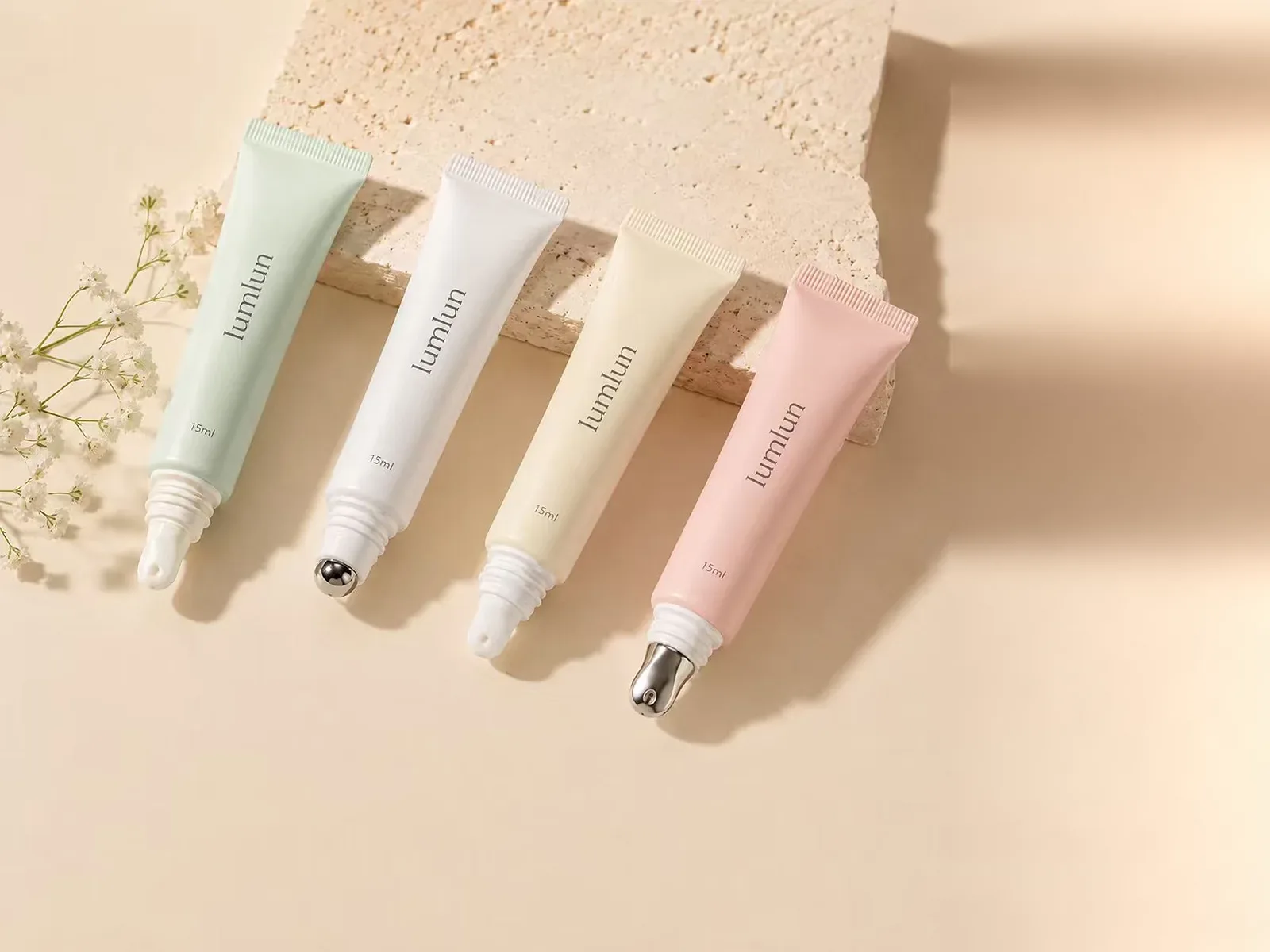
| LumLun model | Confirmed size/material direction | Application mechanism |
|---|---|---|
| PE Nozzle Tip Eye Cream Tube | 10–20ml, PE | Fine nozzle |
| PE Rollerball Tube for Eye Serum | 15ml, PE | Rollerball |
| 16mm Slanted-Tip Lip Gloss Tube | 5–10ml, PE / sugarcane PE | Slanted direct-contact tip |
| Silicone-Tip Lip Balm Squeeze Tube | 10–20ml technical spec, PE / sugarcane PE / PCR | Fixed direct-contact tip |
These examples show four different ways a tube can handle the final application step. They should not be treated as component combinations. Each product starts as its own complete package.
Keep the applicator choice consistent with the product range, not identical across every SKU
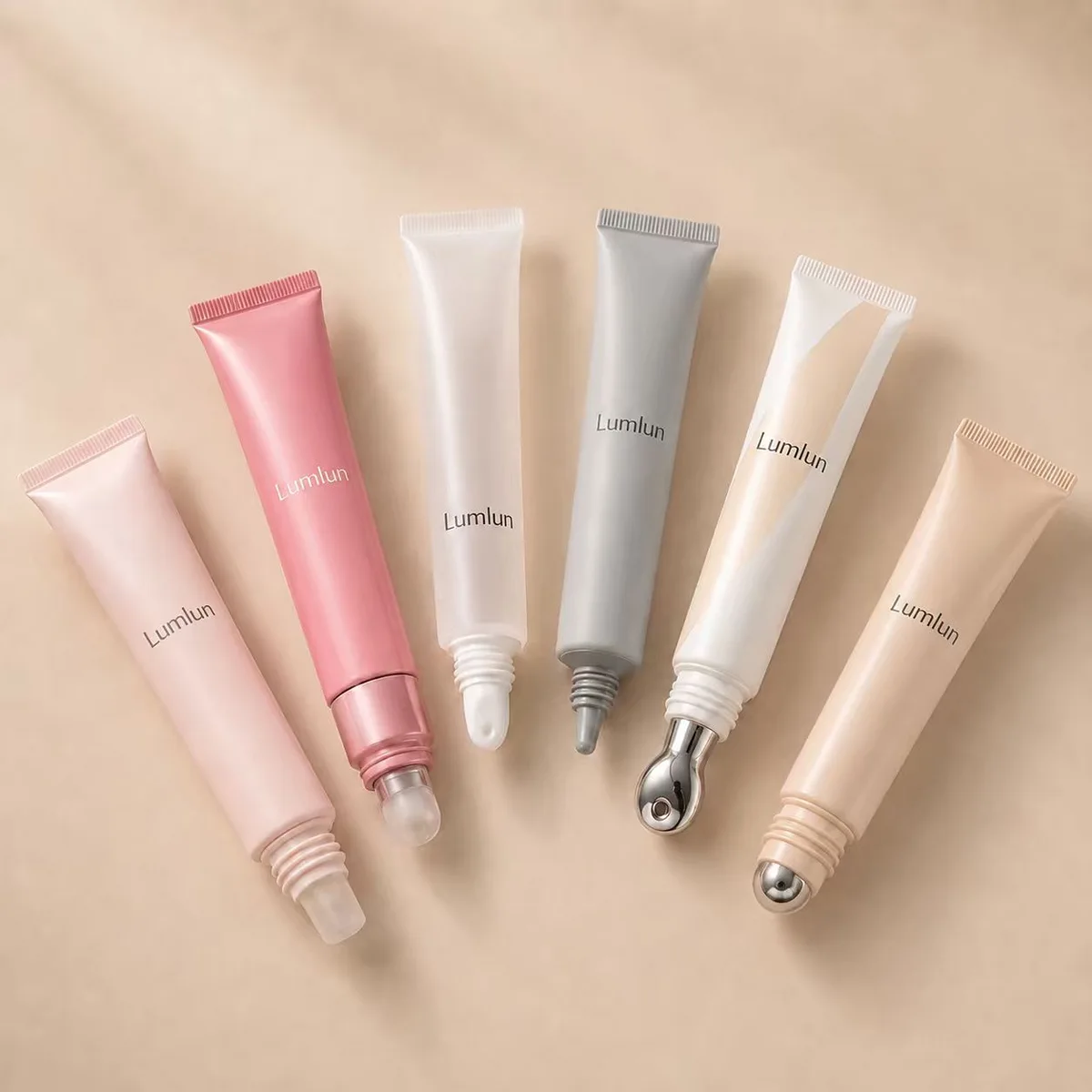
A skincare range may include an eye serum, lip treatment and hand cream. Using one applicator across all three would create visual consistency, but it may not make sense for how the products are used.
A stronger approach is to keep the visual system consistent—colors, artwork, typography and compatible finishes—while allowing the applicator to change when the application action changes. The eye product might use a nozzle or rollerball, the lip product a direct-contact tip, and the hand cream a standard closure.
This keeps the packaging family connected without sacrificing function just to make every tube look the same at the top.
Changing color or finish is different from changing applicator geometry
When an existing tube already has the right capacity, applicator action and overall proportion, customization can focus on the options that model supports: body color, printing, surface finish and visible component color where available.
If the project wants a different nozzle length, ball housing, contact-tip geometry, cap action or tube diameter, the request has moved into structure. The next step should be to check whether another existing LumLun model already provides that geometry.
Only when the required structure is outside the available range does custom tooling become relevant. A reference image can help identify the closest existing option, but it does not prove that every visible detail can be reproduced without development.
Fine nozzle does not automatically mean the smallest possible opening
When buyers search for a “precision nozzle,” the word precision can hide several different expectations. One project may need a long, visible tip that can place product close to a small area. Another may only need a narrower outlet than a standard tube opening. A third may care more about how cleanly the cap covers the tip.
Those are different design questions. A very narrow opening is not automatically better, because it also changes the resistance the product meets when the tube is squeezed. A longer nozzle may improve reach but also changes the visual proportion of the package and the space needed inside the cap.
For that reason, compare nozzle length, outlet size and cap together. If a catalogue image shows the general look you want, the next step is to confirm the actual model rather than asking for “the smallest nozzle available” without reference to the product.
Rollerball material is a second decision after the rolling mechanism
Once a rollerball format has been chosen, the ball itself may be offered in different materials on different product lines. That can change rigidity, appearance and contact feel, but it does not change the basic fact that the ball must rotate inside its housing.
This is important because searches for “ceramic applicator” or “metal applicator” often mix fixed contact heads with rollerballs. If the project specifically wants a ball that rolls, keep the mechanism fixed first and then ask what ball materials are available on the selected model. If the project wants a fixed smooth surface, compare direct-contact materials instead.
Keeping those two decisions separate also reduces unnecessary redesign. A buyer may discover that the desired contact material already exists on a fixed-tip model even though the original reference showed a rollerball, or vice versa. The application action should decide which structure stays in the comparison.
Residue around the outlet is a package-detail question, not a reason to invent a cleaning tutorial
Any direct-dispensing applicator has an area where product leaves the pack. On a fine nozzle that is the outlet tip. On a rollerball it is the ball housing. On a slanted or fixed contact head it is the opening within or beside the contact surface.
The geometry around that outlet affects how much surface area can retain visible product after dispensing. Cap clearance also matters because the cap closes around the same area. Those are useful things to look at on a real sample, especially when two models are otherwise very similar.
There is no need to add a cleaning routine to the packaging decision. The practical procurement point is simply to inspect the outlet geometry and cap fit of the actual model rather than assuming all “nozzle” or “rollerball” packs behave identically.
Three project examples show how the mechanism changes the first choice
Targeted eye treatment: if the product is meant to be placed on a small point and then spread separately, a fine nozzle can be a strong starting direction. If the desired action is to move the pack itself across the application area, a rollerball or fixed contact surface becomes more relevant.
Lip treatment: if the tube should dispense and spread directly on the lips, a slanted or other fixed contact tip is often easier to compare than a narrow nozzle. If a rolling action is central to the concept, then the project should move into rollerball models rather than choosing the lip category first and the applicator second.
Spot or focused skincare: a fine nozzle can keep placement simple when the main need is a small outlet. A decorative metal or ceramic contact surface would add another component decision without necessarily solving a better application task.
These examples are not formulas that force one package onto every product. They show how defining the intended movement—place, roll, or spread—can narrow a catalogue much faster than starting from material or visual finish.
You can start from a reference instead of a technical brief
A LumLun product link, a reference image or even a simple description of the application idea is enough to start comparing nozzle, rollerball and direct-contact formats. If the product type or general flow is already known, that can help narrow the options, but it does not need to become a required form before the conversation starts.
Once a real model is on the table, capacity, color, artwork and supported material can be discussed in context. The decision stays simple: choose the application action first, then compare the packages that actually perform it, and refine the visual details after the structure makes sense.
Artwork and applicator scale should be reviewed together
Applicator tubes often have a larger or more visually distinctive upper section than a standard screw-cap tube. That changes the balance of the finished pack. A long nozzle can make a small tube look taller, while a rollerball housing or broad contact head can take up more of the visible height.
Once the structure is selected, artwork can be scaled around that real proportion. The goal is not to make the applicator a marketing claim; it is to keep the product name, logo and required information readable on the actual tube body that remains after the shoulder, tail seal and component are accounted for.
For a family of related products, the same artwork system can be adapted rather than copied at identical physical dimensions. That keeps the range visually connected while each applicator retains the space it needs.
A physical sample helps confirm the applicator you are actually considering
Photos are useful for comparing shape, but a physical sample makes the applicator easier to understand. It lets the buyer see the scale of the nozzle, the movement of the rollerball, the angle and size of a contact surface, the cap fit and the overall tube proportion.
For a decorated project, the sample can also show how the applicator and tube color work together. The packaging sample does not replace formula-specific compatibility work, but it gives the project a real package to evaluate instead of an abstract applicator name.
LumLun’s general OEM MOQ is 10,000 pieces. If you already have a product link, reference image or simple applicator idea, you can start there and compare the closest existing model before moving into color, artwork and other details.