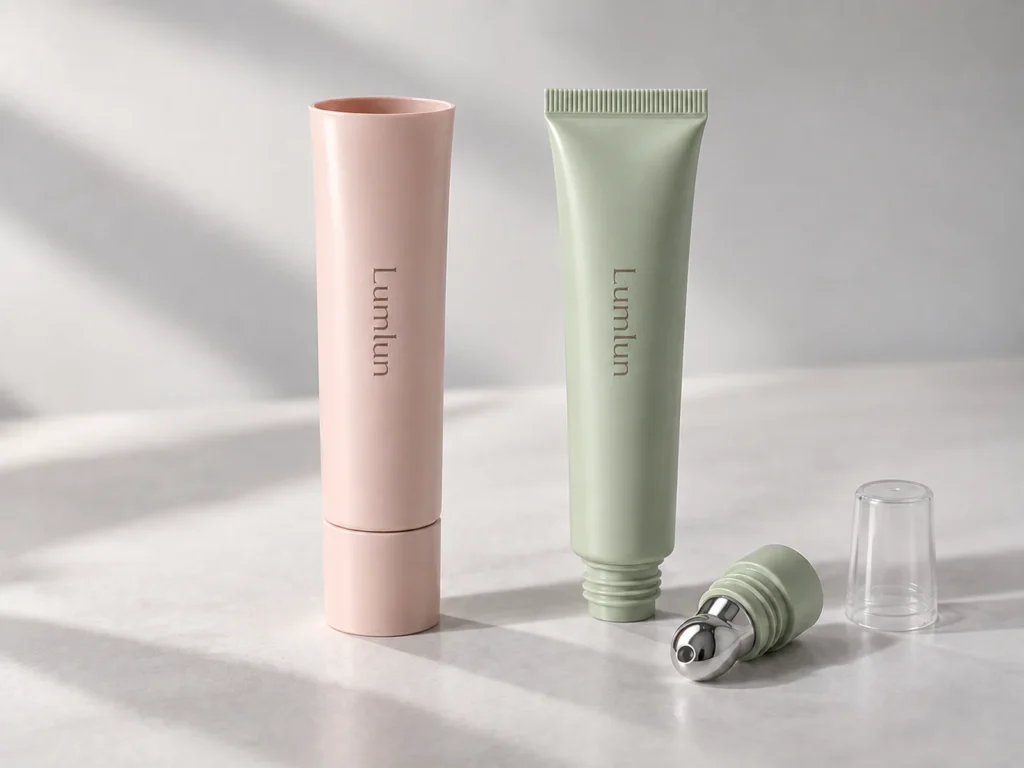
Many customers first focus on capacity, material, cap, applicator and appearance when choosing a cosmetic tube.
But before a project enters production, there is another important question:
Where will this tube be filled from?
Most standard cosmetic tubes use tail filling, while some special tubes can also use head filling.
This is not a minor detail to decide only after the tube reaches the filling factory.
Different filling directions directly affect:
- The condition in which LumLun delivers the tube
- Whether the tube tail needs to be sealed in advance
- Whether the applicator needs to be supplied separately
- The artwork direction and available area
- Whether an electric eye mark is needed
- The subsequent filling, tail-sealing or assembly method
- The appearance and directional consistency of the finished pack
Therefore, before tube production begins, it is better to confirm the filling direction.
First confirm: is your tube tail-filled or head-filled?
They can first be understood as two different production routes.
Tail Filling
For a common tail-fill tube, the shoulder, outlet and cap or applicator end are usually already completed.
The tube tail remains open, and the supplier does not complete tail sealing during tube production.
During filling, the formula enters the tube through the open tail. The tube is then oriented, tail-sealed and trimmed:
Filling → Orientation → Tail Sealing → Trimming
This is the more common production route for most standard cosmetic tubes.
Head Filling
A head-fill project is different.
The tube tail has already been sealed during tube production.
Filling no longer takes place through the tail. Instead, the formula is filled through an open position at the top of the tube.
For some special structures, such as certain lip care tubes, the applicator head can be separated from the tube body.
The filler can first fill the formula through the top opening, then install the applicator and the remaining closure components.
This needs to be stated in advance because not every lip care tube or applicator tube supports head filling.
The tube delivered by the supplier is therefore clearly different from a normal tail-fill tube.
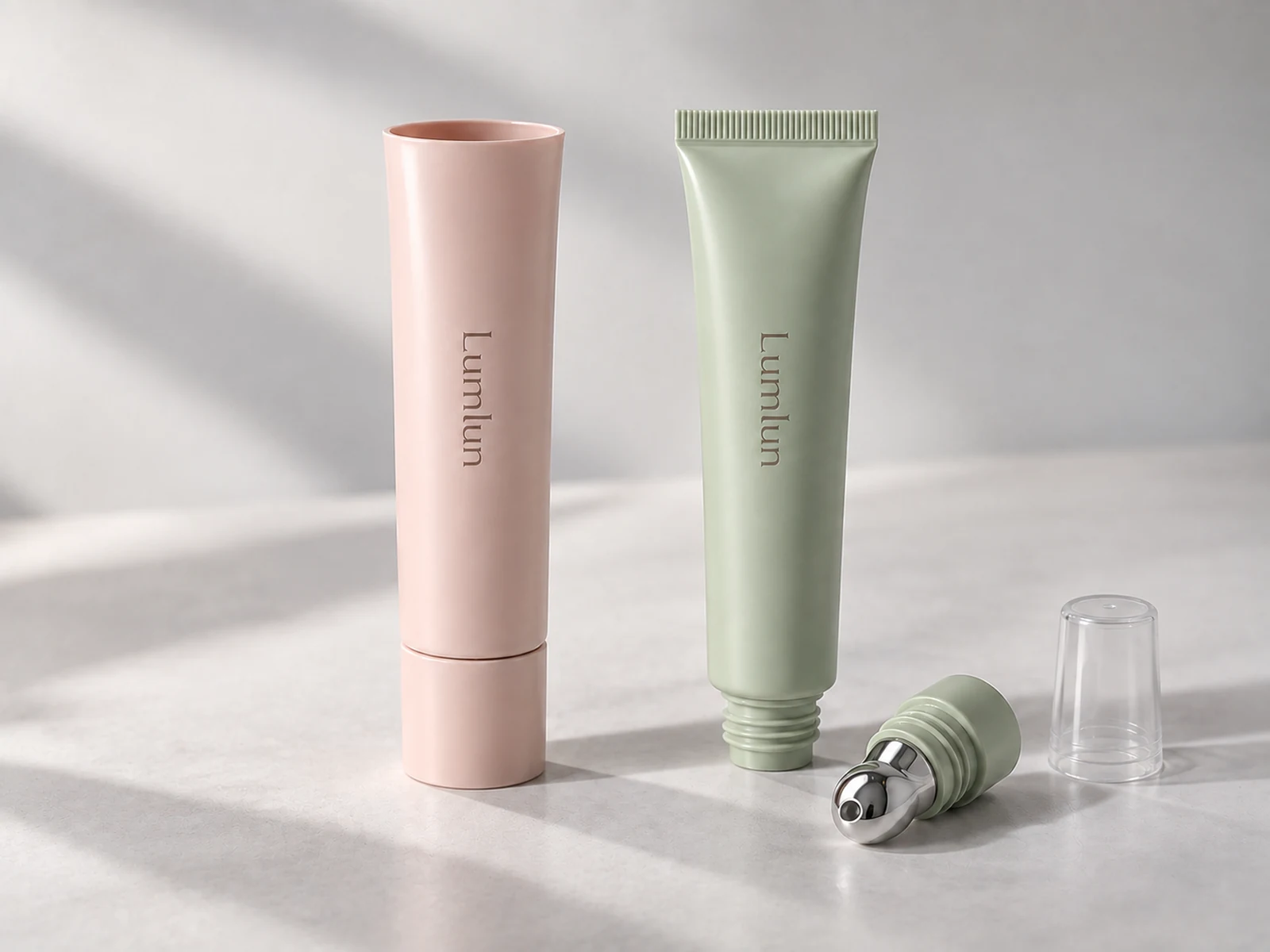
Why do most standard cosmetic tubes use tail filling?
For many common PE cosmetic tubes, the tail remains open after the tube body, shoulder and outlet have been completed.
The filling partner can fill the formula through the larger tail opening and then complete tail sealing.
This route avoids requiring the formula to pass through an already formed small outlet or applicator opening during filling.
Therefore, the following products are more commonly used in tail-fill projects:
- Cleanser Tube
- Hand Cream Tube
- Face Cream Tube
- Sunscreen Tube
- Body Care Tube
- Most standard Squeeze Tubes
However, “common” does not mean that every model must use the same filling route.
The final route still needs to be confirmed according to the specific tube model, formula and filling line.
What needs to be confirmed before tube production for a tail-fill project?
If the customer plans to use tail filling, the supplier needs to know the subsequent filling and sealing method in advance.
This allows the tube to enter the filling line in the correct condition.
Items that normally need to be confirmed include:
- The tube tail remains open
- The tube diameter and length meet the project requirements
- The closure or applicator configuration has been confirmed
- The front / back artwork direction is clear
- Enough space is reserved for the tail seal area
- Whether an electric eye mark is needed
- Whether the coding position conflicts with the tail seal or trim area
Tail filling is not simply a matter of “sealing the tail after the tube has been made.”
It begins to affect the finished pack from the artwork and tube-production stages.
Why do tail-fill tubes often need an electric eye mark?
If the tube surface already has a clear logo, front panel and back panel, the tube normally cannot rotate completely at random during tail sealing.
Otherwise, the result may include:
- The logo and tail-seal direction do not align
- The back panel turns to the side
- The front and back directions vary between finished tubes
- The visual relationship between the tail seal and the overall artwork changes
For projects that require automatic orientation, an electric eye mark / registration mark can be added to the final approved artwork.
Its main purpose is to help the relevant equipment identify the rotational position of the tube so that subsequent sealing and trimming can be completed in the set direction.
Simply put, an electric eye mark is a production positioning mark, not information intended for the consumer.
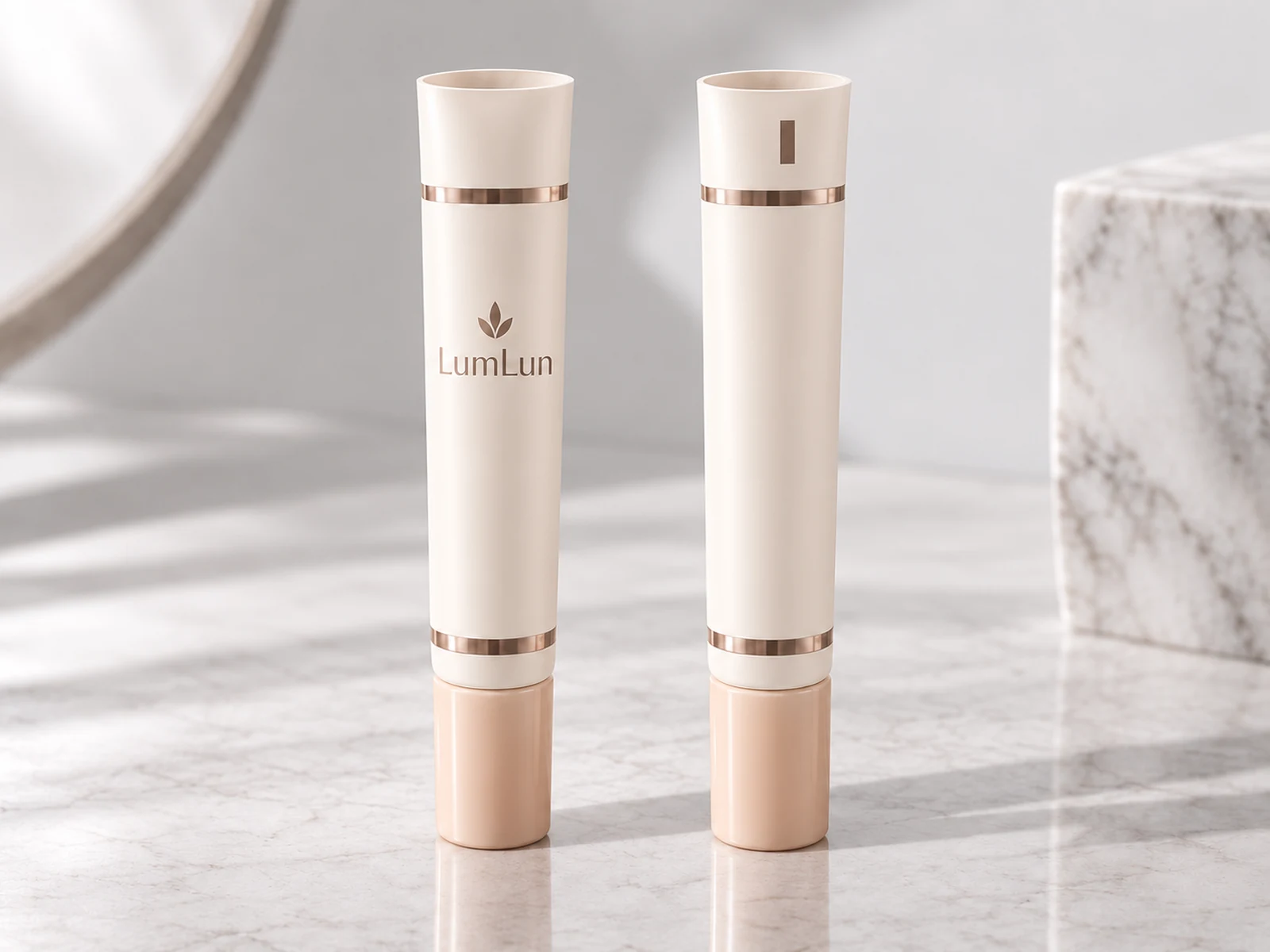
The electric eye mark should be confirmed at the artwork stage
Although an electric eye mark is small, it is still part of the production artwork.
It should not be added casually after all printed content has already been confirmed.
The following usually need to be considered together:
- The actual printing area
- The tail seal area
- The front / back direction of the artwork
- The recognition requirements of the filling / sealing line
- The position of the mark in relation to the overall visual design
- Its condition after final trimming
LumLun can assist customers in adding the electric eye mark to the final approval artwork.
However, the specific position and form still need to be confirmed according to:
Actual Tube + Printing Layout + Filling / Sealing Equipment
Different tubes and different production lines should not mechanically use the same fixed position.
When is head filling used?
Head filling is normally not the default route for standard cosmetic tubes.
It appears more often in some models with special top components or applicator structures.
For example, on some lip balm or lip treatment tubes, the applicator can be separated from the tube body.
In that case, the production route may be:
- The tube tail is sealed in advance
- The applicator is temporarily left uninstalled
- The formula enters the tube through the top opening
- The applicator is installed after filling
- The cap or other closure components are assembled last
This structure avoids filling through an already formed narrow applicator outlet.
Whether it suits a particular project still depends on the actual tube structure.
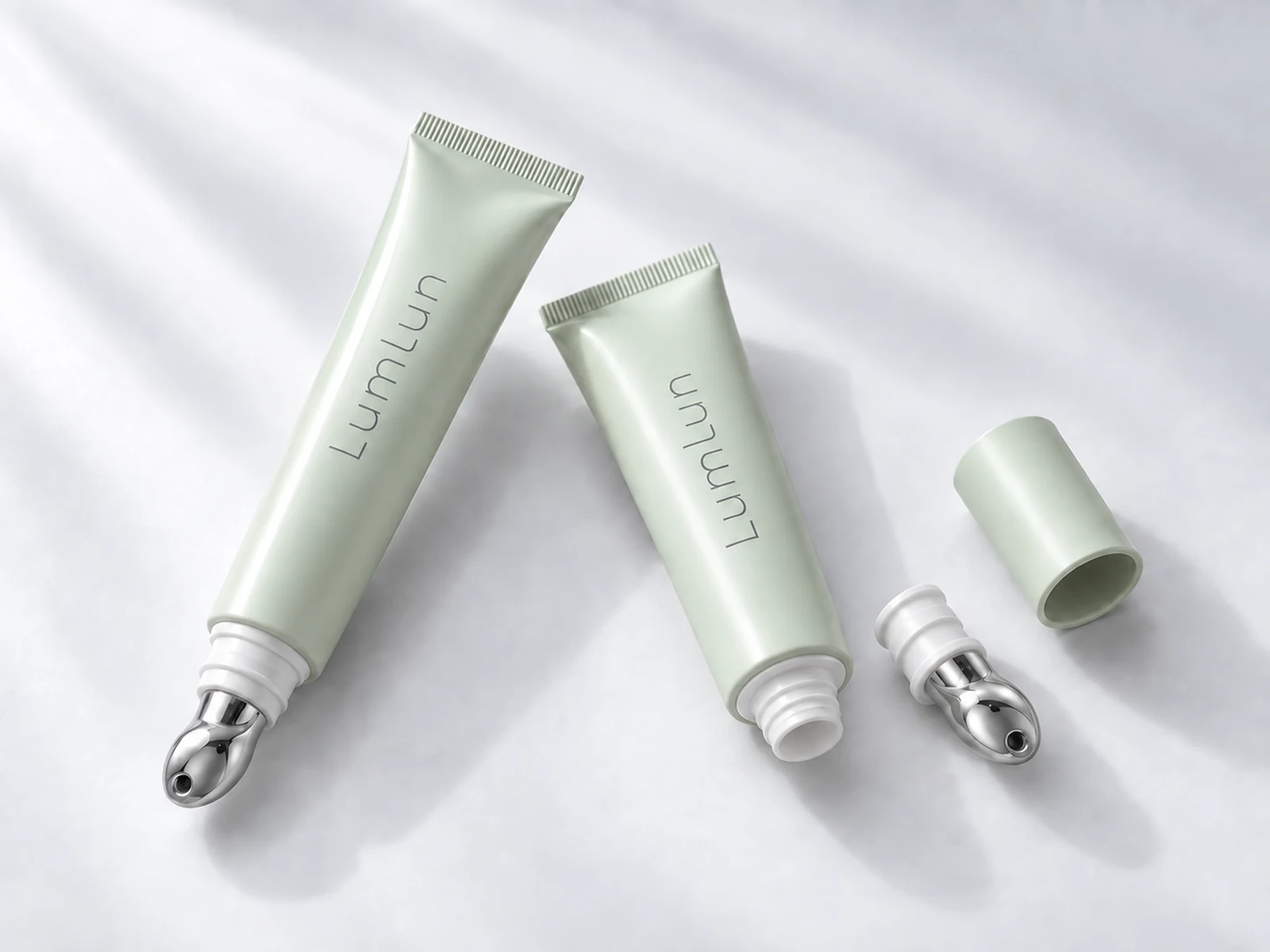
If head filling is required, tell LumLun when selecting the tube
One of the easiest problems to encounter with head filling is that the customer selects the tube first and only later tells the supplier:
“We plan to fill from the top.”
If the original tube was prepared as a normal tail-fill tube, the following situation may occur:
- The tube has not been tail-sealed
- The applicator has already been assembled
- The filling partner requires a tail that has already been sealed
- The top does not provide a suitable open filling structure
Therefore, if the project plans to use head filling, it is better to tell LumLun during model selection.
We can give priority to helping customers screen tube structures that actually support head filling, rather than selecting an unsuitable model first and then trying to change the filling route later.
For a specific model, the following still need to be confirmed:
- Whether the tail can be sealed in advance
- Whether the applicator can be supplied separately
- Which components need to be packed separately
- How final assembly will be completed after filling
- Whether the model is genuinely suitable for the customer’s filling line
Not every tube with an applicator can be head-filled
A tube having an applicator does not mean that it automatically supports head filling.
For example:
- Silicone Applicator
- Metal Applicator
- Rollerball
- Ceramic Tip
- Precision Nozzle
These names only describe the material of the head and cannot determine the filling route on their own.
What really needs to be confirmed is:
Can the applicator assembly be separated from the tube body and then reliably reassembled after filling?
Some models can.
Some models are not suitable.
Therefore, if the customer has already confirmed that head filling is required, this can be stated during model selection, and LumLun will prioritize tubes suitable for head filling for the customer to compare and choose from.
What actually changes between tail filling and head filling?
| Item | Tail Filling | Head Filling |
|---|---|---|
| Filling opening | Open tube tail | Tube top / head opening |
| Tube-tail delivery condition | Normally remains open | Normally already sealed in advance |
| Applicator condition | Normally already assembled | Some models need separate delivery |
| Main action after filling | Orientation → Seal → Trim | Install Applicator / Closure |
| Artwork focus | Tail Area, Orientation, Eye Mark, Coding | Finished tail condition, Top Assembly, component direction |
| Common applications | Most standard Cosmetic Tubes | Some special Lip Care / Applicator Tubes |
| Scope | More common | Depends on the specific model |
Neither route is inherently better than the other.
The key is to make sure the tube structure, formula and the customer’s filling line use the same production logic.
Formula also affects the filling route
Whether tail filling or head filling is used, the condition of the formula cannot be completely ignored.
Common situations include:
- Liquid
- Gel
- Cream
- Paste-like Formula
- Balm-like Formula
- Formula containing particles or suspended solids
Different formulas may have different requirements for the filling opening and filling equipment.
For example, even if a tube structurally allows head filling, it does not mean that every high-viscosity formula is suitable for filling through a top opening of the same size.
Therefore, the following should be confirmed together:
Tube Structure + Formula + Filling Equipment
The filling route should not be decided only from the appearance of the tube.
Artwork needs to be confirmed together with the filling direction
Filling direction is not only a production-floor issue. It also affects the artwork.
Tail-Fill Projects
The main items to confirm normally include:
- Tail Seal Area
- Electric Eye Mark
- Front / Back Direction
- Batch Coding Position
- Trim Area
Head-Fill Projects
More attention is needed for:
- The final tube length after the tail has already been sealed
- Top Component Assembly
- The directional relationship between the applicator and the artwork
- Whether reinstalling components after filling affects the final appearance
Artwork is therefore best based on a confirmed:
Exact Model + Capacity + Filling Direction
Rather than completing the design file first and then trying to adapt it to the production method later.
Final confirmation cannot be based only on whether the tail seal looks “neat”
For a tail-fill project, the tail seal visible to the consumer may look like a simple sealed edge.
But the actual project should also check:
- Whether the tail seal is complete
- Whether the seal area is clean
- Whether leakage occurs during normal squeezing
- Whether the tail direction is consistent with the artwork
- Whether the finished tube length meets expectations
- Whether the coding is clear
- Whether the trim edge meets the project requirements
Therefore, whether a tube project can enter mass production should not be judged only by whether the tail seal looks neat.
The final check still needs a filled pack
An empty tube can help the customer confirm:
- Tube Size
- Diameter
- Cap
- Applicator
- Structure
- Overall Proportion
But it cannot completely answer how the formula will behave in the real package.
Whether tail filling or head filling is used, before mass production it is more useful to use the actual formula, or the closest realistic formula, to check:
- Filling
- Tail Seal or Top Assembly
- Leakage
- Squeeze Behavior
- Outlet Flow
- Closure Fit
If the customer needs to understand further what a stock sample, decorated sample and production sample should each confirm, they can continue to the separate Sample Guide.
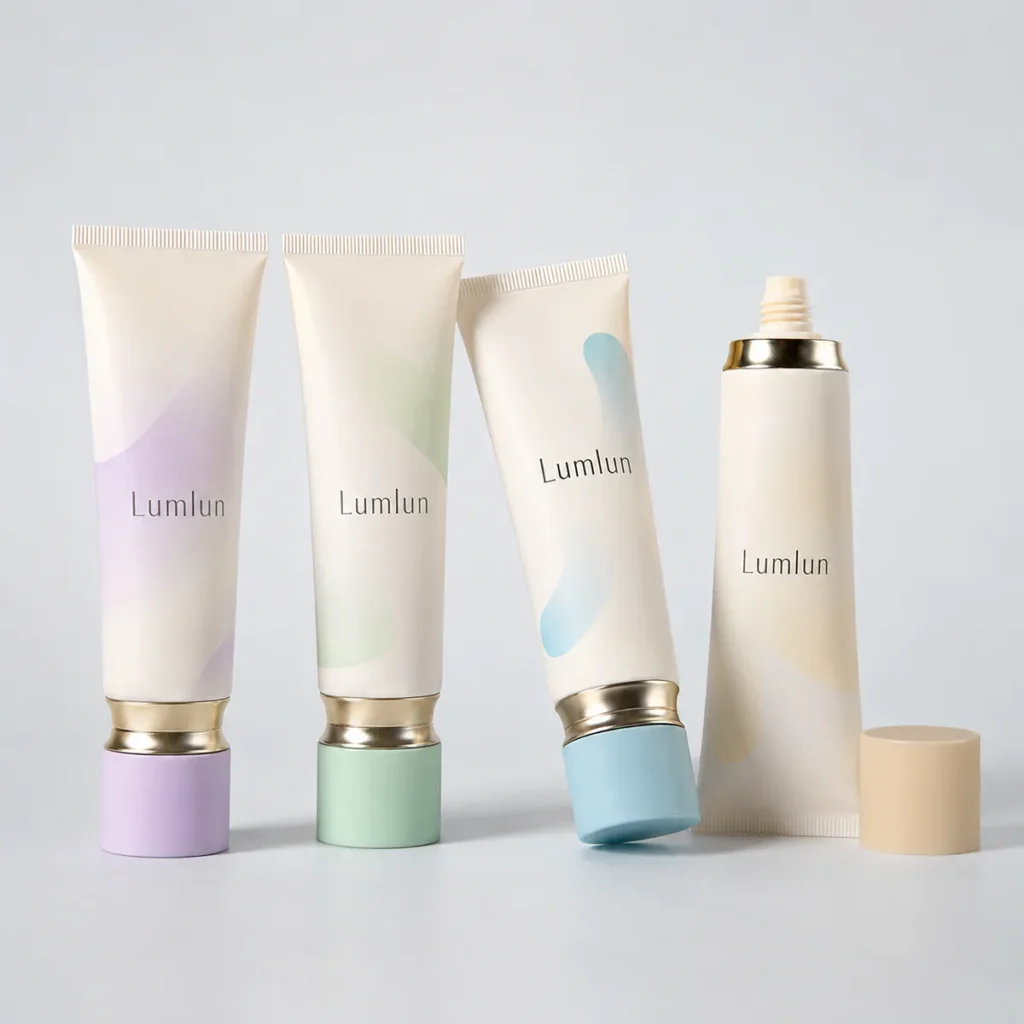
Compare real LumLun cosmetic tube models
Open the exact product page to review the model, capacity, material and component structure before confirming filling requirements.


A tail-fill project can proceed in this order
For a standard tail-fill cosmetic tube, the project can simply proceed in the following order:
Confirm the capacity, material, closure and actual tube model.
Confirm that the tube needs to be delivered with an open tail.
Confirm the artwork, tail area, coding and electric eye mark according to the actual template.
LumLun produces and delivers the unsealed-tail tube according to the confirmed condition.
The filling partner completes formula filling, orientation, tail sealing and trimming.
Check the seal, leakage, orientation and finished dimensions.
How can a head-fill project proceed?
For a special tube that actually supports head filling, a different order can be used:
First confirm that the model itself supports head filling.
Confirm that the tail needs to be sealed in advance and which top components need to be supplied separately.
Complete tube production and tail sealing according to the confirmed requirements.
The filling partner fills through the open position at the top.
Complete the final assembly of the applicator, top component and cap.
Confirm assembly, leakage, outlet and final appearance.
What should you tell LumLun in an enquiry?
If the project has started considering filling, a few basic pieces of information can be provided first.
Product Use
For example:
- Lip Balm
- Lip Treatment
- Eye Cream
- Cleanser
- Hand Cream
Target Capacity
For example:
- 10ml
- 30ml
- 50ml
- 100ml
Filling Direction
If it has already been confirmed, state:
Tail Fill or Head Fill
If it is not yet clear, you can also tell us the product structure or the filling line you plan to use.
Filling Partner Requirements
If the filling partner has already provided requirements for:
- Tube Diameter
- Tube Length
- Electric Eye Mark
- Tail Seal
- Assembly
These can also be sent to LumLun.
This makes it possible to confirm a suitable tube earlier, rather than changing the filling route only after the tube has already been produced.
FAQ
Do most cosmetic tubes use tail filling?
Most standard flexible cosmetic tube projects normally use tail filling and then complete tail sealing.
However, some special structures can also use head filling, so the final route should still be confirmed according to the specific model and filling line.
When should I tell LumLun that head filling is required?
If the project requires the tube tail to be sealed during tube production and the formula to be filled from the top, this should be stated during model selection.
This is especially important for lip care tubes where the applicator needs to be supplied separately.
What does an electric eye mark do?
An electric eye mark helps the relevant equipment identify the direction of the tube.
In tail-fill projects that require automatic orientation, it can help keep the front / back artwork more consistent with the tail-seal direction.
Does every tube need an electric eye mark?
No.
Whether it is needed depends on the filling / sealing equipment, the artwork and the customer’s orientation requirements.
Is head filling better than tail filling?
No.
They are simply different production routes.
The suitable route should be selected according to the tube structure, formula and actual filling line.
Can every lip care tube be head-filled?
No.
Only models whose top components can be separated and reliably reassembled after filling are suitable for this method.
Already selected a tube but not sure whether to tail-fill or head-fill?
You can first send LumLun:
Tube Reference / Product Type + Capacity + Planned Quantity + Filling Requirements
If a filling partner has already been confirmed, you can also provide its requirements for tube size, tail sealing, electric eye mark or assembly.
For a tail-fill project, we can further confirm:
Open Tail + Artwork Direction + Tail Area + Electric Eye Mark
For a special tube that supports head filling, the following can be confirmed in advance:
Pre-Sealed Tail + Head Opening + Applicator Assembly
Confirming the filling route before locking the tube production specification allows the tube supplier and filling partner to work in the same production direction from the beginning.