Choosing a lotion bottle size usually starts with how the product will be used, but the decision quickly becomes visual as well. The capacity affects how substantial the bottle looks in product photography, how comfortably it fits into a gift set and how clearly shoppers understand the difference between a travel, everyday and larger-use format.
Two bottles with the same stated capacity can create very different impressions because width, height, shoulder shape and pump proportion change the scale customers see. The most useful approach is therefore to compare real bottle models and decide what each size should contribute to the product line, rather than treating milliliters as an isolated specification.
Compare the available LumLun lotion bottle models first. The separate guides to lotion pump bottles for everyday body care and body lotion packaging design cover the pump and wider visual decisions without turning this size guide into a duplicate article.
Reviewed by the LumLun Packaging project team · Updated July 2026
Key Takeaways
- Give every size a clear purpose. Travel, core retail and larger-use formats should not feel like simple copies of one another.
- Compare real bottle proportions. Width, height and pump scale can change how large the same capacity looks.
- Match capacity to the customer routine. Use frequency and the amount applied each time influence how quickly the product is finished.
- Adapt the artwork for each bottle. Logo size, spacing and product information should be adjusted rather than mechanically scaled.
- Start with one strong core size when needed. Additional sizes are most useful when they answer a clear use or channel need.
Decision Table
100ml, 250ml and 500ml: the fastest comparison
| Size direction | Likely product role | What customers may read from the pack | Best starting use |
|---|---|---|---|
| 100ml | Travel, targeted care, introductory or companion SKU | Compact, portable and easy to include in a set | Travel body lotion, hand-and-body care, focused treatment or a premium small format |
| 250ml | Core retail SKU | Balanced everyday presence without feeling oversized | Main body lotion, daily moisturizer or the hero size in a body-care line |
| 500ml | High-frequency, family, spa or value SKU | Substantial, generous and designed for routine use | Home use, salon/spa, refill companion or larger-value positioning |
100ml, 250ml and 500ml Bottles Play Different Roles
The useful question is not “Which capacity is best?” but “What job should this SKU do in the range?”
A 100ml bottle can be the most persuasive choice when portability, a treatment-led story or a lower-commitment introduction is part of the offer. It can also work as a hand-and-body companion or a set component. The smaller size should still look intentional: a weak front panel, an oversized pump or too much copy can make it feel like a sample even when the formula is premium.
A 250ml bottle often gives a body-care brand enough visual presence for a hero product while remaining comfortable for everyday use. It usually provides more space for a clear brand hierarchy, product name and benefit statement. That does not make 250ml universally correct; it simply makes it a practical middle direction when the product is designed to be used regularly but is not meant to look like a family pack.
A 500ml bottle works when customers have a clear reason to buy more product at once. Frequent full-body use, professional settings, a family-size story or a refill-oriented routine can support the larger format. Without that reason, a large bottle may create unnecessary shipping volume or make the line feel less focused. The role must be visible in the design and product offer.
Which Size Matches the Way Customers Use the Product?
Match capacity to the application area, use frequency and how much product customers use each time instead of guessing the number of days a bottle will last.
Body lotion use varies widely. A lightweight lotion applied after every shower may be used over a large area and consumed relatively quickly. A richer cream or targeted body treatment may be applied to elbows, hands or dry areas in smaller amounts. Because brands use different formulas and consumer instructions, fixed “days of use” claims are rarely reliable without real product data.
- Application area: full-body use generally supports a larger core pack than a targeted hand, neck or dry-area treatment.
- Frequency: a product used once a week has a different capacity logic from a lotion used morning and evening.
- Formula spread: fluid, high-slip formulas can cover more skin per dose than dense creams, but the actual dose still depends on the pump and instructions.
- Use location: a bathroom or bedside product can tolerate more volume than a travel or handbag product.
This is why the first packaging conversation can begin with the product idea rather than a finished technical specification. A clear use scenario is often enough to narrow the first group of realistic sizes.
How Bottle Size Changes Product Positioning
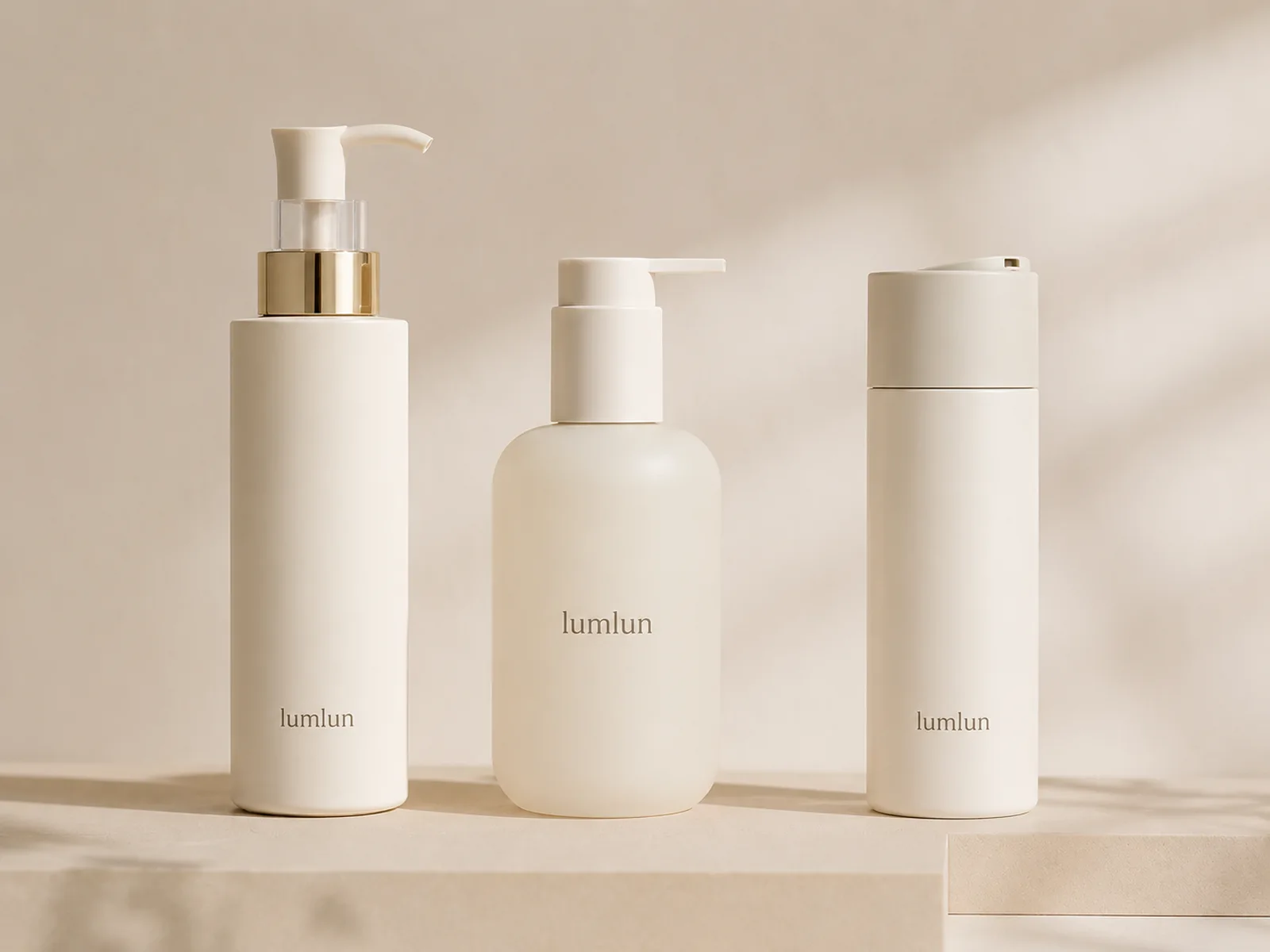
Capacity changes how customers interpret price, commitment and product importance before they compare the formula.
A smaller bottle may support a premium price per milliliter when the product is framed as concentrated, portable or highly considered. That position must be carried by the overall shape, wall feel, finish, pump and artwork. Simply reducing the capacity does not create luxury. A compact bottle with a balanced pump, restrained copy and a well-controlled finish can look deliberate; the same capacity with crowded artwork can look temporary or low-value.
A medium bottle usually reads as the brand’s normal everyday offer. It is often the easiest format for a customer to understand online because it looks substantial without dominating the image. A large bottle can strengthen a value or routine-use proposition, but only when the design remains consistent with the brand. If the 500ml pack suddenly uses a generic pump and a different overall shape, customers may read it as a separate product family rather than a larger version of the same line.
Price positioning also depends on what sits around the bottle. Secondary packaging, label hierarchy and the rest of the range influence perceived value. The size should support the product promise, not be used as a substitute for a clear brand story.
Why the Same Capacity Can Look Very Different
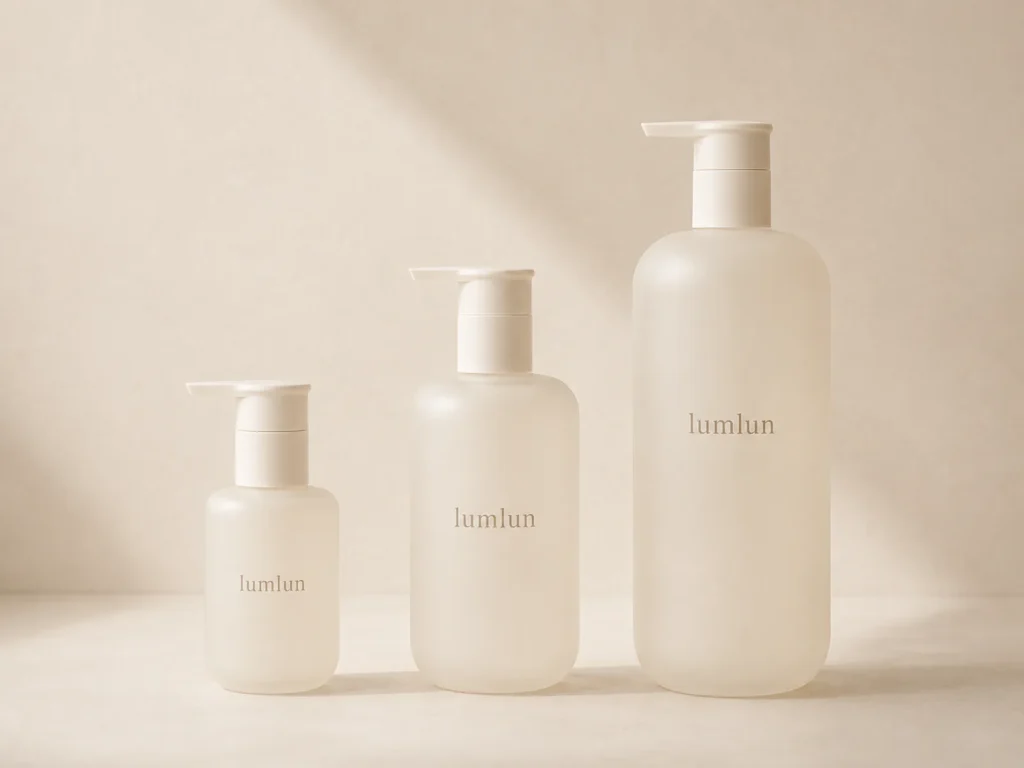
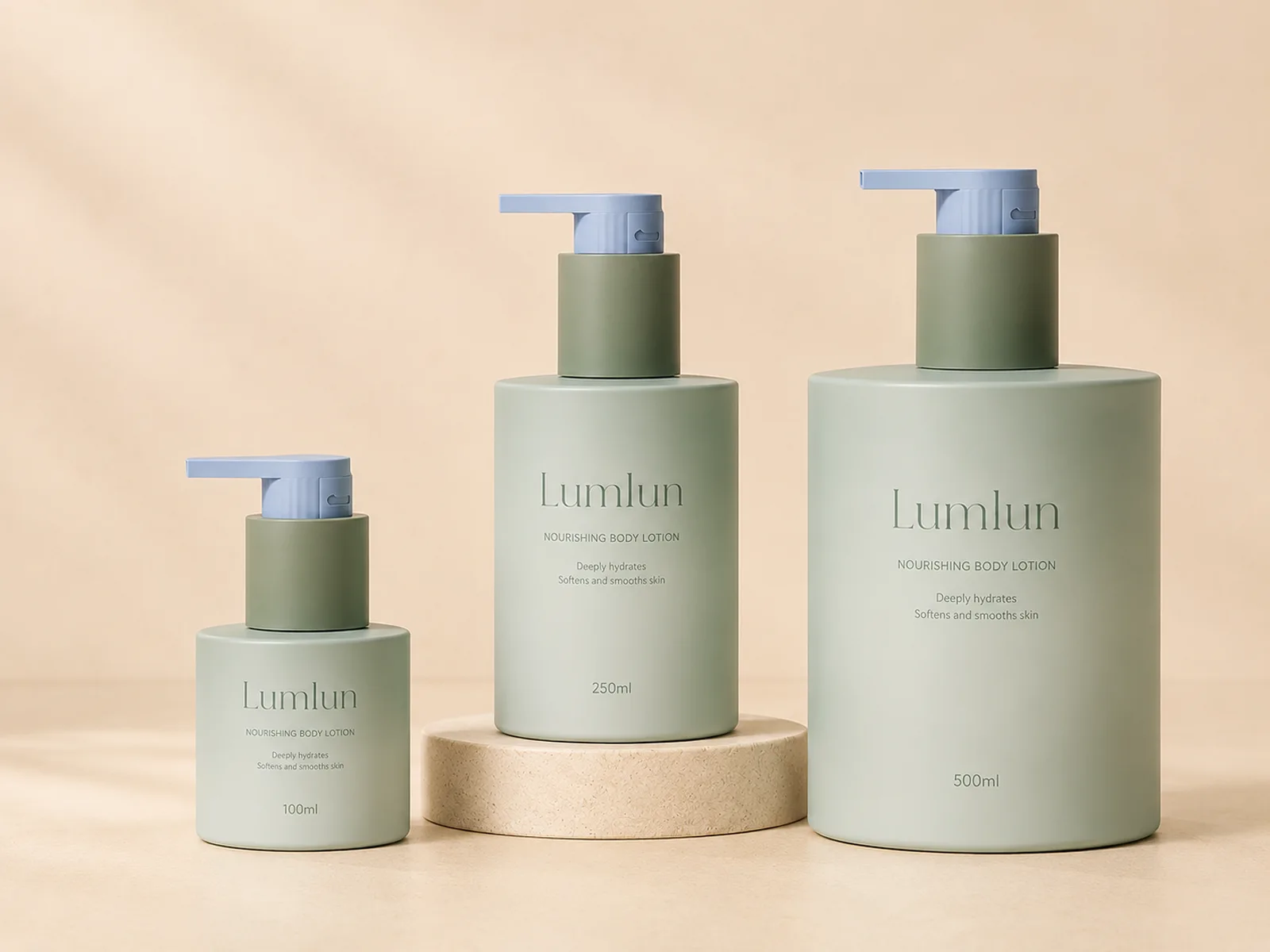
A 250ml bottle can look slim and premium, short and generous, or visually larger than a 300ml bottle because capacity is hidden inside a three-dimensional shape.
Height, diameter, shoulder shape, base thickness and wall construction change the visible mass of the package. A tall cylinder may photograph elegantly and use a narrow shelf footprint. A wider bottle may feel stable and substantial on a countertop. A thick-wall or double-wall appearance can make a smaller capacity feel more valuable, while a very light, narrow bottle can make a larger capacity look less substantial than expected.
The pump is part of the proportion. A long pump head may suit a broad body-lotion bottle but overpower a compact 100ml pack. A narrow pump on a large 500ml bottle can look under-scaled. The collar, closure and shoulder should be reviewed as one overall shape, especially when the same family is intended to cover several sizes.
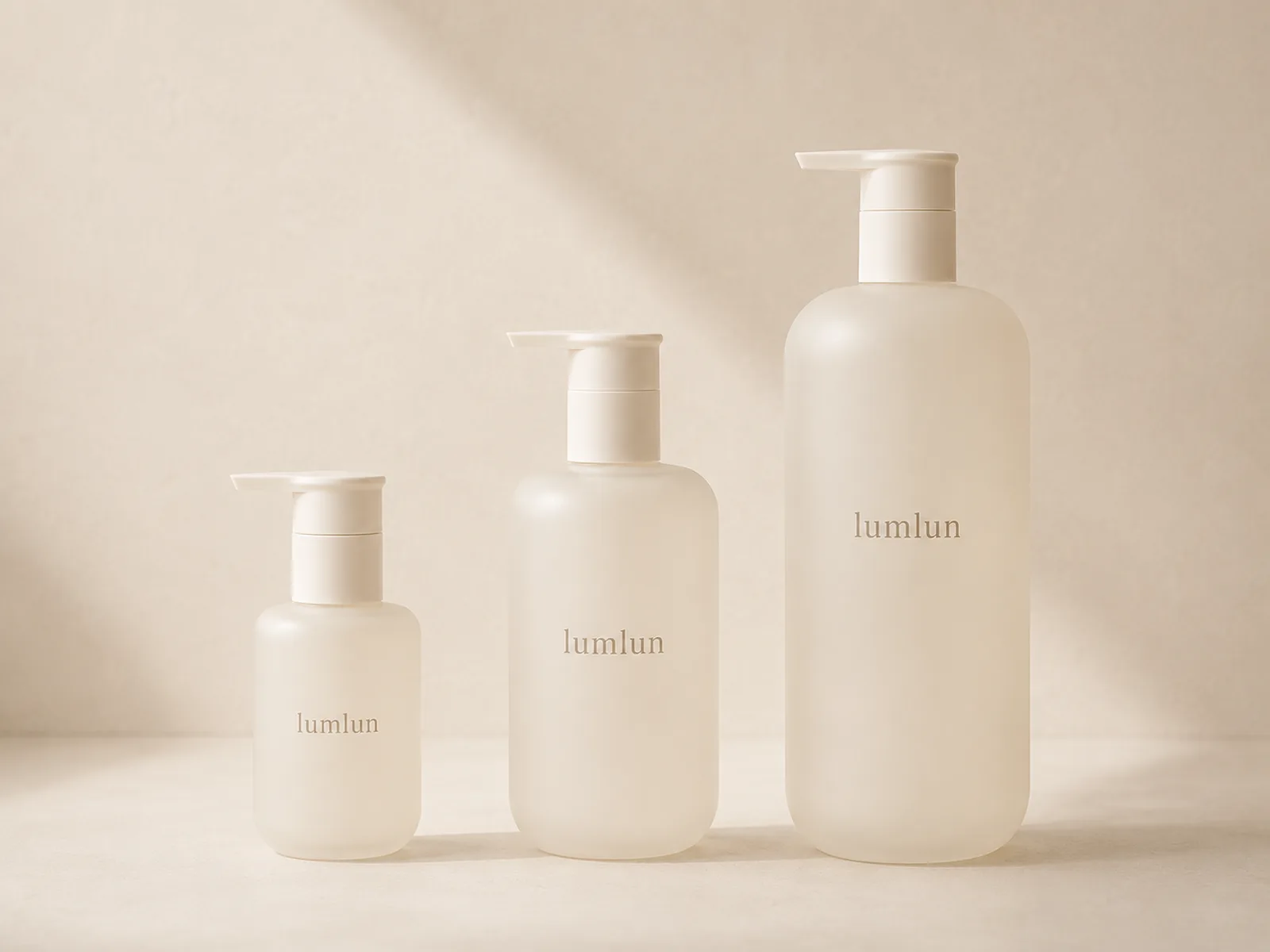
Photograph the shortlist side by side before approving the range. This makes it easier to see whether the smallest SKU disappears, whether the largest becomes dominant and whether the bottles still look related. The product images used here illustrate why real proportions are more informative than capacity numbers alone.
Send us the LumLun bottle you like or one reference image. We can help compare the closest sizes and bottle proportions before you adapt the artwork.
How to Build a Clear Body Care Size Range
A useful size range is a ladder of customer choices, not three bottles that differ only by milliliters.
The cleanest ladder is often travel or focused use, core daily use and larger routine use. Each size should have a clear label, channel or use occasion. If a brand offers 100ml, 250ml and 500ml with the same formula, the product page should explain who each size is for. Without that distinction, the extra SKUs can split demand, complicate forecasting and make the assortment harder to understand.
Range planning also affects production. Shared pump colors, compatible decoration processes and a related bottle family can make the system easier to coordinate. The exact component commonality depends on the selected models, so it should be confirmed rather than assumed. Visually, the goal is consistent logic: the same brand hierarchy, color direction and finish, with artwork adapted to the available front panel.
When a brand is developing more than one primary pack, the LumLun packaging case studies show how bottles, jars, tubes and boxes can be coordinated without pretending that every structure is identical. The same principle applies to a size range: consistency comes from shared design rules, not forced sameness.
Which Size Fits E-Commerce, Retail and Gift Sets?
The same capacity can perform differently by channel because product photography, shelf spacing, gift-box depth and shipping volume change what “right size” means.
In e-commerce, the bottle must read clearly as a thumbnail. A distinctive shoulder, cap or proportion can be more valuable than extra milliliters that are invisible in the main image. A small bottle can look premium when photographed with enough scale reference and a clear front panel. A large bottle can lose impact if the image makes it look generic or if the pump is visually weak.
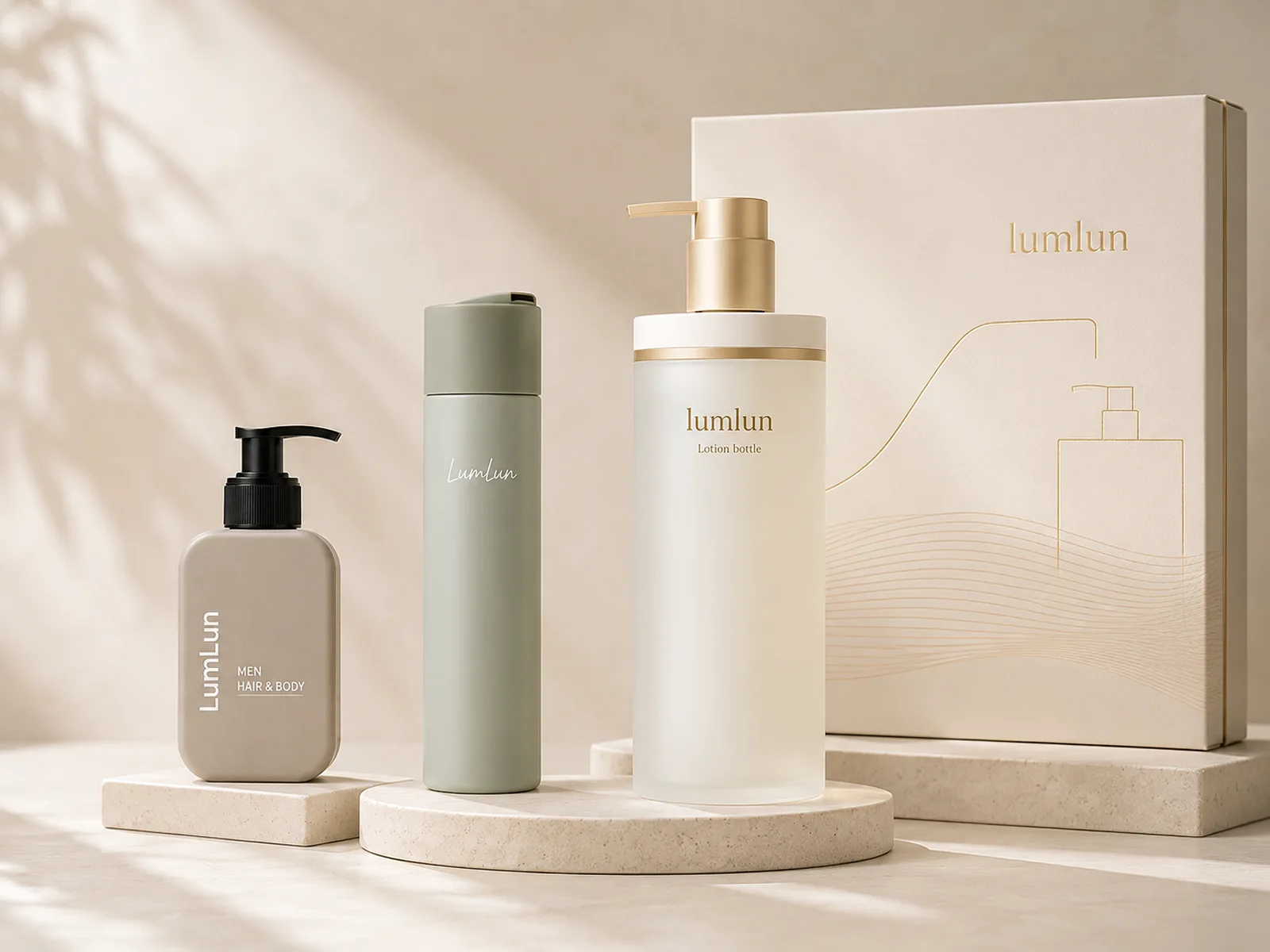
In retail, height and width affect shelf allocation and how the range blocks together. A group of tall, narrow bottles may create a clean vertical rhythm; a group of wider bottles may communicate stability and generosity. Gift sets add another constraint: a 500ml bottle can dominate the box, while a 100ml bottle can disappear unless the insert and secondary packaging give it enough presence.
Transport volume is part of the commercial decision but should not be discussed as a fear point. It is simply one input alongside the desired customer experience. Review the bottle, pump, box and intended order mix together before confirming the size strategy.
How to Keep Different Sizes Looking Like One Brand
Use one visual system across the range, then adapt it to each bottle rather than copying the same artwork dimensions.
- Keep the brand hierarchy stable: logo, product family and product name should appear in the same order.
- Coordinate visible components: pump, collar and cap colors should feel deliberate across sizes.
- Use a controlled color rule: one master color, a benefit-based color family or a clear size-code system can all work.
- Adapt the artwork: a 100ml front panel may need fewer words and larger type; a 500ml front panel may need more spacing to avoid looking empty.
- Repeat one finish language: matte, gloss, gradient, silk screen, hot stamping or metallized details should be applied consistently where the selected packaging allows.
The available decoration depends on the actual package and process. Review the custom skincare packaging materials and finishing options after the structure and capacity have been narrowed, so the artwork is designed for a real printable area rather than a concept that the bottle cannot reproduce.
Should a New Body Care Line Start With One Size or Several?
One strong hero size is often the clearest starting point; several sizes make sense when each has a proven role, channel or use occasion.
A first launch already requires formula, artwork, packaging, filling, content, forecasting and sales-channel coordination. Adding three sizes can multiply decisions and inventory without automatically creating more demand. One core size can keep the product proposition focused and make it easier to learn how customers respond.
A multi-size launch can still be appropriate when the brand already knows the channel need. A travel retailer may require a compact format. A spa or salon customer may need a larger pack. A gift program may benefit from a 100ml companion to the core 250ml bottle. The key is that each size earns its place.
A staged approach can be practical: establish the core SKU, then add the size that answers the strongest next need. This is not a universal rule, but it keeps range expansion tied to customer behavior rather than to the assumption that more SKUs always create more value.
Which Lotion Bottle Size Fits Your Product Line?
Make the final choice by scoring product role, use behavior, visual scale, channel and future range planning together.
Start with the product role. If portability or focused use is central, shortlist 100ml directions. If the product is the main daily body lotion, compare 200ml to 300ml families with 250ml as a useful reference point. If high-frequency use, professional use or value is central, compare larger families and confirm stability, pump scale and secondary packaging.
Then compare real models, not generic capacity drawings. Review the bottle next to its pump, the available front panel, the finish options and the other products in the line. A slightly different capacity in a much stronger bottle family may be more commercially useful than forcing an exact milliliter target into a weak overall shape.
The most responsible answer is therefore conditional rather than absolute: choose the capacity that makes the product role obvious, gives the brand enough design space and fits the way customers will actually use and buy the product.
Decision Table
Final size decision matrix
| Project question | Choose 100ml when… | Choose 250ml when… | Choose 500ml when… |
|---|---|---|---|
| How will the product be used? | It needs to travel, sit in a gift set or support focused use | It is the normal daily product and main retail offer | It will be used frequently over a large area or positioned as a larger-value format |
| What should the pack communicate? | Compact care, portability or a lower-commitment entry | The brand’s core body-care proposition | Routine, generosity or professional/home-use scale |
| What is the launch plan? | A secondary SKU or travel extension | One clear hero SKU for launch | A proven range, value tier or high-frequency channel |
| What should be checked visually? | Enough front-panel space and a pump that does not overpower the bottle | Balanced overall shape, readable artwork and shelf presence | Stability, pump scale, gift-box depth and visual connection to smaller SKUs |
Final Recommendation
For many body-care launches, a well-proportioned 250ml bottle is a balanced core direction. Choose 100ml when portability, targeted care or set-building is part of the offer, and choose 500ml when frequent use, professional use or larger-value positioning is clear. Confirm the decision with real bottle proportions, not capacity alone.
Frequently Asked Questions
What is a common size for a body lotion bottle?
A 200ml to 300ml bottle is a common core retail direction, and 250ml often provides a balanced everyday format. The right size still depends on how much product customers use each time, use frequency, price position, channel and the bottle’s actual proportions.
Is 100ml too small for a body lotion?
Not necessarily. A 100ml bottle can work for travel, trial, hand-and-body care sets, focused treatments or premium compact products. It is less suitable when the product promise is generous full-body daily use unless the small size is intentional.
When does a 500ml lotion bottle make sense?
A 500ml bottle makes sense for frequent home use, family-size positioning, spa or salon use, and value-oriented ranges. The bottle should remain stable and visually connected to smaller SKUs.
Can different lotion bottle sizes share one design system?
Yes. They can use the same bottle family, pump color, finish and logo hierarchy. Artwork size and spacing should be adjusted for each front panel rather than copied at one fixed scale.
Should a new body care brand launch several sizes at once?
A single core size is often simpler for a first launch. Several sizes are useful when each has a clear role, channel and inventory plan, such as travel, core and larger-value formats.
LOTION BOTTLE OPTIONS
Compare Lotion Bottle Options for Your Body Care Line
Browse existing LumLun lotion bottles, send us the product you like, or share one reference image. A simple question or approximate capacity is enough to begin.