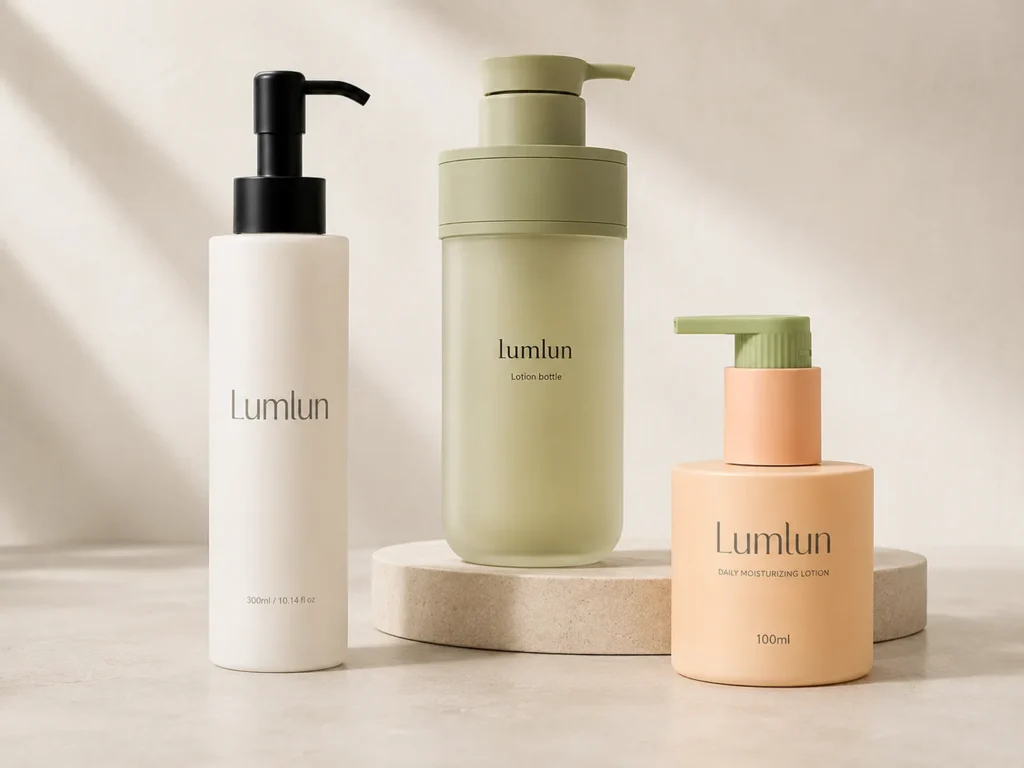
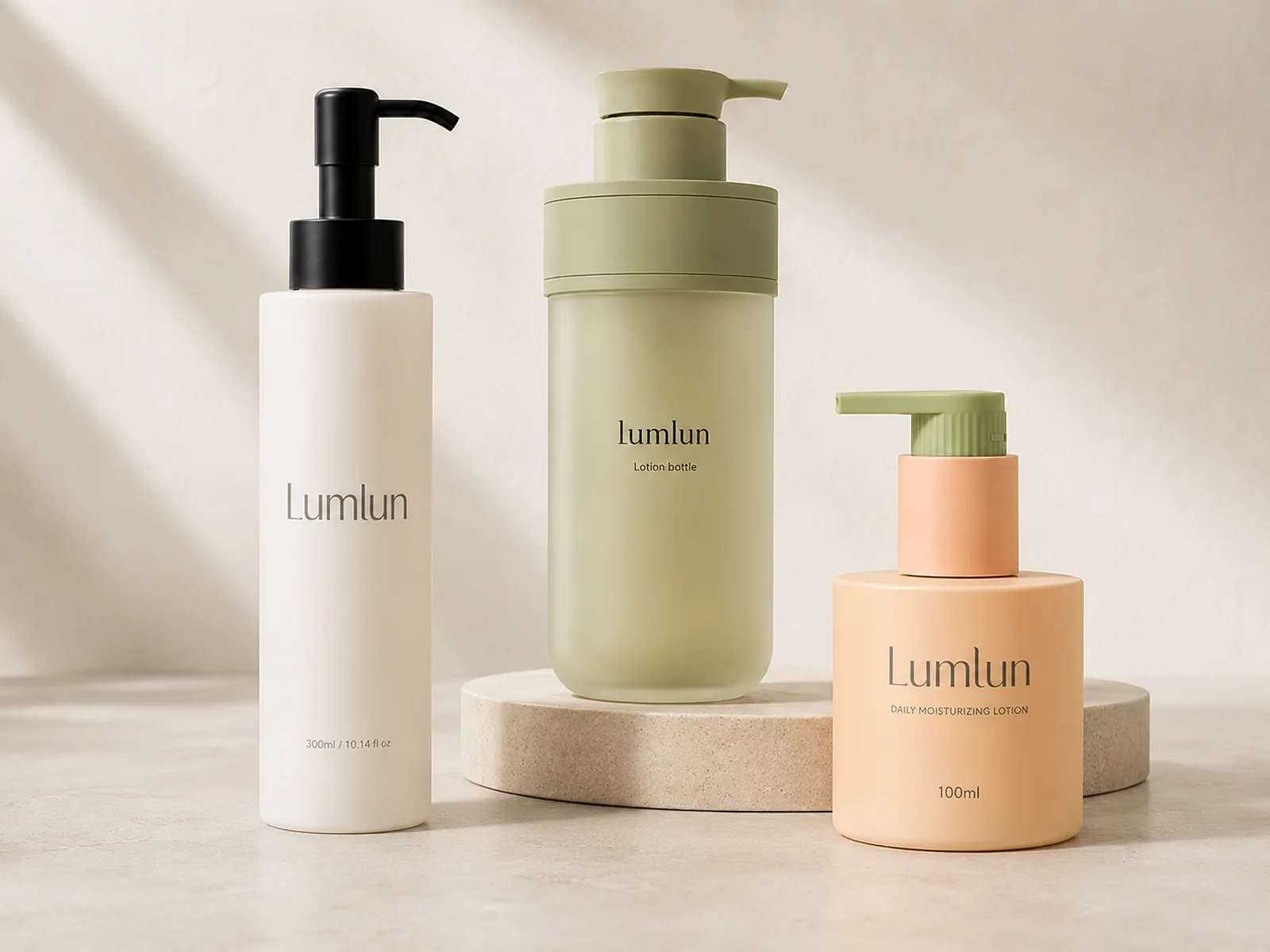
A lotion pump bottle becomes part of an everyday routine, which means stability, pump reach, bottle proportion and one-handed use matter as much as appearance. Customers may not describe these details, but they notice whether the pack feels balanced and easy to live with.
The practical starting point is to compare existing bottle models that already fit the intended capacity and routine. Color, finish, logo and pump coordination can then create a distinctive brand direction without making a new mold the default solution.
Browse the current LumLun lotion bottle models. The separate guide to 100ml, 250ml and 500ml lotion bottle sizes can help confirm capacity after the preferred bottle and pump direction is clearer.
Reviewed by the LumLun Packaging project team · Updated July 2026
Key Takeaways
- Choose for real daily use. Stability, one-handed pressing and pump reach should fit the intended routine.
- Compare the complete bottle proportion. A pump that is too small or too large can make the package feel unbalanced.
- Select the capacity family before final artwork. Related sizes should support future product-line planning.
- Use customization to differentiate existing models. Pantone color, finish, logo and pump coordination can substantially change the look.
- Consider a new mold only when the structure must be unique. A close existing model is often the more practical starting point.
Decision Table
Lotion pump bottle selection checklist
| Selection area | What to compare | Why it matters | What not to assume |
|---|---|---|---|
| Bottle base and body | Stability, grip, wall appearance, shoulder and front panel | Supports one-handed use and the intended visual character | That the same capacity will have the same dimensions |
| Pump and collar | Pump head length, press direction, lock, collar height and color zones | Shapes the use action and top overall shape | That any pump can be fitted to any bottle |
| Capacity family | Available sizes and relationship between them | Supports launch and future SKU expansion | That one model automatically has every desired size |
| Customization | Color, transparency, finish, printing and compatible components | Creates brand distinction on a real structure | That decoration can change the bottle shape or mechanism |
What Makes a Lotion Pump Bottle Feel Right in Daily Use?
The bottle should remain stable while the customer presses a pump that feels proportionate to the product and routine.
Body lotion, hand lotion, cleanser and similar products are often used with one hand. A stable base and comfortable pump head reduce the need to hold the bottle awkwardly. The pump should be easy to understand, and the nozzle should direct product where the customer expects it.
A broad bottle can feel stable and generous. A tall slim bottle can look elegant but needs enough base stability and a pump that does not create leverage. A rounded shoulder can soften the design, while a square body can create a stronger front panel and shelf block.
The final performance depends on the selected pump, bottle, dip tube, formula and filling conditions. “Lotion pump” is not a guarantee of a particular output or evacuation result.
Which Bottle Shape Fits the Body Care Product?
Choose the overall shape by product role, grip, front-panel needs and how the bottle will sit in the range.
A tall cylinder supports a clean vertical design and can work for lotion, wash and hair/body care. A wide round bottle can feel substantial and stable. A rounded rectangle can create a broad artwork area while remaining softer than a sharp square. The best form depends on the real capacity and pump.
Consider where the customer uses the product: bathroom, vanity, bedside, desk, salon or travel. A bottle that looks refined in a studio image may be inconvenient if it is too wide for the intended space or too tall for the shelf or gift box.
Compare assembled height, not only the bottle body. Pump, collar and cap can add significant height and change the visual balance.
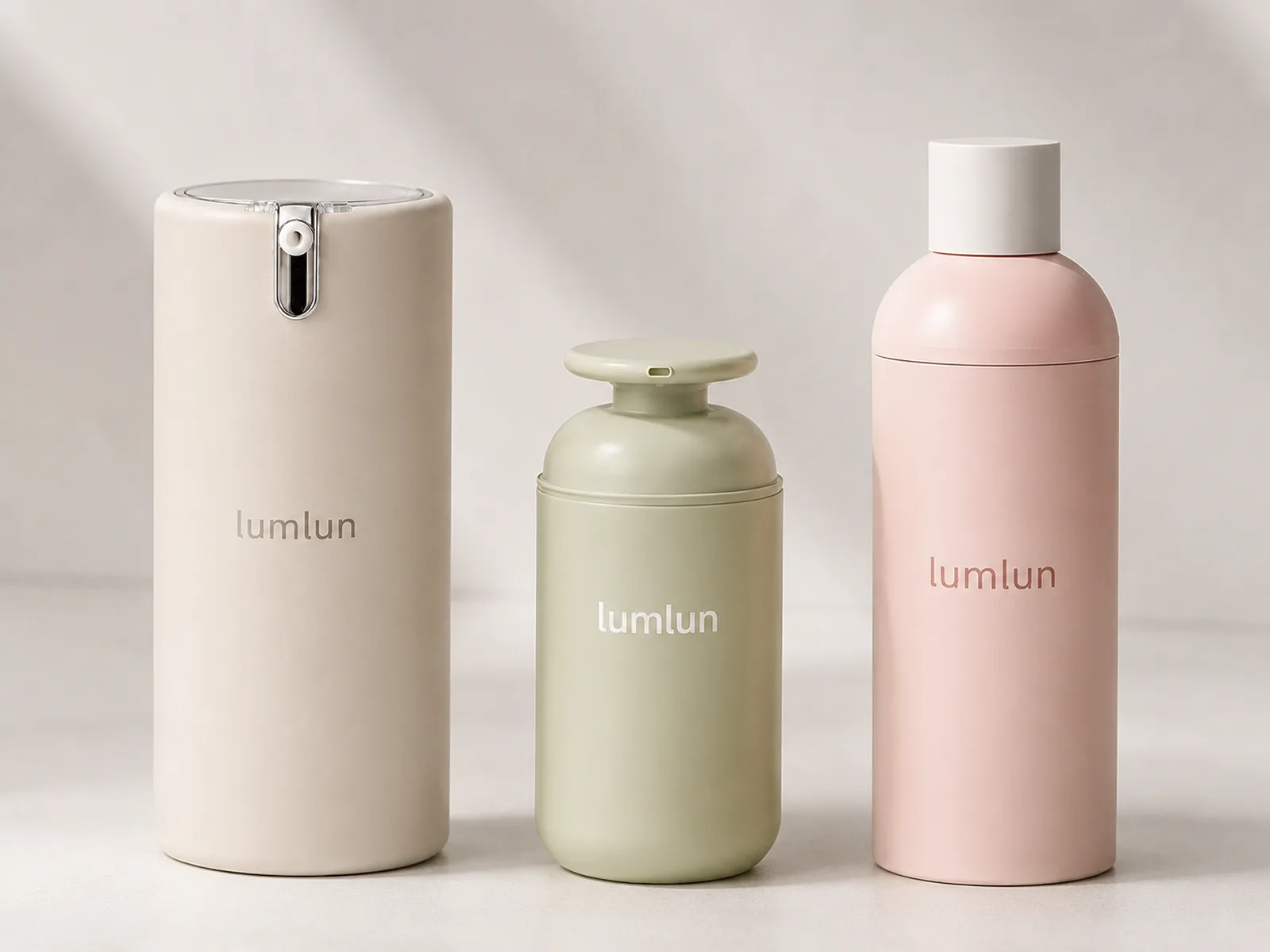
How Should the Pump, Collar and Bottle Look Together?
Treat the pump, collar and bottle shoulder as one design zone.
The pump head length should match the bottle scale. A small pump on a large body can look weak and may feel less comfortable for body-care use. An oversized pump head can dominate a compact bottle. Collar height and diameter influence whether the top looks refined, technical or bulky.
Component color can unify or contrast. A color-matched pump creates a quieter overall shape. A metallic-effect collar can add a premium accent. A clear sleeve can reveal the mechanism. A black pump can create contrast but should not be used by default when the rest of the brand is soft or minimal.
Review the product from front, side and top, and confirm whether the pump needs a lock or protective cap. Practical parts should be incorporated into the visual direction.
Which Pump Style Fits the Intended Use?
The correct pump style supports the required press action, storage and visual language.
A standard long pump head can suit frequent body-care dispensing. A shorter compact pump can suit facial lotion or a smaller bottle. Lockable pumps can support storage and shipping when the selected model provides a reliable lock. Covered or airless-style pumps can create a more enclosed appearance for treatment-led products.
The article should not prescribe a universal pump output. Output depends on the actual pump and project, and the brand may prefer a smaller controlled dose or a more generous body-care dose. Review the selected component with the product direction and formula.
When the formula, capacity or desired experience does not fit a standard pump, consider an airless bottle, tube or jar rather than forcing the package to follow a visual reference.
Share the LumLun lotion bottle you like or a reference image. We can help identify the closest existing models before you consider a new mold.
Which Capacity Works for the Selected Bottle Direction?
Choose capacity after identifying the product role and realistic bottle family.
Compact sizes can support hand lotion, facial lotion, travel or targeted body care. Medium formats can carry the core everyday SKU. Larger 250ml, 300ml, 500ml and related directions can support full-body routine, family use or professional channels when the brand has a clear reason for the scale.
A nominal capacity does not tell the full story. Tall narrow and short wide bottles can hold similar volumes but look very different. The pump, wall thickness and shoulder also change the assembled footprint and perceived value.
Use the full guide to 100ml, 250ml and 500ml lotion bottle sizes when capacity is the primary decision. This article keeps size secondary to the pump-bottle model.
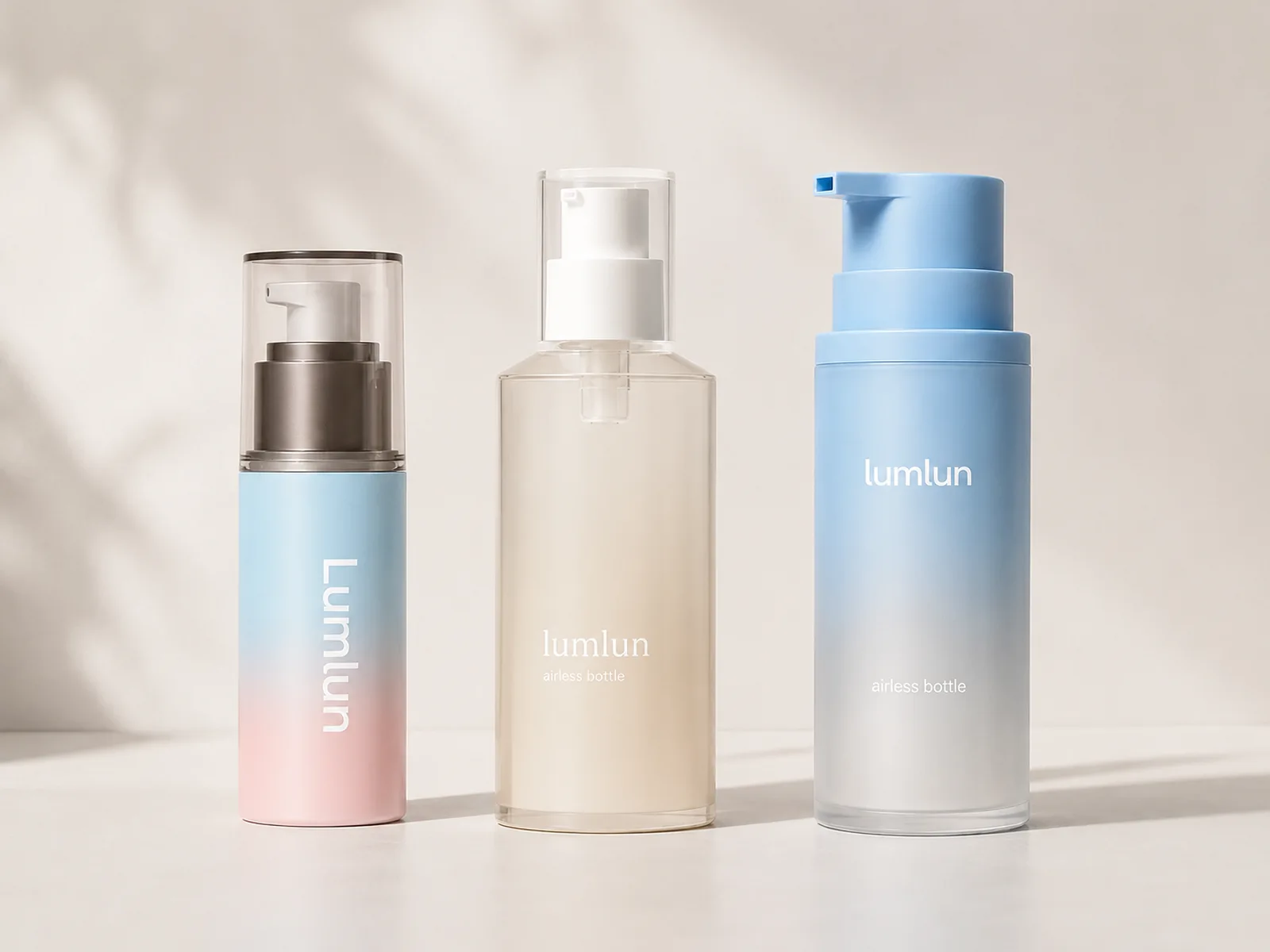
How Can Color, Finish and Logo Make the Bottle More Distinctive?
A real existing bottle can support a distinctive brand when the color zones, finish and artwork are designed together.
Pantone color can unify the bottle and pump or create deliberate contrast. Matte, glossy, frosted, transparent and gradient directions change how the same shape is read. Silk-screen printing, hot stamping and metallized details can add hierarchy when the model and surface support them.
Logo position should remain stable across capacities. On a tall bottle, the mark may sit lower to balance the pump; on a wide bottle, it may need more space. Artwork should be adapted to the real curve and print area rather than copied from a flat design file.
Review LumLun customization and sustainability options after selecting the model. Decoration can transform appearance, but it cannot change the neck, pump fit, shoulder or bottle geometry.
Which Existing LumLun Lotion Pump Bottle Is Closest to the Design?
Compare the reference against real structures: shape, capacity, neck, pump, cap and proportion.
A reference image may look unique because of color and photography even when the underlying bottle is familiar. Separate the structural features from decoration. A rounded rectangle with a standard pump may be matched closely by an existing model and customized through color and print.
Another reference may depend on a proprietary top press, collar or shoulder. The closest existing model should be presented honestly as a similar direction, not described as identical. The client can then decide whether the visual difference is acceptable.
LumLun can shortlist products from a reference image or a selected product page. The first comparison can begin with an approximate capacity and intended use; a complete technical brief is not required.
How Can a Reference Image Be Matched With an Existing Model?
Match the most important customer-facing features first, then confirm the practical details.
Start with the overall shape and dispenser because they define the experience. Next compare overall scale, shoulder, base and cap. Finally translate color, finish, logo and artwork. This sequence prevents a decoration-led match that fails structurally.
A practical shortlist should explain what is close, what differs and what can be customized. It may include one model closest in shape, one closest in pump action and one with the strongest capacity family. This helps the brand make a transparent trade-off.
The goal is to reproduce the intended product impression, not to claim an exact copy from a photograph without dimensions or component information.
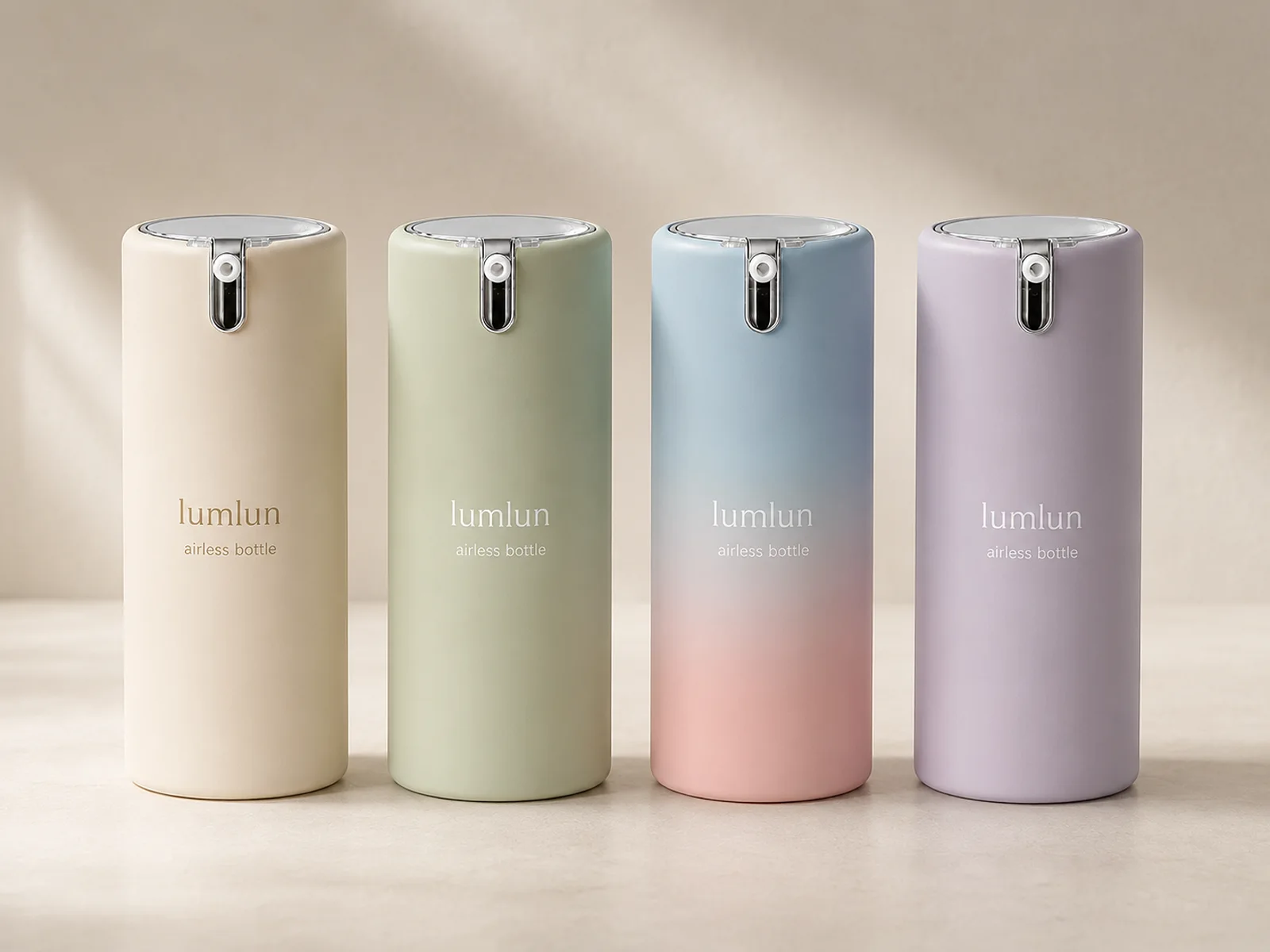
What Can Be Customized Without Developing a New Mold?
Existing models can usually be differentiated through visible design choices while the core bottle and pump structure remain unchanged.
Depending on the model, customization may include bottle color or transparency, matte or glossy effects, gradient, printing, hot stamping, labels, metallized details, pump and cap color and secondary packaging. Availability must be confirmed for the selected material and component.
These changes can create very different results without changing geometry. A soft monochrome bottle, transparent body with metallic collar and opaque gradient design can all start from the same structural family.
Do not promise that every pump, cap or finish can be combined. Compatible components and real production tolerances guide the final selection.
When Is a Custom Mold Worth Considering?
Custom tooling is worth considering when the structure itself is central to the product and no existing model is close enough.
Examples include a proprietary overall shape, exact dimensions for a device or gift system, a unique shoulder and base, or a dispensing format that cannot be achieved with available components. The decision should account for development cost, order scale, timing and the value of the structural difference.
A custom mold is not necessary simply because the brand wants a unique appearance. Strong color, print, component coordination and secondary packaging can create recognizable identity on an existing bottle.
LumLun should present tooling as one transparent route after existing and similar options have been reviewed, not as the default starting point.
Decision Table
Existing model, similar model or custom tooling?
| Project situation | Best starting route | What can usually change | When to move to another route |
|---|---|---|---|
| A LumLun product already fits | Customize the existing model | Pantone color, finish, logo, artwork and compatible component colors | Only when the required capacity or feature is unavailable |
| A reference image is close | Match a similar structure | Select the nearest overall shape, pump and cap, then adapt decoration | When the visual depends on a proprietary shoulder, base or mechanism |
| The exact shape is essential | Evaluate custom tooling | Structure and dimensions can be developed as a dedicated project | Proceed after cost, order scale and timing are accepted |
| The formula or routine does not fit | Choose another packaging format | Airless, tube, jar, dropper or mist can be considered | Do not force a lotion pump only for visual uniformity |
Final Recommendation
Select the lotion pump bottle that feels stable, comfortable and visually coherent in the intended daily routine. Match the pump and collar to the bottle scale, choose a real capacity family, and use color, finish and artwork to make the model distinctive. Begin with existing and similar structures; consider custom tooling only when the exact geometry or mechanism is essential.
Frequently Asked Questions
Which lotion pump bottle suits body care?
Choose a stable bottle with a pump and capacity that fit the daily routine, formula texture and brand position. Tall, wide and shaped bottles can all work.
What size suits a daily body lotion product?
Medium sizes are common for daily retail use, while larger sizes support frequent home use. The full bottle and pump proportions should guide the final choice.
Can the pump and bottle be customized in the same color?
Often yes, subject to component material and production process. Matching colors can create a cleaner, more unified package.
Can several capacities share one bottle design?
Yes, when a capacity family exists. Artwork and pump proportions should be reviewed at each size so the range remains balanced.
Can an existing pump bottle be customized with a new finish and logo?
Yes. Existing models can use custom color, finish, printing, logo and component accents, subject to the selected structure and process.
LOTION PUMP OPTIONS
Compare Lotion Pump Bottle Options for Body Care
Browse LumLun lotion pump bottles or send the model you like. A simple question about size, pump style or finish is enough to start.