For a skincare buyer, the useful questions are straightforward: what stays, what is replaced, which sizes and materials are available, and whether the replacement inner can be ordered again later.
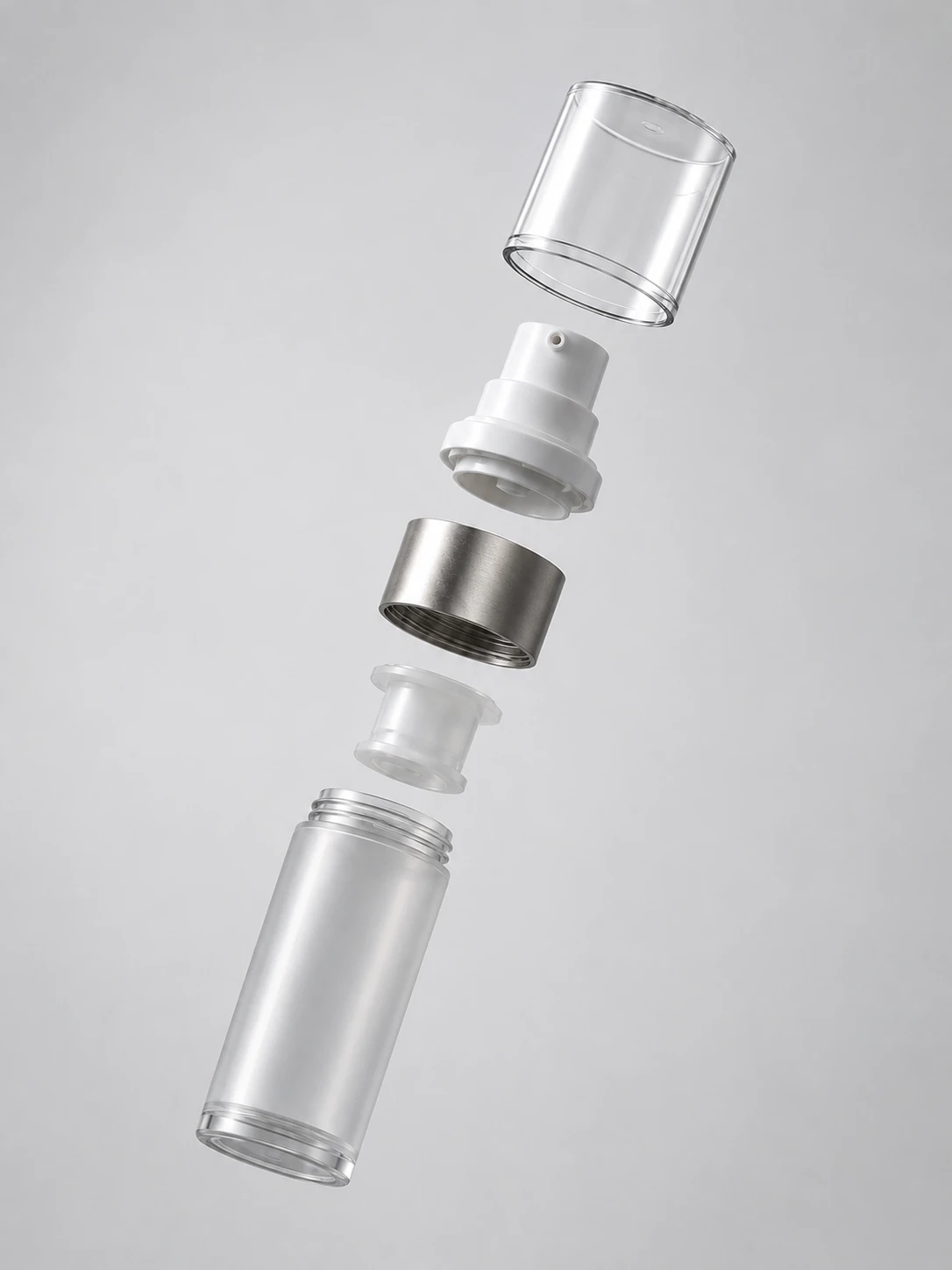
What is a refillable / replaceable-inner airless bottle?
It is an airless package designed with a matching replacement inner bottle or refill component. Instead of replacing the same complete outer pack each time, the defined inner part is replaced while selected outer parts remain in use.
LumLun uses “refillable” and “replaceable inner” as the same broad product direction. The exact design still depends on the model.
In LumLun sourcing, refillable and replaceable-inner describe the same basic project direction: a confirmed outer Airless pack is used with a matching inner replacement unit. The exact parts included in that refill unit still depend on the model.
Which parts stay and which parts are replaced?
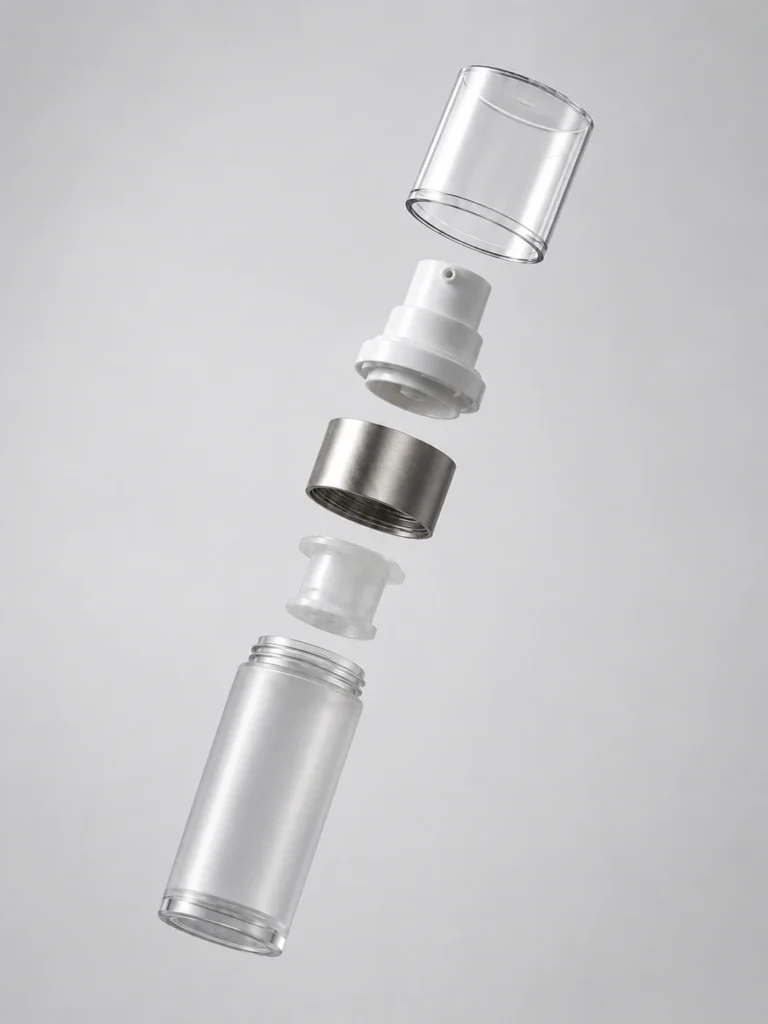
There is no single answer for every model. In one current LumLun 30ml / 50ml design, the clear PET outer shell, pump and cap stay, while the PP inner bottle with the formula and piston is replaced.
Other models use different structures and materials, so the selected model specification and approved sample should define which parts stay and which part is replaced.
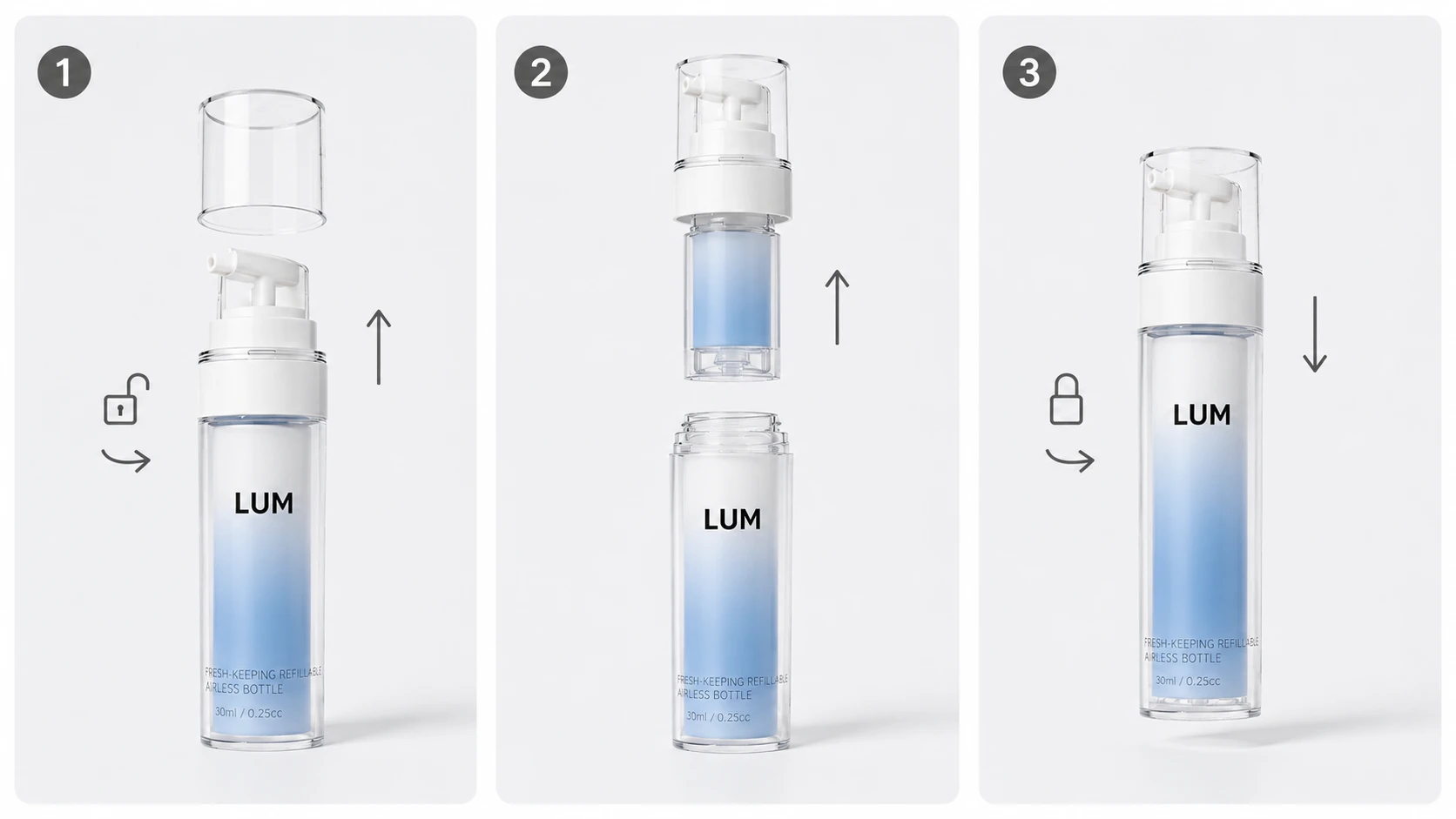
Do not assume the pump always stays or always goes with the refill. Some models keep more of the outer assembly than others. The product drawing and refill reference should show exactly what the buyer receives in the full pack and in the replacement unit.
Does the replacement inner have to match the same outer bottle?
Yes. The refill should be treated as a model-specific part. Height, diameter, locking point, pump connection and piston position can differ even when two inner bottles look similar.
For repeat orders, use the exact replacement-inner reference approved with that outer bottle. Capacity alone is not enough: two 30ml inners can differ in diameter, shoulder, pump connection, piston position or locking points.
If the same outer design is offered in several sizes, keep the matching inner reference for each capacity. This gives purchasing a clear reorder reference and avoids treating a visually similar inner from another series as interchangeable.
Which refillable airless sizes are available?
LumLun currently has refillable / replaceable-inner models in several skincare sizes, including 15ml, 30ml, 50ml and 100ml across different product families.
A 100ml refill is not simply a longer 30ml inner bottle. Different capacities can use different outer shells, pump connections and assembled dimensions, so each size should stay tied to its own product model.
Choose the size from the real product range before final artwork. A 15ml, 30ml, 50ml or 100ml model can use different outer dimensions and inner components, so the larger size should not be treated as a simple scaled-up version of the smaller one.
Which materials are available?
The material combination changes by model. Current LumLun examples include PP / PET, PP / PP-PCR, and PP / ABS / MS / PE constructions.
This is why “refillable airless” should not be reduced to one fixed material recipe. Choose the model first, then use its real component/material list.
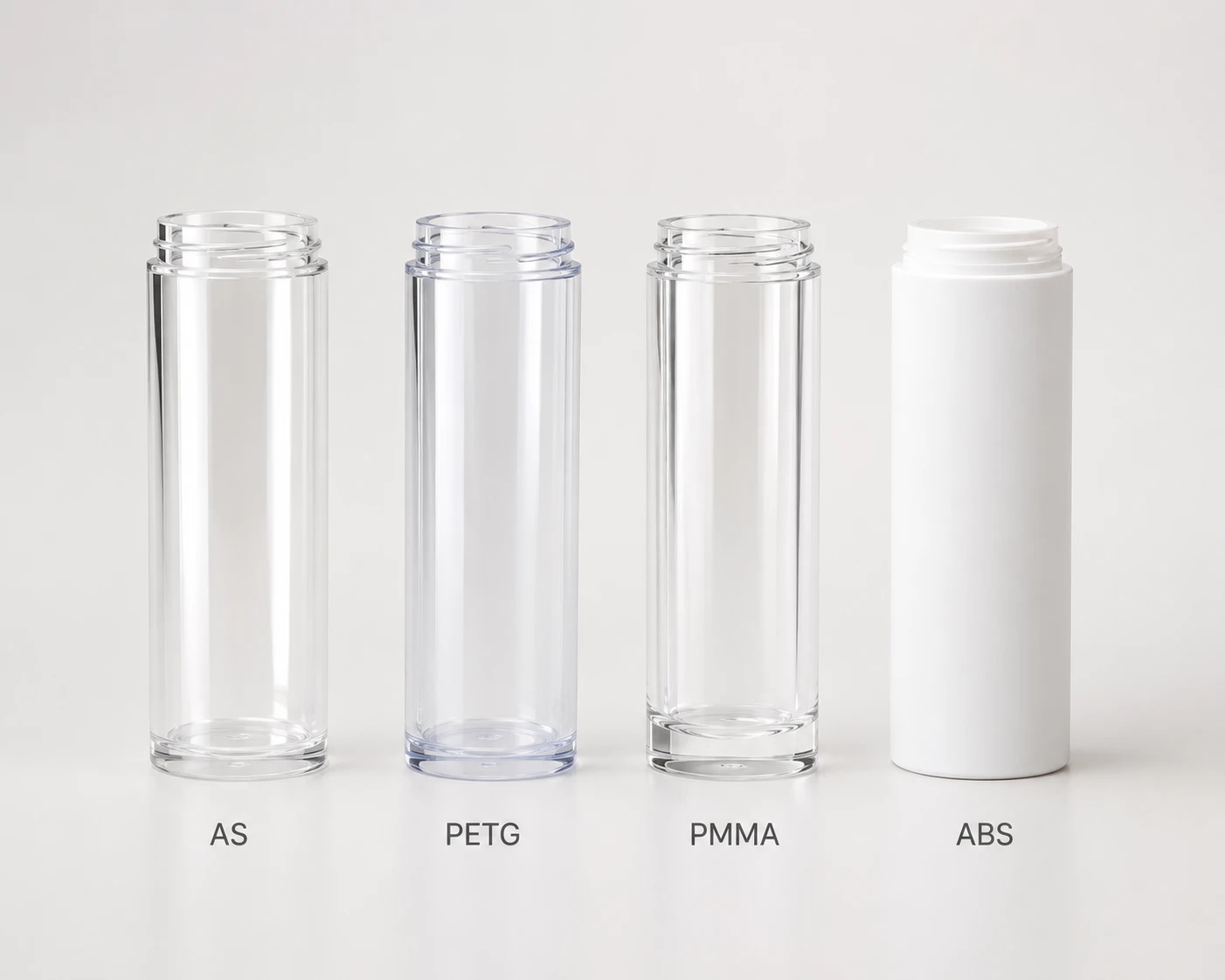
Separate the outer material from the formula-contact inner material. A clear PET outer shell, PP inner bottle or another confirmed combination can serve different design needs. Material selection should therefore follow the exact model, not the word “refillable” alone.
Do different sizes use the same replacement inner?
Not necessarily. A 15ml, 30ml, 50ml and 100ml family can look visually related while using different inner heights, diameters or pump connections.
For a multi-size range, keep the refill reference attached to each capacity unless the supplier has confirmed that the same inner part is shared. This is simple to manage and avoids guessing during repeat orders.
Can several skincare SKUs use the same refillable outer design?
Yes, when the selected model family, capacity and replacement-inner system support the plan. A shared outer design can keep a product range visually consistent, but each SKU still needs the correct inner reference for its capacity and formula.
If two formulas use the same outer model, keep the product identification and refill reference clear on the replacement item. If the formulas need different pumps, inner materials or capacities, use the matching approved system for each SKU rather than forcing one inner bottle across the whole range.
This works best when the range is planned from real existing models first. The outer color and decoration can stay coordinated while the inner bottle, formula and refill reference remain specific to the SKU that is actually being ordered.
Can PCR be used in a refillable airless bottle?
Yes, on models that offer a PCR material option. LumLun’s PP Refillable Airless Bottle in 50ml / 100ml is confirmed in PP / PP-PCR.
PCR and refillable describe two different things: PCR is the material source, while refillable describes which part of the packaging is replaced. They can be combined when the specific model supports both.
Can the replacement inner be ordered separately?
It can be discussed as a separate item when the selected model is designed and supplied that way. Confirm separate refill availability before the final full-pack specification is locked if the project plans to order replacement inners later.
The final quotation should make clear whether it is for the complete pack, the replacement inner, or both.
For projects planning later refill orders, keep the replacement-inner product reference in the quotation and production specification from the beginning. That makes it easier to reorder the correct inner later without relying on photos or approximate dimensions.
How does the pump connect to the replacement inner?
The inner bottle has to sit at the correct height and connect with the airless dispensing system exactly as the model was designed. A refill is compatible only when the inner bottle, piston and pump interface match the approved outer pack.
This is why a similar-looking inner bottle should not be treated as interchangeable. The product model and refill reference are the easiest way to keep the system correct.
The interface should also be checked on a physical sample before final production. The buyer does not need to design this connection; the practical task is simply to confirm that the selected full pack and its supplier-matched refill are the same approved system.
How should I order the full bottle and replacement inner?
Treat them as two separate order items tied to the same model: the complete pack and the supplier-confirmed replacement inner for that exact system.
This makes capacity, materials, artwork and later reorders easier to manage because it is always clear which replacement inner belongs to which bottle.
For a first order, ask the quotation to separate the complete Airless pack and the matching replacement inner when both are needed. This keeps quantities and later reorders clear without requiring the buyer to create a complicated component list.
The purchase specification should identify the exact model, capacity and refill reference for both items. This is especially useful when the same outer design exists in several sizes, because a 30ml refill should never be selected only because it looks similar to a 50ml version.
If the pump, collar or inner-bottle design changes later, confirm that the new parts still belong to the same refill system before the next production order. A small component change can change refill fit even when the outside appearance is almost unchanged.
Which LumLun refillable airless bottles are available?
| LumLun model | Capacity | Confirmed materials | What to compare |
|---|---|---|---|
| Replaceable Inner Bottle Airless Pump | 15 / 30 / 50ml | PP / ABS / MS / PE | Glass-look outer direction with a replaceable inner system. |
| PET Refillable Airless Bottle | 15 / 30 / 50ml | PP / PET | Clear PET outer direction with a replaceable inner. |
| PP Refillable Airless Bottle | 50 / 100ml | PP / PP-PCR | Refillable PP model with a PCR option. |
| Clear PET Outer + Replaceable PP Inner | 30 / 50ml | PET outer / PP inner | On this model, the inner bottle holds the formula and piston. |
| Square Replaceable Airless Bottle | 15 / 30 / 50ml | PP / PP-PCR | Square replaceable-inner option in several skincare sizes. |
These models use different outer packs, inner bottles and material combinations. Start with the capacity and replaceable-inner structure that fit the project, then confirm the matching refill for that exact model.
How does decoration work on a refillable airless bottle?
Decoration usually follows the part that stays visible. Color, coating, printing or other finishes can be developed on the outer pack when the selected model supports them.
If the outer shell is clear, the inner bottle may also be visible and become part of the final look. Confirm the refill structure first, then finalize the color and artwork on the actual dimensions.
A useful approach is to decide which graphics belong on the part that stays and which identification belongs on the replacement unit. Keep the artwork practical for the actual refill structure rather than copying the same decoration onto every surface by default.
Do the complete bottle and replacement inner need the same artwork?
Not always. The outer pack usually carries the main visible decoration, while a replacement inner supplied separately may use simpler product identification, a label or its own secondary packaging.
Use the complete-bottle drawing for the finished pack and the actual replacement-inner dimensions for the refill item. This keeps artwork, labels and cartons tied to the part that is actually being supplied.
Can serum, lotion and cream use refillable airless packaging?
They can when the selected airless model dispenses the actual formula correctly. Refillable describes the replacement structure; it does not create a universal formula rule.
Once the model is chosen, a filled sample can confirm the same practical question as with any airless pack: whether the formula and dispensing system work well together.
Which sample should I check before ordering?
A stock sample is useful for size, structure and how the inner fits the outer pack. A decorated sample is useful when color and finish matter. A filled sample can be used when the project needs to confirm dispensing with the actual formula.
Once a realistic model is selected, use the sample type that answers the remaining question.
If later refill compatibility matters, check the full pack together with the exact replacement inner, not two unrelated samples. A stock sample can confirm structure and fit; a filled sample can then confirm the selected formula and Airless dispensing behavior without turning the process into a long test protocol.
For a multi-SKU launch, check at least the actual capacity and refill combination planned for each structure. Color can be shared across the range, but refill fit, pump connection and inner-bottle dimensions should remain tied to the exact model.
What is the MOQ for refillable airless bottles?
LumLun’s general MOQ is 10,000 pcs, and current refillable airless product specifications also show 10,000 pcs for the main pack. If replacement inners are ordered separately, the quantity and terms are confirmed for that specific model.
What if I am still comparing refillable, PCR and mono-PP airless packaging?
If the project is still choosing between these options, compare them first in the PCR vs mono-PP vs refillable Airless comparison. Then return to the refillable structure only if keeping the outer pack and replacing a matched inner bottle is the direction that fits the project.
For a refillable project, keep the full-pack model and its matching replacement-inner reference together in the approved production specification. For current refillable Airless models and matching inners, contact LumLun.