When a skincare or beauty packaging project begins, the first question is often framed as “stock or custom?” That is too broad to make a good decision. The more useful question is what actually has to change for this project to work?

START WITH REAL MODELS
Compare real packaging before deciding what actually needs to change
Start with the closest existing model. It helps separate a visual change from a change that really needs a different structure.


1. Start With What Must Change: The Look or the Structure?
A good stock vs custom cosmetic packaging decision starts by separating changes to the look from changes to the structure. That one distinction can prevent unnecessary tooling. A package can look highly customized while keeping the same basic shape and component setup.
If capacity, overall proportions, dispensing method and the main components already fit the product, the remaining work may be visual rather than structural. Color, transparency, matte or glossy finish, printing, hot stamping, logo placement and compatible component colors can create a very different brand result without changing the body shape.
By contrast, a new body diameter, unusual height, unique shape, different closure or a new way for the internal parts to fit together may change the package itself. Those requirements need a structural review.
| Required change | What it usually means | Development route to review first |
|---|---|---|
| Brand color, logo, artwork or finish | The core geometry remains usable | Semi-custom on an existing model |
| Different compatible pump, cap or visible component | Component fit must be checked before tooling | Existing component combination |
| Different body height, diameter or shape | The molded shape may need to change | Structural review |
| New closure, inner system or way the parts fit together | The current package structure may no longer work with existing tooling | Structural review / new tooling evaluation |
2. Existing Mold Does Not Automatically Mean Ready Stock
“Stock packaging” is often used loosely. For sourcing, it helps to separate finished inventory from an existing mold or existing model.
A package can use a mature, existing structure and still require a new production run for the selected color, finish, logo or component combination. Finished inventory may be available for some models and quantities, but an existing mold does not guarantee that the final decorated specification is sitting in a warehouse ready to ship.
This matters because MOQ and timing may be driven by the actual production specification, not simply by whether the geometry already exists.
3. When an Existing Model Is Already Enough
If a real model already satisfies the important functional and dimensional requirements, there is no automatic benefit in recreating the same function through new tooling.
For example, an existing airless bottle, cream jar, cosmetic tube or lotion bottle may already provide the right capacity range, proportions, closure and everyday use. The project can then focus on what customers will actually see and recognize: color, finish, logo, artwork and coordinated component appearance.
The selected package still needs to suit the product, filling method and final assembly. A familiar shape is only useful if it works for the real project.
The objective is not to minimize customization. It is to avoid spending development effort on geometry that already works while investing attention in the parts that create a meaningful product difference.
4. What Semi-Custom Can Change — and What It Cannot
Semi-custom packaging is most useful when the structure works, but the package still needs a distinct brand look. The same core model can look very different through color matching, surface treatment, printing, hot stamping and coordinated visible components where the selected model supports them.

What semi-custom does not do is change physical geometry. A cylindrical bottle does not become a rectangular bottle through decoration. A standard opening does not become a different closure mechanism because the cap color changes. If the project depends on a new dimension, silhouette or mechanism, surface work is no longer the answer.
For a broader view of available finishing and customization capabilities, use the LumLun Customization & Sustainability overview after the real model has been narrowed down.
5. When the Existing Structure Cannot Do the Job
Before discussing a new mold, define the part of the requirement that no existing model or compatible component can meet. That is the real structural gap.
It may be a body height, shoulder, base or unique shape. It may be how a closure, refill system or internal part needs to work. Or it may involve only one visible component.
This is more useful than simply saying “we want fully custom packaging.” Once the missing requirement is clear, compare it with real structures. The answer may be another existing model, a compatible component or new tooling for one specific part.
6. If New Tooling Is Needed, Decide Which Part Must Change
A package is made of several parts. The body, outer shell, cap, actuator, closure and inner components do not automatically need to be redesigned together.
If the body shape already works but one visible component needs a different shape, only that part may need new tooling. If the body must change but an existing compatible pump can remain, keeping the proven pump is usually more sensible than redesigning it just to call the whole package “fully custom.”
| Component question | Check before new tooling |
|---|---|
| Bottle or jar body | Is another existing size or shape already close enough? |
| Pump or actuator | Is there a compatible existing component with the required function and size? |
| Cap or closure | Can the required look be achieved without changing how the cap fits the neck? |
| Outer shell | Can a new visible shell solve the design need while preserving the inner package? |
| Inner or refill system | Does the project require a new way for the parts to fit or work together? |
7. MOQ, Cost and Lead Time Depend on the Real Scope
The general direction is simple: finished stock can be faster, semi-custom work adds decoration and approval steps, and new tooling adds design, tooling and trial stages. But fixed industry numbers can be misleading when the real scope is still unknown.
For LumLun’s current catalog, the general custom MOQ is 10,000 pcs; a selected model may have a different confirmed quantity. Custom decorated samples are generally USD 200 and normally take about 12–15 days. Typical bulk production for a standard approved project is about 30–35 days after the 50% deposit. A new tooling project follows a separate schedule and quotation because the structure itself is being developed.
So the better comparison is not “Which route is always cheapest?” It is “Which route solves the required change without adding work the product does not need?”
8. Choose the Route From the Change You Actually Need
| Project situation | Best starting route | Why |
|---|---|---|
| Existing capacity, structure and use are already right | Existing model | Keep proven geometry and develop the brand appearance. |
| Structure is right; color, logo or finish must change | Semi-custom | The brand difference is visual, not structural. |
| One component is close but not exact | Compatibility review | Check another existing component before opening a tool. |
| Body dimensions or shape are essential and unavailable | Structural review | The molded shape may need new tooling. |
| The required closure, internal fit or mechanism is unavailable | New tooling evaluation | The package structure itself may need to be developed. |
| The only reason is “we want it to feel more premium” | Compare semi-custom first | Premium presentation can come from proportion, finish and artwork without unnecessary structural change. |
This is not a ladder that every brand must climb. A new project can justify tooling immediately if the structure is essential. An established brand can also use an existing model for years when it continues to fit the product and supply plan.
9. Compare Real Packaging Families Before Developing a New Structure
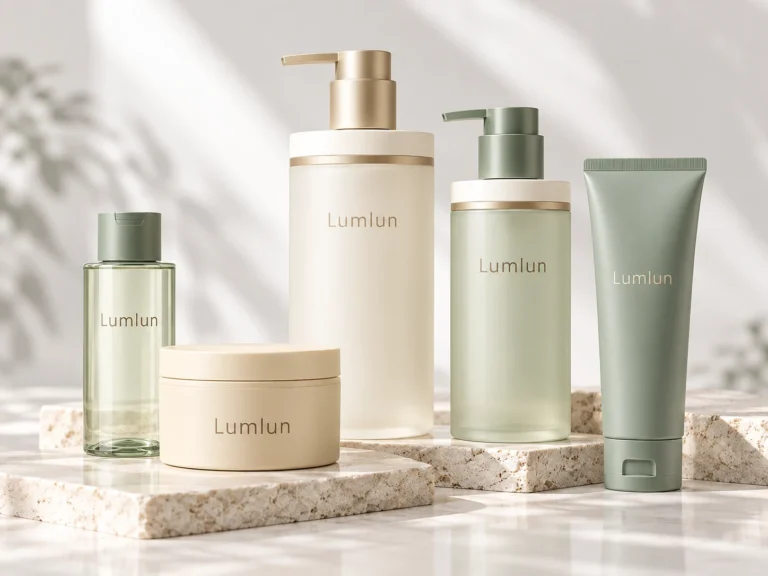
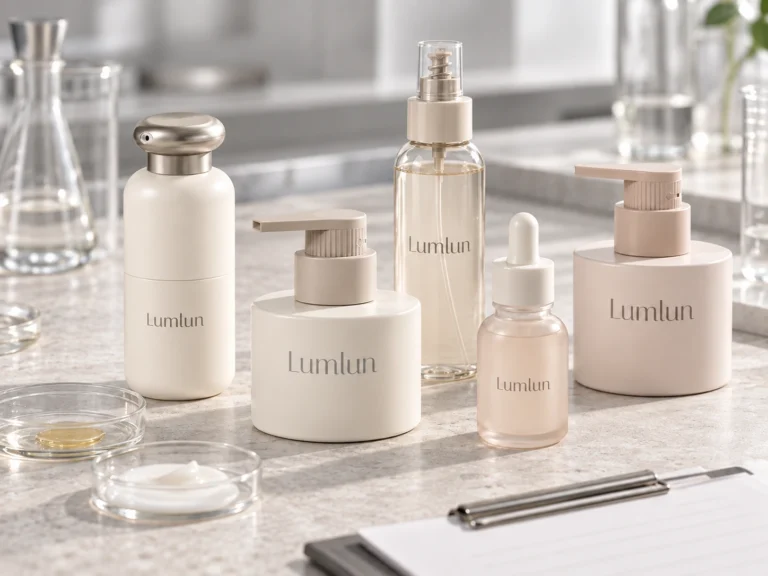
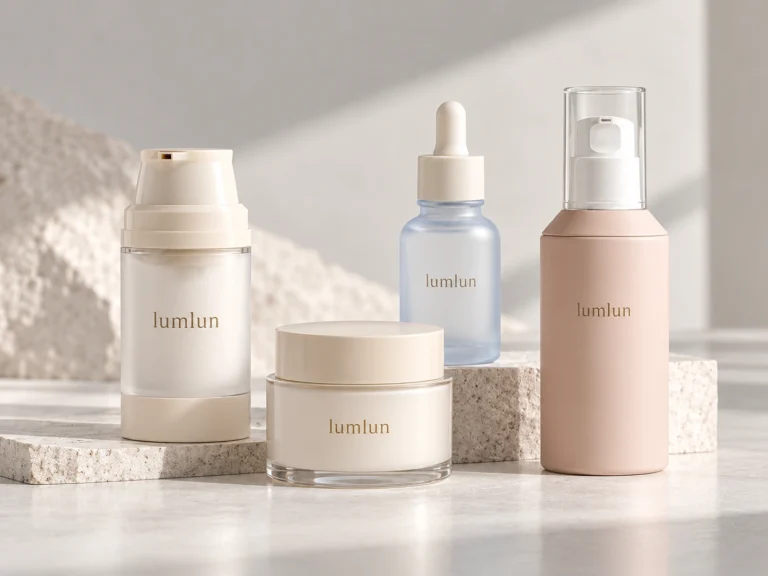
Real packaging makes the development decision easier because it shows what is already solved. A skincare line may use an airless bottle, cream jar, cosmetic tube and lotion bottle while still presenting one coherent brand system through coordinated color, finish and artwork.
Start with the closest real family, separate structural requirements from visual preferences, and reserve new tooling for the gap that remains. If the project is specifically an Airless Bottle, the Airless customization route guide goes deeper into existing models versus tooling for that product family.
FINAL DECISION
Do not begin with “How custom do we want this to be?” Begin with “What must be different for the product to work and for the brand to be recognizable?”
That question usually makes the route clearer: use an existing structure where it already fits, use semi-custom work for visual differentiation, and define a specific structural gap before investing in new tooling.