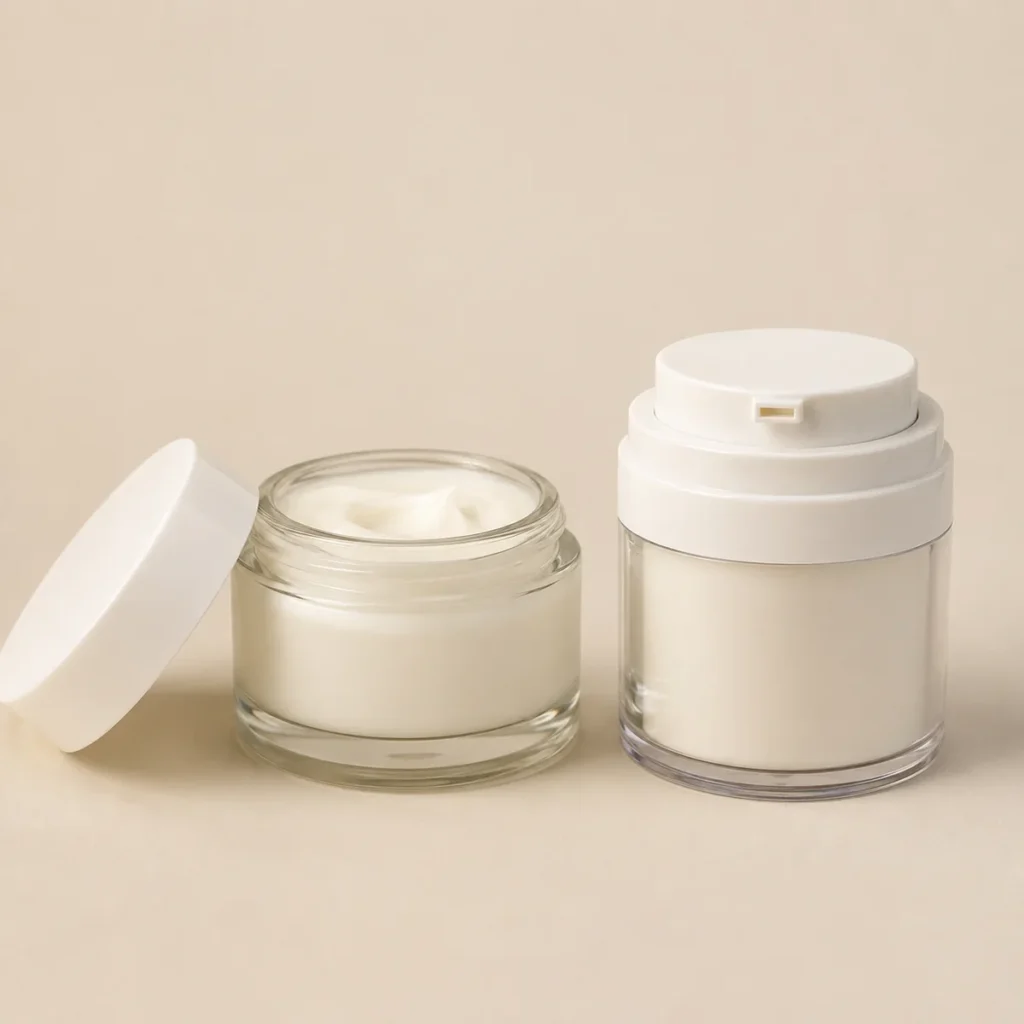
The real difference is the way the cream is accessed. A traditional cream jar opens directly to the formula. An airless pump jar keeps the wide jar shape but delivers product through a top-press mechanism. Neither format is automatically better; each creates a different use pattern, component structure and packaging brief.
For a skincare buyer, the comparison should begin with daily use rather than a promise about protection or premium positioning. Do you want the cream visible and directly accessible, or do you want a defined press-and-take action built into the top of the jar? Once that is clear, capacity, materials, decoration and cost become much easier to compare.
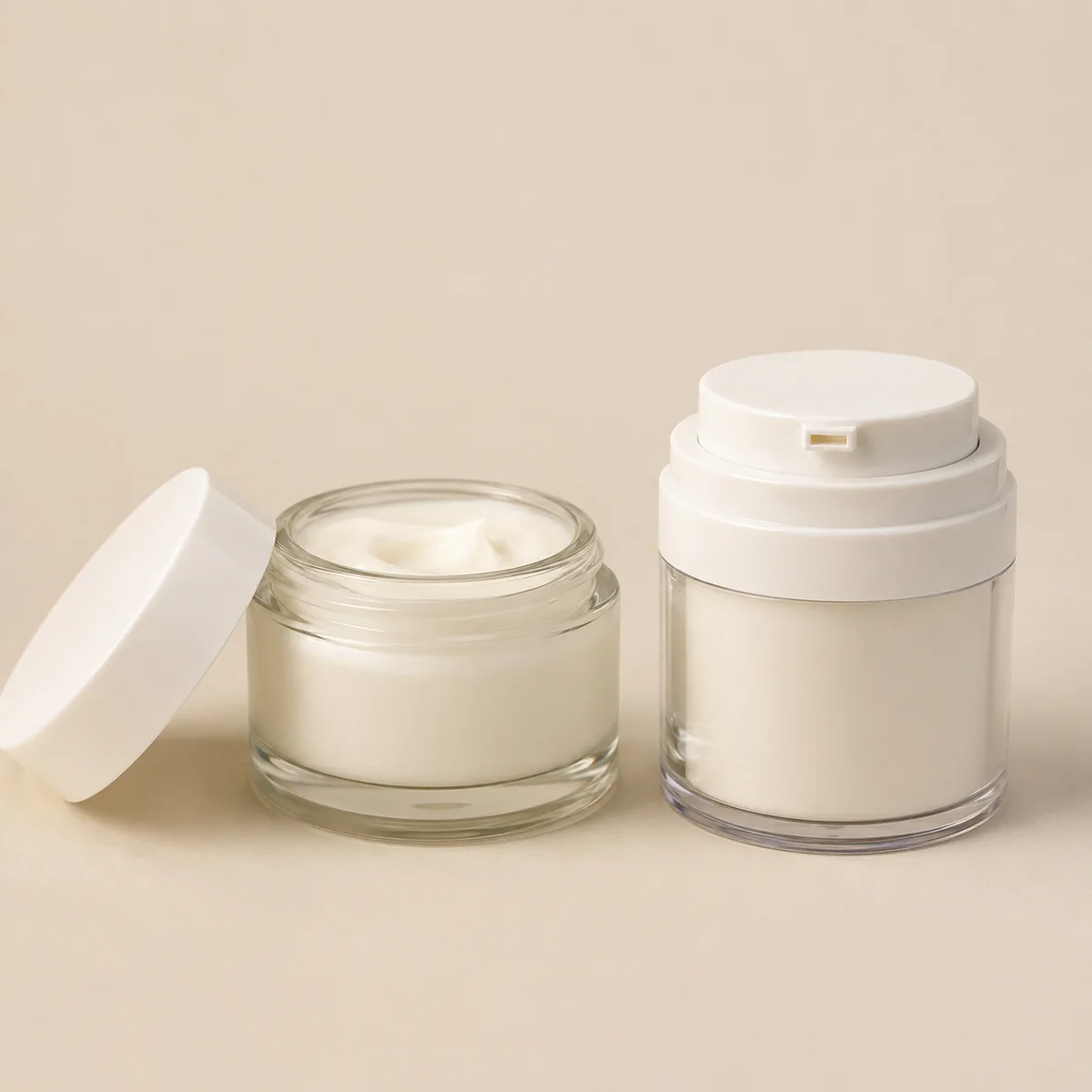
The First Difference Is Direct Access vs Top-Press Dispensing
With a traditional cream jar, the lid is removed and the formula surface is directly visible. The user takes the desired amount with a finger or spatula. With an airless pump jar, the bulk formula stays behind the dispensing structure and product is brought to the top through a press disc, pump cap or other confirmed mechanism.
That structural difference matters because it changes what the user touches, what is visible after opening and how the package is explained. Direct access gives complete control over the amount taken. A pump jar creates a more defined, repeatable action, although the actual amount delivered still depends on the specific top assembly.
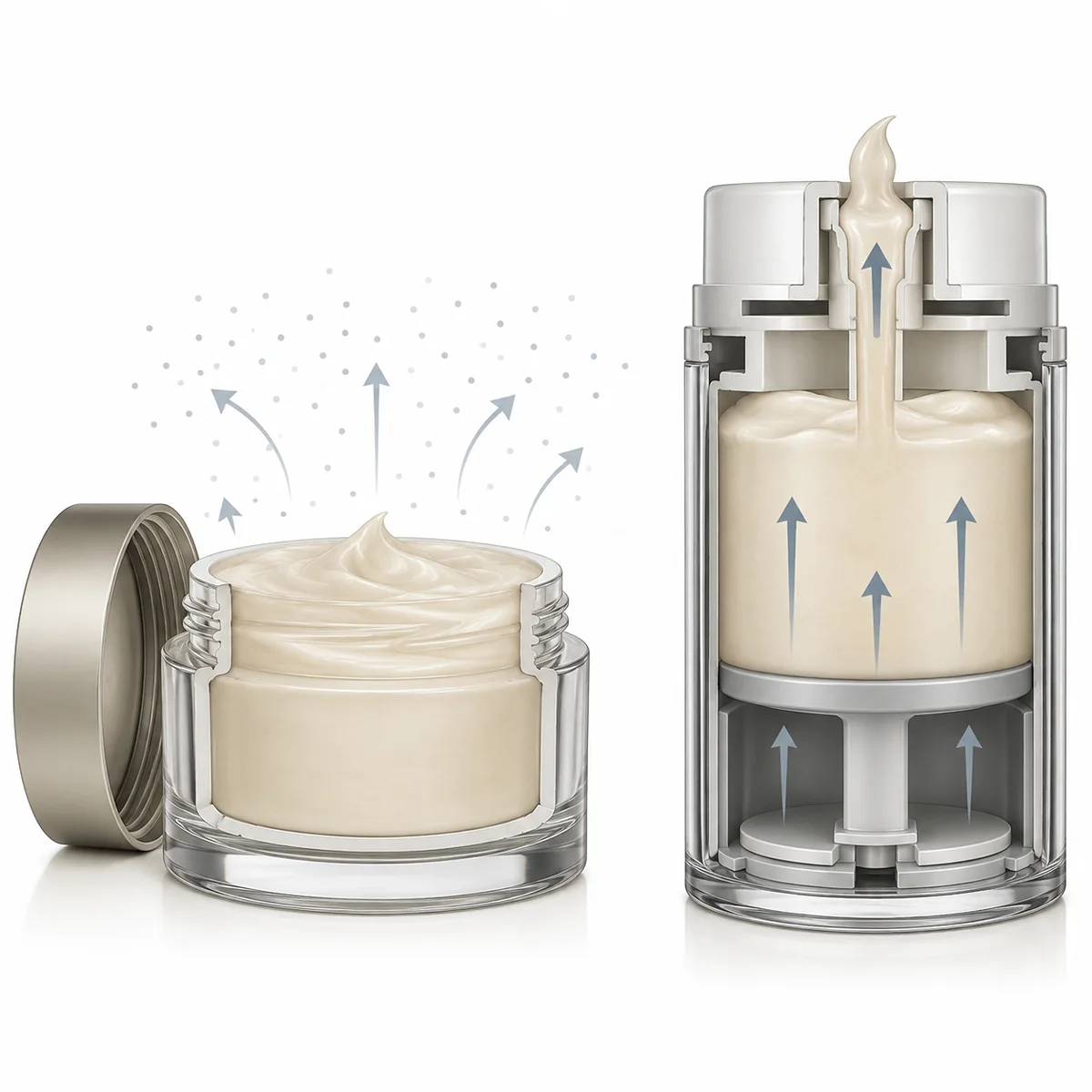
It is reasonable to say that an open jar exposes more of the product surface during normal use, while a pump jar reduces direct access to the bulk formula. It is not reasonable to promise that one format automatically extends shelf life, prevents contamination or preserves every active ingredient. Those outcomes depend on the finished formula and the complete package.
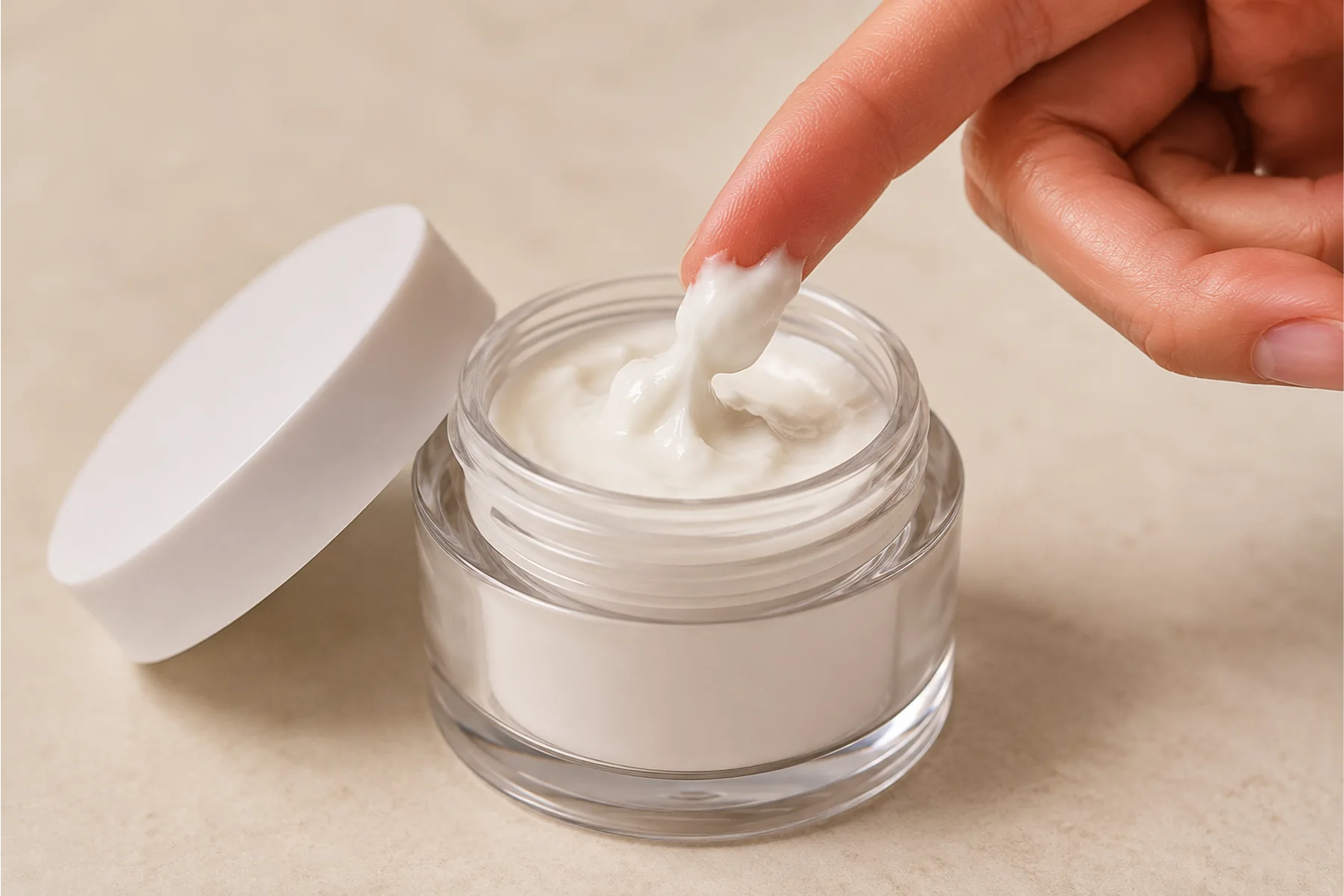
When a Traditional Cream Jar Is the Stronger Choice
A traditional jar is often the better choice when direct access is part of the product experience. The user can see the texture, scoop a small or large amount and reach the remaining product directly. That can be useful for rich creams, balms, masks and products where the visible texture matters.
- Formula visibility: the cream surface, color or whipped texture can be seen immediately.
- Flexible amount: the user is not limited to the output of a pump mechanism.
- Simple interaction: opening, scooping and closing are familiar actions.
- Jar design: body, lid, inner lid and spatula can all contribute to the final pack.
- Large-access products: masks, balms and thicker products may benefit from direct access when a pump mechanism is not the preferred route.
Traditional jars also exist in very different constructions. A 30ml or 50ml glass jar with a metallized lid is not the same package as a 20ml–100ml square PP jar. Material, wall thickness, lid design, inner lid and decoration all need to be confirmed on the real model.
When an Airless Pump Jar Is the Stronger Choice
An airless pump jar is useful when the product should keep the proportions of a cream jar but the daily action should be a press rather than direct scooping. This format can suit face cream, eye cream and other treatments when the selected mechanism can dispense the product reliably.
- Defined top action: the user presses a known area and receives product at a controlled location.
- Reduced direct access: normal use does not require dipping into the bulk formula.
- Jar proportions: the product still looks and handles like a cream jar rather than a vertical serum bottle.
- Visible mechanism: the disc, outlet, pump cap or twist feature can become part of the packaging identity.
- Connected range: the jar can sit beside airless bottles while keeping a distinct cream role.
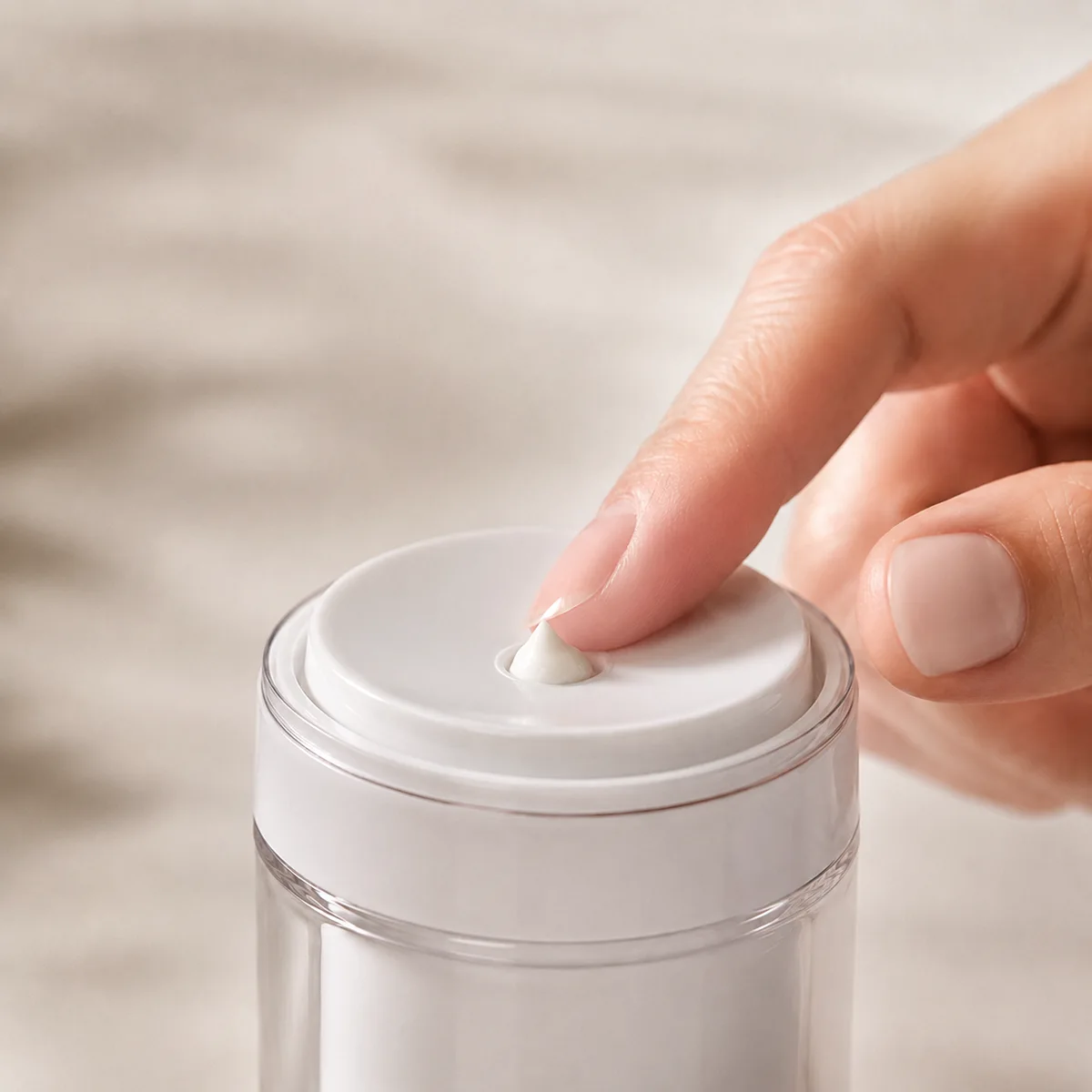
The top mechanism is not identical across all products. One model may use a broad press disc, another an integrated pump cap, and another a twist-unlock feature. These differences affect handling, height and appearance, so buyers should compare the complete top structure rather than treating every airless jar as the same.
Formula Texture Is a Feasibility Check, Not a Universal Rule
A traditional jar can accommodate a very broad range of cream and balm textures because the user accesses the product directly. A pump jar places more demands on the dispensing path, so the finished product still needs to work with the selected mechanism.
That does not justify a fixed viscosity table or a simple “thick equals jar, lighter equals pump jar” rule. Rich creams can work in airless pump jars, and some very dense or particulate products may be better in an open jar. The relevant question is whether the specific product moves through the selected package cleanly and consistently.
For the first packaging comparison, a simple description such as gel-cream, daily moisturizer, rich cream, balm or mask is usually enough to narrow the direction. Final confirmation belongs to the actual selected pack and finished product, not to a generic texture label.
The Component Structure Changes Cost, Height and Assembly
A traditional cream jar may consist of the jar body, lid, inner lid or liner and, in some cases, a spatula. An airless pump jar adds a dispensing top and internal moving parts. Depending on the design, it may also use an overcap or a separate locking feature.
More components do not automatically mean “better,” and fewer components do not automatically mean “cheaper.” A heavy double-wall glass jar can be more complex than a simple plastic pump jar. A finished quotation should compare the exact models, materials, decoration and secondary packaging rather than only the nominal capacity.
The format also changes the assembled dimensions. Pump jars may be taller because the top assembly occupies more space, while traditional jars may use a deeper or heavier lid. That affects box height, inserts and shipping configuration even when both packages hold the same nominal amount.
Visibility and Portion Control Are Different Advantages
A traditional jar gives direct visibility and lets the user choose any amount each time. That is useful when the product texture is part of the experience or when the user may apply different amounts to the face, neck or targeted areas.
A pump jar trades some of that direct access for a defined dispensing action. The user receives product from a specific outlet or press surface. The output may feel more repeatable, but it should not be described as a universal dose unless the selected mechanism has a confirmed output specification.
These are practical differences, not quality rankings. A brand that values visible texture may prefer an open jar. A brand that values a defined top action may prefer an airless pump jar. Both can be well-designed, well-manufactured packages.
Compare Real LumLun Models Instead of Generic Jar Types
For a traditional direction, LumLun currently lists a 30ml/50ml glass cream jar with metallized lid and a square PP cream jar in 20ml, 30ml, 50ml and 100ml. They demonstrate how material and shape can vary within the open-jar category.
For airless jars, the Clear AS Airless Cream Jar is listed in 15ml, 30ml and 50ml with PP+AS+PS, while the 50ml PET Airless Cream Jar with ABS press-pump cap is a separate 50ml construction. These examples should be compared as complete products, not as parts that can be mixed freely.
Environmental Claims Need a Complete-Pack Comparison
Neither format can be called more sustainable from shape alone. A traditional jar may use glass, PP, PMMA or other materials and may include liners, lids or spatulas. An airless pump jar may add moving parts, an overcap or replaceable components. Weight, material combination, separability, refill design and local recycling infrastructure all matter.
The RecyClass packaging guidelines are useful because they assess compatibility of packaging features such as caps, labels, adhesives and other components with specific recycling streams. For projects sold in the EU, the European Commission PPWR overview is the appropriate official starting point for current packaging and packaging-waste requirements.
This means a simple mono-material jar can be a strong environmental direction in one project, while a carefully designed refillable or recyclable airless system may be suitable in another. The correct claim should follow the actual selected construction and target market.
How to Compare Cost Without Oversimplifying It
Start with the complete pack, not the words “jar” and “airless.” A basic screw-lid PP jar, a heavy glass jar, a double-wall jar and an airless pump jar can sit at very different cost levels even when the capacity is the same.
Decoration also changes the comparison. Metallized lids, thick outer walls, frosting, coating, printing, hot stamping and custom color all affect the final specification. Secondary packaging may also change because the assembled heights are different.
For a meaningful quote comparison, first choose one or two realistic products in each direction. Once the exact constructions are known, cost can be compared without making misleading assumptions from category names.
Do Not Turn the Exposure Difference Into a Shelf-Life Promise
The structural contrast between the two formats is easy to see, but the conclusion needs to stay proportionate. An open jar exposes the full product surface when opened and can involve repeated finger or spatula contact. An airless pump jar reduces that direct access during normal dispensing. That is a packaging fact.
It does not prove that an airless jar will extend a particular cream’s shelf life by a fixed amount, keep every active ingredient stable or make a preservative system unnecessary. Formula stability depends on the complete formulation, filling, package, storage and use conditions. Packaging selection should therefore support the product brief without replacing formula-specific validation.
This distinction is especially important for buyer communication. “Less direct access during normal use” is a clear, defensible package feature. “Keeps actives potent for longer” is a formula-performance claim unless it has been demonstrated for the finished product.
Traditional Jar Accessories and Pump-Jar Tops Create Different Packaging Work
A traditional jar project may need decisions about an inner lid, liner, spatula, spatula storage or a hinged/flip-top configuration. Those parts affect the opening sequence and the space available under the lid. A pump-jar project instead concentrates more of the component work in the dispensing top, outlet, lock and overcap.
This changes where attention should go during model review. On an open jar, check the lid fit, opening diameter, inner lid and how any spatula is stored. On a pump jar, check where the finger presses, where the product appears, whether the top is protected when closed and how the assembled top changes total height.
The goal is not to create a long technical checklist for the buyer. It is simply to compare the parts that are actually different between the two systems before artwork or secondary packaging is finalized.
Plan the Cream Range Around Product Roles, Not Around One Packaging Rule
A skincare range can use both formats without looking inconsistent. A classic moisturizing cream may use an open jar while a targeted treatment uses an airless pump jar. Shared colors, typography and finish can connect the range even though the use actions are different.
The opposite approach can also work: several cream SKUs may use the same pump-jar structure in different capacities if that real product range exists. What matters is that the packaging role stays clear. Forcing every product into the same mechanism can create unnecessary compromises when the formula, capacity or daily use is different.
Keep the package choice tied to the product role. An airless pump jar and an airless bottle may share airless dispensing, but their package shapes and use patterns are different. Compare each format against the formula, capacity and intended daily use rather than treating the two formats as interchangeable.
Use a Sample to Confirm the Chosen Pack, Not to Create a Laboratory Procedure
Once one or two realistic models remain, a sample is useful for confirming how the finished cream and pack work together. The buyer does not need a complex testing protocol at the first inquiry stage. A practical review can focus on whether the package primes, dispenses, closes and handles as expected, and whether the visible finish matches the project.
For a traditional jar, pay attention to the opening, lid engagement, inner lid or liner, and the amount of product the user can access comfortably. For a pump jar, observe the press action, outlet location, overcap and the consistency of normal dispensing with the actual product.
Any formal compatibility, stability or transport validation required by the finished product remains a separate project responsibility. The goal is to choose a realistic packaging direction without turning a straightforward format decision into a technical qualification manual.
Airless Pump Jar vs Traditional Cream Jar: Practical Comparison
| Decision point | Traditional cream jar | Airless pump jar | What matters |
|---|---|---|---|
| Access | Direct access to formula | Product delivered through top mechanism | Preferred daily use |
| Visibility | Formula visible after opening | Bulk formula remains behind dispensing structure | Whether visible texture matters |
| Amount taken | User chooses freely | Defined by press action and mechanism | Need for free scooping vs repeatable action |
| Components | Body, lid, possible inner lid/liner/spatula | Body plus top mechanism and internal moving parts | Compare complete pack |
| Formula fit | Broad direct-access range | Depends more on dispensing path | Confirm with selected model |
| Cost | Varies from simple PP to heavy glass/double-wall | Varies with pump/top/outer construction | Quote actual models |
| Recyclability | Complete-pack assessment | Complete-pack assessment | Materials and components matter more than format name |
Choose the Daily Use First, Then Choose the Exact Jar
If the product should be opened, seen and scooped freely, start with a traditional cream jar. If the product should remain visually jar-like but use a defined top-press action, start with an airless pump jar. That single decision removes much of the confusion before materials and decoration are discussed.
Browse LumLun Cream Jars or Airless Bottle & Jar options once the preferred use pattern is clear. If you are still deciding between airless bottle and airless jar, compare Airless Bottle vs Airless Jar. If the pump-jar format is already chosen, continue with How to Choose an Airless Pump Jar.
Need help comparing two real options? Send the product you like or a reference image through LumLun Contact. We can begin with the closest existing structures without asking you to prepare a long technical brief.