Once the airless pump jar format is decided, the next job is choosing the exact jar. The most useful comparison is between real structures: how the top opens and presses, what capacity belongs to the model, which materials make up the complete pack and how the outer wall and finish support the design.
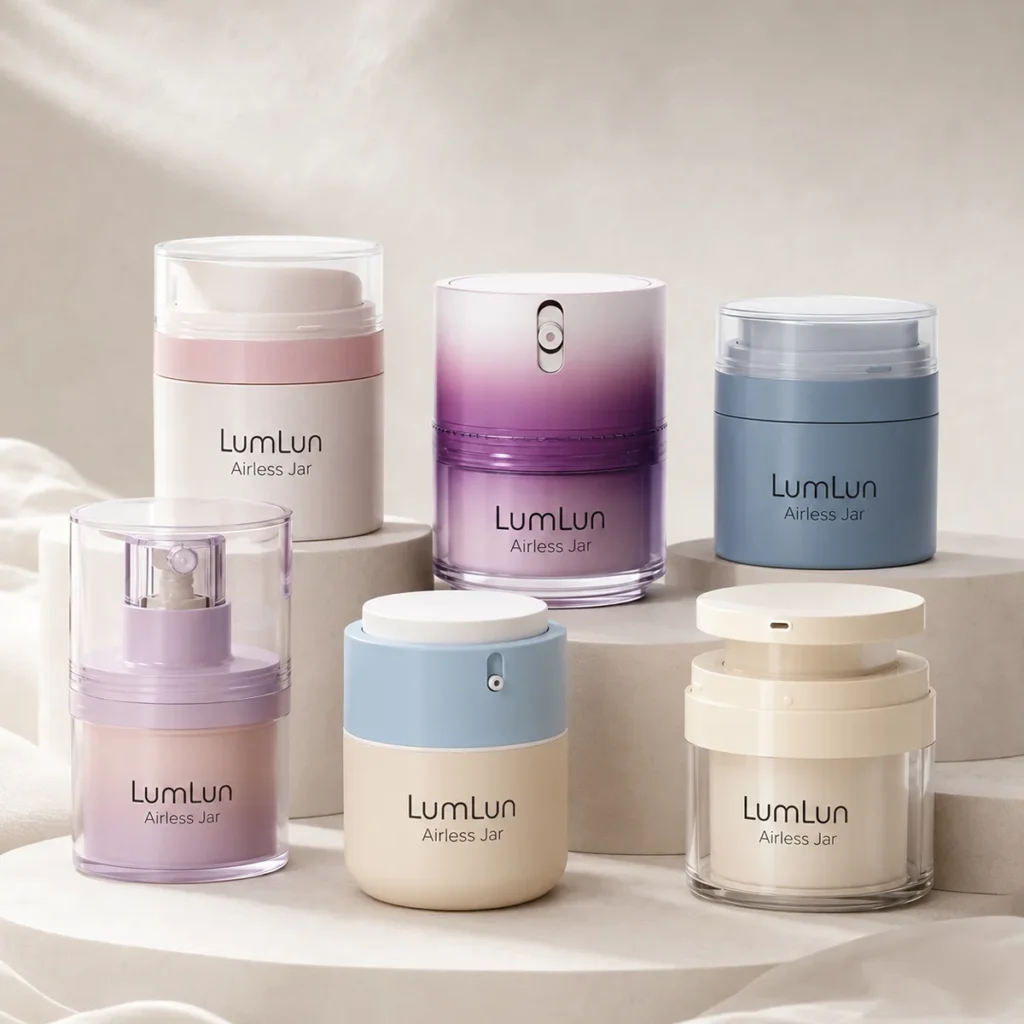
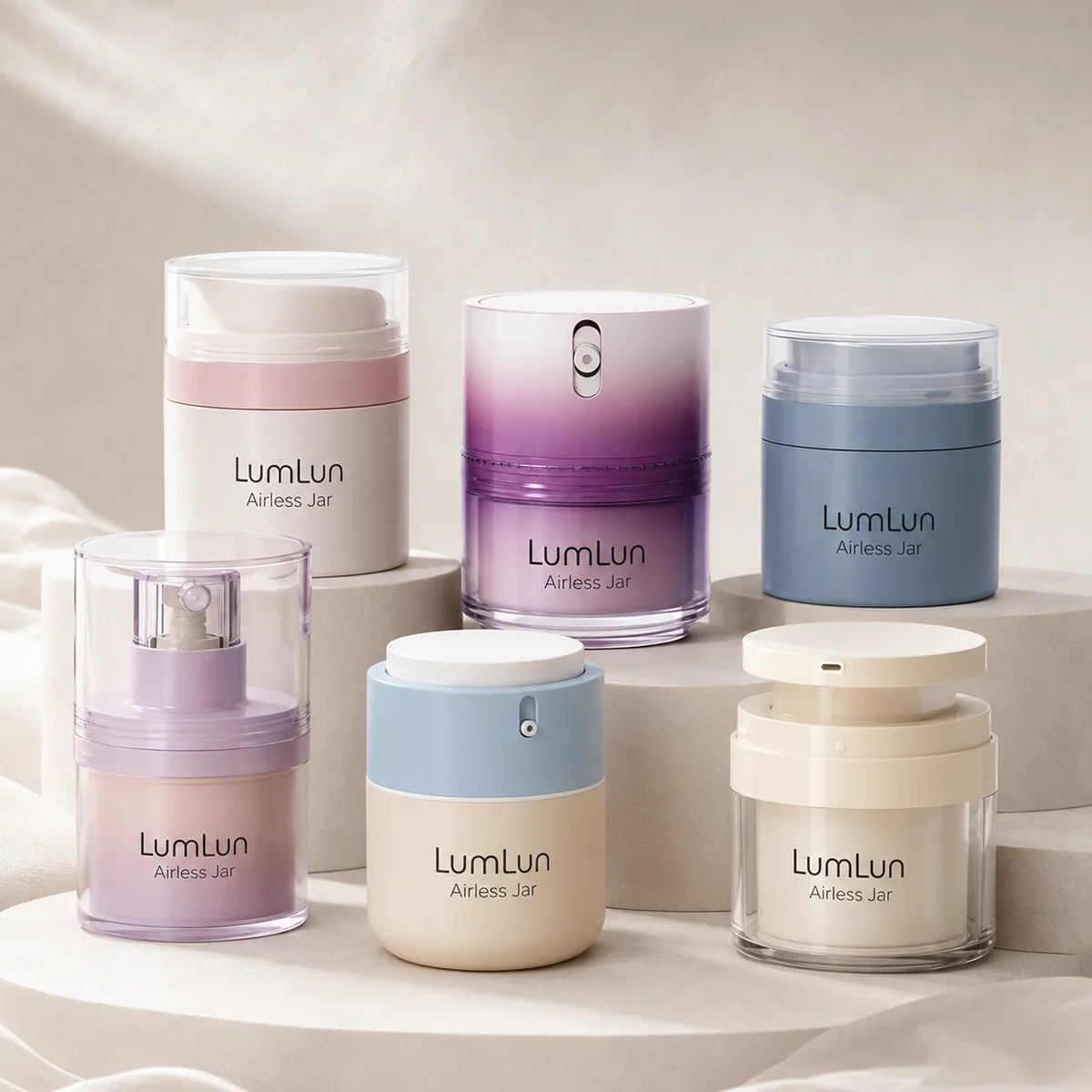
Two airless pump jars can share the same 50ml capacity and still feel completely different. One may use a broad press disc, another an integrated pump cap, and another a twist-lock mechanism. The outer wall can be clear, frosted or opaque; the material combination and internal construction can also change from one model to the next.
Start With the Top: Press Disc, Pump Cap or Twist-Lock
The top is the first part to compare because it controls the daily action. A broad press disc gives the user a large surface to press and usually places the dispensed product on the top. An integrated pump cap makes the pump action more visually obvious. A twist-lock or rotary design adds an opening or unlocking movement before the press.
These are not cosmetic names for interchangeable parts. Each mechanism belongs to a complete product with its own overcap, outlet, internal moving parts and dimensions. Changing the top can change the total height, the way the jar is held and the amount of visible space available for artwork.
A useful first decision is simply which action feels right for the product. If the user should press one broad surface, compare disc-top models. If the pump itself should be visible, compare pump-cap structures. If a lock/unlock movement is useful for the package, compare rotary or twist-lock designs.
Understand the Internal Movement Without Turning It Into an Engineering Project
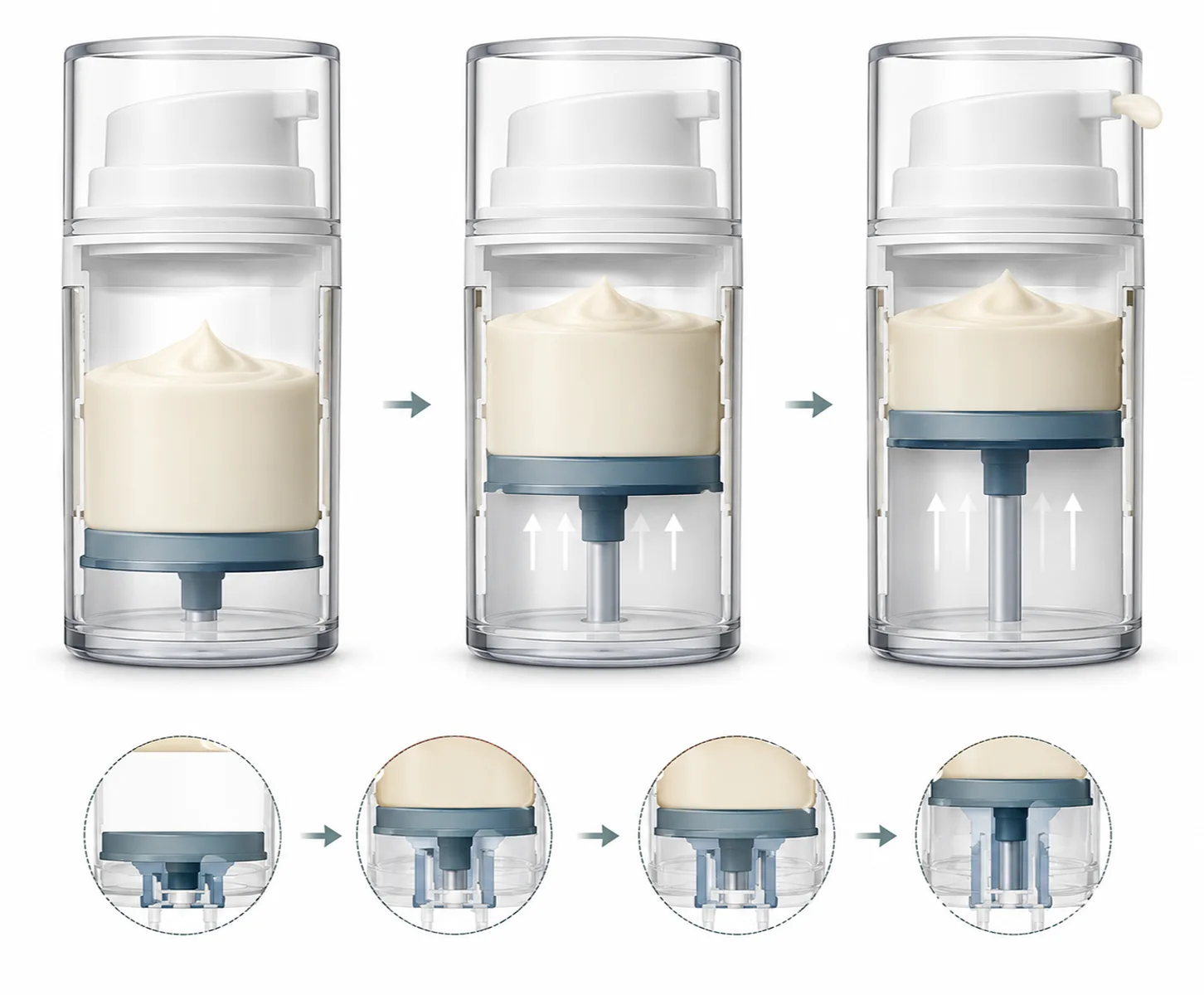
Airless pump jars use an internal system that moves product toward the dispensing point as the package is used. Depending on the model, this may involve a piston or moving platform working with the top assembly.
For a packaging buyer, the important questions are practical: where does the product appear, how does the top move, how is the pack primed and what happens as the product level drops? There is no need to turn the selection into a detailed pump-design lesson unless a specific technical issue appears.
The mechanism also does not create a universal performance guarantee. Evacuation, output, priming and compatibility depend on the selected jar and the finished product. A real sample is more useful than copying a pump-output number from another model.
Match the Jar to the Product Role and Texture
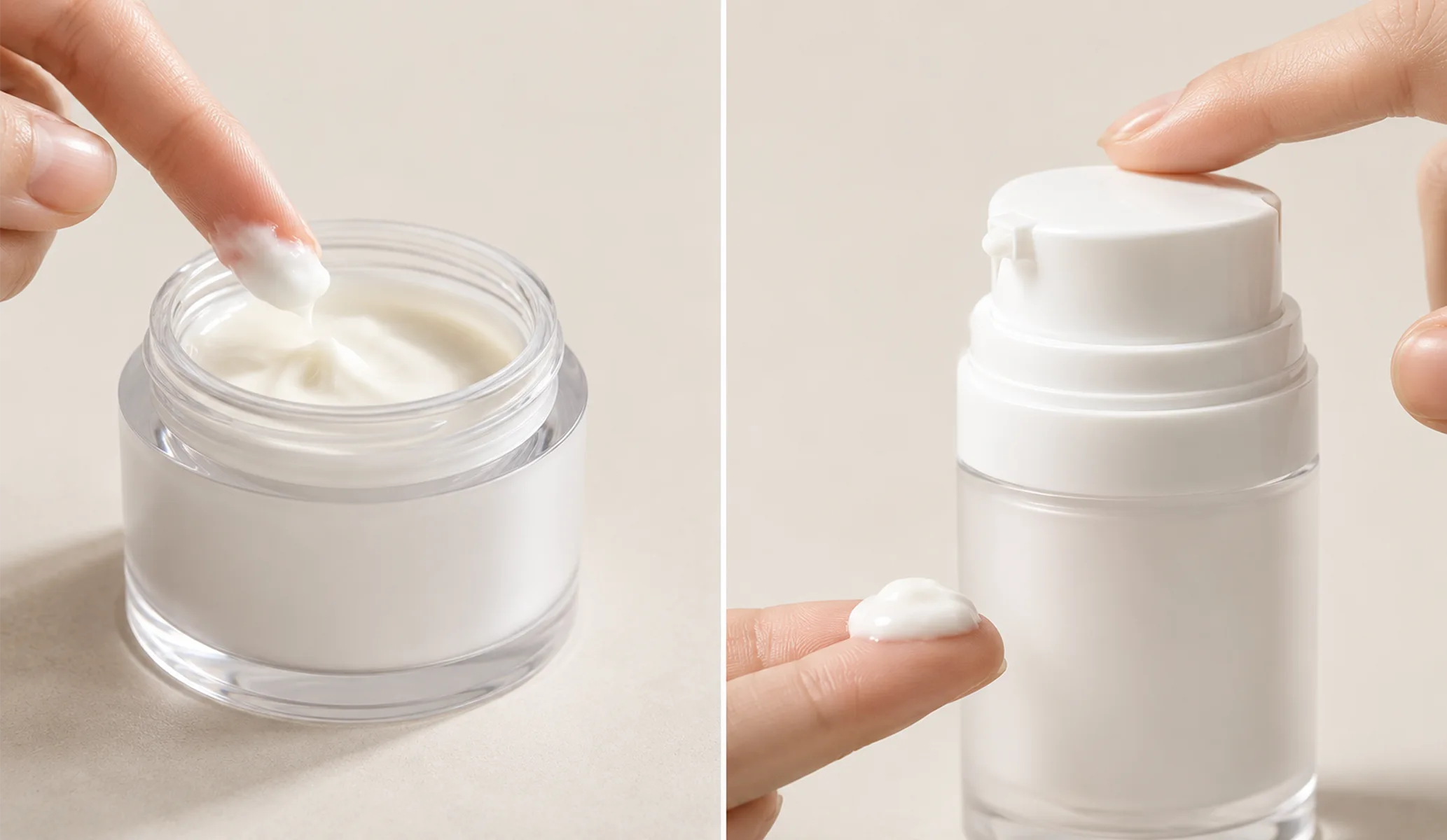
Airless pump jars are most often considered for face creams, eye creams, gel-creams and other treatment products that should keep a wide jar format while using a top-dispensing action. That product-role fit is useful, but it should not become a rigid formula rule.
A richer cream may work in one pump jar and not in another if the outlet or internal path is different. A lighter cream can also work in a jar when the package role and mechanism make sense. Very dense balms, products with particles or unusual textures should be considered against the actual dispensing path rather than the label “cream.”
For the first comparison, a simple description such as eye cream, daily moisturizer, gel-cream, rich face cream or treatment cream is enough to narrow the structures. The exact package can then be confirmed with the finished product.
Capacity Belongs to the Exact Model
Capacity is not a separate filter that can be added to any preferred shape. A 50ml pump jar has a mold, internal cup, top assembly and proportions designed around that capacity. If the same silhouette is not offered in 30ml or 100ml, the correct next step is to compare another real product rather than assume the design can be scaled.
LumLun currently lists a clear AS airless cream jar in 15ml, 30ml and 50ml, which can support related eye-care and face-cream sizes within one visual direction. Other airless jar structures are confirmed only in 50ml or 50g.
When several SKUs are planned, compare the complete size range before choosing the final style. A 15ml eye product and a 50ml face cream may look more coherent when they come from one existing series, but it is also acceptable to use two related structures if the mechanism or capacity needs are different.
Compare Real LumLun Airless Pump Jar Structures
| LumLun model | Confirmed capacity | Confirmed material | Main selection difference |
|---|---|---|---|
| Clear AS Airless Cream Jar with Colored PP Inner | 15ml / 30ml / 50ml | PP + AS + PS | Clear outer presentation, colored inner cup and multi-size range |
| 50ml PET Airless Cream Jar with ABS Press-Pump Cap | 50ml | PET / ABS | Visible press-pump cap and 50ml PET construction |
| 50ml MS Airless Jar with Twist Pump | 50ml | MS + ABS + PP | Twist/unlock action and MS outer presentation |
| PETG Rotary Airless Jar — 50g Twist-Lock | 50g | PETG | Rotary/twist-lock use action and PETG body |
These examples are useful because they show why “airless pump jar” is still too broad as a purchase description. The top mechanism, material, capacity and visible wall need to be chosen together.
Clear, Frosted and Opaque Finishes Change the Presentation, Not the Basic Mechanism
A clear or transparent outer wall can show the relationship between the outer shell and the inner cup. Frosting softens the view and reflections. An opaque finish creates a more solid color block and hides the internal construction.
Those choices should be separated from performance claims. A clear jar is not automatically unsuitable for a sensitive formula, and an opaque jar does not by itself prove a specific light-protection result. If light management is important, it should be confirmed for the actual wall, color, coating and finished product.
Finish also behaves differently on PET, PETG, AS, MS, ABS and PP. The same Pantone reference can look different on transparent, translucent and opaque components, so color and finish should be approved on the assembled package rather than judged from a material name.
Do Not Copy Pump Output or Evacuation Claims From Another Jar
Pump output is a model-level specification. One airless jar may release a different amount per press from another, and the result can also depend on how the finished product moves through the system. A generic “standard output” should not be applied across the category.
The same is true for evacuation. Airless systems are designed to move product toward the outlet, but a fixed percentage should not be promised without evidence for the exact package and product. Residual product, priming and consistency are better confirmed with the selected sample.
For a buyer, the practical question is whether the press action gives an appropriate amount for normal use and whether the product dispenses cleanly. That can be checked once a real model has been selected without turning the first inquiry into a technical test plan.
Material Names Must Stay Bound to the Complete Construction
PP+AS+PS, PET/ABS, MS+ABS+PP and PETG describe different packages. The materials affect transparency, wall feel, decoration behavior and how the components relate to one another. They do not mean that a PET body from one product can be combined with a pump from another.
When a reference image is the starting point, match the structure and appearance first. After the closest existing product is identified, confirm the exact materials and available finishes for that model. This avoids creating a specification on paper that does not exist as a validated package.
If Recyclability or Refillability Matters, Compare the Complete Pack
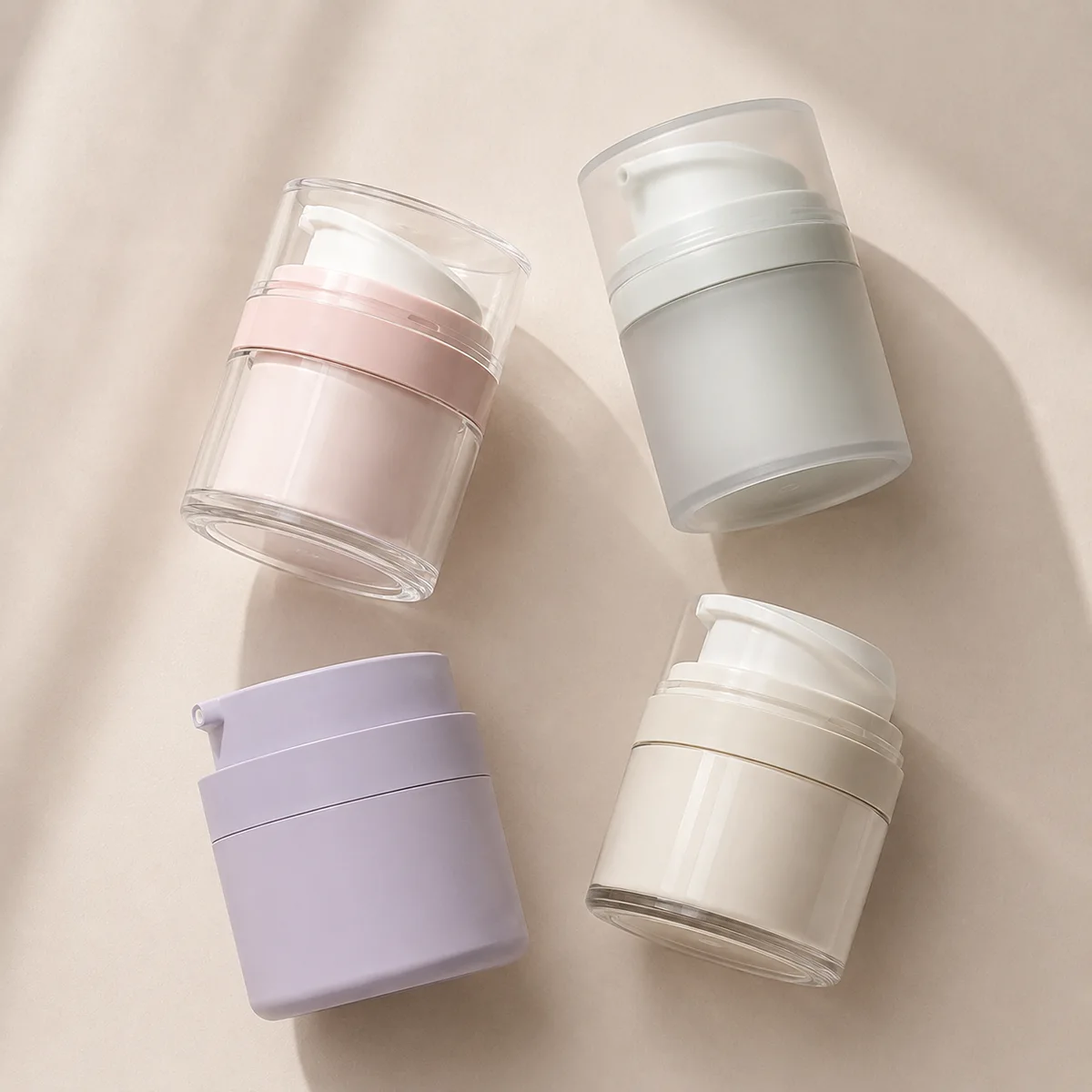
Environmental requirements should be added at the model-selection stage, but they should not turn a pump-jar selection into a generic sustainability discussion. The useful questions are whether the chosen jar is refillable, what materials make up the complete pack, whether components are separable and how decoration affects the intended recycling route.
The RecyClass Design for Recycling Guidelines evaluate features such as caps, labels, adhesives and rigid-plastic components by recycling stream. For products sold in the EU, the European Commission PPWR overview provides the official framework for packaging and packaging-waste requirements.
A refillable construction, a mono-material direction or recycled content can be valuable when the actual selected product supports it, but none of those claims should be assumed from the words “airless jar.” The product specification has to support the claim.
Check the Closed Pack, Decoration Area and Secondary Packaging
An airless pump jar is approved as a complete package, not only as an open dispensing mechanism. Check the jar with the overcap fitted, because the cap and pump structure can change the apparent height and proportion significantly.
The front wall of a wide jar may offer good horizontal space but limited vertical height. Logo, product name and required information need enough breathing room. A twist-lock or taller pump cap can also change the carton height compared with a low press-disc structure.
Confirming the assembled dimensions before artwork and box dielines are locked avoids avoidable changes later. This is a packaging-planning issue, not a reason to add more decoration or complexity.
What Can Usually Be Customized Without New Tooling
When the existing shape, capacity and dispensing mechanism are acceptable, color, printing and suitable surface finishes can often be developed around the model. Depending on the material, options may include silk screen printing, hot stamping, frosting, coating, metallized details or custom color.
Structural changes are different. A new jar diameter, another press-disc geometry, a different lock mechanism or a capacity that does not exist in the selected product may require a different existing model or new tooling.
The practical order is simple: first choose the closest structure, then develop the appearance. This keeps the project grounded in a package that can actually be sampled and quoted.
Press Action, Locking and Cap Security Matter in Real Use
A pump jar can look compact in a rendering but feel very different once the top is handled. A press disc that sits close to the rim gives a different finger position from a raised pump cap. A twist-lock can reduce the need for a separate tall overcap, while another design may use a full protective cap over the press area.
These differences matter for travel, secondary packaging and first-time use. The package should make it obvious how to open or unlock the top without adding unnecessary instructions. If the user has to guess whether to twist, lift or press, the mechanism is not doing enough of the communication by itself.
Cap fit should also be judged on the assembled pack. A loose-looking overcap, a large gap or a pump top that sits visually off-center can make an otherwise good jar feel unresolved. That is why model selection should include closed-pack photos and a physical sample, not only a cross-section of the internal system.
Think About Capacity in Terms of Product Role, Not Price Positioning
A smaller jar is not automatically more premium, and a larger jar is not automatically better value. Capacity should follow the amount of product sold, expected use and the role of the SKU in the range.
A 15ml or 30ml jar may make sense for eye care or a concentrated treatment when the product amount is genuinely smaller. A 50ml jar is common for face creams and moisturizers. A 50g format may be used for a similar product role when the supplier records the capacity by weight rather than volume.
When the range includes several sizes, compare the physical proportions as well as the number on the label. A 30ml and 50ml jar from one series may look intentionally related, while two unrelated 50ml jars can differ substantially in diameter, height and top size.
Compare Cost by Complete Structure, Not by Material Name
A clear AS outer wall does not create one standard price, and a PET or PETG jar is not automatically cheaper or more expensive. Cost depends on the actual component set, wall construction, top mechanism, decoration and quantity.
A rotary mechanism can involve a different assembly from a simple press disc. A double-wall construction uses more visible material than a simple single-wall jar. Metallized parts, coating, custom color and complex decoration can change the quotation more than the base resin name.
For a meaningful cost comparison, choose two or three actual products first. Then compare the complete specifications on the same quantity and decoration basis. This produces a more useful sourcing comparison than a generic price list.
Use Samples to Confirm the Chosen Jar Without Making the Inquiry Difficult
A sample is most useful after the structure has been narrowed down. At that stage, the buyer can see how the top moves, whether the cap feels secure, how the product appears on the press surface and whether the assembled proportions match the intended design.
With the finished product, normal-use dispensing can also be checked. The practical questions are whether the package primes, whether each press releases product cleanly, whether residue around the outlet is acceptable and whether the jar continues to dispense as the product level moves.
Those checks do not need to become a long list of requirements before a customer can contact LumLun. The first conversation can stay simple; detailed confirmation belongs after a realistic model has been identified.
Know When an Airless Pump Jar Is Not the Best Direction
Choosing the right airless pump jar also means recognizing when another format makes more sense. If the formula is very dense and direct scooping is important, a traditional cream jar may be easier to use. If the product is a light serum or lotion and the brand wants a one-hand vertical pack, an airless bottle may be the clearer fit.
The purpose of model selection is not to force every cream into an airless jar. It is to identify the package that matches the product role and dispensing action with the least unnecessary complexity.
Making that decision early keeps the next step clear: compare airless bottles when the product needs a vertical pump format, traditional jars when direct access matters, and pump jars when the wide jar shape plus top dispensing is already the preferred direction.
How to Reduce the Choice to Two or Three Real Jars
- Choose the preferred top action: broad press disc, visible pump cap or twist/rotary lock.
- Confirm the capacity and assembled proportions that actually exist.
- Compare the material construction and whether the outer wall should be clear, frosted or opaque.
- Check the decoration area, overcap height and how the jar sits beside the rest of the skincare range.
- Use a sample to confirm normal dispensing with the finished product before bulk production.
Browse the LumLun Airless Bottle & Jar collection when the structure is clear. If the decision is still bottle versus jar, compare Airless Bottle vs Airless Jar. If the choice is between direct-access cream jar and top-press jar, compare Airless Pump Jar vs Traditional Cream Jar.
Need help narrowing the models? Send the product you like or a reference image through LumLun Contact. We can start with the closest existing jar and keep the first conversation straightforward.