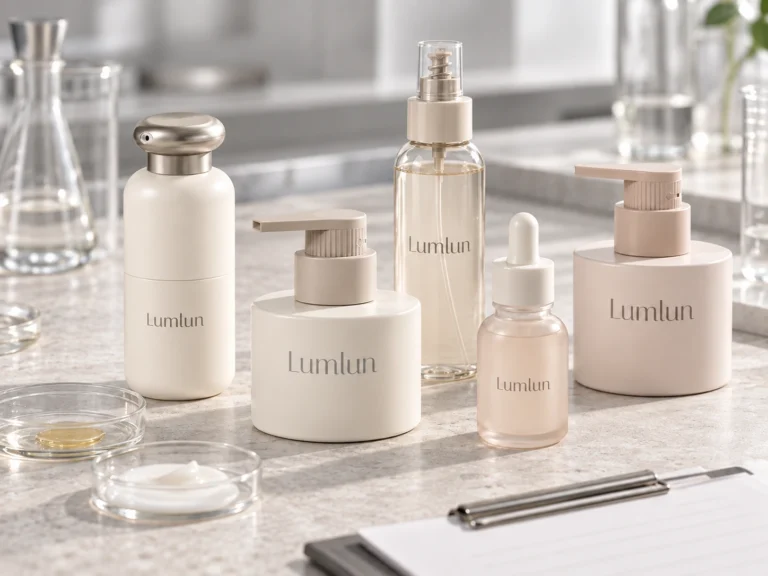
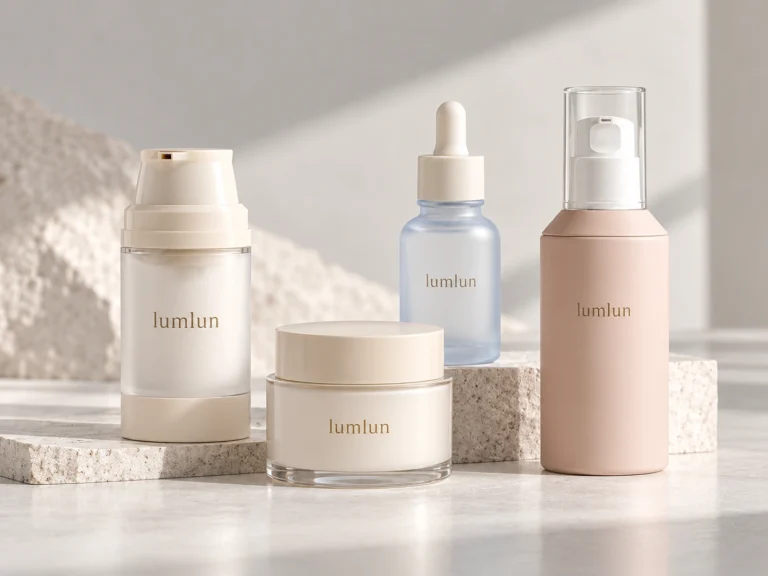
Two suppliers can quote very different prices for a 30ml or 50ml Airless Bottle without one of them necessarily being “expensive” and the other “cheap.” The first question is whether both quotations describe the same complete Airless package.
Capacity is only one line in the specification. The base model, component set, material combination, internal system, refill structure, decoration, order quantity, tooling route, sample stage, packing and shipping scope can all change the quotation. A useful cost comparison therefore starts by aligning the quote scope before comparing the unit price.
The Same 30ml Capacity Can Be a Different Airless Package
“How much is a 30ml Airless Bottle?” sounds specific, but 30ml only describes fill capacity. LumLun has a 30ml/50ml/100ml PP Airless Pump Bottle and a separate 30ml/50ml/100ml PETG-body + PP-pump Airless Bottle. The capacity ranges overlap, while the visible materials and package construction do not.
The same applies to standard and refillable Airless systems. A 30ml standard Airless Bottle and a 30ml refillable model may hold the same nominal volume, yet they are not the same purchasing unit.
Same capacity does not mean same package, and it does not create one standard price.

Compare the Complete Package, Not Just the Bottle Body
An Airless Bottle is a dispensing package made from several matched parts. Depending on the model, the quoted set may include the bottle body or outer shell, inner container, Airless reservoir system, pump mechanism, actuator, shoulder or collar, overcap, piston or pouch components, and any refillable or replaceable-inner parts.
That is why two packages with a similar silhouette can still have different cost structures. One may use a simple opaque body; another may have a clear outer shell, a separate inner container and a different top assembly.
When quotations differ, first check what each supplier includes as the complete package. A complete pack should be compared with another complete pack, not with a partial component set.
Material Cost Depends on the Actual Component Combination
Material is often reduced to a label such as “PP bottle” or “PETG bottle,” but Airless Packaging is usually a combination of materials across several components. LumLun’s real Airless range includes PP models, PETG-body + PP-pump models, and other component combinations using materials such as AS, ABS, PET and EVOH where they are part of the confirmed model.
For quotation comparison, the useful question is not whether one material is always cheaper. It is whether the suppliers are quoting the same material arrangement for the same components.
A clear PETG outer shell, for example, does not mean every part of the package is PETG. The inner container, actuator, pump parts or other components may use different materials. Cost should therefore be compared against the real component specification rather than a single material name.
Internal Airless Systems Can Change the Quote Scope
Airless packages can also use different internal systems. A piston-based package and a pouch or bag-in-bottle package are not the same construction, even when their capacity and external proportions look similar.
For cost comparison, the key point is simpler: confirm whether both quotations are based on the same internal Airless system before comparing price. If you are still deciding between these structures, the Piston vs Pouch Airless Bottle guide covers that separate decision.
Existing Model and Custom Tooling Are Different Cost Routes
Many Airless projects can begin from an existing bottle family. If the body, capacity and component architecture already fit the project, customization can stay around the confirmed model: color, artwork, suitable decoration and other model-supported appearance choices.
Custom tooling is a different route. If the project requires a new bottle shape, new dimensions, a new proportion or a structural feature that does not exist in the current model range, tooling may be needed.
So Supplier A may be quoting an existing model while Supplier B includes a new development route. Both quotations may end with the words “50ml Airless Bottle,” but their project scope is different. The separate existing-model vs custom-tooling guide explains when that change in route becomes relevant.
The tooling cost itself depends on the actual design and development scope, so it should be confirmed for the specific project rather than treated as one fixed Airless Bottle tooling fee.
Refillable or Replaceable-Inner Airless Needs Its Own Cost Boundary
A refillable or replaceable-inner Airless Bottle should not be compared with a standard one only by capacity. The reusable outer pack, replacement inner, pump and matching components form a different package architecture.
There is another important quotation detail: a price can refer to the complete first pack or to the replacement inner unit. Those are different purchasing units. Before comparing prices, make sure both suppliers are quoting the same refill boundary.
LumLun uses refillable and replaceable-inner as the same broad project direction, while the exact parts that remain and the exact parts that are replaced depend on the selected model. The refillable Airless system guide explains that structure in more detail.

Decoration Is Not One Universal “Logo Cost”
Once the base bottle is selected, color and decoration can change the production scope. Depending on the confirmed material and model, a project may review custom molded or applied color, screen printing, hot stamping, matte or glossy directions, frosted or coated surfaces, and selected metallic effects.
A quotation for a standard-color bottle with one simple logo is not equivalent to a quotation that includes custom color, multiple decoration steps and special surface treatment. The useful comparison is whether both quotations include the same decoration specification on the same components.
Avoid treating decoration as a generic price add-on detached from the bottle. The available process and printable area depend on the actual surface and model.
Quantity Must Be Compared on the Same Basis
Order quantity is an important quotation input, but it should be compared together with the package specification. A 10,000-piece quotation and a 50,000-piece quotation are not directly comparable even if the model is identical.
LumLun’s general custom-packaging MOQ is 10,000 pieces. Some specific models can have a 5,000-piece MOQ when that model is confirmed, so the model-level requirement should take priority over a general assumption.
For a fair comparison, align the same model, capacity, materials, decoration and quantity before using unit price as the deciding number.
Sample Cost and Mass-Production Cost Are Different Stages
Sample-stage cost should also be separated from mass-production unit cost. For LumLun, stock samples normally have no sample fee and the customer pays shipping. A custom sample is usually about USD 200 and normally takes about 12–15 days.
Standard bulk production is generally about 30–35 days from the 50% deposit, subject to the confirmed project. These stages answer different questions: the sample confirms the selected package and customization direction, while the mass-production quotation covers the approved production specification.
If one supplier lists sample or development cost separately and another places it elsewhere in the quotation, separate those lines before comparing the production unit price.
Packing and Shipping Scope Can Change the Final Total
Two unit prices can be close while the project totals are very different because the quotations cover different packing or shipping scopes. For example, an EXW price and a quotation that includes freight or a different Incoterm should not be treated as the same total-cost basis.
If you are comparing the final project amount rather than only the factory unit price, check whether packing, pallet or protective requirements, freight and the stated shipping term are aligned. LumLun most commonly quotes EXW and can also discuss FOB, CIF or DDP according to the project; sea freight, air freight or courier can be reviewed separately. Packing is confirmed according to the product structure, quantity and shipping route.
What Should Be Aligned Before You Compare Two Airless Quotes?
The quickest way to make two quotations comparable is to put the specifications side by side before looking at the final unit price.

| Quote item | What to align |
|---|---|
| Base model | The same model or genuinely comparable Airless construction |
| Capacity | The same 30ml, 50ml, 100ml or other fill volume |
| Complete package | The same included components and top assembly |
| Materials | The actual materials used for the main components |
| Internal system | Piston, pouch or another confirmed Airless structure |
| Pump / actuator | The same or equivalent dispensing components |
| Overcap / shoulder | The same included external components |
| Refill structure | Standard, refillable or replaceable-inner; full pack or refill unit |
| Decoration | Color, logo process and surface treatment included in the same scope |
| Quantity | The same order quantity |
| Tooling | Existing model or a quotation that includes new tooling |
| Sample | Stock or custom sample costs shown separately |
| Packing | The same packing and protection scope |
| Shipping scope | The same Incoterm or freight boundary |
If several of these lines are different, the two prices probably describe two different packaging projects.
A Realistic Example: Three 30ml Projects Can Have Three Cost Bases
Consider three skincare brands that all ask for a “30ml Airless Bottle.”
Project A — PP Airless Bottle
30ml PP Airless Bottle, existing model, standard Airless structure, one-color logo, 10,000 pieces.
Project B — Clear PETG-Body + PP-Pump Airless Bottle
30ml PETG-body + PP-pump Airless Bottle, existing model, clear outer appearance, custom color and decoration, 10,000 pieces.
Project C — Refillable Airless Bottle
30ml refillable Airless Bottle with a reusable outer pack and matching replaceable inner, customized appearance, 10,000 pieces.
LumLun has real product families that correspond to these three directions. They can all be described casually as “30ml Airless Bottles,” but they are three different packaging specifications. Comparing their unit prices without comparing their structures would not answer which supplier is offering the better same-specification quote.
Compare Three Real Airless Bottle Directions
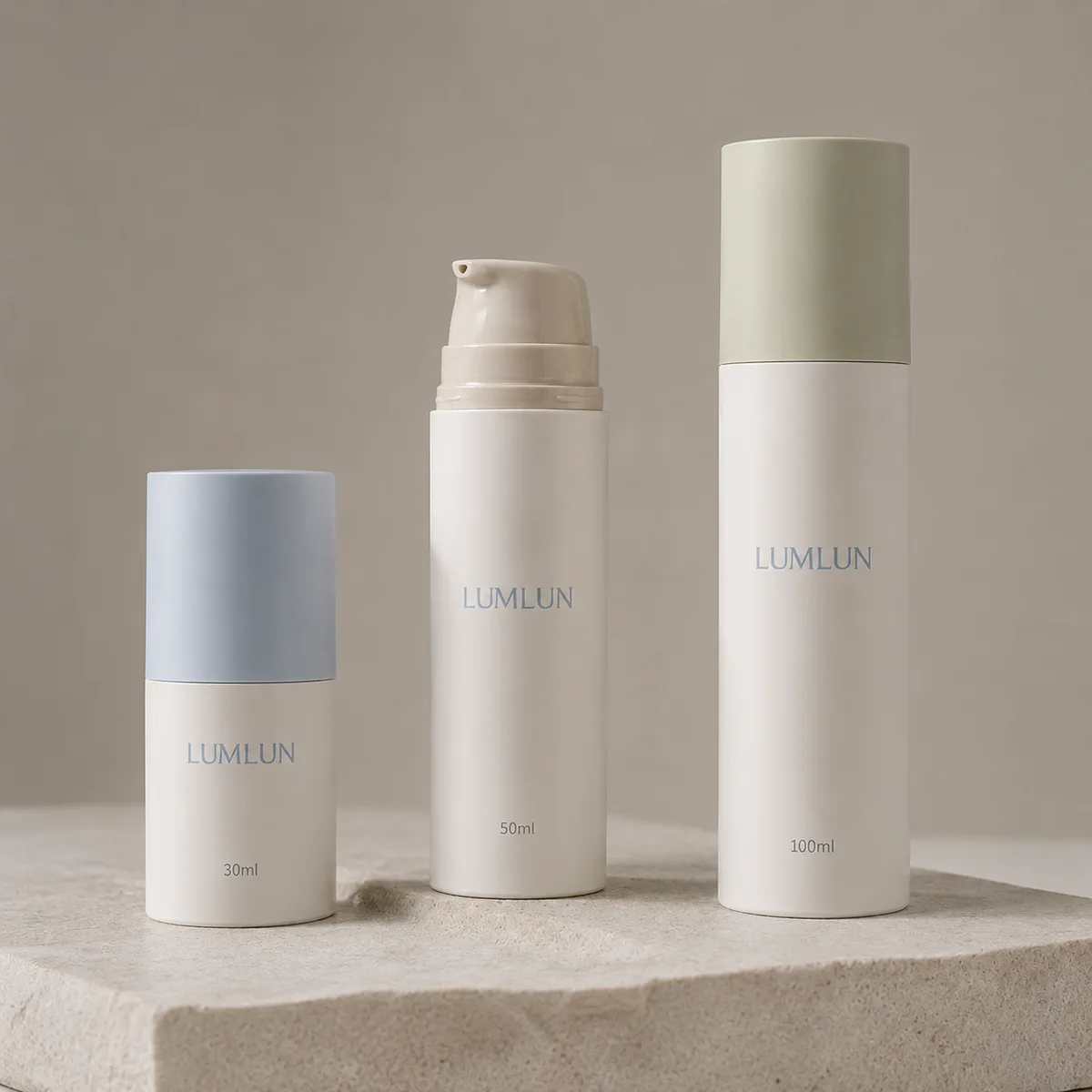
These three real LumLun models show why similar nominal capacities can still have different quotation bases when materials, construction and refill architecture change.
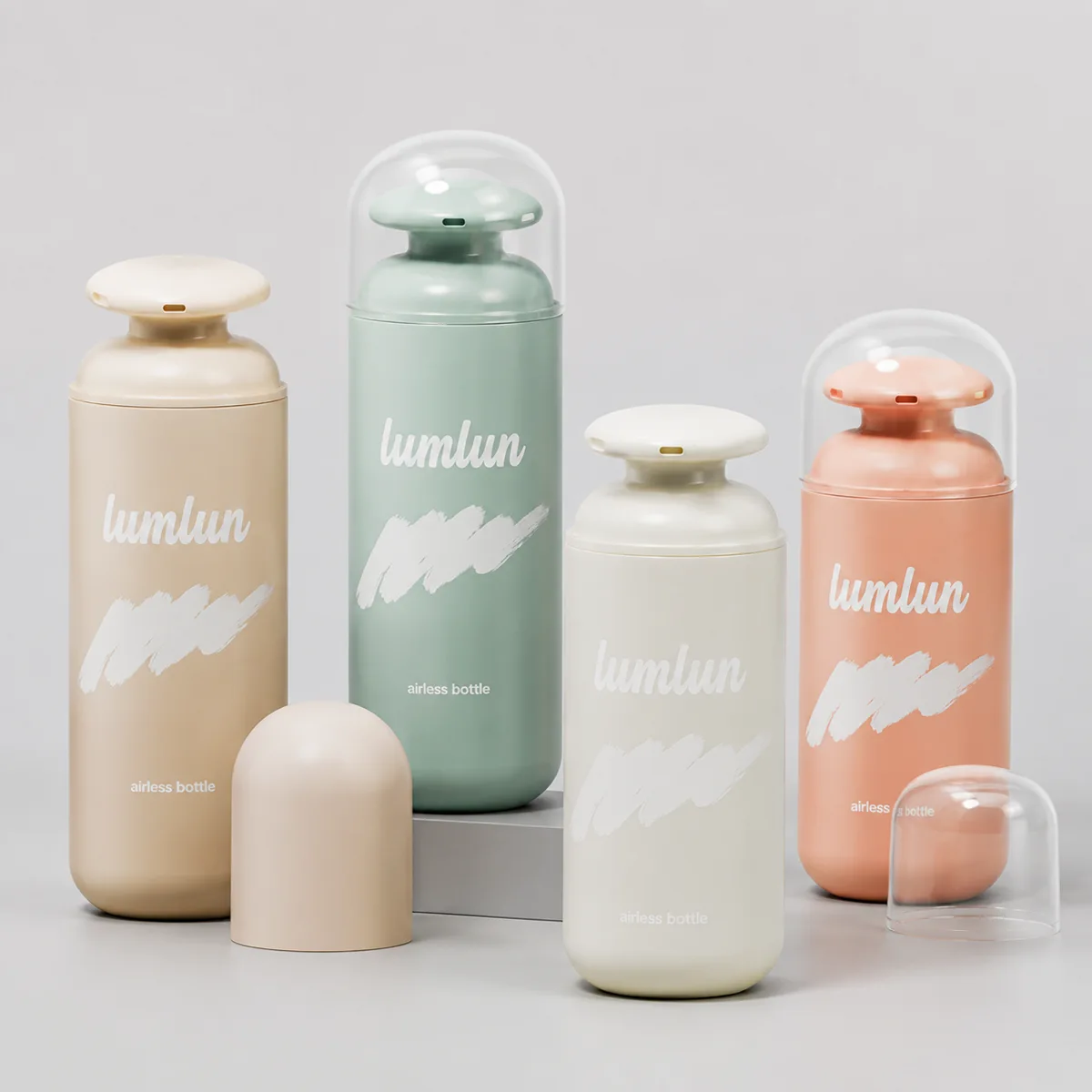
Airless Pump Bottle — PETG Body & PP Pump, 30ml, 50ml & 100ml for Cream & Serum
30 / 50 / 100ml · PETG body + PP pump
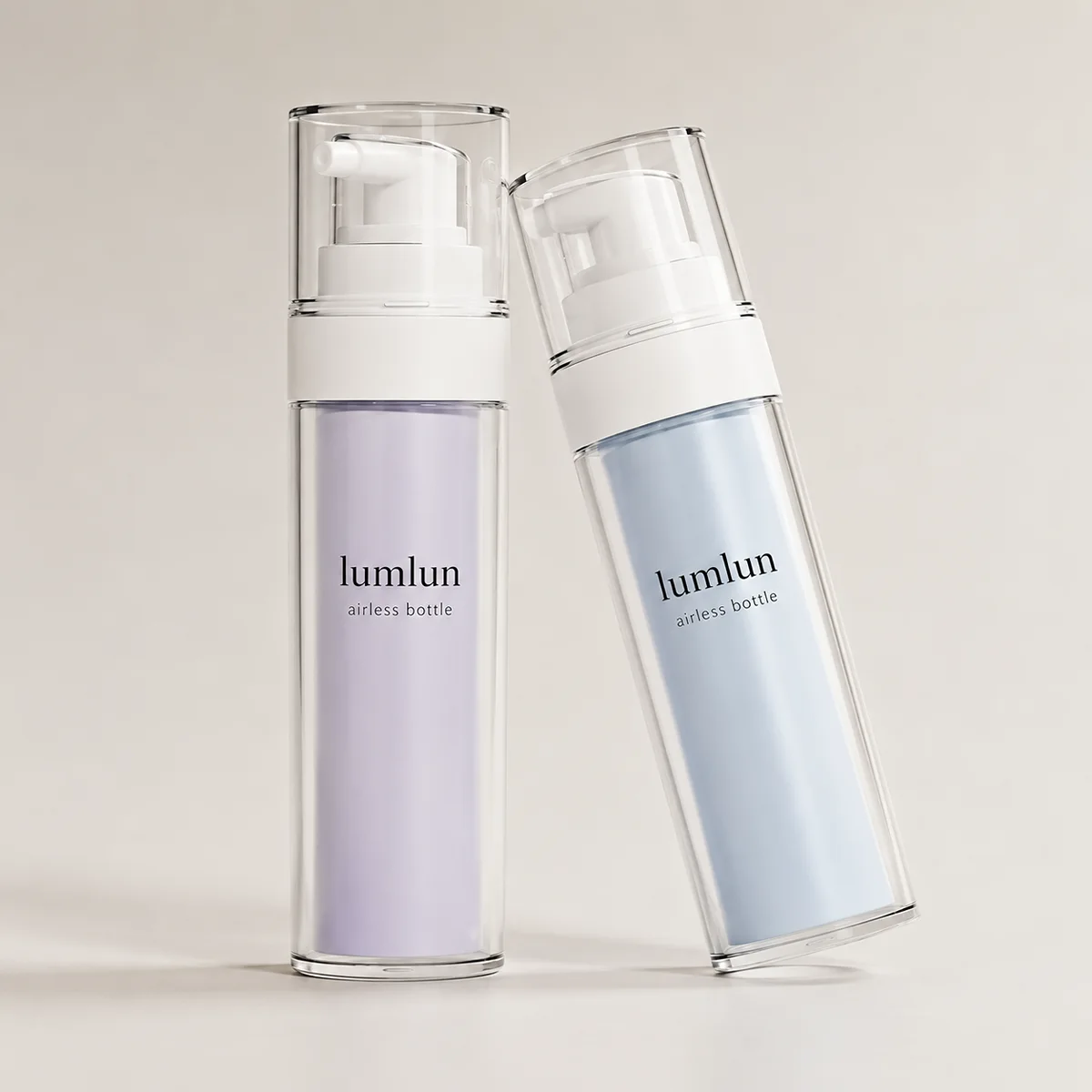
PET-Shell Refillable Airless Bottle with PP Inner — 30ml & 50ml
30 / 50ml · PET outer shell + PP inner
The Lowest Unit Price Is Not Always the Lowest Same-Specification Quote
Price matters. Once two suppliers are genuinely quoting the same model, materials, internal system, component set, decoration, quantity and commercial scope, the unit-price difference becomes meaningful.
Before that point, a lower number may simply reflect fewer components, a different material combination, a standard rather than refillable structure, less decoration, a different quantity or a different shipping boundary.
The most useful question is therefore not “Which number is lower?” but “Am I comparing the same complete package?”
Start Airless Bottle Cost Comparison From a Real Model and Clear Scope
There is no single Airless Bottle price that applies to every skincare project. Standard PP models, clear PETG-body models, refillable systems, different internal systems and new-tooling projects are different cost routes.
A meaningful quotation becomes possible when the model, capacity, materials, structure, components, decoration, quantity and quote scope are clear. The LumLun Airless Bottle & Jar range includes standard, refillable and replaceable-inner directions across different capacities, materials and component structures. If you are still comparing directions, start from the closest real model. That gives every later cost comparison a much clearer basis.