Key Takeaways
- Dropper bottles are a brand statement before they are a container — the format itself signals precision and care to consumers who have not yet read a single word on the label.
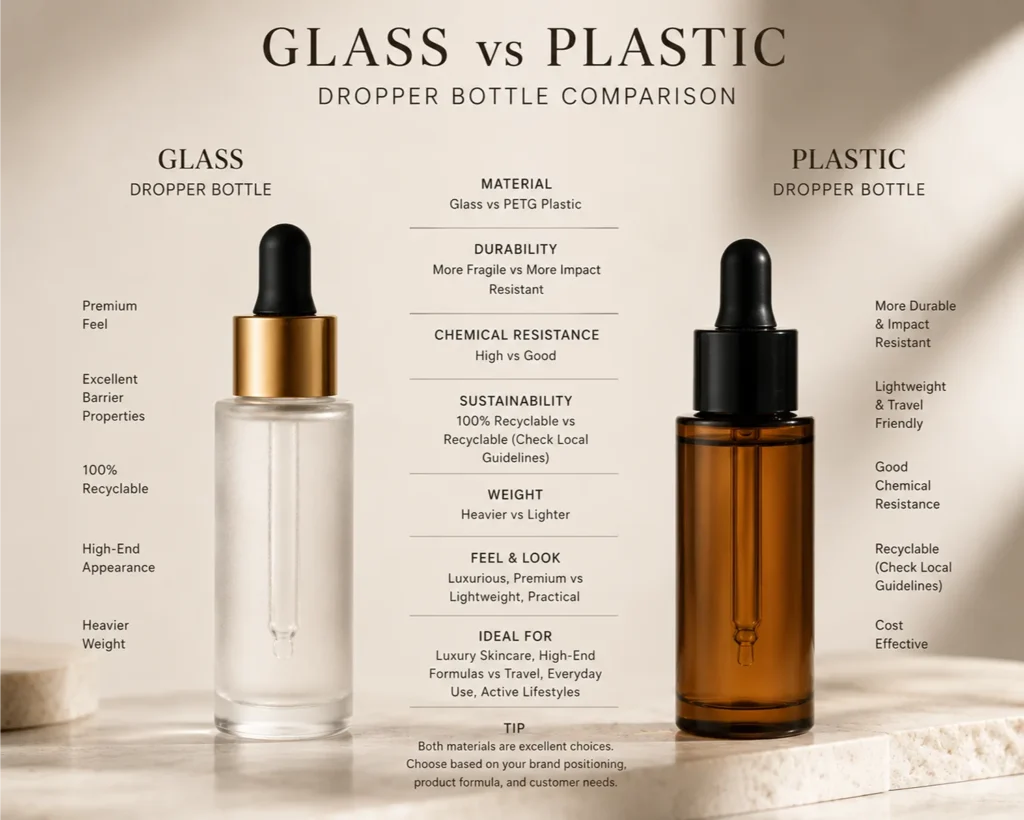
- Glass communicates weight and quality; PETG and PET achieve a similar premium feel through higher gram weight and thick-wall options, with the practical advantage of eliminating breakage in transit.
- Color is a functional and brand decision simultaneously — amber protects light-sensitive formulas, clear showcases the formula itself, and frosted signals understated luxury.
- The right size is the one a consumer uses up in four to eight weeks — this keeps the formula fresh, supports repurchase, and matches how consumers think about value.
- Finalize your formula before choosing packaging — selecting a bottle before the formula is confirmed is one of the most common and costly mistakes in a first launch.
Last Updated: June 2026
Pick up any well-regarded serum and you notice something before you know what’s inside: the bottle has already told you something. The weight of the glass, the way a frosted surface feels under your fingers, the precise click of the dropper cap — each detail communicates something about the formula before a word is read. Choosing the right dropper bottle for skincare brand packaging is rarely about finding “the best” option — it’s about matching the bottle to what your formula needs and what your customer expects to see. Done well, the packaging does real selling work. Done without enough thought, it can quietly work against a product that deserves better.
This guide walks through each decision in the order you’ll actually face it — material, color, size, finish, and what to confirm before placing an order.
The Gap Between a Great Formula and a Package That Shows It
Most skincare brands put their energy into the formula — and then make packaging decisions quickly, without enough consideration for what those decisions communicate. The gap that opens up shows up in predictable ways.
The packaging doesn’t match what the formula is worth. A consumer picks up a serum and forms an immediate impression — before they read the ingredient list, before they smell it, before they try it. The weight of the bottle, the material, the way light moves across the surface all contribute to an instant judgment about value. A formula developed with real investment can be undercut by packaging that doesn’t carry the same signal. The consumer won’t analyze why they feel this way. They’ll just decide — and what they decide affects both the first purchase and every repurchase that should have followed.
The packaging doesn’t hold up on screen. Skincare is now largely discovered through social media and brand websites. A consumer scrolling through content has a fraction of a second to decide whether to stop. Packaging that photographs well — that catches light in an interesting way, has a finish that reads as considered, has a color that stands out — earns that pause. Packaging that looks like every other bottle in the category gets scrolled past, regardless of what’s inside.
The brand story and the packaging contradict each other. A brand built around clean formulation, natural ingredients, and careful sourcing, shipped in a generic plastic bottle with no surface treatment, sends a mixed signal. Consumers sense this inconsistency even when they cannot name it. Inconsistency between what a brand says and what its packaging communicates erodes trust — and trust is what converts a first-time buyer into a loyal customer.
Packaging problems damage the first experience. A dropper bottle that leaks in transit, or one without an inner seal where formula collects around the bottle neck — these aren’t small inconveniences. The consumer opens the package and sees residue at the bottle mouth, product on the cap. They read it as the brand being careless, the product being wasteful. That first experience determines whether they come back.
The packaging never gets shared. When packaging feels genuinely considered — when the glass has presence, the dropper releases exactly one clean drop, the cap fits with precision — consumers photograph it. That photograph becomes organic reach the brand did not pay for. Packaging that feels ordinary never gets shared.
Every decision below is a chance to close this gap.
One practical question to answer first: dropper bottles work best with liquid or lightweight formulas that flow on their own — water-based serums, facial oils, and light essences. If your formula is too thick to move through a narrow pipette, a dropper will frustrate your consumer rather than impress them. A simple test: if the formula flows freely when you tip the bottle, it’s dropper-ready. If it needs to be pushed, scooped, or squeezed out of a tube, a pump or jar format will serve it better. The rest of this guide assumes your formula passes that test.
Glass or Plastic — What Each Material Does for Your Brand
The material question comes first because it affects everything else: how the product is perceived in hand, how it performs across your supply chain, and what a consumer concludes about your brand before opening the bottle.
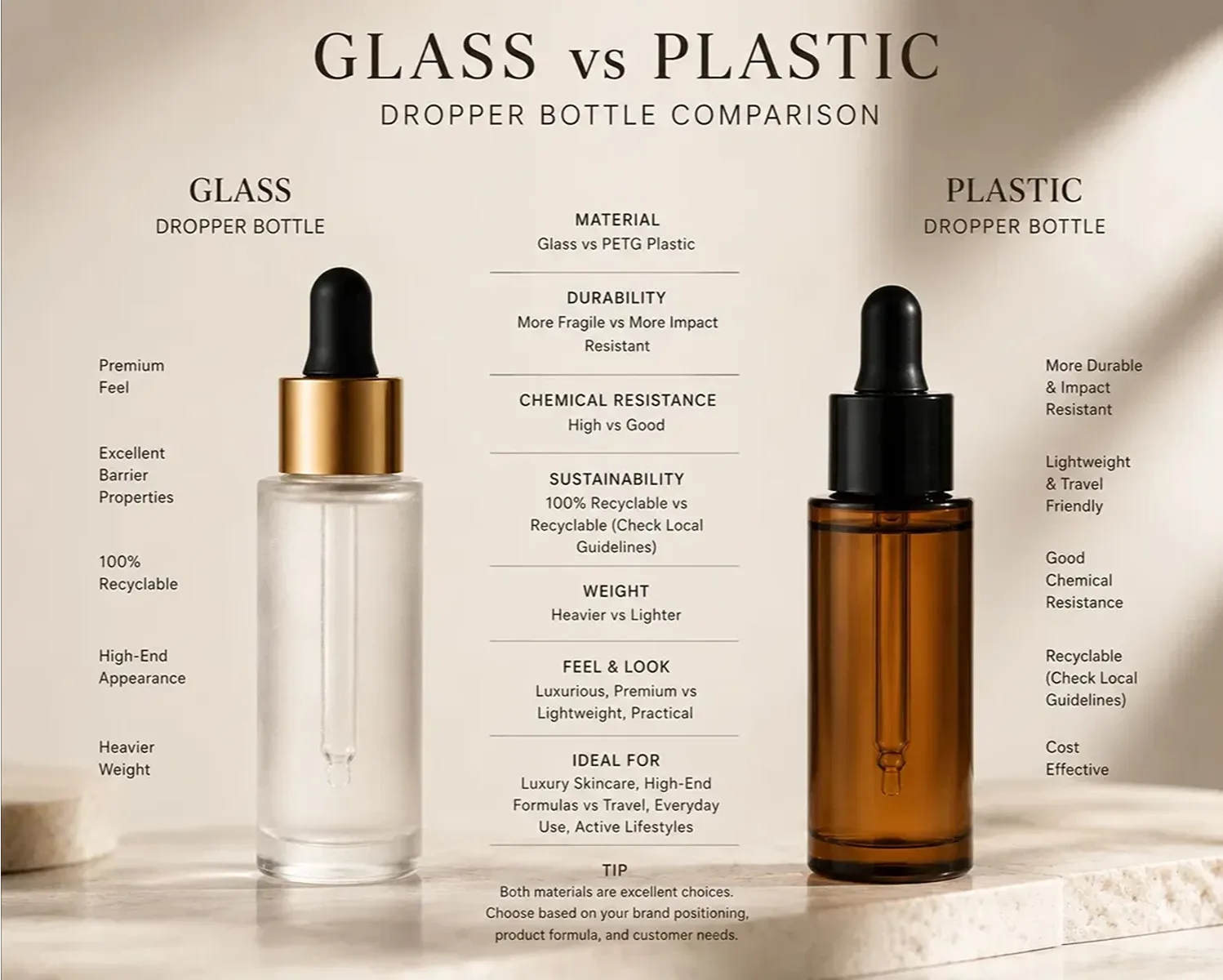
Glass
Glass carries weight — literally and in terms of brand perception. A glass dropper bottle in a consumer’s hand delivers a tactile experience that plastic cannot fully replicate: cool to the touch, smooth, substantial. Consumers associate this quality of feel with care and quality. Research consistently shows that the physical weight of packaging directly influences how much consumers believe they should pay for what’s inside.
Glass is also chemically stable — it does not interact with formula ingredients. For brands working with vitamin C, retinol, plant extracts, peptides, or other actives, this is a practical advantage: the packaging will not alter the formula you have worked to develop.
Glass is 100% recyclable and can be recycled endlessly without any loss in quality or purity. The EU glass packaging recycling rate stands at approximately 75%, making it one of the most widely recycled packaging materials in the region. For brands with a sustainability position, this is a claim that holds up.
PETG and PET — the plastic options that reach glass-level appearance
PETG and PET are both capable of achieving a glass-like visual profile: high clarity, clean lines, a look that reads as premium. The key variable is gram weight. A higher gram weight means thicker bottle walls, which produces a heavier, more substantial feel in hand. A high-gram-weight PETG or PET bottle can genuinely approximate the feel of glass while eliminating breakage risk entirely.
This matters most for brands distributing internationally. Glass breakage during transit is a real, recurring issue — damaged stock, replacement costs, customer complaints. PETG and PET remove this variable. Both materials are also recognized as recyclable by APR (Association of Plastic Recyclers) under standard recycling streams, and both support the full range of customization options available in glass: color, finish, surface treatment.
The choice between glass and PETG or PET is not a quality decision. It is a decision about the feel you want to deliver and the operational realities of how your product moves from supplier to customer. Both formats are available across LumLun’s dropper bottle collection, from 5,000-unit glass to higher-volume plastic runs.
→ If breakage during international shipping is a real concern, we’ve compared PETG and glass in detail, including transit performance.
Color and Finish — The Visual Story Before the Bottle Is Opened
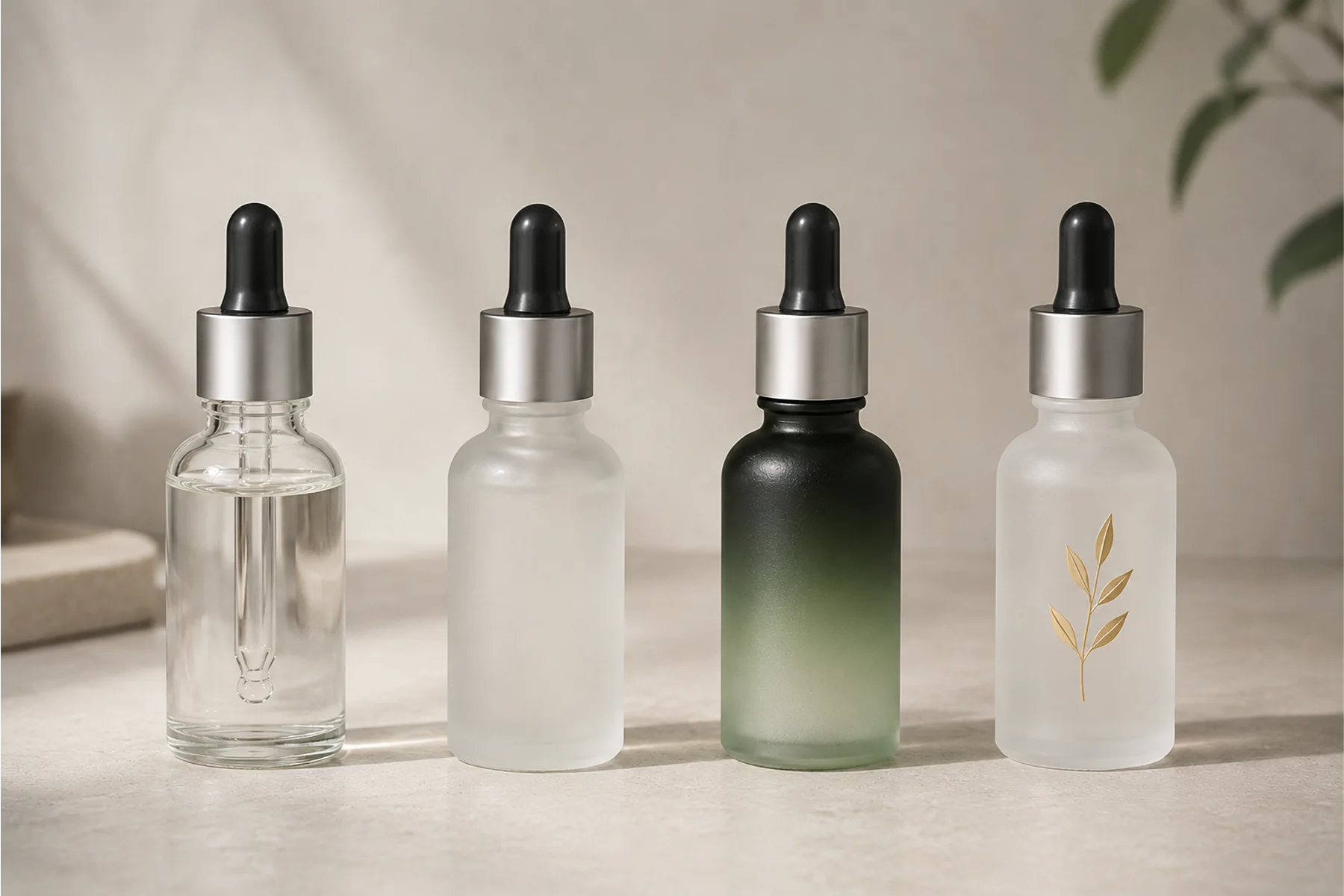
Once the material is settled, color and surface finish become the next signal a consumer reads — often before they register the brand name on the label.
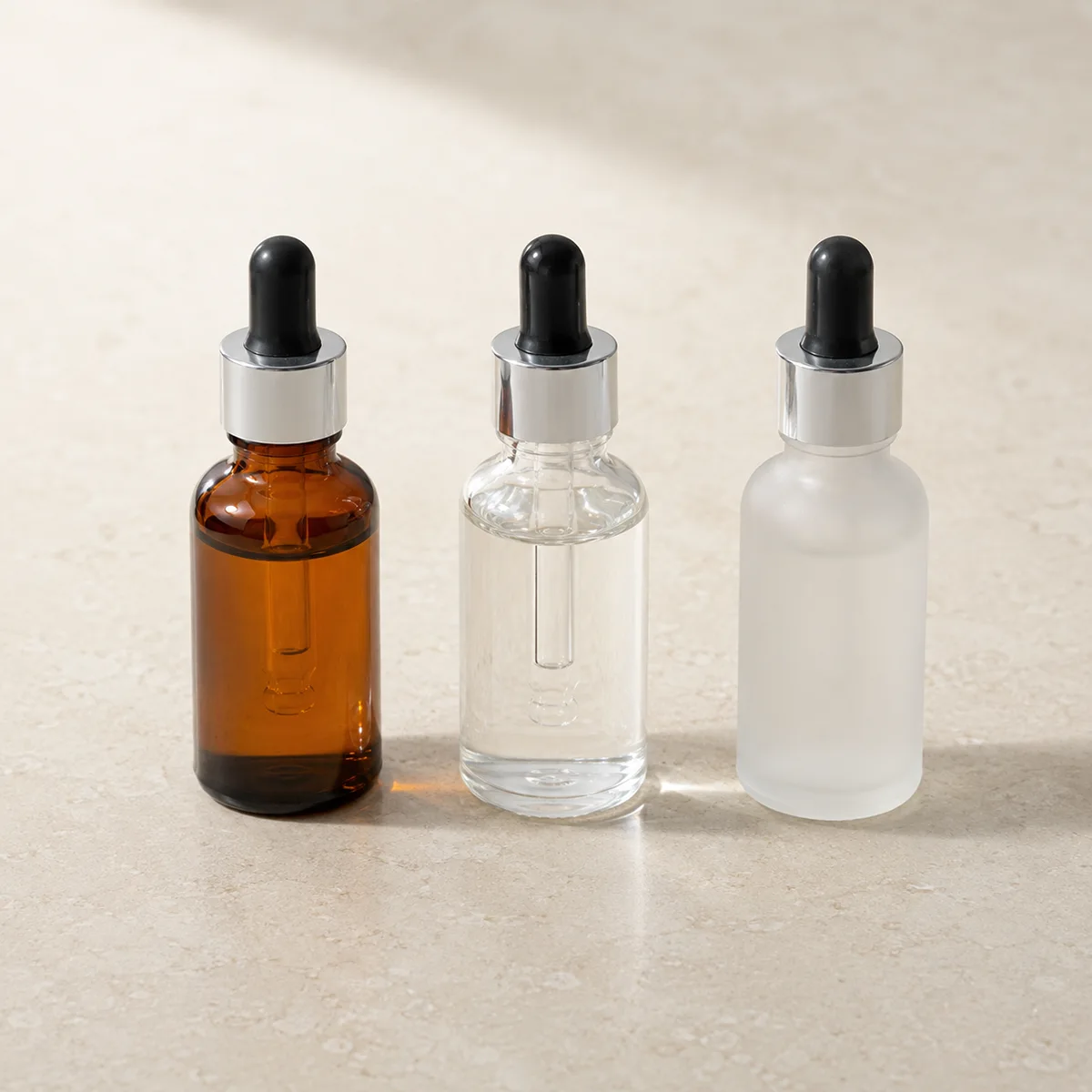
Amber is a formula protection choice that also communicates seriousness about ingredients. Amber glass filters UV light — which matters for formulas containing actives that degrade on light exposure, including vitamin C, retinol, and antioxidant blends. When a consumer sees an amber bottle, the association is: this brand knows what’s inside needs protecting, and they took care of it.
Clear glass or plastic showcases the formula itself. If the serum has a color — golden, pale green, water-clear — that color becomes part of the visual experience, and clear packaging lets it do that work. Clear also signals transparency: nothing is hidden, the product speaks for itself.
Frosted is where understated luxury lives. The matte surface diffuses light, creates a soft tactile quality, and reads as considered rather than plain. Research shows that 68% of luxury skincare consumers associate frosted glass with premium quality and trustworthiness. For brands targeting consumers who respond to quiet, refined signals, frosted is one of the most reliable choices.
Custom colors and gradient finishes turn the bottle into a brand recognition signal. A consumer who knows your brand spots your product in a feed or on a shelf without reading the label. For brands building repeat purchases through social media or DTC channels, this visual consistency compounds over time.
| Surface Treatment | Visual Effect | Brand Signal |
|---|---|---|
| Silk Screen Printing | Precise logo and text, clean color | Clear brand identity across all SKUs |
| Hot Stamping | Metallic gold or silver, high sheen | Luxury, occasion-worthy, gift-ready |
| Gradient Coating | Color transitions across the surface | Distinctive, high social-media performance |
| UV Plating | Mirror-like metallic surface | High-end, maximum visual presence |
| Frosted Treatment | Matte surface, soft tactile quality | Understated, refined, premium without noise |
| Pantone Color Matching | Exact brand color reproduction | Consistent brand system across product lines |
→ The choice between amber and clear glass is closely tied to how sensitive your formula is to light. This guide walks through that decision in full.
Not sure which finish and material fits your brand? Send us a reference image or a brief description and we’ll come back within 24 hours with what’s achievable.
Size — What the Volume Tells Your Consumer About What’s Inside
Size shapes how a consumer experiences your product over time — how long it lasts, what it costs per use, whether the last drop feels satisfying or frustrating, and whether they reorder without thinking or don’t reorder at all.
Smaller formats (5–15ml) communicate concentration and value density. A consumer who receives a 10ml serum draws an immediate conclusion: this is potent, measured, and precise. This size also works well as a lower-commitment entry point — a consumer trying a brand for the first time is more willing to start with a smaller bottle, and if the formula delivers, the next purchase is the full-size.
Standard formats (30ml) are the reference frame most skincare consumers carry. They know this size, know roughly how long it lasts, and can compare it to other products they’ve tried. For a brand’s main SKU, launching at 30ml means meeting the consumer where they already are. It creates the least friction at the point of first decision.
Larger formats (50ml and above) make sense for products designed for frequent or generous use — hair serums, body oils, high-frequency treatments applied to larger areas. A bigger bottle signals: use this freely, this is a product for your daily routine, not something to ration.
The four-to-eight-week window. The most useful way to think about size is not from a volume preference but from a usage timeline. A bottle that lasts a consumer four to eight weeks is ideal: long enough to feel like good value, short enough that the formula stays effective through to the final drop, and aligned with a natural repurchase rhythm. For formulas with active ingredients, quality toward the end of a very long bottle’s life is often compromised — and the consumer’s last experience of the product is what decides whether they reorder.
| Size | Best For | What It Signals to the Consumer |
|---|---|---|
| 5–15ml | High-potency actives, eye treatments, brand entry samplers | Concentrated, precise, worth the attention |
| 30ml | Main SKU facial serums, face oils, daily treatments | Industry standard, familiar, easy to evaluate |
| 50ml+ | Hair serums, body oils, high-frequency facial treatments | Daily use, use freely, practical daily value |
How Customization Brings Your Brand Into the Bottle
The color, finish, and print on a dropper bottle are not decoration added at the end — they are what makes the product feel like yours, and what separates your serum visually from every other serum in the same format.
The most useful starting point is not a capabilities list. It is your brand’s visual language: what does this product need to communicate without words?
If the brand story is about efficacy and ingredients, the packaging should support the formula, not compete with it. Amber or deep-toned glass signals that the formula is being protected. Simple silk screen printing or a single hot stamp for the logo keeps the visual language focused. Minimal variation across a product line creates a coherent, professional feel that tells consumers the brand is serious about what’s inside.
If the brand story is about feeling and lifestyle, visual interest carries more weight. Gradient coatings, distinctive brand colors, frosted finishes with a noticeable tactile quality — these are elements that make a consumer want to pick the bottle up, examine it, and photograph it. For brands selling primarily through social media or independent websites, packaging that performs well in content is part of the marketing infrastructure.
If the brand story is about sustainability, restraint reads as intentionality. Minimal surface treatment, clean label placement, colors that feel natural rather than designed — these signal that the brand has thought about what it puts into the world. Pairing glass with simple silk screen printing creates an aesthetic that resonates with consumers paying close attention to that kind of alignment.
If you have a visual reference, send it — a finish you’ve seen somewhere, a brand you admire, a direction that’s right but difficult to describe. A reference image communicates more precisely than any written description, and it lets us tell you immediately what’s achievable, what process would be used, and what samples would look like. Browse current dropper bottle formats for a starting reference point.
Before You Order — The Steps That Prevent Expensive Mistakes
The sequence matters. Most of the costly mistakes in a first skincare launch come from making packaging decisions before the formula is confirmed.
Formula first, always. Your formula’s texture, viscosity, and ingredient profile determine what packaging will actually work — both in terms of dispensing performance and material compatibility. A dropper bottle that works beautifully with a lightweight water-based serum may not dispense smoothly with a thicker oil blend. Finalizing the formula first means every packaging decision can be made with complete information, not assumptions.
Test with your actual formula before committing to bulk. Request samples and run them with your formula — check dispensing behavior, seal quality, how the product flows from the first press to the last, and how the bottle performs after several days of repeated use. This step catches problems early, when they are inexpensive to solve. The difference between a configuration that works reliably and one that frustrates consumers nearly always shows up in testing.
Verify the inner seal. A dropper bottle without a properly fitted inner seal allows formula to collect around the bottle neck opening. The consumer sees residue at the mouth of the bottle, product on the inside of the cap. To them, this reads as leakage, as waste, as carelessness. Confirming that the bottle configuration includes a secure inner seal is a small step with a significant impact on first impressions.
LumLun’s process in real numbers:
- Glass dropper bottle MOQ: 5,000 units — half the minimum of most other formats in the range, which makes it a practical starting point for a first serum launch
- Free samples shipped within 48 hours of request
- Sample lead time: 12–15 working days for custom samples
- Bulk production: 30–40 days
- Response on enquiries: within 2 hours
Frequently Asked Questions
What size dropper bottle should I start with for a facial serum?
For most facial serums, 30ml is the right starting point. It is the format consumers expect, it fits a four-to-eight-week daily usage window, and it provides a reliable reference for pricing and comparison. Brands working with high-potency or high-cost formulas — where a small amount goes a long way — often find that 15ml communicates value density more effectively. The useful question: how long should one bottle last a consumer who uses it every day, and does that timeline feel right for your repurchase strategy?
What is the real difference between glass and PETG for dropper bottles?
Glass delivers a tactile quality that plastic cannot fully replicate — the cool weight in hand sends a signal about care and quality that matters when a consumer is deciding how much the product is worth. PETG and PET can reach a very similar visual standard through clarity and finish, and a high-gram-weight configuration produces a thicker-walled bottle that feels substantially more premium than standard plastic. The decisive practical difference is breakage: PETG and PET eliminate transit breakage entirely, which matters for brands shipping internationally at volume.
Can I customize the color, finish, and branding on my dropper bottle?
Yes — Pantone color matching, surface treatments including frosted, gradient coating, UV plating, silk screen printing, and hot stamping are all available. The bottle shape is typically drawn from existing molds, but the combination of color, finish, and print creates packaging that reads as fully the brand’s own. If you have a reference image of the look you’re aiming for, sending that image is the fastest way to get a clear answer on what’s achievable.
What is the MOQ for custom glass dropper bottles, and is it possible to start small?
Glass dropper bottles at LumLun start at 5,000 units — half the minimum order for most other packaging formats in the range. This makes it a practical starting point for a brand launching its first serum or testing a new formula without committing to a large production run before the market has been validated. Once sales and customer response are confirmed, scaling the order is straightforward.
Ready to find the right dropper bottle for your brand?
Tell us about your formula and brand direction, and we’ll give you an honest recommendation within 24 hours — with free samples shipped in 48 hours.