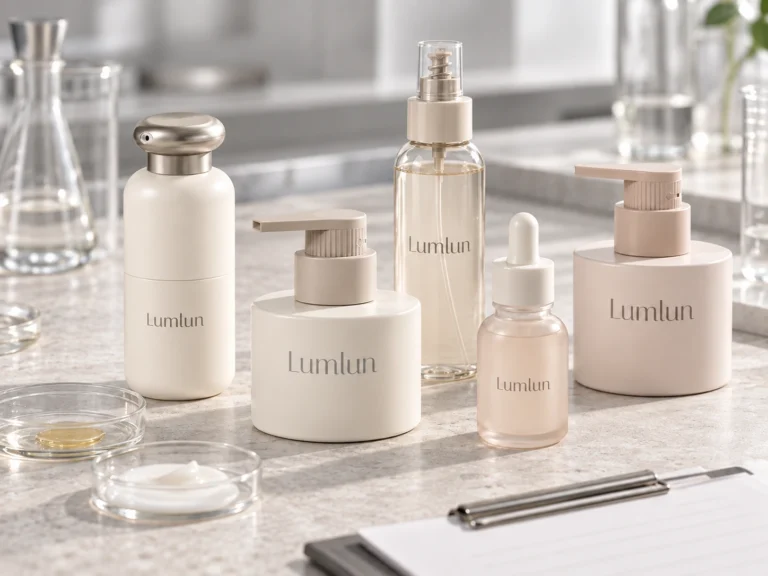
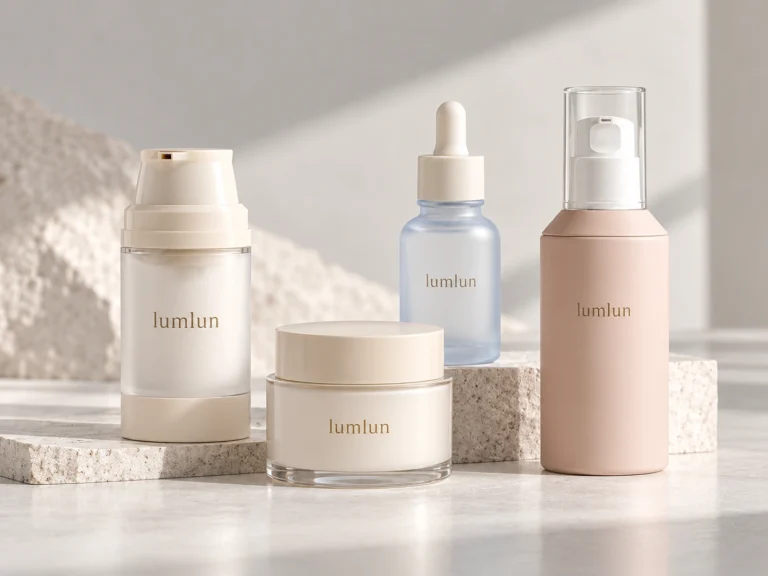
Airless Pump Bottles and Squeeze Tubes can both work for skincare packaging. For some serums, lotions, creams, gels and targeted treatments, both formats may enter the first packaging shortlist.
The useful question is not which format is “better.” It is which dispensing action, formula behavior, amount per use, capacity, package structure and real model fit the project.
Start with how the product should be dispensed: pump or squeeze?
An Airless Pump Bottle uses an actuator and pump system. Once a real model is selected, the project can compare the pump, actuator, outlet, overcap, internal system, capacity and material combination as one package.
A Squeeze Tube uses a flexible tube body. The user squeezes the pack and the product exits through the selected outlet, nozzle, cap or applicator. The actual amount depends on the formula, outlet and how the tube is squeezed.
If the project is already committed to Airless and now needs to choose a specific bottle family, the Airless Pump Bottle selection guide covers that next step in more detail.

Formula flow matters, but there is no universal viscosity cutoff
Formula behavior is important because a fluid serum-like product, a lotion, a cream and a richer gel do not move through every pump or every tube outlet in the same way.
That does not create a universal rule such as “below this viscosity use Airless” or “above this value use a Tube.” Airless systems can use different pumps, flow paths, actuators and outlets. Tubes can use different diameters, shoulders, outlets, nozzles, applicators and caps.
A more useful early description is whether the formula is fluid, lotion-like, cream, rich cream or gel-like. Then evaluate that actual formula with the actual pump or tube outlet being considered.
The amount used each time can also influence the format
Some skincare products are used in small amounts, others in larger amounts, and some vary with the application area.
With an Airless Pump Bottle, a confirmed model may have a nominal pump-output specification that can be considered when defining the dispensing action. That value belongs to the specific pump and should not be copied across all Airless bottles.
If pump output is an important specification for the project, the Skincare Packaging Pump Output guide explains that model-level decision in more detail.
A standard Squeeze Tube does not have one fixed “stroke.” The user controls the amount through the squeeze action together with the outlet and formula behavior.
The practical question is whether the project benefits from a specific pump action, or whether a squeeze action is the more natural way for the product to be used.
The same capacity does not mean the same packaging project
A 50ml Airless Pump Bottle and a 50ml Squeeze Tube may have the same nominal fill volume while using completely different package architectures.
An Airless package may include the bottle or outer shell, inner container, Airless internal system, pump, actuator, collar or shoulder and overcap. A Tube project is built around the flexible tube body, shoulder, outlet, cap or applicator and tail seal.
Capacity therefore helps narrow real models, but it does not replace the format decision.
Capacity and package proportion should be reviewed together
A real Airless family may offer 30ml, 50ml and 100ml. A real Tube family may cover 30–60ml, while another Tube family may cover larger sizes. Those ranges do not mean that one capacity “belongs” to one format.
What matters is which real models exist at the target fill volume and what their actual proportions look like. Airless proportions vary with bottle diameter, overall height, outer shell, actuator, overcap and internal structure. Tube proportions vary with tube diameter, length, shoulder, cap and applicator.
If the project has already chosen the Tube route, the Cosmetic Tube selection guide can help compare the next model-level dimensions and components.

Package structure and filling route also need to fit the project
Airless Bottles and Squeeze Tubes are not the same package with a different closure. Their filling and assembly routes are different.
For an Airless project, the specific container, filling opening, pump assembly, internal system and final assembly method need to match the selected model. For a Tube project, the tube body, shoulder, outlet or cap, filling and tail sealing form the relevant package route.
If a brand already works with a specific contract filler or filling setup, those conditions should be reviewed with the shortlisted model early enough to avoid choosing a package that does not fit the actual production route.
Material requirements can be evaluated alongside the packaging format
Material may be a later choice in some projects, but in other projects it is already a starting requirement. A brand may have a clear PP, PCR, Sugarcane PE or other material direction before the final format is selected.
If material is not yet locked, compare the two packaging formats and then review the material combinations available in the real shortlisted models. If material is already a project requirement, evaluate material and format together.
Different Airless models can use different material combinations. For LumLun Cosmetic Tubes, the tube body can use conventional PE, Sugarcane PE or PCR depending on the project, while the cap, applicator and other components remain model-specific.
Formula protection depends on the actual package, not the format name alone
Airless and Tube packaging use different dispensing architectures, but the word “Airless” by itself does not prove the final protection performance of a finished skincare product.
The actual package structure, materials, dispensing system, closure, filling conditions and formula all matter. The same principle applies in the other direction: using a Tube does not automatically mean the formula is less protected.
When stability or product protection is a critical project requirement, compare the specific formula with the specific package rather than treating a format name as a performance guarantee.
Cost should be compared after the real package is defined
Airless Bottles and Squeeze Tubes use different package architectures, so their quotation bases are also different. That does not justify a universal rule that one format is always cheaper or more expensive.
Real cost depends on the model, capacity, materials, components, decoration, quantity and other quotation scope. If both formats fit the product, shortlist a real Airless model and a real Tube model first, then compare the complete specifications and quotations.
If the project has already selected Airless and is comparing supplier quotations, see what affects Airless Bottle cost and how to compare packaging quotes fairly.
Airless Pump Bottle vs Squeeze Tube: a quick comparison
| Comparison point | Airless Pump Bottle | Squeeze Tube |
|---|---|---|
| Main use action | Press / pump | Squeeze |
| Dispensing system | Specific pump + actuator + outlet | Flexible tube body + outlet / cap |
| Amount per use | Can be reviewed with the confirmed pump-output specification | Controlled by squeeze action together with outlet and formula |
| Formula review | Actual pump / flow path / outlet | Actual tube / outlet / nozzle or applicator |
| Main package body | Rigid bottle / Airless assembly | Flexible tube body |
| Capacity selection | Real Airless model family | Tube diameter + real capacity family |
| Package proportion | Depends on the actual bottle model | Depends on diameter, length and actual tube model |
| Filling route | Confirm for the selected Airless structure | Filling + tail sealing |
| Material | Confirm for the selected Airless model | PE / Sugarcane PE / PCR tube-body directions, project-specific |
| Cost | Quote the complete Airless specification | Quote the complete Tube specification |
Compare real LumLun packaging directions
Once both formats remain plausible, real products are more useful than continuing to compare abstract category names.

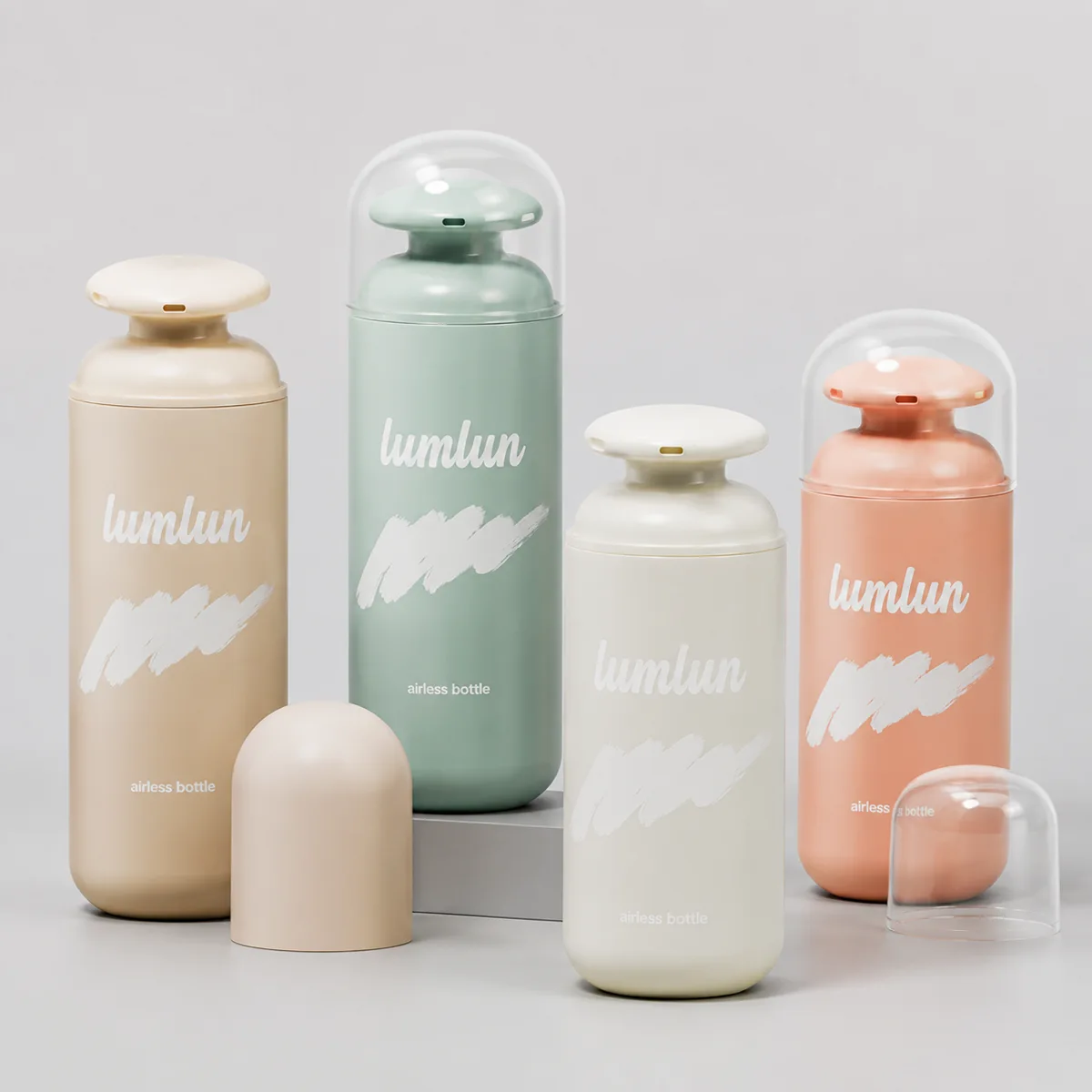
These three real models show how similar fill volumes can use different dispensing formats and package structures. The Airless Squeeze Tube is included as an additional hybrid option for projects that want a tube form with Airless dispensing.
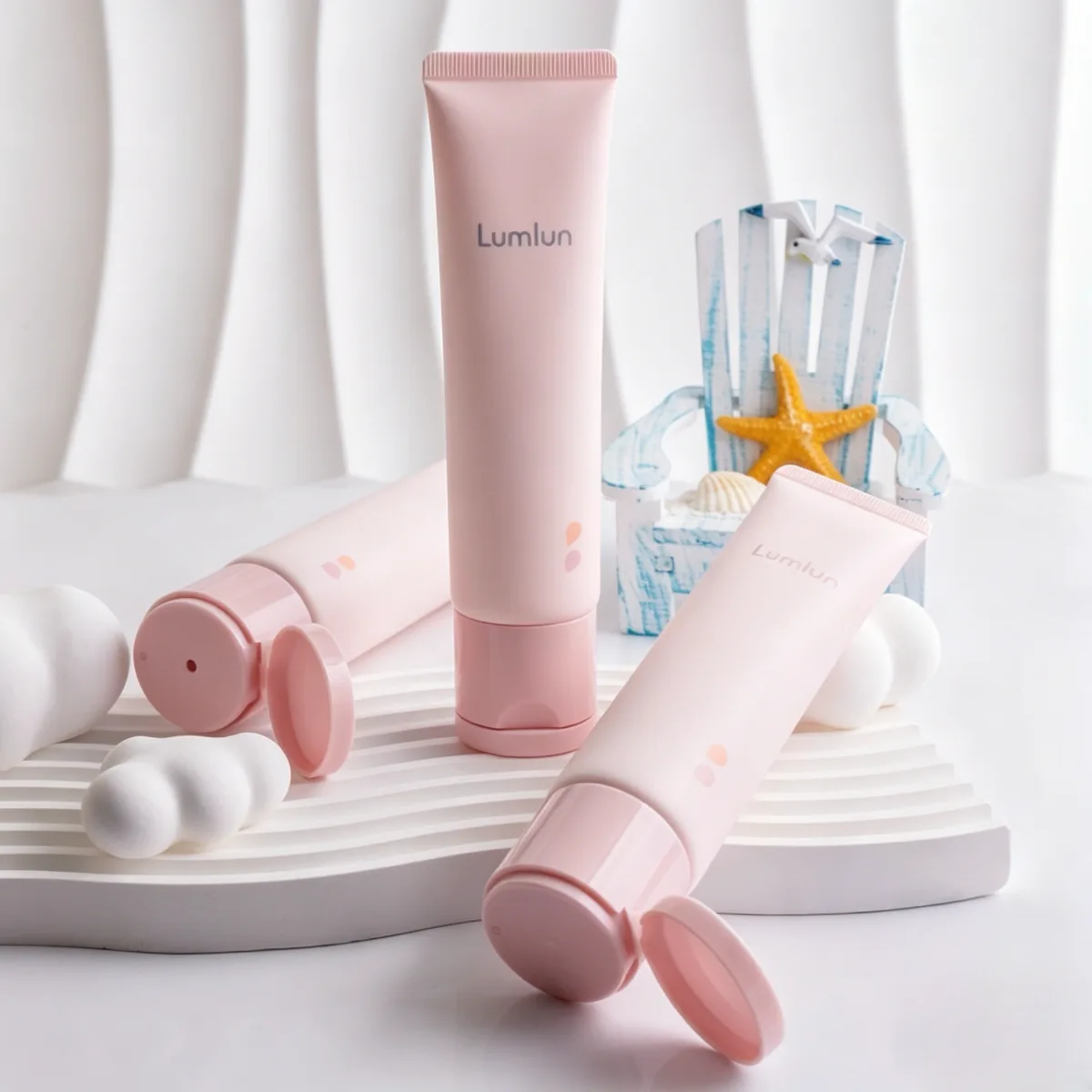
35mm Squeeze Tube for Hand Cream and Cleanser
30–60ml · Tube body: PE / Sugarcane PE / PCR
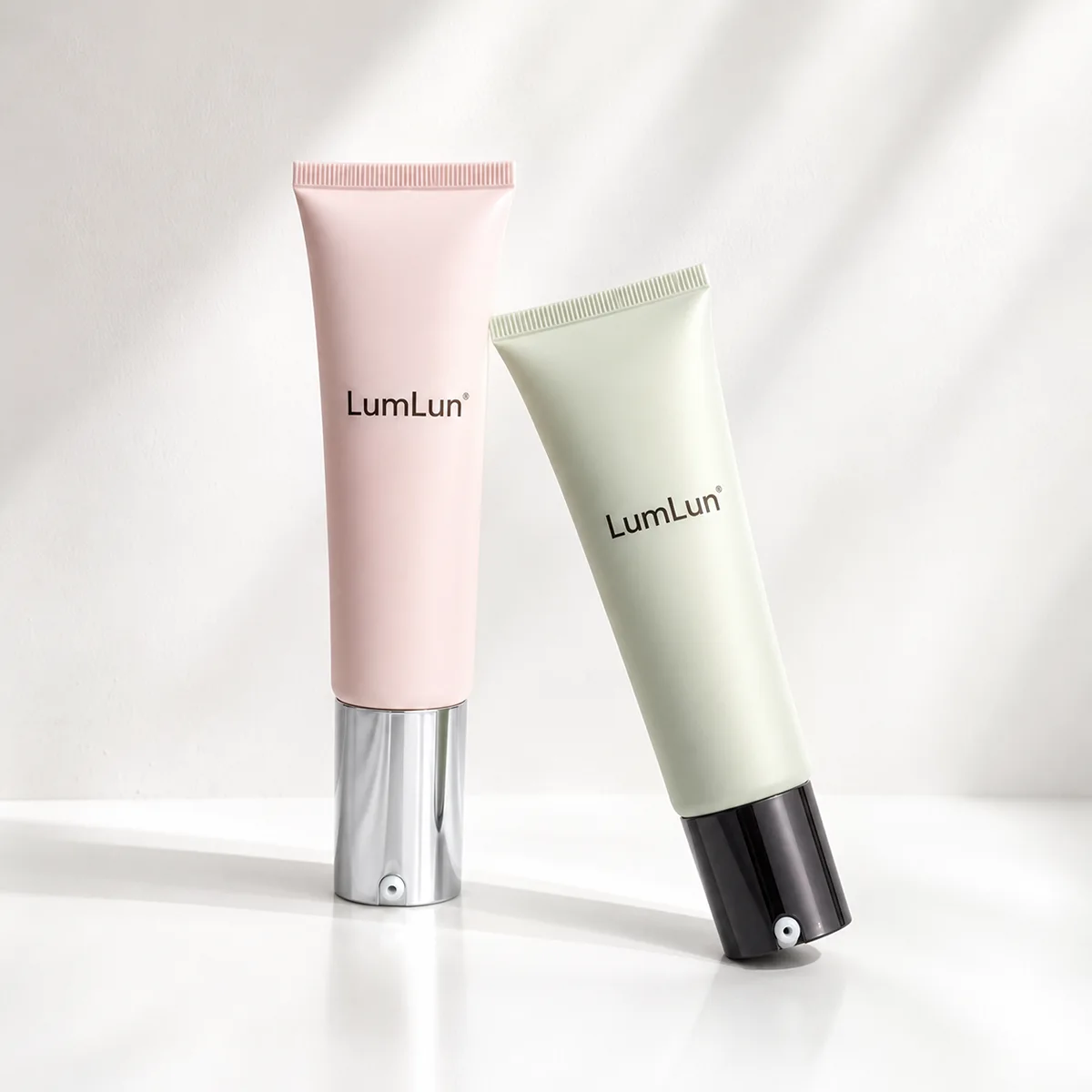
30mm Airless Squeeze Tube — PE, Sugarcane PE or PCR
30–60ml · Tube body: PE / Sugarcane PE / PCR
Which direction fits your project?
When both Airless Pump Bottle and Squeeze Tube are still on the shortlist, five practical checks usually narrow the choice:
- How should the product be dispensed? Through a pump action or a squeeze action?
- How does the actual formula behave in the real dispensing system? Review the selected pump / flow path / outlet or the selected tube / outlet / nozzle.
- How much product is typically used each time? Decide whether a defined pump action or user-controlled squeeze action better matches the use pattern.
- Which real models exist at the target capacity? Compare actual dimensions and proportions, not only the ml number.
- Which complete package fits the project? Then compare material, dimensions, pump or outlet, cap or overcap, filling route, decoration, MOQ and quotation on the shortlisted models.
At that point, the decision is no longer “Airless or Tube in general.” It is which of two real packages is the better fit for this specific product and production project.