Key Takeaways
- Choosing a cosmetic tube starts with your formula, not the catalog. Your texture, ingredients, and positioning decide the material, cap, and size that fit.
- The right tube protects your formula, which protects your reviews and repeat sales. A leak or a formula that changes on shelf costs you returns and lost loyalty, not just packaging.
- Standard PE tubes suit most skincare formulas and can be upgraded with PCR or sugarcane-based bio-PE when sustainability helps you win retail shelf space and eco-conscious buyers.
- Matching the tube to your product type makes it sell better on the shelf and on screen, which is where more channels and more orders come from.
- The right tube isn’t a cost, it’s a brand asset that supports a higher price, stronger reorders, and customer loyalty. Confirm the fit with a free sample before bulk.
Last Updated: June 2026
If you’re choosing a cosmetic tube for the first time, the options can feel overwhelming. Different materials, a dozen cap styles, a range of sizes, and a supplier asking questions you’re not sure how to answer. It’s easy to default to whatever looks nice in the catalog.
Here’s why that’s risky. The tube isn’t just a container, it’s the thing that decides whether your formula arrives intact, whether it looks worth its price on the shelf, and whether the customer comes back. Get it wrong and the cost shows up later:
- A material that doesn’t suit your formula can let the product separate or change over its shelf life, which means returns and one-star reviews.
- The wrong cap leaks in transit or feels awkward in the hand, which costs you the repeat purchase.
- Decoration that cracks or peels after a few squeezes makes the whole product feel cheap, which undercuts the price you want to charge.
This is where knowing how to choose a cosmetic tube the right way pays off. This guide walks through it the way an experienced packaging supplier would, in the order the decisions actually matter, and at each step it shows not just what to pick but what the right pick does for your brand. The goal isn’t a tube that holds your product. It’s one that protects your formula, earns its price on the shelf, and gives customers a reason to buy again.
Start With Your Formula and Product
Before comparing materials or caps, pin down three things about your product: its texture, its ingredients, and where it sits in the market. Every other choice follows from these, and getting this step right is what saves you from a costly re-order later.
Most brands skip this and reach straight for a tube that looks right. We’ve seen where that leads, so here’s the order that actually works. Answer these three first:
- How thick is your formula? A runny lotion, a medium cream, and a thick balm each need a different tube softness, opening size, and cap. Texture drives how easily the product dispenses, and dispensing is what customers notice every single time they use it.
- How sensitive is it to air? Most creams, cleansers, and lotions are easy to package in a tube. A few products, like high-potency treatments that lose effectiveness once exposed to air, need more thought about protection, and sometimes a different format entirely, which we’ll come back to.
- Where does it sit in the market? An everyday cleanser and a premium treatment justify very different finishes and price points. Your positioning decides how much the tube should invest in looking and feeling premium.
A good supplier asks about these before recommending anything. If you’re quoted a tube without a single question about what’s going inside it, you’re being sold from a catalog, not guided. Starting from your formula is what keeps your packaging and your product working together, so your launch goes out right the first time.
Step One: Choose the Right Tube Material
Standard PE (polyethylene) is the right material for most skincare formulas like creams, lotions, cleansers, gels, and masks, because it’s flexible, stable with most formulas, and accepts the widest range of caps and decoration. For most brands, the material question is simpler than the catalog makes it look.

Here’s how to think about it, and what each choice does for your business:
- For most formulas, standard PE is the practical default. It handles creams, lotions, cleansers, gels, and masks well and dispenses smoothly. More importantly, a stable, compatible tube keeps your formula performing as intended through its shelf life, which means fewer returns and better reviews, the things that drive repeat sales.
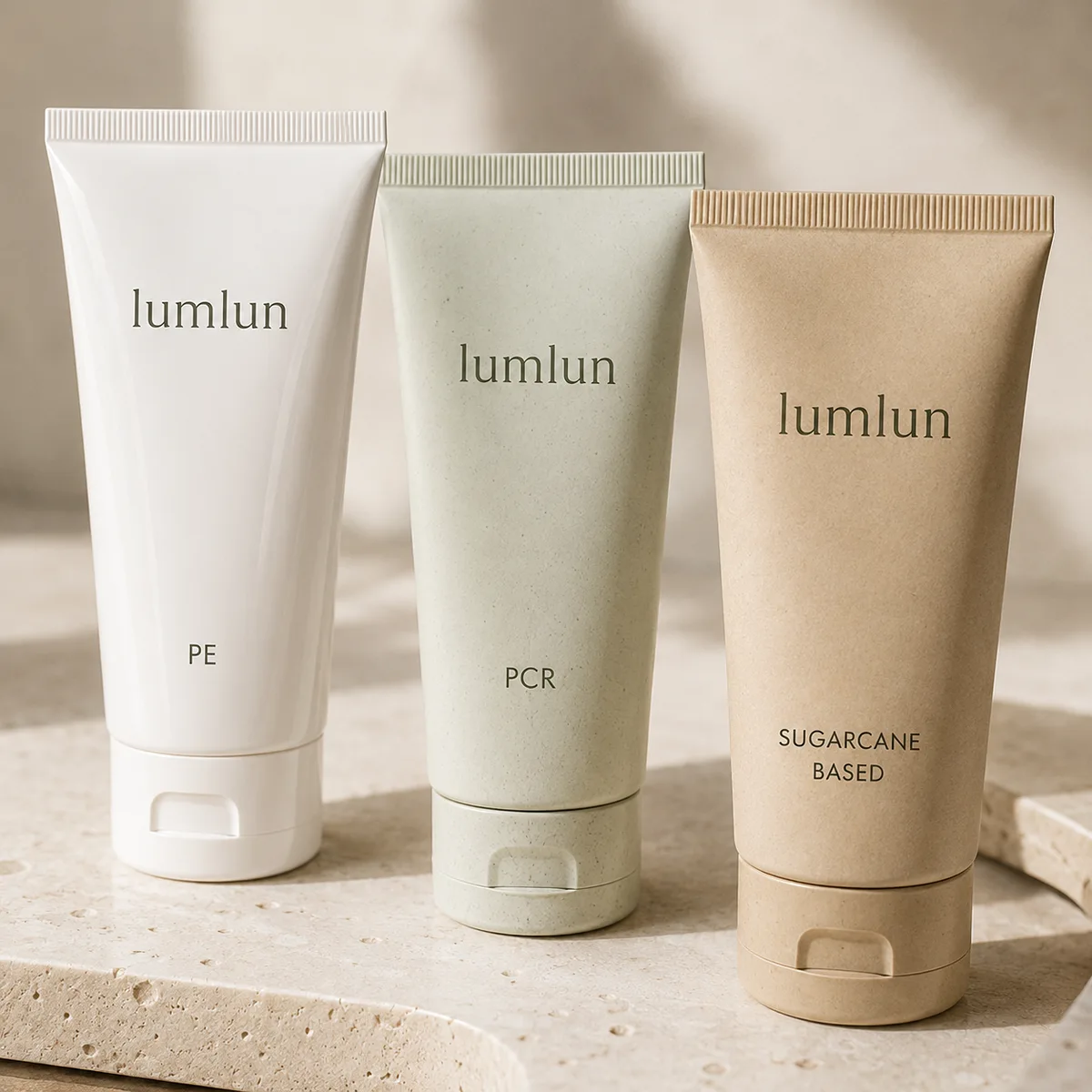
- If sustainability is part of your brand, PE can be upgraded with PCR or sugarcane-based bio-PE. Both keep the familiar squeeze-tube feel. This matters commercially: a credible sustainability story helps you win shelf space with retailers that now require it, and wins over eco-conscious buyers willing to pay more. In other words, it can open channels and support a higher price, not just check a box. We cover the trade-offs in our sustainable cosmetic tube guide.
- If you need stronger barrier protection, multi-layer structures are an option. Some formulas benefit from extra protection against air and moisture.
One honest point, because the right packaging depends on your product: a squeeze tube suits most everyday skincare, but it isn’t the best home for a high-potency treatment that loses effectiveness once it’s exposed to air. For that kind of product, a tube, even a multi-layer one, won’t seal as completely as an airless bottle, which blocks air entirely. That’s not a knock on tubes, it’s about matching the format to the formula. If that sounds like your product, it’s worth looking at an airless option so it stays effective to the last application, which is exactly what keeps those customers reordering.
Step Two: Choose the Cap and Applicator
Match the cap to how your customer uses the product: flip-top for products applied often, screw caps for thicker formulas and a secure seal, and nozzle tips or applicators for precise or targeted use. The cap is a small part with an outsized effect on how your product feels to use, and that feeling drives reviews and reorders.

The main options and where each fits:
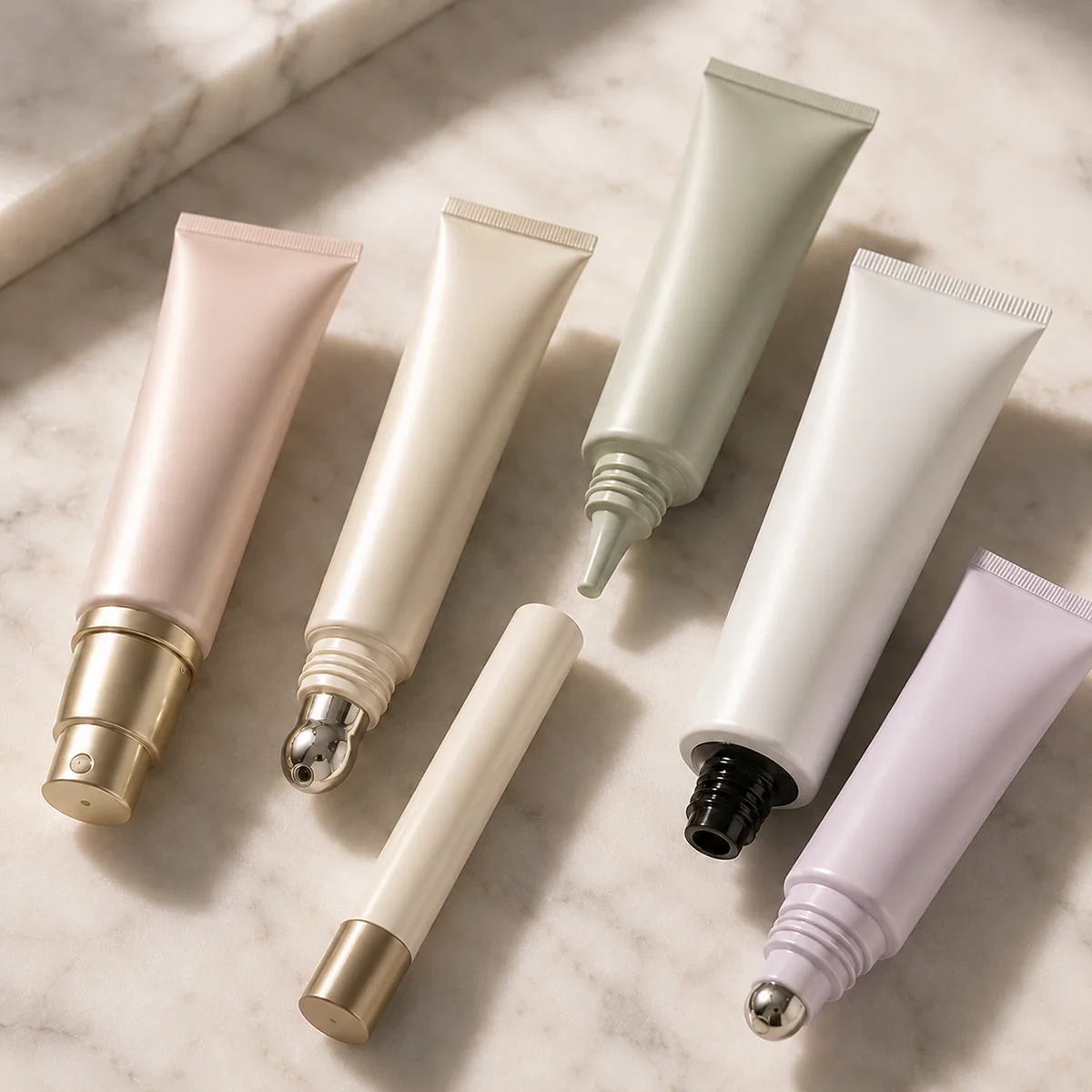
- Flip-top cap — opens with one hand and stays attached. Best for products applied often and quickly, like cleansers, hand creams, and sunscreens. An easy, satisfying open-and-close is the kind of small daily win that earns good reviews.
- Screw cap — a secure, classic closure that seals well for thicker textures or products used less often. It reads as considered and premium, which supports a higher price point.
- Nozzle tip — a narrow opening for controlled, precise dispensing. Good for targeted treatments and thinner formulas, and it reduces waste, which customers appreciate.
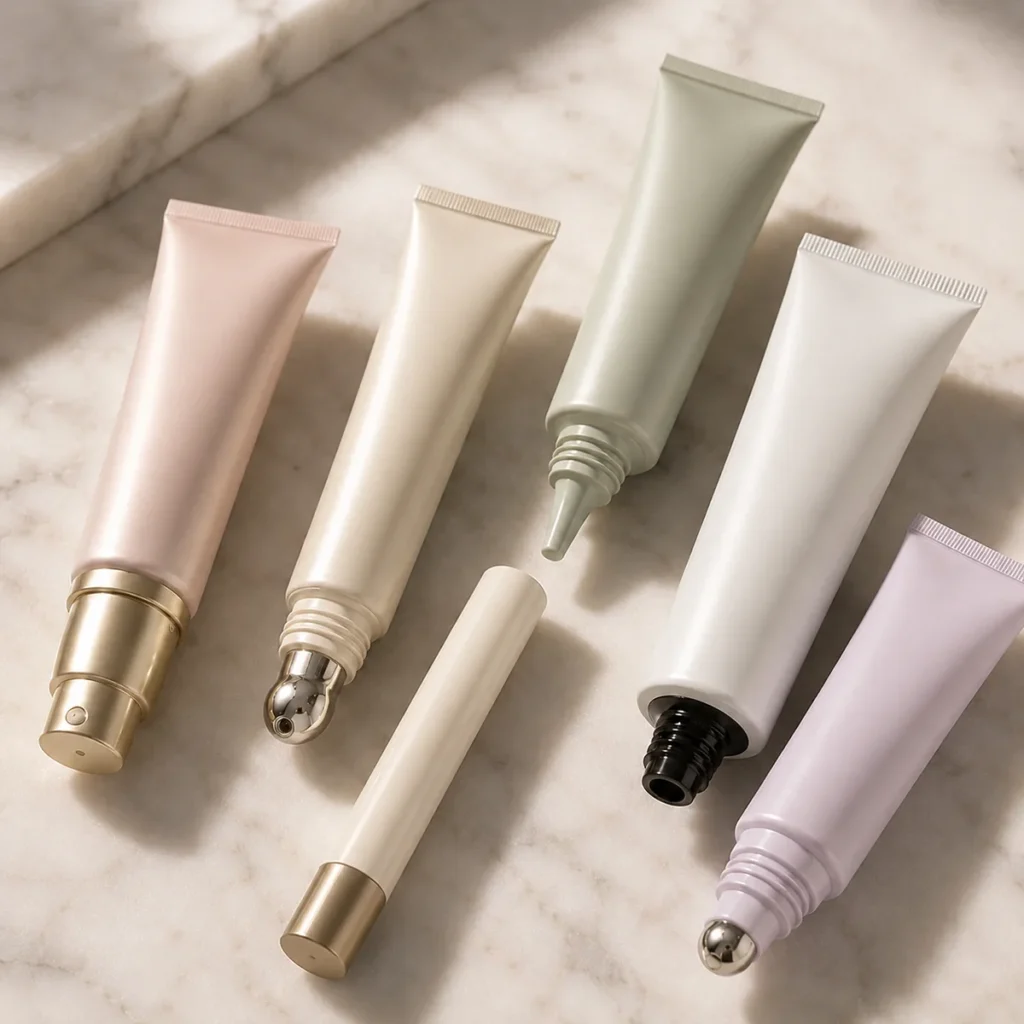
- Applicator tips — rollerballs, metal tips, or angled tips add a function, like a cooling rollerball for eye products. These make a product feel more premium and purpose-built, which is a real lever for standing out and charging more.
Whatever finish or print you choose has to survive being squeezed, bent, and carried around. If the decoration rubs off, the product feels lower quality, so it’s worth confirming the decoration holds up on the actual tube. We go deeper into closures and applicators in our cosmetic tube cap and applicator guide.
Step Three: Choose the Capacity and Size
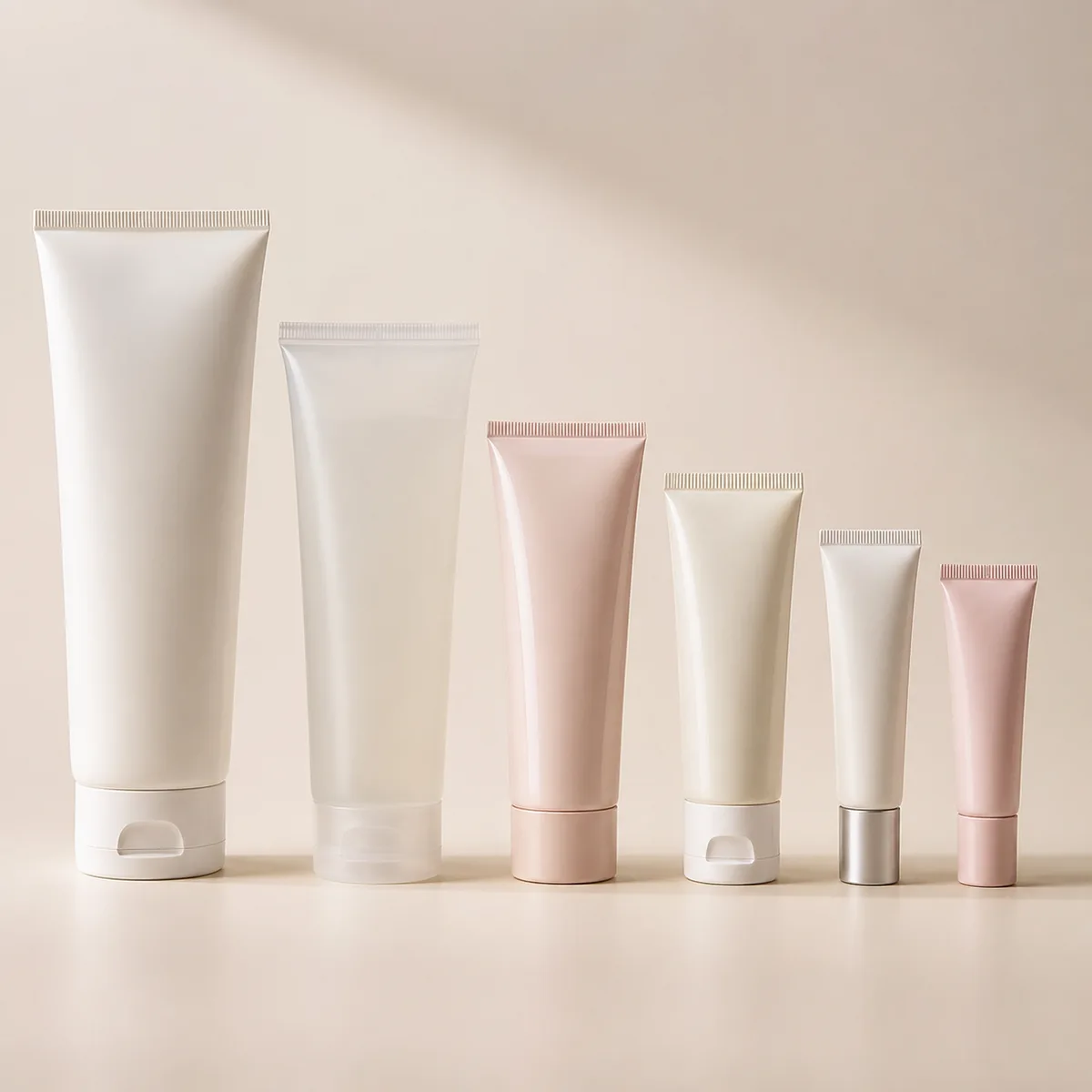
Match tube size to how your product is used and how long it should last: small travel and trial sizes around 15–30ml, standard 30–50ml for most face products, and 100ml or more for body care. Size isn’t just about volume, it shapes your price point and how much value the customer feels they’re getting.
A few guidelines that hold across most skincare lines:
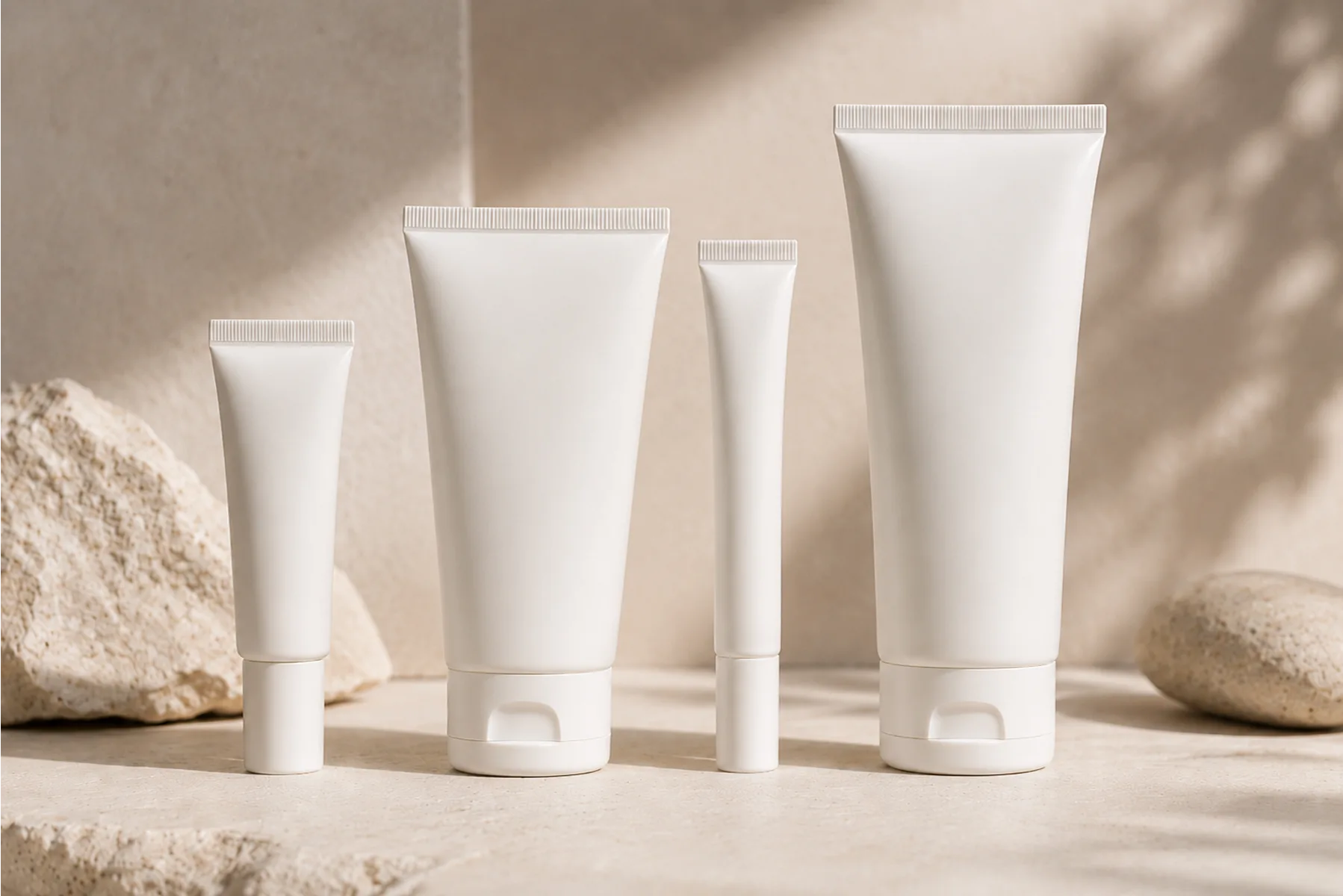
- Small (around 15–30ml) — eye creams, lip care, trial and travel sizes. Small formats also double as a low-cost way to win new customers: a trial size lets someone try the product before committing to full size, which turns into full-size orders later.
- Medium (around 30–50ml) — the standard range for most face creams, serums in tube format, and cleansers. This is the size customers most associate with skincare and the one that reads as fair value at a standard price.
- Large (100ml and up) — body lotions, hand creams, and daily-use products where customers expect more volume for the money.
A practical rule: customers feel they get good value from a tube that lasts roughly one to three months of normal use. Size the tube to that rhythm and keep it proportional to your price, and the product feels worth what you charge, which is what brings people back for a refill.
Match the Tube to Your Product Type
The fastest way to narrow your choices is to start from your product type. Sunscreen, eye cream, lip care, face cream, and cleanser each have a best-fit combination of material, cap, and size. Choosing the format that fits the product isn’t just about function, it’s what makes your product look right on a shelf and in a phone screen, which is where more channels and more orders come from.
| Your product | Typical size | Common cap | Why it fits |
|---|---|---|---|
| Sunscreen | 50–100ml | Flip-top | Applied often and fast; one-hand flip-top beats a screw cap for daily reapplication |
| Eye cream | 15ml or smaller | Nozzle or rollerball | Small, precise dose; a rollerball adds a cooling, premium feel that supports a higher price |
| Lip care | 10ml or smaller | Slanted tip or nozzle | Small format with a tip shaped for easy, hygienic application |
| Face cream / moisturizer | 30–50ml | Flip-top or screw | The standard skincare format; the finish you choose drives the premium feel |
| Cleanser | 100–150ml | Flip-top or disc-top | Used with wet hands; needs a cap that opens and seals easily every time |
Use this as a starting point, not a rule. The exact fit still depends on your specific formula and brand, which is what a sample and a compatibility test confirm before you commit.

Not sure which tube fits your product? Send us your formula type and what you’re packaging, and we’ll recommend the right material, cap, and size, with a free sample so you can see and feel it before you commit.
Sustainable Tube Options Worth Knowing
The most practical sustainable upgrades for a cosmetic tube are PCR content and sugarcane-based bio-PE, both of which keep the familiar squeeze-tube experience while reducing reliance on virgin plastic. Sustainability has shifted from nice-to-have to something many retailers and customers now expect, so the right choice here can open doors rather than just tick a box.
Your main options, and what each one does for your brand:
- PCR (post-consumer recycled) content reuses existing plastic and gives a credible, measurable “second life” story. It’s the most defensible green claim for mass and mid-market lines, and it’s increasingly what retailers ask for. It can be added on select structures, worth confirming for your specific design.
- Sugarcane-based bio-PE comes from a renewable plant source and offers a “grown, not drilled” story that resonates strongly with clean-beauty buyers and can support a premium position. As Plastics Europe notes, drop-in bio-based PE performs much like conventional PE.
- Mono-material designs simplify recycling by keeping the tube to one material family. For the wider picture, European Bioplastics is a useful reference.
Each has different trade-offs in cost, look, and the claim it lets you make, so choosing between them deserves its own conversation. We cover it in detail in our sustainable cosmetic tube guide. The short version: if a green claim matters to your brand, you have real, credible options on a tube, and they can translate into shelf space, new markets, and a price your customers are happy to pay.
Customizing Your Cosmetic Tube and Placing Your Order
Once material, cap, and size are settled, you make the cosmetic tube your own through color, printing, and finish, then confirm everything with a sample before bulk, on a typical timeline of around 12–15 working days for sampling and 30–40 days for production. This is the step that turns a generic tube into recognizably your product.
What you can customize, and why it’s worth doing well:
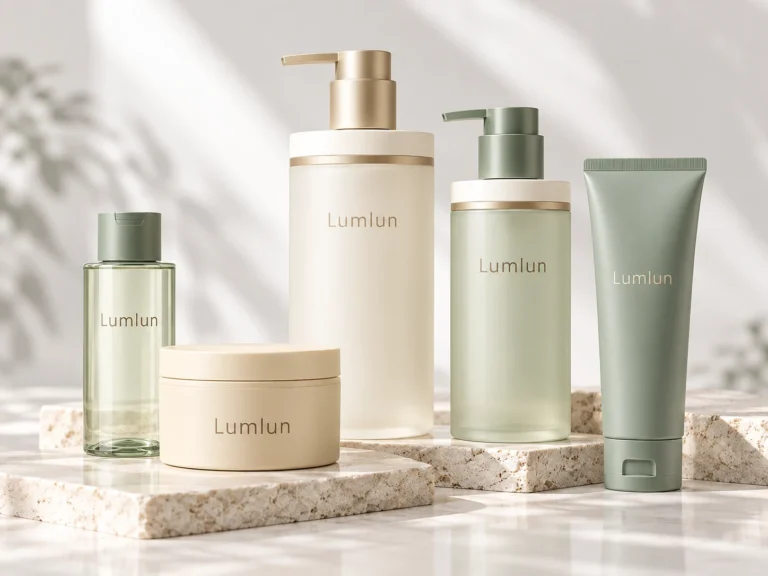
- Branding (color, printing, finish). Custom color plus silk-screen, offset, or hot-stamp printing put your logo and design on the tube. This is what builds shelf recognition and a consistent line, and a consistent, branded look is what lets customers spot you, trust you, and reach for the next product in your range.
- Sampling and compatibility testing. Always run a sample and a compatibility test with your real formula before bulk. This protects your investment, it confirms the tube, cap, and decoration all work with your product before you pay for a full run. We dig into the full process in our custom cosmetic tube guide.
- Timeline and minimums. Plan your launch backward from production timing, and confirm the MOQ for your specific tube and decoration up front so there are no surprises.
Based on our experience supplying cosmetic tubes to skincare brands across 27 countries, the brands that avoid sourcing headaches are the ones that confirm the fit with a sample first. A good partner makes that easy and low-risk:
- Free samples shipped within 48 hours, so you can see and feel it before committing.
- Replies within 2 hours, so you’re never left waiting during a launch.
- A fill test before bulk, because a supplier who slows you down to get it right is protecting your launch, not delaying it.
Why Getting Your Cosmetic Tube Right Pays Off
The right cosmetic tube isn’t a cost to minimize, it’s a brand asset that protects your formula, lifts how your product is perceived, and turns one purchase into a loyal customer. Everything in this guide leads here, because this is the real reason the choice matters.
When the tube fits your product, the payoff shows up across your business:
- Fewer returns, better reviews. A tube matched to your formula keeps it performing through its shelf life, so customers get what they expected, and you spend less on complaints and replacements.
- More attention, more channels. A considered finish and clean branding make your product look worth its price on a shelf and in a feed, which is what helps you get picked up, both by customers and by the retailers deciding what to stock.
- Room for a higher price. Packaging that looks and feels premium lets you charge more for the same formula, which is margin you keep.
- Stronger loyalty and reorders. A consistent, recognizable line builds trust, so a first-time buyer becomes a repeat customer who works through your whole range.
Seen this way, upgrading your tube isn’t spending, it’s investing in something that keeps working, protecting margin, winning attention, and bringing customers back, long after the order is delivered. That’s the difference between a tube that simply holds your product and one that helps you sell it.
Ready to choose the right cosmetic tube?
Tell us your product type, formula, and the look you want, and we’ll recommend the right material, cap, size, and finish, with free samples shipped in 48 hours.
Frequently Asked Questions
What material is best for a cosmetic tube?
For most skincare, standard PE (polyethylene) is the best material for creams, lotions, cleansers, gels, and masks. It’s flexible, stable with most formulas, and accepts the widest range of caps and decoration.
If sustainability matters to your brand, PE can be upgraded with PCR or sugarcane-based bio-PE while keeping the same feel, which can help you win retail listings and eco-conscious buyers.
Which skincare products work best in a cosmetic tube?
Cosmetic tubes are a great fit for most everyday skincare: face creams, cleansers, sunscreens, hand creams, lip balms, masks, and body lotions all work well. They’re squeezable, hygienic, lightweight, and travel-friendly.
The main exception is a product whose performance depends on staying sealed from air. If that’s your product, an airless format protects it better and keeps it effective to the last dose, which is what keeps those customers reordering.
What size cosmetic tube should I choose?
Match the size to how the product is used and how long it should last:
- 10–15ml — eye creams, lip care, travel and trial sizes
- 30–50ml — most face creams and cleansers (the standard skincare size)
- 100ml or more — body lotions and daily-use products
A good rule: size the tube so it lasts one to three months of normal use, which customers read as good value and which brings them back to reorder.
Are sustainable cosmetic tubes available?
Yes. The two most practical options both keep the familiar squeeze-tube feel:
- PCR (post-consumer recycled) content — reuses existing plastic; the most defensible everyday green claim and what many retailers now ask for.
- Sugarcane-based bio-PE — a renewable, “grown not drilled” story that suits a premium, clean-beauty position.
PCR can be added on select structures, so confirm what’s possible for your specific tube design with your supplier.
What is the minimum order for custom cosmetic tubes?
It depends on your tube size, material, cap, and decoration, since each can carry its own minimum, and custom color and printing typically raise it.
The best approach is to share your full specification and ask for the real minimum against your actual choices. Requesting a sample first also lets you confirm the fit before committing to a production run.